

Issue 279
C&T Round Up for August 2024!

This month, we recap what we learned about AI spreadsheet tools, how phage funding has changed over the years, and the rise of phage research in Latin America!

Community digest5updates6jobs2posts
Updates
David Pride, Douglas Conrad (UC San Diego) and Daria Van Tyne (University of Pittsburgh) received a $1,487,500 research grant from Emily's Entourage, a CF nonprofit to launch a phage clinical trial for combatting CF infections.
Cytophage Technologies (Winnipeg, Canada) has announced a launch of ready-to-use lyophilized phage tablets for poultry.
Paul Kim (Locus Biosciences, Inc.) and colleagues published a paper on the results of the first phase of their Phase 2 ELIMINATE clinical trial, where they used a CRISPR-Cas3-enhanced phage cocktail to treat uncomplicated urinary tract infections. They found a well-tolerated dosing strategy, reduced E. coli in urine, and will now move onto the next stage of the trial.
Tea Glonti (Queen Astrid Military Hospital) and colleagues published a new paper on designing therapeutic phage cocktails based on naturally occurring phage groupings. They transferred naturally occurring phage groups directly from their sources to in vitro, introduced an 'interpretation model curve' for phage liquid culturing, and found their cocktails largely performed well and inhibited resistant mutant growth.
Joshua Jones (UK Phage Therapy, University of Edinburgh) and colleagues have provided guidelines for assessing patient suitability for unlicensed phage therapy in the UK, showing clinical and microbiological considerations for local clinical teams.
Jobs
The Société Française de Bioinformatique, Lyon, France is hiring a Master's level bioinformatician to study the phageomes and counter-defensomes of microbial communities.
Tolka AI Therapeutics (now backed by Khosla Ventures!) is a biotech startup in Miami, Florida focused on developing phage therapy for M. abscessus infections. Tolka is hiring a Microbiology Intern to assist in phage hunting and developing treatments for antibiotic-resistant infections.
The Westmead Institute for Medical Research is hiring a Senior Research Assistant to assist in developing therapeutic plasmids targeting antimicrobial resistance in bacteria.
The University of Otago is hiring a postdoc to contribute to phage-based biocontrol research for agricultural pathogens in Dunedin, New Zealand.
Friedrich Schiller University Jena is hiring a PhD student to study phage-host interactions and single-cell transcriptomics in microbial infections.
Archana Anand has announced that the BRaVE Phage Foundry at Lawrence Berkeley National Laboratory is hiring postdocs and research assistants. The team is particularly interested in candidates with a passion for viruses, wastewater research, and bioinformatics.
Community board
In an upcoming course in Lyon, France (Nov 12-13 2024), the European Society of Clinical Microbiology and Infectious Diseases (ESCMID) will explore current clinical experiences, compassionate use protocols, cohort studies, and ongoing clinical trials in phage therapy, emphasizing global regulatory navigation and implementation.
Course coordinator: Tristan Ferry.
Register by Oct 27, and apply for an attendance grant by Sept 20.
In episode 2 of the Podovirus podcast, 'Getting Phage Research Funded', Jessica Sacher interviews Dr. Joe Campbell, who spent the past decade+ as a program officer at NIAID, the US gov's main infectious disease funding body.
Dr. Campbell reflects on his role in making it easier for phage research to get NIH funding, and shares his perspective on what's next for the field, including the growing importance of phage therapy centers like Phage Australia and Phage Canada.
Subscribe to Podovirus to get the next one, which will be an interview with Dr. Jesus Fernandez of Eligo Bioscience about their recent paper on microbiome editing with engineered lambda phage!
Hi phage friends!
It’s been a while since I’ve written one of these — Jan has been doing the roundups for at least a year now (I’ve lost track?).
I’ve been back in the lab, this time at the Bollyky Lab at Stanford. I still haven’t found time to write about it, but I will soon. It’s been almost 6 months already?!
This month we were partly gone to Canada, but we still covered a bunch — from AI tools for data analysis (what Jan’s been deep into these days), to a podcast interview I did with Joe Campbell on phage grant funding (what I’ve been spending most of my time thinking about this summer), to an exciting guest post from the organizers of the Colombia phage meeting happening this December! (So excited for this — we will be there! So nice to finally be in flying distance of a key phage meeting). I didn’t realize until reading the post that there’s been a tight knit community doing phage science and hosting meetings and workshops for a decade in Latin America. (I just knew many of them as some of my favourite salsa dancing phage friends from Evergreen meetings over the years — the much loved Colombian contingent!) Absolutely cannot wait to go see what it’s like down there for real — come join us!
With that said, here’s what we covered in August:

In a new Podovirus podcast episode, transcribed and published in C&T as a blog post, I interviewed Joe Campbell, former program officer at the National Institute of Allergy and Infectious Diseases (NIAID), about his career and the evolution of phage therapy research since he’s been there. Joe discusses his role in shaping phage research funding at NIAID, including the creation of phage-specific grant calls and the growth of the ‘Bacteriophage Interest Group’. He reflects on the changing perception of phage therapy in the scientific community, from initial skepticism to increased acceptance. Joe highlights the importance of the Tom Patterson case in raising awareness and credibility for phage therapy. He also discusses the roles of phage therapy centers like Phage Canada and Phage Australia alongside biotech companies in advancing the field. Joe emphasizes the need for rigorous clinical trials to optimize phage therapy while balancing the urgent need to treat patients. He concludes by acknowledging the progress made in the field, noting that phage therapy is no longer seen as an underdog approach, but still faces challenges in terms of economic viability and optimizing treatment protocols.
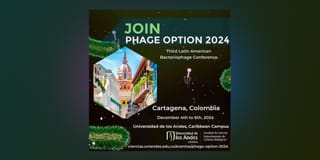
This blog post traces the growth of the Latin American phage community, initiated by connections made at the 2011 Evergreen Bacteriophage Conference. It highlights the International Course on Bacteriophages at the University of Buenos Aires, established in 2015 by Mariana Piuri and Raúl Raya. The authors describe the course's structure, featuring lectures from international experts and hands-on lab work, and its success in attracting students from 15 Latin American countries. They note the establishment of the Argentinian Network of Bacteriophages in 2019 and the first two Latin American Phage Meetings. The post concludes by announcing the upcoming 3rd Latin American Phage Meeting (Phage Option 2024) in Colombia, emphasizing these initiatives' role in advancing phage research and addressing regional challenges in resource-limited settings.
C&T Throwback!
Remember PHAVES, our pandemic-born Zoom webinar club? (It’s all still alive and well on youtube if you ever want to catch your favourite researcher’s seminar, or catch a bioinformatics workshop to brush up on phage annotation!).
I was thinking recently about when we hosted Dr. Paul Jaschke for PHAVES 10. His talk on "Learning how to engineer genomes by building phage" was a fascinating deep dive into synthetic genomics using the ΦX174 phage. Paul walked us through his work on decompressing the ΦX174 genome and exploring its cryptic genes, showing how these changes affected phage fitness and structure. It was particularly interesting to learn about the trade-offs between removing gene overlaps and maintaining phage fitness. Paul also teased some tools his lab built, including a Plaque Quantification Tool.
So that’s it, see you in September!
~ Jess and Jan
In this blog post, Jan shares insights from an experiment at Sphinx Bio to use AI for extracting data from messy spreadsheets in biology labs. He explores various approaches, including ChatGPT's Data Analyst, which showed promise in explaining and extracting data from complex spreadsheets. Jan's team built "Slice & Dice," a web application to test different extraction strategies. They faced challenges with LangChain and OpenAI's Assistants API, finding issues with reliability, speed, and cost-effectiveness. A simplified approach using chained prompts with GPT-4 and Claude Opus showed better results but was still slow. The integration of the Llama 3 model with Groq's fast inference capabilities significantly improved speed, enabling new user experience paradigms. Jan suggests several strategies for future exploration, including using common data patterns, chained agents, navigation tools for models, and co-creation interfaces. He emphasizes the importance of efficient spreadsheet data extraction for labs and invites readers to explore their demo and contribute to the open-source project. Jan concludes by hinting at ongoing work on more spreadsheet-centric tools to be shared in the coming months.