

Issue 313
C&T Round Up for May 2025!

For this month, we feature a guest post about pipolin use in PCR, two podcasts from Jess, and another lab hacks episode from Jan.

Community digest5updates2jobs2posts
Updates
Stephen Tang (Columbia University) and colleagues published a new paper on protein-primed homopolymer synthesis, showing a novel bacterial antiviral defense mechanism involving synthesis of poly-dA DNA triggered by phage infection, driven by a reverse transcriptase that likely uses its own tyrosine residues to prime synthesis.
Meaghan Castledine (University of Exeter) and colleagues published a new paper on interactions between phages and macrophages, showing macrophages reduced phage efficacy and increased bacterial phage resistance, potentially explaining variable phage therapy outcomes in patients.
Liana Merk (Harvard University) and colleagues published a new paper on prevalence of group II introns in phage genomes, showing group II introns are widely present in phages from diverse phylogenetic backgrounds, contrary to previous assumptions.
Nathan Novy (University of Wisconsin-Madison) and colleagues published a new paper on multiobjective learning and design of phage specificity, showing deep learning can enhance T7 phage infectivity and specificity toward diverse bacterial strains.
Tianjing She (Nanjing Agricultural University) and colleagues published a new paper on phage-mediated gene transfer in Salmonella, showing horizontal transfer of virulence genes in Salmonella enterica with regulatory feedback from the host.
Jobs
The Turnbaugh lab at UCSF is hiring a Junior/Assistant/Associate/Full Specialist, to study human gut microbiome impact on disease treatment and engineer bacteriophages for microbiome manipulation. The role involves microbiology, molecular biology techniques, and lab management.
The Roybal lab at UCSF School of Medicine is hiring a Junior/Assistant/Associate/Full Specialist, to study synthetic biology and immune cell editing using viral and non-viral techniques, and develop new CRISPR-Cas tools for microbes.
Community board
Hi everyone,
I'm a researcher based in Argentina working on a phage-based biocontrol project targeting spoilage bacteria in industrial fermentations, particularly lactic acid bacteria like Lactobacillus plantarum, L. fermentum, and L. brevis. Despite screening a wide variety of environmental samples, we have not yet observed any plaques on our target strains. We’d be really grateful for any advice or insights regarding common pitfalls when working with phages for Lactobacillus spp.
Thanks in advance for your help, Cecilia.
Reminder to register for the Phage Protein Meeting, taking place in Ghent, Belgium, on September 10-11, 2025. This interdisciplinary conference will bring together experts working with phage lysins/endolysins, tail fibers, tailspikes, depolymerases, and tailocins, fostering collaboration and knowledge exchange for applications in human and veterinary health, food conservation, and beyond.
https://phageproteinmeeting.ugent.be/
• Registration/abstract submission: until June 15, 2025 • Late registration: from June 16, 2025
Daniel Nelson (nelsond@umd.edu) on behalf of the organizing committee
Hi everyone,
Spring is upon us! Jess has been focused on her research — a slight deviation from phage therapy into phage therapy — using phages to deliver large genetic payloads as gene therapy. Is that still considered phage therapy? The gene therapy conference was a success, and she’s been going down a few rabbit holes in this new, tangential realm.
Coincidentally, a new article was published in Nature, around the “pivot penalty” in research. Take it with a grain of salt, but from the authors’ analysis of millions of research papers, they conclude that “the further a scientist moves away from the topic of their previous work, the fewer citations their new work will receive.” The paper seems all kinds of flawed, but there’s probably some truth to it. Pivoters, beware. Read more on Nature: https://www.nature.com/articles/s41586-025-09048-1
As for myself, my work at Groq is getting on-track and I’m getting in the groove. I’m back to prototyping and building AI-based research tools. Most of them we still use internally (e.g. I share with Jess to use) as they’re still quite janky, and break a lot. When they work, they really work though. We use some of these tools for Capsid research, and to write issues like Capsid & Tail. My personal goal is to make these reliable enough for Jess to use on a daily basis in her research — at that point I think it would be ready for release!
For this month, here’s what we published:

In this Podovirus podcast recap, Jessica interviews phage therapy patient advocate Chris Shaffer about his journey to access phage therapy, and his ongoing advocacy work.
After successfully treating his persistent E. coli infection at the Eliava Institute in Georgia, Chris now helps other patients navigate the challenges of awareness, trust, and access to phage treatments. He draws parallels between the current situation and the early HIV/AIDS crisis, suggesting that patient advocacy groups similar to ACT UP might be needed to increase public demand for phage therapy.

In this post, I outline a few strategies and tools for finding relevant research papers. There’s too many papers getting published (and coincidentally, also too many tools “that use AI” to read those papers) right now. I’ve basically tried them all, and I’ve summarized them here. Some tools are better for finding the right paper to read; others are better for discovering new papers — I lay out all my favorite ones here. Most of them have a free tier, so there’s no excuse not to explore!
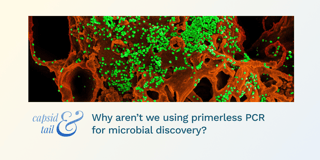
In this article, Aaryan, our regular guest writer, explores how pipolins (genetic elements that can replicate DNA without primers) can be used for isolation. Current isolation methods are too constrained and selective, so we’re unable to detect most species in our samples. Aaryan then outlines a protocol for implementing pipolin-based PCR for a microbial discovery pipeline. If you’re interested in pipolin-based PCR (pPCR?) you should reach out!
Throwback: For better or worse, it’s been ~5 years and the field is still grappling with this question. With several positive results from BiomX/APT and Armata clinical trials, and some large shifts in the biopharma/biotech realm, this question is probably more pressing than ever!
~ Jan & Jessica
In this Podovirus podcast recap, Jessica Sacher interviews Jonathan Solomon, CEO of BiomX, about their successful phase 2 clinical trial for diabetic foot osteomyelitis using phage therapy. The trial showed not just microbial effects but actual clinical improvement with statistical significance, with approximately 40% improvement in the phage-treated group and impressive tissue regrowth in patients where bone was exposed. Their approach used a single optimized phage for each patient rather than a cocktail, and demonstrated that targeting only Staph aureus in polymicrobial infections was effective.