A Science paper by Samuel J. Hobbs and Philip J. Kranzusch reports that phage prohead protease activity activates the CD-NTase enzymes of bacterial CBASS defence: the authors reconstitute CBASS recognition of phage T4 in vitro, identify cleavage of a CD-NTase activation loop as the trigger of immune signal synthesis, and show that phage prohead proteases activate CBASS in vivo, explaining how immunity is initiated late during infection. Structure-based analyses identify activation loops in clade A, D and G CD-NTases.
Posts
-
-
TattleTail identifies canonical pyocin gene clusters in Pseudomonas aeruginosa
TattleTail is a rule-based bioinformatic pipeline for identifying canonical pyocin-encoding gene clusters in Pseudomonas aeruginosa. It targets the characteristic trpE–trpG-associated loci, combining conserved pyocin genes with exclusion of canonical phage features to distinguish these clusters from prophage regions. It complements existing prophage prediction tools.
-
WACCBIP–DAAD master’s scholarships in infectious-disease cell biology
Graduates who are nationals or permanent residents of Sub-Saharan African countries can apply for an MPhil in Molecular Cell Biology of Infectious Diseases at the University of Ghana. Scholarships support up to 24 months of study. Applicants need an above-average first degree completed within the last six years. The DAAD portal deadline is November 12, 2026.
-
Phylogeny-agnostic machine learning predicts strain-level phage–host interactions from genomes (Nature Microbiology)
A Nature Microbiology study from Lawrence Berkeley National Laboratory, UC Berkeley and Penn State presents a phylogeny-agnostic machine-learning framework that predicts strain-level phage–host interactions across diverse bacterial genera from genome sequences alone, matching species-specific methods (AUROC 0.67–0.94) across six datasets (115,037 interactions, 949 bacterial strains, 518 phages). Experimental validation of 1,240 predicted E. coli phage–host interactions gave an AUROC of 0.84, and model-guided cocktail design reached up to 97.5% bacterial coverage with five phages.
-
Innovate UK innovation loan applications pause from October 9
Applications for Innovate UK Innovation Loans will pause from 11am on October 9, 2026, until January 2027. UK-registered SMEs can submit an expression of interest for loans of £100,000–£5 million for innovative late-stage R&D projects with strong commercial potential.
-
HIDEN-SEQ: transposon-insertion sequencing that links phage genes to selectable phenotypes (Nature Microbiology)
A Nature Microbiology study from ETH Zürich, University Hospital Basel, the University of Basel and the University of Lausanne presents HIDEN-SEQ (hidden Acr-enabled transposon-insertion sequencing), which systematically links viral genes to selectable phenotypes. Using phage T4 it reproduced the established gene essentiality map, and it is portable to non-model phages, revealing conditionally essential genes in several bacterial hosts and conditions, including previously unknown antidefence factors matched to specific antiviral defences.
-
Defining the essential genome of diverse phages with phage Tn-seq
Phage Tn-seq is a transposon-based approach to studying phage gene essentiality and engineering.
-
HydroPhage: a hyaluronan hydrogel that delivers phage over one week in a mouse wound infection model (Nature Communications)
A Nature Communications study from Stanford University and collaborators used a mouse model of established Pseudomonas aeruginosa wound infection to compare phage route, dose and frequency: topical, but not systemic, delivery reduced wound bacterial burden, and phage resistance emerged rapidly, suggesting a benefit from high, repeated doses. The team then developed HydroPhage, a hyaluronan-based hydrogel with dynamic covalent crosslinks that delivers high-titer phage over one week.
-
Prophage-encoding engineered bacteria enable prophylactic lytic phage therapy for enteric infection in mice
Engineered non-pathogenic E. coli producing lytic phages protected mice against Salmonella infection in a preclinical proof-of-concept study.
-
Phage bioinformatics tools: a review of computational approaches for bacteriophage research
This review surveys more than 80 phage bioinformatics tools for identification, assembly, annotation, taxonomy, lifestyle, defence, and host prediction. It compares sequence homology, machine learning, and foundation-model approaches, then proposes web and command-line workflows.
-
Anthropic AI for Science: up to $50,000 in credits per project
Researchers can apply for up to US$50,000 in credits per scientific project. The expanded AI for Science programme accepts any researcher and extends beyond its initial biological-science focus to other fields. Biology and chemistry access currently uses Opus-class models. The announcement gives no fixed application deadline.
-
Phage PAK_P3 genome folding and host chromosome rearrangement during Pseudomonas aeruginosa infection (Science Advances)
Bignaud, Lamy-Besnier, Koszul, Debarbieux, Marbouty and colleagues followed the 3D organization of the virulent phage PAK_P3 genome during infection of Pseudomonas aeruginosa. The phage genome rapidly decondenses into a specific 3D organization that reflects its transcriptional program while the host genome decondenses as gene expression wanes, and specific contacts between the phage genome and the host chromosome show how the phage exploits its host's spatial genome architecture.
-
Inserm Phage Therapy Booster Programme: call for letters of intent to build a national phage therapy consortium
Inserm's Phage Therapy booster programme, led by its Health technologies and Immunology, inflammation, infectiology and microbiology institutes, will fund a single three-year consortium of 10-12 participants (individual researchers or teams) working on phage biotechnology and bioproduction, preclinical frameworks and the societal impact of phage therapy. The call for letters of intent opened on 10 July 2026 and closed on 18 September 2026 at 5:00 PM; the programme kick-off meeting is scheduled for 28 January 2027.
-
The biology of jumbo phages (Nature Communications Review)
A Nature Communications Review by Sam P. B. van Beljouw and Li Yuping (Biozentrum, University of Basel) on jumbo bacteriophages, whose double-stranded DNA genomes exceed 200 kb. It covers their diversity, evolutionary origins, distinctive morphologies and lifecycles, interactions with bacterial hosts and potential for biotechnology and therapy, with a focus on, but not limited to, the Chimalliviridae phages.
-
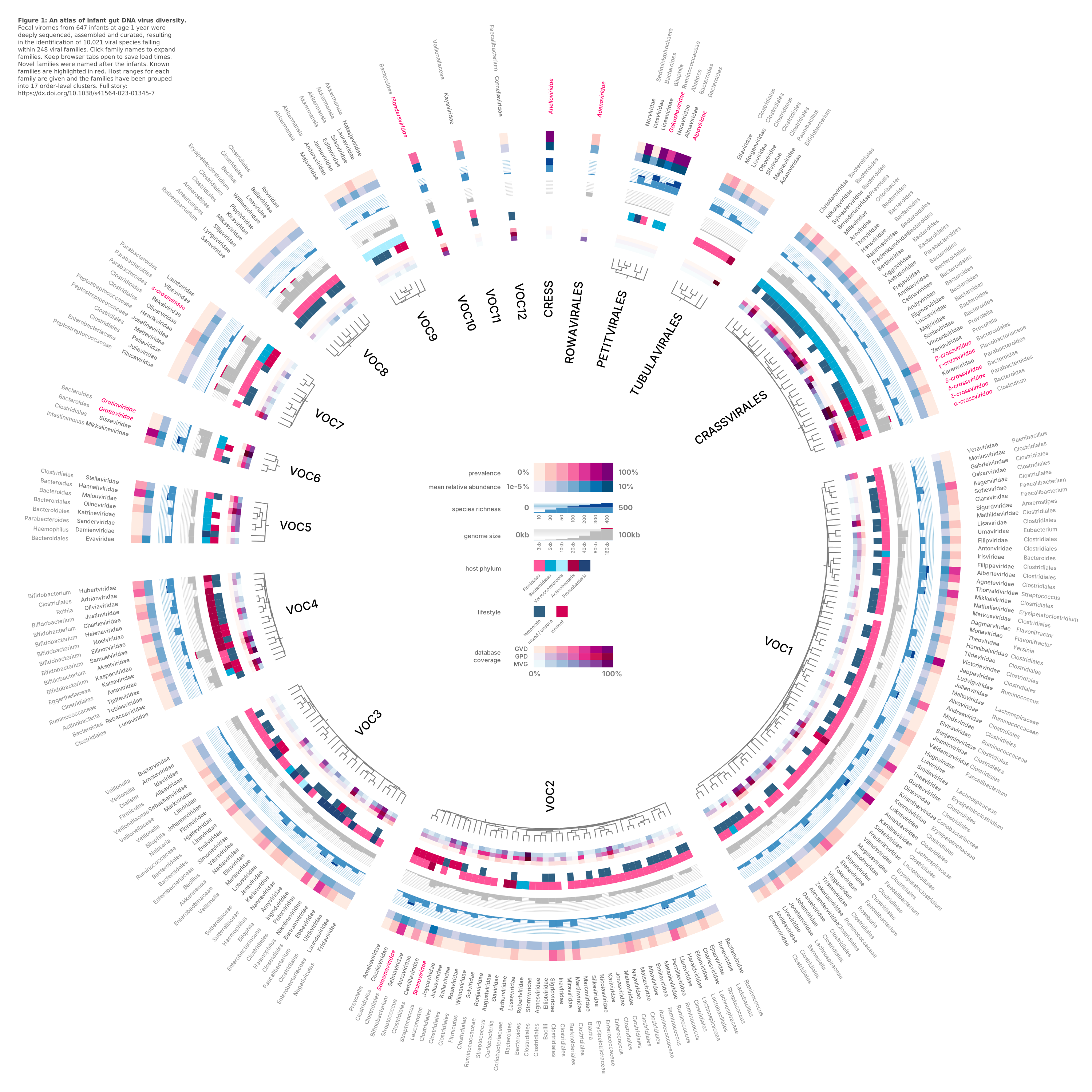
A meta-analysis of infant gut viromes reveals global patterns in bacteriophage community assembly and functional capacity over the first three years of life
A meta-analysis of 12 infant cohorts across 8 countries (1,893 samples from 999 infants) models gut virome development over the first three years of life. Viral richness rose significantly over the first eight months alongside a loss of community evenness, and infant viromes became more similar with age; the transition to a stable state involved fewer extracellular temperate phages and shifts in phage-encoded auxiliary metabolic genes.
-
Bacteriophages hijack 2′,3′-cNMPs to enhance transposase-mediated phage DNA integration in Acinetobacter baumannii (Science Advances)
Cui and colleagues report in Science Advances that Acinetobacter baumannii makes 2′,3′-cyclic nucleotide monophosphates (2′,3′-cNMPs) with the ribonuclease RnaA and senses them through the receptor protein CRPAb, which affects the interaction with the promoters of target genes. Bacteriophages raise 2′,3′-cNMP levels to up-regulate transcription of the transposases and Mu-like integrases required for phage DNA integration, showing that phages can hijack this bacterial signal.
-
Sequential use of capsule-targeting Klebsiella phages shows order-dependent effects
In this preprint, a 1:1 Loop and Spear cocktail did not improve bacterial suppression over Loop alone and showed multiplicity-dependent antagonism. In a Galleria mellonella larvae infection model, only sequential treatment with Spear followed by Loop improved survival beyond monotherapy.
-
Prevalent gut phages encode modular adhesins mediating epithelial binding and endoplasmic reticulum trafficking
A high-throughput platform identified gut phages that adhere to epithelial layers and the immunoglobulin (Ig)-like domain proteins that mediate it: displayed on a non-adherent phage, they confer epithelial binding and internalization in vitro and longer retention in the mouse gut. Phages encoding these adhesins include crAss-like phages and myoviruses related to the proposed Flandersviridae family, and internalized phages traffic to the endoplasmic reticulum through the Golgi apparatus.
-
Single-phage profiling illuminates viral individuality during bacterial cell fate determination
Parallel sequential fluorescence in situ hybridization (par-seqFISH) profiled the transcriptional activity of individual phage lambda genomes during synchronized infection of E. coli. Cells pursuing lysogeny show consensus activity among all their phages, whereas lytic cells may contain phages with lysogenic activity, supporting the idea that consensus among coinfecting phages is required for dormancy.
-
Theomophage: massive, parallel phage outbreaks in cellulose-degrading compost microbial communities (Science Advances)
Meijer, Skiadas, Rainey, Hogeweg and Dutilh tracked viral dynamics in 20 compost-derived microbial communities over one year and observed massive, parallel outbreaks of Theomophage, a previously uncharacterized member of the Schitoviridae that reached up to 74% of metagenomic reads, the largest bacteriophage outbreak documented to date. Theomophage stayed genetically stable during outbreaks, but experimental migration of viral communities triggered rapid evolution through recombination and new mutations.
-
Single nucleotide variants drive evolutionary phage-host arms race in anaerobic carbon dioxide-converting microbiome
Metagenomics, metatranscriptomics and metabolic modelling followed a thermophilic CO2-converting (biomethanation) trickle bed reactor over 353 days of stepwise gas-feed perturbations, tracking single nucleotide variant trajectories in both prokaryotes and viruses. System destabilization triggered a viral bloom, and some community members recovered from phage infection through targeted modifications of their defense systems.
-
DepoCatalog maps Klebsiella phage depolymerases and introduces the DepoCat database
The study presents DepoCatalog, an experimentally validated collection of 129 recombinantly prepared Klebsiella phage depolymerases across 75 KL-types, and proposes a five-class framework for their diversity. The accompanying DepoCat database reports 131 depolymerases and supports exploration by capsule-type specificity or structural classification.
-
Science feature "Brothers in arms": key human defenses against pathogens were forged in microbial battles with viruses
Science news feature by Richard Stone (Science 392, issue 6800, May 21, 2026, pp. 800-804), whose standfirst states that key human defenses against pathogens were forged billions of years ago in microbial battles with viruses.
-
Phage infectivity prediction across Pseudomonas isolates
Researchers profiled 95 Pseudomonas phages against 99 clinical isolates and trained strain-specific models to predict infectivity. In a single held-out strain in vivo, the model-designed cocktail produced a higher median CFU reduction than the expert-designed cocktail.
-
PHAGE4DAIR: €14.9 million Horizon Europe trial of phage therapy for Staphylococcus aureus prosthetic joint infections
PHAGE4DAIR, a Horizon Europe project coordinated by Qeen Biotechnologies (Canada), runs from 1 June 2026 to 31 May 2031 with an EU contribution of €14,869,038.73. It is a multicenter, randomized, double-blind, placebo-controlled, adaptive Phase I/II trial of a GMP-manufactured five-phage cocktail targeting Staphylococcus aureus in prosthetic joint infections treated with DAIR (debridement, antibiotics and implant retention), with phages given intraoperatively and intravenously alongside standard-of-care antibiotics.
-
Cross-genus phage design through branching domain and conserved peptide interactions
Using the Klebsiella podophages KP32, K11 and KP34, the authors validated the interaction between the primary RBP branching domain and the secondary RBP docking peptide. They used this interaction to engineer a KP32 scaffold that propagated on both Klebsiella and Escherichia hosts.
-
Phage-encoded factor stimulates DNA degradation by the Hna anti-phage defense system
Biochemistry, cryo-electron microscopy and single-molecule imaging show that Hna, a broadly distributed anti-phage system that triggers abortive infection, is a 3'-5' single-stranded DNA exonuclease forming an auto-inhibited dimer under physiological ATP. A phage-encoded single-stranded DNA-binding protein (5A SSB) destabilizes the dimer and drives dysregulated nuclease activation, while phage escape mutants encode SSB variants that evade Hna.
-
Structural investigation of QatB and QatC proteins in QatABCD anti-phage defense
A structural and functional study of QatB and QatC, two components of the four-protein QatABCD anti-phage defense system. QatC bound to the ATP analog AMPPNP and the QatB-QatC heterodimer were solved, and structural analysis suggests QatB may serve as a substrate of QatC, implicating a potential regulatory mechanism.
-
Phage satellites induced by virulent phages are mobilized by natural competence leading to phage resistance in a new host
More than two-thirds of Streptococcus thermophilus strains harbor a phage satellite structurally similar to Staphylococcus aureus pathogenicity islands (SaPIs). Virulent phages can trigger induction of these satellites, and their DNA can then be transferred into a new strain by natural competence, which enhances the recipient strain's resistance to virulent phages.
-
The honey bee triad: a comprehensive catalogue of phages in the Apis mellifera gut microbiome
A metagenomic study of 450 virus-enriched honey bee gut samples from 63 hives across eight European countries, three seasons and three gut sections catalogues a diverse phageome, including many phages that appear to belong to novel taxa and a core set of 97 highly prevalent phages. It also identifies potential auxiliary metabolic genes, such as a sulfur metabolism gene carried by predominantly temperate phages that likely infect mutualistic honey bee core bacteria.
-
Nature Communications Perspective: moving phage therapy beyond anecdote to clinical reproducibility
A Nature Communications Perspective by Aleksandra Petrović-Fabijan and Stephen T. Abedon argues that phage therapy must move beyond anecdote to clinical reproducibility, and identifies three foundational pillars to be addressed through interdisciplinary collaboration: drug delivery, treatment effectiveness and managing bacterial resistance.
-
Bridging continuous and discrete evolution through a controllable, hypermutagenic phage-bacteria system
Lytic selection and evolution (LySE) is a T7-based method for near-continuous directed evolution of bacterial gene clusters that keeps discrete checkpoints: a hypermutagenic T7 DNA polymerase mutates a target gene cluster carried on a T7 phagemid, and alternating lysis and transduction cycles discard off-target genomic mutations. It evolved a 25-fold increase in tetA-encoded tigecycline resistance in 5 cycles and a 50.9% increase in endpoint biomass of a strain using ethylene glycol as its sole carbon source (Nature Microbiology, 2026).
-
V- and VL-scores unveil viral signatures and origins of protein families
V-score and VL-score are annotation-free metrics that quantify the "virus-likeness" of protein families and genomes, released with an open-access searchable database, V-Score-Search. Applied to public protein databases they link 19-59% of protein families with viruses (a 5-8x increase over current estimates) and detect viral genomes, prophages and host-derived auxiliary viral genes in fragmented sequences more efficiently than existing approaches.
-
Quantifying phage-host dynamics using droplet microfluidics
A high-throughput droplet microfluidics platform co-encapsulates individual phages and bacteria to quantify single phage infection events, with control over exposure time and the phage-to-bacteria ratio. It measures lysis events and lysis kinetics without the progeny-driven infection that confounds bulk cultures, and is applicable to diverse phage-host systems.
-
Capsular specificity in temperate phages of Klebsiella pneumoniae is driven by diverse receptor-binding enzymes
The study links temperate-phage capsule specificity with diverse receptor-binding proteins, including classical depolymerases and SGNH-domain hydrolases predicted to deacetylate polysaccharides. The team also shared English and Polish comics of the discovery, created with illustrator Paweł Piechnik.
-
Nuclease–NTPase antiphage defence systems use conserved molecular features to control bacterial immunity
Large-scale comparative cell biology and biochemistry of 16 bacterial nuclease-NTPase antiphage defence systems shows that protein-protein complex formation is a shared feature. The nucleases of the Pa AbpAB, Bt Hachiman and Ec PD-T4-8 systems degrade nucleic acids with highly degenerate recognition site preferences, while the Azaca system specifically targets modified phage genomic DNA (Nature Microbiology, 2026).
-
Rage against the mean: a perspective on measuring fitness of individual phage particles
A perspective arguing that traditional bacteriophage methods measure population averages and miss variation between individual particles. It advocates optical microscopy and flow cytometry approaches that can reveal phenotypic heterogeneity across the infection cycle: binding kinetics, genome entry, replication, coinfection dynamics and particle stability.
-
Systematic review of phage therapy in people with cystic fibrosis: 51 patients in 19 studies (International Journal of Infectious Diseases)
Terlizzi and colleagues report a systematic review in the International Journal of Infectious Diseases of phage therapy in cystic fibrosis: 19 studies covering 51 patients and 52 phage treatment courses, mostly against Pseudomonas aeruginosa. Microbiological improvement was reached in 35 of 51 cases (68.6%), FEV1 improved in 74% (20/27) and 41 of 52 had no adverse events; the authors conclude phage therapy appears generally safe and well tolerated and call for further well-designed studies given small, heterogeneous series.
-
VirHost Hunter phage-host assignment
VirHost Hunter uses phage tails and lysins with protein language models and vision transformers to assign hosts without requiring complete phage genomes.
-
PILAR 2026 Latin American AMR research call: closed round
Argentina, Paraguay, Uruguay and Brazil’s São Paulo and Espírito Santo agencies jointly supported research and knowledge transfer on antimicrobial resistance in intensive food-animal production. Projects could run up to 24 months, with agency-specific eligibility and budgets. The submission deadline was April 30, 2026, at 23:59 GMT−3.
-
Conditional activation of Cas13 enforces lysogeny in a native type VI-A CRISPR host (Nature Microbiology)
Godsil, Wei and Meeske report in Nature Microbiology that the Listeria seeligeri type VI-A CRISPR system restricts the lytic cycle of temperate phages but tolerates prophage acquisition and interferes with prophage induction through a non-abortive mechanism. When induction is attempted, Cas13 activation forces prophage re-integration and so maintains lysogeny, and during polylysogenic induction it restricts only the targeted phage; the authors say this lets type VI hosts acquire potentially beneficial prophages while mitigating lysis.
-
High-molecular-weight PVP keeps spray-dried phage PEV1 stable at low to moderate humidity
A Bioengineering & Translational Medicine study from the University of Sydney spray-dried phage PEV1 with polyvinylpyrrolidone (PVP) grades K15 to K100 and stored it for 180 days at 4, 22 and 40 °C and 15 to 53% relative humidity. At 33% relative humidity, high-molecular-weight PVPs (K40, K100) gave long-term stability while lower grades (K15, K25) lost 2–3 log10 of titre; degradation rose about tenfold above a water activity of 0.43, and at 40 °C and ≥43% RH titre losses were substantial even when the glass-transition offset exceeded 100 °C.
-
Specific Caudoviricetes prophages are more common in colorectal cancer-associated Bacteroides fragilis (Communications Medicine)
Damgaard and colleagues report in Communications Medicine that Bacteroides fragilis isolates from colorectal cancer (CRC) patients are infected with specific Caudoviricetes prophages significantly more often than controls, a finding made by pangenome-wide association in an isolate collection and validated in a faecal metagenome cohort of 877 individuals, where CRC patients were about twice as likely to have detectable levels of these phages (OR = 2.05). They describe it as the first link between one of the most implicated CRC driver bacteria and phages, and suggest phages as potential CRC biomarkers.
-
Rip1: a prophage-encoded pore-forming protein that senses phage portal and terminase rings to defend bacteria (Nature)
Patel and colleagues describe in Nature a 164-residue prophage-encoded defence protein, ring interacting pore 1 (Rip1), that is activated by the portal or small terminase proteins of infecting phages, oligomeric ring-shaped complexes essential for virion maturation. Rip1 uses these rings as a template to assemble into membrane-disrupting pores that inhibit phage virion assembly and cause premature death of the host cell; homologues are widely distributed across bacteria and defend against diverse phages.
-
High-throughput methods leveraging robotics and computer vision for the development of therapeutic phage cocktails
An automated screening platform combining liquid-handling robotics, standardized phenotypic assays and computer-vision enumeration screens large phage collections against clinical bacterial strain panels and has assessed more than 3.8 million phage-bacteria reactions. As an example, a six-phage cocktail (LBP-EC01) for urinary tract infections was active in vitro against 96.4% of 356 uropathogenic E. coli isolates, and 37 of 38 isolates from participants in a Phase 2b trial were sensitive to it.
-
A prophage-encoded abortive infection protein preserves host and prophage spread
HepS, encoded by the Gifsy-1 prophage in Salmonella enterica serovar Typhimurium, detects infection by Siphoviridae phages and cleaves tRNA anticodon loops to halt phage replication. Gifsy prophages evade self-targeting through a tail-tip variant, allowing them to spread while HepS protects the host from other phages.
-
Fully synthetic Golden Gate assembly system for engineering a Pseudomonas aeruginosa phiKMV-like phage (PNAS)
Sikkema and colleagues describe in PNAS an engineering platform for the phiKMV-like Pseudomonas aeruginosa phage 41S1 built on one-pot High Complexity Golden Gate assembly (HC-GGA): the genome is divided into synthesizable DNA fragments that assemble in a high-accuracy reaction, and phages are rescued by transformation into P. aeruginosa PAO1 or E. coli cells. Point mutations, insertions, deletions and fluorescence reporter genes were generated with near 100% success and minimal screening, providing a chassis for phages that broadly target P. aeruginosa.
-
Beyond kin killing: Dickeya-derived phage-tail-like bacteriocin P2D1 targets phylogenetically distant Pseudomonas spp.
P2D1 tailocin from Dickeya dadantii was active against nine Pseudomonas strains among 480 soil and rhizosphere isolates. Six susceptible, nonpathogenic strains mitigated Dickeya-induced soft rot on potato; three related P. tensinigenes isolates caused rot on their own under permissive conditions.
-
Microgravity reshapes T7 phage-E. coli coevolution aboard the International Space Station
A PLOS Biology study by Huss, Chitboonthavisuk, Meger and colleagues reports the dynamics between T7 bacteriophage and Escherichia coli aboard the International Space Station: phage activity was initially delayed in microgravity but ultimately successful, and de novo mutations in both phage and bacteria enhanced fitness there. Deep mutational scanning of the phage receptor binding domain differed between terrestrial and microgravity conditions, and T7 variants built from microgravity selections could productively infect uropathogenic E. coli resistant to wild-type T7 on Earth.
-
Case report: systemic phage therapy for implant-associated MRSA vertebral osteomyelitis
An International Journal of Infectious Diseases case report from the Military University Hospital Prague describes a 60-year-old woman with chronic MRSA vertebral osteomyelitis and non-removable spinal instrumentation who received 35 intravenous doses of individualized antistaphylococcal phage therapy, approved by the national regulatory authority. It was well tolerated, and six months after finishing phage therapy and stopping all antibiotics she remained in good clinical condition without signs of relapse.
-
Perfilyev et al.: 119,510 lytic phage genomes found in 3.6 million bacterial genome assemblies (Nature Microbiology)
Perfilyev and colleagues analysed 3.6 million bacterial genome assemblies from 1,226 species in Nature Microbiology and found 119,510 lytic phage genomes, which they call bacterial assembly-associated phage sequences, a roughly five-fold increase in phages with associated hosts. The set includes previously undescribed phage clusters, expands genera such as Seoulvirus from 16 to more than 300 members, and contains close relatives of therapeutically used lytic phages, suggesting that clinical isolate sequencing unknowingly archives potential phage candidates.
-
Transatlantic taskforce perspectives on phage therapy
The transatlantic taskforce on antimicrobial resistance sets out research and regulatory priorities for phage therapy, including standardized susceptibility testing, experimental models, GMP and personalized-treatment criteria, and clearer routes to patient access.
-
Phage lambda small RNA PreS hijacks host dnaN to enhance DNA replication and the lytic cycle (Molecular Cell)
Silverman and colleagues used RIL-seq to map RNA–RNA interactions in Escherichia coli during phage lambda infection, reported in Molecular Cell, and identified a phage-encoded small RNA, PreS (phage replication enhancer sRNA), embedded in the early left operon. PreS regulates essential host genes including dnaN, which encodes the DNA polymerase β sliding clamp, thereby enhancing DNA replication and fine-tuning the phage lytic cycle.
-
Silver nanoparticles templated by phage M13 show high antibacterial activity and slower resistance in vitro (Langmuir)
Silver nanoparticles templated by the Escherichia coli phage M13 showed unusually high potency against Gram-negative pathogens including E. coli, Pseudomonas aeruginosa and Vibrio cholerae in vitro, and elicited resistance more than 10-fold more slowly than commercial silver nanoparticles. The authors attribute the activity to the nanoparticles' structure rather than to the phage.
-
Mathematical model of encapsulated bacteriophage dynamics in the gastrointestinal tract (Mathematical Methods in the Applied Sciences)
Barril, Bardina and Cuadrado (Universitat Autònoma de Barcelona) propose a mathematical model of phage therapy with encapsulated bacteriophages in the gastrointestinal tract. Microcapsules protect phages from degradation in acidic environments such as the stomach, but phages inside them cannot infect bacteria, so efficient encapsulation needs microcapsules that are permeable to the phages they carry, a trade-off the model studies in different biological scenarios.
-
Directed evolution of phages in biofilms improves Pseudomonas aeruginosa control through better LPS recognition (Nature Communications)
Biofilm-adapted mutants of Pseudomonas phage PE1, evolved on a cystic fibrosis-derived P. aeruginosa isolate, controlled biofilms better in vitro under conditions mimicking the CF lung. Mutations in tail fiber and baseplate genes improved adsorption and enabled recognition of truncated LPS variants (Meneses et al., Nature Communications).
-
Targeted bacteriophage T4 nanoparticles reverse HIV-1 latency in human T cell line models (iScience)
Bacteriophage T4 capsid nanoparticles arrayed with a CD4-binding DARPin or the HIV-1 gp140 envelope trimer reactivated HIV-1 latency in J-Lat T cell models and primary T lymphocytes without global T cell activation or cytokine storm, independently of the PKC and NFAT pathways. The authors conclude that engineered non-infectious phages could be exploited for HIV-1 cure and targeted T cell therapies.
-
Phage diversity mirrors bacterial strain diversity in the honey bee gut microbiota (Nature Communications)
Paired bacterial and viral metagenomes from the guts of 49 individual honeybees, with a phage-bacteria interaction network built from CRISPR spacer matches and genome homology, show that viral and bacterial diversity are correlated, particularly at bacterial strain level and when the interaction network is considered (Ndiaye, Bonilla-Rosso, Mazel and Engel, Nature Communications).
-
Phage cocktail reduces fire blight in pear flowers without altering the floral microbiome (Applied and Environmental Microbiology)
A phage cocktail targeting Erwinia amylovora, the cause of fire blight, greatly reduced pathogen numbers and disease symptoms in inoculated pear flowers without significantly altering the resident floral microbiome (Holtappels, Wu, Koskella and Roh, Applied and Environmental Microbiology).
-
Rational design of Entelli-02, a hospital-specific phage cocktail for Enterobacter cloacae complex infections (Nature Microbiology)
Entelli-02 is a five-phage cocktail built from The Alfred Hospital's decade-long isolate collection against multidrug-resistant Enterobacter cloacae complex; it covers 88% of the hospital's 206 isolates and reduced bacterial load in septicaemic mice by more than 99%. It was produced as a therapeutic-grade product ready for clinical use (Subedi et al., Nature Microbiology).
-
Phage quest: a guide to computational phage analysis
This guide helps researchers navigate tools for prophage detection, gene annotation, taxonomic classification, and downstream analysis. It highlights actively maintained tools available on the web or command line, including approaches for filamentous phages.
-
Jessica was interviewed on the Development & Research podcast, a new video interview series by biotech investor/economist Ross Rheingans-Yoo about people doing things differently in clinical trials and drug development.
They discussed operational challenges with phage therapy in academic versus clinical settings, why most trials fail due to execution issues rather than fundamental problems with phages, and more!
Check out Development & Research’s other interviews on clinical drug trial inefficiencies and those building the solutions — they are excellent!
-
The 6th International Conference on Bacteriophage Research & Antimicrobial Resistance is taking place November 12–13, 2025, in Varanasi, India.
Hosts: the Institute of Medical Sciences–Banaras Hindu University along with the Society for Bacteriophage Research and Therapy.
The conference aims to advance phage applications in health, environment, food, and antimicrobial resistance.
Abstracts are due September 10, 2025.
-
The Interdisciplinary Meeting on Antimicrobial Resistance and Innovation (IMARI) is coming up early next year on January 28-30, 2026 in Las Vegas. The meeting will bring together the top scientists, innovators, and cross-sector leaders to address one of health care’s most resistant problems: AMR. But we can’t do that without your contributions. ASM and IDSA are looking for the latest research across the innovation pipeline – from uncovering emerging resistance mechanisms to advancing next-generation therapeutics and accelerating translation into clinical studies. Mark your calendar for the meeting (registration will open soon!) and begin preparing your abstract to submit by October 1, 2025. I hope to see you – and your research – at the meeting!
-
Naia Novy (University of Wisconsin-Madison) and colleagues published a new paper on multiobjective machine learning design of phage specificity, showing deep learning can successfully design T7 phages with precisely tuned infectivity, specificity, and generality across diverse E. coli strains. They could even make T7 have the completely opposite host range compared to wild type, just by changing up its RBP according to the ML model's suggested sequence!
-
Shelby Andersen (University of Colorado Anschutz Medical Campus) and colleagues published a new paper on systematic phage gene function interrogation, showing PhageMaP enables high-throughput screening of phage mutant libraries to decipher genotype-phenotype relationships.
-
Zhiying Zhang (Memorial Sloan Kettering Cancer Center) and colleagues published a new paper on a membrane-embedded Kiwa defense supercomplex mechanism, showing KwaA and KwaB form transmembrane complexes that detect phage attachment and bind DNA to block replication without killing host cells.
-
Hannah Kapoor (Oregon State University) and colleagues published a new paper on phage-mediated TLR2 signaling against intracellular Mycobacterium abscessus, showing certain mycobacteriophages stimulate TLR2 signaling and NLRP3 inflammasome activation in macrophages, significantly reducing intracellular M. abscessus survival through enhanced innate immune responses.
-
Amit Vikram (Intralytix) and colleagues published a new paper on phage cocktail biocontrol in wheat milling operations, showing significant E. coli O157:H7 reductions of 1.4-3.1 log CFU/g without affecting flour quality or baking properties.
-
The 6th International Conference on Bacteriophage Research & Antimicrobial Resistance is taking place November 12–13, 2025, in Varanasi, India.
Hosts: the Institute of Medical Sciences–Banaras Hindu University along with the Society for Bacteriophage Research and Therapy.
The conference aims to advance phage applications in health, environment, food, and antimicrobial resistance.
Abstracts are due September 10, 2025.
-
The Interdisciplinary Meeting on Antimicrobial Resistance and Innovation (IMARI) is coming up early next year on January 28-30, 2026 in Las Vegas. The meeting will bring together the top scientists, innovators, and cross-sector leaders to address one of health care’s most resistant problems: AMR. But we can’t do that without your contributions. ASM and IDSA are looking for the latest research across the innovation pipeline – from uncovering emerging resistance mechanisms to advancing next-generation therapeutics and accelerating translation into clinical studies. Mark your calendar for the meeting (registration will open soon!) and begin preparing your abstract to submit by October 1, 2025. I hope to see you – and your research – at the meeting!
-
Saima Aslam and colleagues at University of California, San Diego have announced Phase I/II phage vs placebo trial for recurrent E. coli UTIs in female kidney transplant recipients.
-
Jérémy Cherbuin (Lausanne University Hospital) and colleagues published a new paper on in vivo podovirus resistance via tarS mutations, showing tarS disruption causes phage 66 resistance in MSSA endocarditis through impaired wall teichoic acid β-GlcNAcylation.
-
Jiayu Gu (Chinese Academy of Sciences) and colleagues published a new paper on crosstalk between inovirus core gene and accessory toxin-antitoxin system, showing RepG4 protein from Pf4 phage triggers degradation of PfpC antitoxin, coordinating polylysogeny in Pseudomonas aeruginosa biofilms.
-
Matt Walker (Columbia University) and colleagues published a new paper on RNA-guided flagellar remodeling by temperate phages, showing prophages use TldR transcription factors to alter host flagellar composition, enhancing bacterial motility, immune evasion, and gut colonization fitness.
-
Andrian Gajigan (University of Hawaii at Manoa) and colleagues published a new preprint on a dinoflagellate giant virus with a micron-length tail with visual similarities to a phage. They show PelV-1’s 459 kb genome encodes diverse metabolic genes and a 2.3 µm tail, expanding marine virus diversity.
-
Sophia Zborowsky (Institut Pasteur) and colleagues published a new paper on macrophage interference with phage therapy efficacy, showing alveolar macrophages reduce phage density through phagocytosis and adsorption inhibition, limiting therapeutic efficacy against Pseudomonas aeruginosa pneumonia in mice.
-
Mengyu Li (University of Sydney) and colleagues published a new paper on long-term stability of inhalable phage powder formulations, showing spray-dried phage powders maintained viability over four years with 0.97-2.49 log titer reduction, with higher lactose concentrations providing better biological preservation despite decreased aerosol performance.
-
Zainab Dere (Florida State University) and colleagues published a new paper on optimal phage therapy control strategies, showing mathematically that phages can suppress antibiotic-resistant bacteria and offering a clinically translatable implementation framework.
-
Naïma Madi (McGill University) and colleagues published a new paper on ranking phage predation as dehydration determinant, showing the phage-to-pathogen ratio is a top classifier of severe dehydration in cholera patients, just behind age and admission site.
-
Martin Plymoth (Westmead Hospital, Australia) and colleagues published a new paper on Australian physician attitudes toward phage therapy, showing 97% of infectious disease specialists would consider using phage therapy meeting safety guidelines, with preferences for Gram-negative pathogens and cystic fibrosis applications.
-
Fatma Abdelrahman, founder of Women in Phage, invites phage scientists to complete her survey on women’s experiences and challenges in phage research. Share your insights to shape future support and inspire the next generation.
-
Phage Australia and colleagues has announced ISO 9001:2015 certification for its therapeutic phage biobank-to-bedside pipeline! ISO 9001 certification not only enhances Phage Australia's operational efficiency, but also ensures their products meet the rigorous safety and quality requirements required for phage therapy.
-
Join Evergreen 2025 Virtually!
Phagebiotics Research Foundation is excited to announce a virtual attendance option for the 26th Biennial Evergreen International Phage Meeting
📅 August 3–8, 2025 | 📍 Knoxville, Tennessee
In response to overwhelming demand and ongoing global travel challenges, we're making it possible for phage enthusiasts, researchers, and students around the world to participate in real time—no matter where you are.
For a registration fee of $125, virtual participants will receive: • Live-stream access to keynote sessions and oral presentations • Moderated Q&A access via WhatsApp, where you can engage directly with speakers through a live, dedicated group • Daily email updates with livestream links
💡 Your contribution supports scholarship opportunities for students and researchers from low- and middle-income countries, ensuring inclusive participation and continued innovation in the field of phage research.
🧬 Philanthropy from within is a powerful way to advance phage science.
🎟️ Register now
Once registered, we’ll send daily livestream links to the email address you provide. Please ensure it’s the best email for day-of access.
We look forward to having you join us online for Evergreen 2025 – Knoxville as we celebrate over five decades of scientific progress and global collaboration in phage research.
Tom Denes & Ria Kaelin, Co-Chairs, 26th Biennial Evergreen International Phage Meeting Phagebiotics Research Foundation
-
As part of the Evergreen Phage Meeting, Phages for Global Health is organizing a pre-conference workshop on phage purification technologies.
It will include six experts giving short presentations on different purification techniques that could be used to prepare phages for therapeutic applications.
If you aren't able to attend the conference in person, but are interested in attending this workshop virtually, please register via this online form.
-
Clara Torres-Barceló (University of Montpellier) and colleagues introduce the Phylogenetic Host-Range Index (PHRI) — a new metric to classify phages as specialists or generalists based on bacterial genetic diversity.
Using phages infecting Ralstonia spp. from Mauritius and Reunion, they reveal context-dependent virulence–host range trade-offs and show generalist phages are more frequently targeted by CRISPR-Cas systems. Their work bridges ecological theory and application in biocontrol.
-
Rabia Fatima (McMaster University) and colleagues have published a new review on phage-antibiotic synergy against Pseudomonas, synthesizing clinical successes and the mechanisms behind them while underscoring the tenuous links between current in-vitro assays and patient outcomes. They call for standardized protocols to bridge this gap.
-
Toni Nagy (University of Colorado, Boulder) and colleagues published a new paper on systematic identification of phage immune triggers, showing that screening 400 phage proteins across 72 E. coli strains revealed over 100 phage-host immune interactions, discovering novel defense system PD-T2-1 and identifying major capsid proteins as Avs8 activators.
-
Chujin Ruan (Swiss Federal Institute of Aquatic Science and Technology (Eawag)) and colleagues published a new paper on how phage-mediated peripheral kill-the-winner facilitates the maintenance of costly antibiotic resistance.
-
Afif Jati (Monash University) and colleagues published a new paper in npj Viruses on how highly stable phages PIN1 and PIN2 have hallmarks of flagellotropic phages but infect immotile bacteria.
-
Phages 2025 Oxford — 15th International Conference
Dates: 01-02 September 2025
Email: PhageOxford@gmail.com
X: @PhageOxford; Hashtag: #PhgOx25
Important Dates: • Poster Abstracts: 15 Aug 2025 • Digital Posters and flash-talk videos: 25 Aug 2025 • Registration deadline: 29 Aug 2025
We warmly invite you to attend our 15th annual Oxford bacteriophage conference – the longest running phage conferences series in Europe, and the second longest running phage conference globally – which will be held on 01-02 September 2025 as a ‘virtual/in-person’ hybrid event at St Edmund Hall, Oxford, UK. With the rapidly growing interest in bacteriophage therapy to tackle antimicrobial resistance across the globe, we believe this conference will provide an excellent platform for the bacteriophage community to share new ideas, network with colleagues and develop new collaborations.
-
Taruna Anand and colleagues (Indian Council of Agricultural Research) created a new educational phage app, providing an educational resource on phage biology, detection techniques, properties, and applications in therapy for students, researchers, and professionals in microbiology.
-
Kiwa is a membrane-embedded defence supercomplex activated at phage attachment sites (Cell)
Zhang and colleagues, including Franklin Nobrega, report in Cell that the widespread two-component Kiwa defence system, a transmembrane sensor KwaA and a DNA-binding effector KwaB, assembles into a large membrane-associated supercomplex (cryo-EM). On phage binding, KwaA senses infection at the membrane and KwaB binds the ejected phage DNA, inhibiting replication and late transcription without killing the host cell. The phage DNA-mimic protein Gam directly binds and inhibits KwaB, but co-expression with the Gam-targeted RecBCD system restores protection by Kiwa.
-
Join Evergreen 2025 Virtually!
Phagebiotics Research Foundation is excited to announce a virtual attendance option for the 26th Biennial Evergreen International Phage Meeting
📅 August 3–8, 2025 | 📍 Knoxville, Tennessee
In response to overwhelming demand and ongoing global travel challenges, we're making it possible for phage enthusiasts, researchers, and students around the world to participate in real time—no matter where you are.
For a registration fee of $125, virtual participants will receive: • Live-stream access to keynote sessions and oral presentations • Moderated Q&A access via WhatsApp, where you can engage directly with speakers through a live, dedicated group • Daily email updates with livestream links
💡 Your contribution supports scholarship opportunities for students and researchers from low- and middle-income countries, ensuring inclusive participation and continued innovation in the field of phage research.
🧬 Philanthropy from within is a powerful way to advance phage science.
🎟️ Register now
Once registered, we’ll send daily livestream links to the email address you provide. Please ensure it’s the best email for day-of access.
We look forward to having you join us online for Evergreen 2025 – Knoxville as we celebrate over five decades of scientific progress and global collaboration in phage research.
Tom Denes & Ria Kaelin, Co-Chairs, 26th Biennial Evergreen International Phage Meeting Phagebiotics Research Foundation
-
As part of the Evergreen Phage Meeting, Phages for Global Health is organizing a pre-conference workshop on phage purification technologies.
It will include six experts giving short presentations on different purification techniques that could be used to prepare phages for therapeutic applications.
If you aren't able to attend the conference in person, but are interested in attending this workshop virtually, please register via this online form.
-
Looking for lytic phage against Streptococcus mutans strains NLML9, N66, and/or UA159. Bonus points if for a lytic phage against Streptococcus gordonii DL1! Thanks so much! — Amelia Schmidt
-
Phage Australia at Westmead Health Precinct is hosting a course called Phage Therapy 101 for Healthcare Professionals on Nov 14, 2025, aiming to equip prescribers with practical know-how for safe, genomics-guided phage therapy.
-
Recent microbiology graduate applying to graduate schools. Looking for programs focusing on ABR pathogens and/or molecular phage biology. Would greatly appreciate a chance to chat about opportunities in the field. Thanks! — Ivan
-
Marina Mahler (University of Otago) and colleagues published a new paper on arabinosyl-hydroxy-cytosine DNA modifications, showing that these modifications enable phages to evade DNA-targeting CRISPR-Cas and restriction systems while remaining sensitive to RNA-targeting defenses.
-
Per Kristian Thorén Edvardsen (Norwegian University of Life Sciences) and colleagues published a new paper on a cryptic prophage endolysin with muramidase activity. They solve its crystal structure and show 10,000-fold higher activity than lysozyme against P. aeruginosa peptidoglycan.
-
Xiang Hou (Shanghai Jiao Tong University School of Medicine) and colleagues published a new paper on gut phage-induced macrophage reprogramming, showing phages epigenetically prime macrophages via IL-10 to generate LPS-tolerant innate memory.
-
Xiang Hou (Jiangsu Academy of Agricultural Sciences, China) and colleagues published a new paper on a repressor, RptR, that controls Type I restriction modification system defence islands. They show that RptR binds TAGCTA repeats to silence the island until phage infection lifts repression.
-
Is passion enough for to keep our industry going? Jennifer Leeds (ex-Novartis; one of the microbiologists who had to help shut down Novartis’ infectious disease department) published a new perspective on antibiotic R&D talent drain, sharing her thoughts on how workforce collapse threatens future antimicrobial innovation pipelines, and what she sees as possible solutions.
-
Bacteriophages as Agents for Plant Disease Control: Where Are We After a Century? (Viruses review)
Review by Choudhary, Bankole, McDuffee, Parajuli, Poudel, Balogh, Paret and Jones in Viruses on bacteriophages as biocontrol agents against plant bacterial diseases, as an alternative to antibiotics. It discusses barriers to implementation including environmental stability, delivery efficiency, host specificity and potential bacterial resistance, and highlights genetic-engineering and nanotechnology strategies to improve the stability, efficacy and adaptability of phage-based treatments.
-
The 9th International Conference on Bacteriology and Microbiology 2025 is a globally recognized scientific event bringing together researchers, microbiologists, healthcare professionals, and industry experts to explore the latest advancements in bacterial research and microbiological applications.
Themed "Microbial Frontiers: Exploring Bacteria in Health, Industry, and the Environment," this two-day event will feature keynote lectures, oral and poster presentations, workshops, and networking sessions. Topics will include antimicrobial resistance, environmental microbiology, microbial diagnostics, and microbiome research.
Head to Paris November 13-14, 2025 to connect with global experts and share insights that are shaping the future of microbiological science.
-
The American Society for Microbiology (ASM) and the Infectious Diseases Society of America (IDSA) are hosting the Interdisciplinary Meeting on Antimicrobial Resistance and Innovation, taking place on January 28-30, 2026. The conference aims to advance antimicrobial drug discovery and development through cross-disciplinary collaboration among researchers, clinicians, industry leaders, and policymakers.
-
Precisio Biotix Therapeutics and the Mayo Clinic have announced their first patient dosed with ClyO staph lysin for multidrug-resistant prosthetic joint infection treatment.
-
Iddo Weiner (BiomX Ltd) and colleagues published a new paper on their nebulized phage cocktail for cystic fibrosis, showing BX004-A met safety endpoints and demonstrated potential reduction in P. aeruginosa sputum burden in first-in-human trial.
-
Claudia Campobasso (University of Pisa) and colleagues published a new paper on serum lipid inhibition of phage activity, showing human serum lipids impair Staphylococcus aureus phage infectivity in a strain-specific manner by coating bacterial cells rather than neutralizing phages directly.
-
Jennifer Sequoia (Stanford University) and colleagues published a new paper on phage DNA detection in umbilical cord blood, showing that phage DNA is present in human fetal circulation at birth, providing evidence of prenatal exposure to phage sequences.
-
Jiucheng Ma (Zhangjiagang Hospital, Soochow University) and colleagues published a new paper on novel phage therapy for MDR Pseudomonas aeruginosa, showing vB_PaeP_PZH3 effectively reduced bacterial loads and promoted wound healing in mouse infection models.
-
Macrocyclic phage display identifies selective protease substrates for FAP-alpha and DPP4 (JACS)
A phage display platform screens large libraries of chemically cyclized peptides carrying an affinity tag and a turn-on fluorescent reporter, so cleavage can be quantified in every selection round, to find selective substrates for a protease of interest. Applied to FAPα and DPP4, it identified substrates selective for each target, with potential as tools for basic biology and fluorescence image-guided surgery (Journal of the American Chemical Society).
-
Why don't we have phage therapy yet? We want to understand why. Come join the fun by tuning into the Podovirus podcast!
🎙️ Most recent episode: Dr. Marisa Azad, infectious disease physician at The Ottawa Hospital, shares her experience leading Canada's first-ever approved ‘n of 1’ phage therapy treatment for a prosthetic joint infection, and discusses what it took to make this happen!
🎧 Listen: Podovirus on Spotify
🎥 Watch: Podovirus on YouTube
Subscribe to get the next episodes!
🩺 Up next: We'll be talking to more clinicians, scientists and phage biotech executives about their experiences implementing phage therapy at their institutions, including the challenges and successes they've encountered along the way.
-
You’re invited to submit an abstract to the inaugural Conference on Bacteriophages: Biology, Dynamics, and Therapeutics, chaired by Graham Hatfull (University of Pittsburgh) and Robert (Chip) Schooley (UCSD).
Topics range from phage structure and assembly, evolution, and engineering to clinical trials, susceptibly testing, and host/immune responses.
This is organized by The International Antiviral Society–USA (IAS–USA), and will be held October 12-14, 2025, in Washington, DC.
Registration is open as of April 16, 2025! Check out the preliminary program here.
Submit your late-breaking abstract by Aug 13!
Presenting authors who are new investigators may qualify for a scholarship to cover the cost of registration.
-
Tolka AI Therapeutics has announced expanded access to patient-tailored phage therapy for M. abscessus infections. They're screening patients at five institutions for compassionate use where standard antibiotics have failed.
-
Dr. Stephen Vaughan (University of Calgary) successfully treated 76-year-old Boyd English's decade-long antibiotic-resistant hip infection using phage therapy. This is the first PJI phage treatment in Western Canada.
-
Masako Shimamura (Nationwide Children's Hospital and the Ohio State University) and colleagues published a new paper on dual β-lactam therapy for macrolide-resistant M. abscessus, showing successful treatment of two pediatric cases using multi-drug regimens including meropenem-amoxicillin combinations, with one case requiring additional phage therapy for hardware-associated infection clearance.
-
Kai Wang (Huazhong Agricultural University, China) and colleagues published a new paper on novel trimethoprim resistance genes in phage-plasmids, showing identification of two functional dfrA genes (dfrA50 and dfrA51) that confer trimethoprim resistance and are widely disseminated among pathogenic bacteria.
-
Jialin Xiang (Wuhan University) and colleagues published a new paper on type IV pili-mediated archaeal virus mutualism, showing that co-resident temperate viruses SNJ1 and SNJ2 establish tripartite mutualistic interactions with their haloarchaeon host through viral-encoded pili serving as receptors.
-
Michael Doud (University of California, San Diego) and colleagues published a new paper on AI applications in phage therapy, showing how AI can improve phage-host matching, discover novel phage genes, and guide development of synthetic therapeutic phages.
-
Genomic characterization of four Salmonella-specific bacteriophages and evaluation of their cocktail efficacy in milk (Food Science and Biotechnology)
Jung and colleagues analysed the genomic, proteomic and functional characteristics of four bacteriophages (STP-1 to STP-4) targeting Salmonella Typhimurium, finding lysis-related genes (holin, endolysin, RZ-like spanins) and no genes linked to human toxicity or antibiotic resistance. A cocktail applied to milk at MOI 1,000 reduced bacterial counts by 2.11 log CFU/mL after 7 days, more than the same cocktails achieved on chicken breast in a previous study.
-
BX004-A first-in-human trial
A first-in-human, double-blind, placebo-controlled phase 1b/2a trial evaluated nebulized three-phage cocktail BX004-A in nine adults with cystic fibrosis and chronic Pseudomonas aeruginosa infection. The trial met its primary safety and tolerability endpoints.
-
Macrophage-induced reduction of bacteriophage density limits the efficacy of in vivo pulmonary phage therapy (Nature Communications)
In mouse models of acute Pseudomonas aeruginosa pneumonia, depleting alveolar macrophages shortened the survival of adult male mice without raising lung bacterial load, yet lung P. aeruginosa levels were significantly lower in macrophage-depleted than in immunocompetent mice during phage treatment. A mathematical model and experiments indicated that alveolar macrophages phagocytose therapeutic phages and reduce phage density in the lungs (Zborowsky, Weitz, Debarbieux and colleagues).
-
The Global Clinical Phage Rounds (GCPR) is an ongoing forum for discussing phage therapy cases and advances among clinicians and scientists.
The organizers (Greg German, Gina Suh, Jon Iredell and colleagues) are excited to announce a special open 90-minute ‘Journal Forum’ session for their 23rd meeting on June 25, 2025 (5 AM PDT / 8 AM EDT / 2 PM CET / 10 PM AEDT).
This session is open to the broader phage community—including patients, public, government, and industry—and will feature Drs. Jean Paul Pirnay, Sabrina Green, and Sarah Djebara discussing their foundational work on personalized, magistral phage therapy in Belgium.
Read their recent paper here and a popular write-up here.
Register to receive the Zoom link and recording.
Submit questions in advance or during the session here.
More info at https://phagerounds.com. Please share widely!
-
You’re invited to submit an abstract to the inaugural Conference on Bacteriophages: Biology, Dynamics, and Therapeutics, chaired by Graham Hatfull (University of Pittsburgh) and Robert (Chip) Schooley (UCSD).
Topics range from phage structure and assembly, evolution, and engineering to clinical trials, susceptibly testing, and host/immune responses.
This is organized by The International Antiviral Society–USA (IAS–USA), and will be held October 12-14, 2025, in Washington, DC.
Registration is open as of April 16, 2025! Check out the preliminary program here.
Submit your late-breaking abstract by Aug 13!
Presenting authors who are new investigators may qualify for a scholarship to cover the cost of registration.
-
Tolka AI Therapeutics has announced expanded access to patient-tailored phage therapy for M. abscessus infections. They're screening patients at five institutions for compassionate use where standard antibiotics have failed.
-
Precisio Biotix Therapeutics (Delaware-based biotech) announced a newly awarded Gates Foundation grant for engineered lysin discovery targeting bacterial vaginosis.
-
Alexander Sulakvelidze's team at Intralytix announced U.S. patent allowance for Campylobacter phages, showing strengthened intellectual property protection for CampyShield™, an FDA GRAS-affirmed antimicrobial preparation targeting foodborne Campylobacter in raw meat and poultry products.
-
Victoria Harman-McKenna (University of Calgary) and colleagues published a new paper on intestinal protection using mycobacteriophages, showing that lining the small intestine with phages protects against Mycobacterium avium subsp. paratuberculosis and eliminates fecal shedding.
-
Geunsoo Jung, Hyunwoo Zin (Sejong University, Korea) and colleagues published a new paper on characterization of a plasmid-dependent DNA phage, showing it selectively targets E. coli harboring conjugative plasmids and reduces their abundance without disrupting overall gut microbial diversity.
-
Katrina Black (Walter and Eliza Hall Institute of Medical Research, Australia) and colleagues published a new paper on resolving a T1-like bacteriophage outbreak, showing how targeted deletion of an LptD loop conferred resistance to the phage without compromising E. coli growth or protein expression.
-
You’re invited to submit an abstract to the inaugural Conference on Bacteriophages: Biology, Dynamics, and Therapeutics, chaired by Graham Hatfull (University of Pittsburgh) and Robert (Chip) Schooley (UCSD).
Topics range from phage structure and assembly, evolution, and engineering to clinical trials, susceptibly testing, and host/immune responses.
This is organized by The International Antiviral Society–USA (IAS–USA), and will be held October 12-14, 2025, in Washington, DC.
Registration is open as of April 16, 2025! Check out the preliminary program here.
Submit your late-breaking abstract by Aug 13!
Presenting authors who are new investigators may qualify for a scholarship to cover the cost of registration.
-
Tolka AI Therapeutics has announced expanded access to patient-tailored phage therapy for M. abscessus infections. They're screening patients at five institutions for compassionate use where standard antibiotics have failed.
-
Proteon Pharmaceuticals (Łódź, Poland) shared that BAFASAL®, its phage-based feed additive for poultry, has received a majority vote from EU Member States, moving it closer to EU authorisation. Once finalized, it will become the first phage-based zootechnical feed additive approved for use in poultry across the EU.
-
Vida Štilec (University of Ljubljana) and colleagues published a new paper on high quality preparation and pharmacokinetics of S. epidermidis phage COP-80B in a mouse model. They saw that injection into the joint provided local phage presence in the joint for several days, while intraperitoneally injected phages did not reach the joint space.
-
Taylor Andrews (Rutgers University) and colleagues published a new paper on re-expansion of host range in RNA phage phi6, showing specialized phi6 strains readily regained broader host ranges through both reversion and compensatory mutations in the P3 spike protein.
-
Ortal Yerushalmy (Hebrew University of Jerusalem) and colleagues published a new paper on phage susceptibility diversity in CF Burkholderia isolates, showing mixed populations of phage-sensitive and phage-resistant Burkholderia in 75% of CF sputum samples tested.
-
Cristian Crisan (Emory University) and colleagues published a new paper on phages lysing cystic fibrosis S. maltophilia isolates, describing isolation both specialist and generalist phages that infect diverse S. maltophilia strains.
-
The great phage escape: activating and escaping lactococcal antiphage systems, including Audmula (PNAS)
A PNAS study isolated 66 phage escape mutants against 13 plasmid-encoded lactococcal antiphage systems and found 15 mutated genes, and proposes that the Audmula system modifies the host cell wall, delaying lysis and release of progeny phages. The authors note the findings benefit the dairy industry and may be useful for biotechnological or biomedical applications.
-
Hi everyone,
I'm a researcher based in Argentina working on a phage-based biocontrol project targeting spoilage bacteria in industrial fermentations, particularly lactic acid bacteria like Lactobacillus plantarum, L. fermentum, and L. brevis. Despite screening a wide variety of environmental samples, we have not yet observed any plaques on our target strains. We’d be really grateful for any advice or insights regarding common pitfalls when working with phages for Lactobacillus spp.
Thanks in advance for your help, Cecilia.
-
Reminder to register for the Phage Protein Meeting, taking place in Ghent, Belgium, on September 10-11, 2025. This interdisciplinary conference will bring together experts working with phage lysins/endolysins, tail fibers, tailspikes, depolymerases, and tailocins, fostering collaboration and knowledge exchange for applications in human and veterinary health, food conservation, and beyond.
https://phageproteinmeeting.ugent.be/
• Registration/abstract submission: until June 15, 2025 • Late registration: from June 16, 2025
Daniel Nelson (nelsond@umd.edu) on behalf of the organizing committee
-
Stephen Tang (Columbia University) and colleagues published a new paper on protein-primed homopolymer synthesis, showing a novel bacterial antiviral defense mechanism involving synthesis of poly-dA DNA triggered by phage infection, driven by a reverse transcriptase that likely uses its own tyrosine residues to prime synthesis.
-
Meaghan Castledine (University of Exeter) and colleagues published a new paper on interactions between phages and macrophages, showing macrophages reduced phage efficacy and increased bacterial phage resistance, potentially explaining variable phage therapy outcomes in patients.
-
Liana Merk (Harvard University) and colleagues published a new paper on prevalence of group II introns in phage genomes, showing group II introns are widely present in phages from diverse phylogenetic backgrounds, contrary to previous assumptions.
-
Nathan Novy (University of Wisconsin-Madison) and colleagues published a new paper on multiobjective learning and design of phage specificity, showing deep learning can enhance T7 phage infectivity and specificity toward diverse bacterial strains.
-
Tianjing She (Nanjing Agricultural University) and colleagues published a new paper on phage-mediated gene transfer in Salmonella, showing horizontal transfer of virulence genes in Salmonella enterica with regulatory feedback from the host.
-
Phage DisCo: targeted discovery of bacteriophages by co-culture (mSystems)
Rand and colleagues present Phage DisCo (phage discovery by co-culture) in mSystems: bacterial strains that are isogenic except for fluorescent tags and one perturbation expected to affect phage infection are co-cultured on the same screening plate, so differential plaquing, visible by fluorescence, implies the perturbation prevents infection. They validate the method with characterized phages and show it can target phages from receptors to phage defence systems, without isolating and characterizing many redundant phages.
-
The gut virome in association with the bacteriome in gastrointestinal diseases and beyond (Precision Clinical Medicine)
Review by Feng et al. in Precision Clinical Medicine on the human gut virome, 90%-95% of which is phages. It examines how the virome develops and how diet, environment, host genetics and immunity shape it, its associations with various diseases, its interactions with gut bacteria and the immune system, and emerging clinical applications.
-
The International Antiviral Society-USA (IAS-USA) is hosting a webinar called 'An Introduction to Bacteriophages: Basic Science and Clinical Applications', taking place on June 30, 2025.
This webinar consists of 2 lectures by Graham F. Hatfull, PhD, who will review the basic science of phages, and Robert T. Schooley, MD, who will provide an overview of the clinical applications.
It's designed for clinical decision makers and those new to the topic, and will prove information to those who have some experience in this field and would like a review of these concepts.
-
Hello phage community! 😃 We’re looking for a T-series E. coli K-12 phage (e.g., T2, T4, T7) engineered to express a red fluorescent protein (e.g., mCherry) fused to a capsid or tail protein — to track intact virions by microscopy. No inducible promoters — we want to see the phage, not just expression! Tracking during infection also welcome.
Got leads or willing to collaborate? Contact me: dany.huelgs@gmail.com
-
Bio Lab in Korea is currently seeking Paenibacillus relictisesami phages and Lysinibacillus macroides phages. If you have access to these phages and are willing to share them, please get in touch. We would greatly appreciate your support.
- Jenny Park (jennyp@daesang.com)
-
Another successful phage therapy clinical trial! Armata Pharmaceuticals and colleagues has announced positive topline results from its Phase 1b/2a trial of AP-SA02 for S. aureus bacteremia.
-
Lukeman Kharrat (San Diego State University) and colleagues published a new paper on phage immunogenicity assessment, showing a novel Bacteriophage Risk Index to predict CpG-mediated immune activation potential of phages and guide selection of therapeutic candidates with optimized immunogenic profiles.
-
There’s a lot of improvement we can engineer into phages! Phil Huss (University of Wisconsin-Madison) and colleagues published a new paper on engineering phages using metagenomic data, showing how deep mining of metagenomic motifs can be used to engineer novel phages with desired properties.
-
David Sünderhauf (University of Exeter) and colleagues published a new paper on CRISPR-Cas in plasmid competition, showing CRISPR-Cas benefits plasmids defensively but is limited by competitor toxin-antitoxin systems when horizontally transferred.
-
Chase Morgan (University of California San Diego), Haley Atkins (Loyola University Chicago) and colleagues published a new review on phage therapy for urinary tract infections, showing phage therapy for this indication is promising, but needs more research on dosing, administration routes, and interactions with the urinary microbiome before clinical use.
-
West African–South American pandemic Vibrio cholerae encodes multiple distinct phage defence systems (Nature Microbiology)
Adams and colleagues report in Nature Microbiology that the two genetic signatures defining the West African–South American (WASA) lineage of Vibrio cholerae, responsible for the 1991-2001 Latin American cholera epidemic, encode multiple anti-phage defence systems. The WASA-1 prophage encodes an abortive-infection system, WonAB, that makes the lineage resistant to the predatory vibriophage ICP1, and genes on Vibrio seventh pandemic island II encode a modification-dependent restriction system and a new Shedu-family member active against vibriophage X29; the authors propose these defences contributed to the lineage's success.
-
Horizon Europe 2025 call for phage-therapy clinical trials
The European Commission’s 2025 call sought multicentre, multinational randomised trials of phage therapies for difficult-to-treat bacterial infections, alone or alongside standard care. The call is closed; its deadline was September 16, 2025. FundsforNGOs lists a €45 million topic budget and contributions around €15 million.
-
Phage-mediated horizontal transfer of Salmonella enterica virulence genes with regulatory feedback from the host (iMeta 2025)
She et al. retrieved 5,178 viral sequences encoding 12 Salmonella enterica virulence genes from the IMG/VR database and compared them with 466,136 S. enterica genomes from EnteroBase. Virulence genes including iacP, mgtB, misL and fliC were widely distributed in phages and S. enterica across North America, Europe and Asia, and overexpression of the highly conserved regulator csrA inhibited prophage cyclization and release by upregulating the prophage cI repressor.
-
You’re invited to submit an abstract to the inaugural Conference on Bacteriophages: Biology, Dynamics, and Therapeutics, chaired by Graham Hatfull (University of Pittsburgh) and Robert (Chip) Schooley (UCSD).
Topics range from phage structure and assembly, evolution, and engineering to clinical trials, susceptibly testing, and host/immune responses.
This is organized by The International Antiviral Society–USA (IAS–USA), and will be held October 12-14, 2025, in Washington, DC.
Registration is open as of April 16, 2025! Check out the preliminary program here.
Submit your late-breaking abstract by Aug 13!
Presenting authors who are new investigators may qualify for a scholarship to cover the cost of registration.
-
W. Borges (Yale University) and colleagues published a new abstract on personalized phage therapy for cystic fibrosis, showing an LPS-5 and TIVP-H6 phage cocktail decreased P. aeruginosa biofilm formation and reduced IL-6 secretion for 15 days after treatment. They saw deleterious effects on biofilm formation did not persist at day 27, suggesting a clinical window for phage retreatment.
-
Monyque Karoline de Paula Silva (Brazilian Center for Research in Energy and Materials) and colleagues published a new paper on deep learning in phage discovery, showing how AI enhances phage research through improved vMAG reconstruction, host-interaction prediction, and metagenomic analysis of viral diversity.
-
Robert Brzozowski, Amelia Schmidt (University of Montana) and colleagues published a new paper on prophage-encoded sRNA limiting lytic phage infection, showing a lambdoid prophage in adherent-invasive E. coli encodes an sRNA that downregulates maltodextrin transport genes, reducing phage adsorption and protecting against lytic infection in vitro and in vivo.
-
Jyot Antani (Yale University) and colleagues published a new paper on evolutionary responses of E. coli to flagellotropic phage, showing bacteria evolved resistance through flagellar mutations while retaining motility, with some strains exhibiting trade-offs and others trade-ups in swimming ability.
-
Xiaolin Hou (Chinese Academy of Sciences) and colleagues published a new paper on advances in engineered phages for disease treatment, showing recent progress in enhancing phage targeting, stability, and synergistic combinations, across antibacterial therapy, tumor therapy, and vaccine development.
-
You’re invited to submit an abstract to the inaugural Conference on Bacteriophages: Biology, Dynamics, and Therapeutics, chaired by Graham Hatfull (University of Pittsburgh) and Robert (Chip) Schooley (UCSD).
Topics range from phage structure and assembly, evolution, and engineering to clinical trials, susceptibly testing, and host/immune responses.
This is organized by The International Antiviral Society–USA (IAS–USA), and will be held October 12-14, 2025, in Washington, DC.
Registration is open as of April 16, 2025! Check out the preliminary program here.
Submit your late-breaking abstract by Aug 13!
Presenting authors who are new investigators may qualify for a scholarship to cover the cost of registration.
-
Alexander Perfilyev (University of Copenhagen) and colleagues published a new preprint on discovering lytic phages in bacterial genomes, showing over 100,000 complete lytic phage genomes in bacterial assemblies, challenging assumptions and revealing a vast untapped reservoir of potentially therapeutic phages.
-
Fernando Gordillo Altamirano (Monash University) and colleagues published a new paper on phage therapy failure mechanisms, showing pre-existing anti-prophage antibodies and bacterial heteroresistance contributed to treatment failure in a patient with chronic Bordetella bronchialis infection.
-
Sarah Macdowell (The Ohio State University) and colleagues published a new paper on meropenem interactions with P. aeruginosa phages. They found that phages PEV2 and ΦKMV reduce bacterial burden in vitro and ex vivo, with enhanced efficacy when combined with meropenem.
-
Alexandre Boulay (Ghent University) and colleagues published a new paper on segmentation of phage endolysin domains, showing SPAED achieves higher accuracy than existing tools by using AlphaFold's predicted aligned error matrix for hierarchical clustering of protein residues.
-
Seyoung Ko (Ulsan National Institute of Science and Technology, Korea) and colleagues published a new paper on deep learning-guided structural analysis of phage KPP105. Structural similarity analysis showed how its receptor binding protein facilitates interactions with host receptors and distinguishes between strains.
-
You’re invited to submit an abstract to the inaugural Conference on Bacteriophages: Biology, Dynamics, and Therapeutics, chaired by Graham Hatfull (University of Pittsburgh) and Robert (Chip) Schooley (UCSD).
Topics range from phage structure and assembly, evolution, and engineering to clinical trials, susceptibly testing, and host/immune responses.
This is organized by The International Antiviral Society–USA (IAS–USA), and will be held October 12-14, 2025, in Washington, DC.
Registration is open as of April 16, 2025! Check out the preliminary program here.
Submit your late-breaking abstract by Aug 13!
Presenting authors who are new investigators may qualify for a scholarship to cover the cost of registration.
-
In Episode 45 of the International Antiviral Society (IAS-USA)’s Going anti-Viral podcast, Dr. Michael Saag speaks with Dr. Graham F. Hatfull (University of Pittsburgh) about Bacteriophages for the Treatment of Antimicrobial-resistant Bacterial Infections. They explore the promise and complexity of phage therapy against AMR pathogens, from phage diversity and clinical application to the challenges of scaling production and engineering synthetic phages for precision treatment. Don’t miss the inaugural Conference on Bacteriophages: Biology, Dynamics, and Therapeutics, which IAS-USA is hosting in October of this year!
-
Benjamin Chan (Yale University) and colleagues published a new paper on outcomes from the first 9 adult CF compassionate use cases treated with personalized inhaled P. aeruginosa phage therapy at Yale. 5-18 days after phage therapy, they saw that sputum Pseudomonas decreased by multiple logs without altering sputum microbiome, and saw evidence of trade-offs that decreased Pseudomonas antibiotic resistance and bacterial virulence.
-
Emily Armbruster (University of California San Diego) and colleagues published a new paper on sequential membrane- and protein-bound organelles in phage infection, showing chimalliviruses use two organelles - an early membrane-bound vesicle and a protein-based nucleus - to compartmentalize their genomes during infection.
-
Tao Yang (Zhejiang University) and colleagues published a new paper on tumor-homing phage nanofibers for targeted cancer therapy, showing phage-templated platinum nanozymes can enhance photodynamic therapy of breast tumors by alleviating hypoxia.
-
Hollyn Franklin (Virginia Tech) and colleagues published a new paper on a phage-conditional mouse model, showing acriflavine can deplete gut phages without significantly impacting bacteria, allowing study of phage impacts in conventionally colonized mice.
-
Nadezhda Kolupaeva (State Research Center for Applied Microbiology and Biotechnology, Russia) and colleagues published a new paper on diverse prophage content in A. baumannii and K. pneumoniae bloodstream isolates from patients in the ICU, including phage-derived depolymerases and esterases encoded in the genomes of the isolates.
-
Telomere bacteriophages are widespread and equip their bacterial hosts with potent interbacterial weapons (Science Advances 2025)
Byers et al. report that telomere phages, which replicate their genomes as linear extrachromosomal elements, are widely distributed in bacteria and highly prevalent in Klebsiella species. In phage-host cells only a small set of phage proteins is expressed, including a toxin, the telocin, that kills other Klebsiella strains; the authors discuss using telocins for precision editing of microbial populations.
-
You’re invited to submit an abstract to the inaugural Conference on Bacteriophages: Biology, Dynamics, and Therapeutics, chaired by Graham Hatfull (University of Pittsburgh) and Robert (Chip) Schooley (UCSD).
Topics range from phage structure and assembly, evolution, and engineering to clinical trials, susceptibly testing, and host/immune responses.
This is organized by The International Antiviral Society–USA (IAS–USA), and will be held October 12-14, 2025, in Washington, DC.
Registration is open as of April 16, 2025! Check out the preliminary program here.
Submit your late-breaking abstract by Aug 13!
Presenting authors who are new investigators may qualify for a scholarship to cover the cost of registration.
-
Sabrina Green (KU Leuven) wrote a great perspective piece for Nature Microbiology on communicating the promise of phage therapy, her tips on how best to use social media (when memes? when papers?) to get more people to understand its promise and limits, and why she always makes time for science communication. A really nice reminder for us all!
Also — I had no idea about the ‘hidden-locked-door-in-the-lab saga’ that jumpstarted Sabrina’s super successful twitter account!
-
Lizett Ortiz de Ora (University of California, Irvine) and colleagues published a new paper on visualizing phage transmission dynamics in zebrafish gut microbiomes, showing antibiotics triggered waves of interbacterial phage transmission and sudden shifts in gut community ecology.
-
Hui Yue (Zhejiang University) and colleagues published a new paper on filamentous phages as tumor-targeting immunotherapeutic agents, showing engineered phages can home to tumors and block PD-1/PD-L1 interaction for targeted cancer immunotherapy without systemic side effects.
-
Jacopo Marchi (University of Maryland) and colleagues published a new paper on stable coexistence of phages and bacteria, showing how spatial interactions and chemotaxis enable long-term coexistence and dispersal of virulent phages with migrating bacterial hosts.
-
Jagdev Singh (The Children's Hospital at Westmead) and colleagues published a new paper on safety of bronchoscopic and nebulised phage administration, showing no adverse events and improved lung function in two adolescents with cystic fibrosis receiving phage therapy for Pseudomonas aeruginosa infection.
-
Phagos and Amazon Web Services (AWS) are hosting a hackathon called Phagos x AWS — Hackdays 2025, taking place on May 14-15th, 2025. The event aims to leverage AI and LLMs for phage genome analysis, addressing antibiotic resistance and infectious diseases in animal farming. Participants can join on-site in Paris or remotely.
-
Jerry Nick (National Jewish Health) and colleagues published a new paper on trial design for phage therapy against M. abscessus in cystic fibrosis, showing a standardized protocol to assess efficacy and safety of phage treatment in refractory infections.
-
Jeremy Barr (Monash University) published a new perspective on T-series phages as reductionist models, discussing how these phages have shaped the field of microbiology and continue to be important research tools.
-
Amalie Høgh Eichler (University of Copenhagen) and colleagues published a new paper on PQS stability in phage lysates, showing PQS is highly stable in phage lysates for up to a year and can induce quorum sensing responses when carried over, potentially confounding phage-host interaction studies.
-
The Online Citizen wrote a piece on Singapore General Hospital's successful use of phage therapy to treat a patient using phages, which allowed the patient to avoid high-risk surgery.
-
Phollow reveals in situ phage transmission dynamics in the zebrafish gut at single-virion resolution (Nature Microbiology)
Ortiz de Ora and colleagues created Phollow, a live-imaging approach that tracks phage replication and spread in situ at single-virion resolution by marking virions with distinct fluorescent proteins as they assemble in newly infected cells. Used in optically transparent zebrafish to visualize phage outbreaks in the vertebrate gut, it showed that virions from a zebrafish-derived Plesiomonas strain, but not a human-derived E. coli, rapidly disseminate to the liver and brain, and that antibiotics triggered waves of interbacterial transmission and sudden shifts in gut community ecology.
-
Structure and infection dynamics of mycobacteriophage Bxb1 (Cell)
A Cell paper reports the complete structure and atomic model of mycobacteriophage Bxb1, a virus of Mycobacterium smegmatis, including the capsid, tail tube and tail-tip assembly. Cryoelectron tomography of phage bound to M. smegmatis shows the structural transitions as the phage binds the cell surface and crosses the cell wall to transfer DNA into the cytoplasm.
-
Has anybody got borrelial phage φBB-1? We'd also need a recommendation for correct concentration, dosage and administration. Thank you all! — Barbara Brenner
-
Qeen Biotechnologies (in partnership with Cellexus, CPI, University of Exeter, NRC Canada, and Unity Health Toronto) was awarded a $2M CAD grant through the Canada–UK: Biomanufacturing of Biologics and Advanced Therapies program to develop a scalable GMP manufacturing platform for phage therapies.
-
Michael Shamash (McGill University) and colleagues published a new preprint on improving gut virome comparisons, showing that incorporating predicted phage host information enhances the analysis and comparison of gut viromes across different studies.
-
Amandine Maurin (University of Montpellier) and colleagues published a new paper on convergent evolution in a Salmonella phage, showing expanded host range and increased virulence evolved through parallel mutations, particularly in genes for nucleases, dUTPase, and caudal proteins.
-
Giuseppina Mariano, Justin Deme (University of Glasgow & National Cancer Institute) and colleagues published a new paper on structural and mechanistic insights into Zorya phage defense systems, showing ZorAB forms an ion-driven motor complex that recruits nuclease effectors to damage host DNA and provide population-wide immunity against phages.
-
Nanami Kubota (University of Pittsburgh) and colleagues published a new preprint on filamentous phage exploitation of bacteria, showing that mutant Pf phages can drive P. aeruginosa populations to lower fitness through superinfection and miniphage invasion.
-
Review of bacteriophage therapy in freshwater and saltwater aquaculture species (MDPI)
A review of recent advances in using bacteriophages to treat the most common bacterial infectious diseases of cultured fish, shellfish and crustaceans. It concludes that the documented research supports phage therapy in aquaculture but that more studies are needed, as the field is still mostly at the scientific stage.
-
Dear Phage Protein enthusiast,
We are pleased to invite you to The Phage Protein Meeting, September 10-11, 2025 in Ghent, Belgium.
The Phage Protein Meeting is an interdisciplinary conference organized by academics and dedicated to advancing the field of phage proteins for biocontrol. This event will bring together academic researchers and professionals who are actively working with phage proteins such as phage lysins, tail fibers, tailspikes, depolymerases, and tailocins.
Sincerely, Daniel Nelson on behalf of the Organizing Committee
-
Huge milestone alert! BiomX has announced successful Phase II clinical trial results for their BX211 phage product against diabetic foot osteomyelitis!
Subscribe to the Podovirus podcast to learn more — we'll be interviewing BiomX CEO Jonathan Solomon later this month!
-
Marian Dominguez-Mirazo (Georgia Institute of Technology) and colleagues published a new preprint on inferring phage trait heterogeneity from population data, showing latent period variation in cyanophages exceeds that of coliphages and burst size variability is largely explained by latent period variation.
-
Jason Wilson (University of Sheffield) and colleagues published a new paper on structural analysis of a phage that penetrates bacterial S-layers, showing the phage has an unusually long tail that contracts less than other phages, likely enabling S-layer penetration without enzymatic activity.
-
Isabella Romano (University of New Mexico) and colleagues published a new paper on RNA phage-derived vaccines against heroin and fentanyl, showing the vaccines elicit high-titer antibodies and protect against opioid-induced effects in mice after two doses.
-
José Penadés (Imperial College London) and colleagues published a new review on phage satellite genetics, ecology and evolution, diving into how these elements impact bacterial evolution and virulence.
-
Phage therapy against drug-resistant Klebsiella
This review surveys lytic bacteriophages and related approaches being studied against antibiotic-resistant Klebsiella pneumoniae.
-
Jumbo phages use a membrane-bound EPI vesicle and then the phage nucleus to compartmentalize their genomes (Cell Host & Microbe)
Bacteriophages of the Chimalliviridae family are shown to use two successive compartments during infection: a membrane-bound early phage infection (EPI) vesicle that encloses the injected genome and expresses early genes, and the protein-lattice phage nucleus to which the DNA is transferred before genome replication begins. The authors describe the EPI vesicle as a transcriptionally active, membrane-bound organelle formed by a prokaryotic virus.
-
Dear Phage Protein enthusiast,
We are pleased to invite you to The Phage Protein Meeting, September 10-11, 2025 in Ghent, Belgium.
The Phage Protein Meeting is an interdisciplinary conference organized by academics and dedicated to advancing the field of phage proteins for biocontrol. This event will bring together academic researchers and professionals who are actively working with phage proteins such as phage lysins, tail fibers, tailspikes, depolymerases, and tailocins.
Sincerely, Daniel Nelson on behalf of the Organizing Committee
-
Li Yuping (University of California, San Francisco) and colleagues published a new paper on a bacterial immune system targeting jumbo phages, showing it disrupts an early phage infection compartment to block replication.
-
Brittany Supina (University of Alberta) and colleagues published a new paper on isolation and characterization of a novel Burkholderia jumbo phage, showing it uses flagella as a receptor, controls rice seedling rot, and steers B. glumae toward reduced virulence in rice seedlings.
-
Himanshu Batra (Catholic University of America) and colleagues published a new preprint on targeted phage T4-based nanoparticles, showing these nanoparticles can reactivate latent HIV-1 in CD4+ T cells without causing global T cell activation or cytokine storm.
-
Tamsin Redgwell (Copenhagen University Hospital) and colleagues published a new paper on prophage induction in infant gut microbiomes, showing most prophages were actively induced and may modulate host bacterial functionality through accessory genes.
-
Arne Echterhof (Stanford University School of Medicine) and colleagues published a new preprint on modeling whole-body phage distribution in mice, using Physiologically-based Pharmacokinetic Modeling. They show rapid elimination of phage and the need for multi-dose regimens to maintain detectable phage concentrations.
-
Scalable purification of bacteriophage preparations with alkaline phosphatase and anion-exchange chromatography (Journal of Chromatography A)
Saavedra, Silva-Santos, Duarte and Azevedo describe in Journal of Chromatography A a purification workflow for bacteriophage preparations built around anion-exchange chromatography, using phage T4 and E. coli K12 as models. Treating with alkaline phosphatase before chromatography reduces the net negative charge of endotoxins so they separate from phages; the best workflow gave 98.8% endotoxin removal (20 U/mL enzyme then a quaternary-amine column), titres up to 1.26 × 10^11 PFU/mL and recoveries up to 45.1%, and some preparations would suit intravenous use as far as endotoxin content goes.
-
The Rao lab at Stanford is seeking Mycobacterium phages for testing the new point-of-care phage-based diagnostic device they are developing. If anyone has any to share, or wants to collaborate, please reach out to Dr. Jianghong Rao!
-
Yves Briers (Ghent University, Belgium) and colleagues are hosting The Phage Protein Meeting September 10-11, 2025.
The event is for researchers working with phage proteins such as phage lysins, tail fibers, tailspikes, depolymerases, and tailocins, who want to develop these proteins for controlling bacterial infections, from diagnostic to therapeutic applications across human and veterinary health, food conservation, and other applications for biocontrol.
-
The Belgian Society for Viruses of Microbes (BSVoM) is hosting their 4th Annual Symposium on Phage Research, taking place on September 12, 2025 (the day after the Phage Protein Meeting, in the same city!).
Particularly, there will be also a session on clinical phage therapy under the Belgian magistral phage legislation. Ghent has a beautiful historic city centre for sightseeing and touristic hotspots like Bruges, Antwerp and Brussels are located within a 30 min train trip. As such all phage lovers can have a phantastic trip to Belgium full of phage updates and sightseeing!
-
The Rao lab at Stanford is seeking Mycobacterium phages for testing the new point-of-care phage-based diagnostic device they are developing. If anyone has any to share, or wants to collaborate, please reach out to Dr. Jianghong Rao!
-
Atif Khan published a new blog post on the Phage Collection Project blog about phage-based biofouling control in power plants. He explains how phages can eliminate biofilms that encourage barnacle larvae settlement, offering a sustainable alternative to chlorine-based treatments.
-
Kate Harding (University of Otago) and colleagues published a new paper on genome-wide identification of bacterial genes for nucleus-forming phage infection, showing flagella and lipopolysaccharide biosynthesis genes are major contributors to phage resistance, alongside other cellular pathways also used by non-jumbo phages.
-
Amit Rimon (Hebrew University of Jerusalem) and colleagues published a new paper on comparing methods for assessing phage activity against biofilms, showing several promising techniques including calorimetry, extracellular ATP measurement, and modified CFU assays for evaluating phage efficacy in biofilm infections.
-
Sisi Lin (Shanghai Jiao Tong University) and colleagues published a new paper on coating phage-infected bacteria with polymers, showing this preserves phage vitality and improves therapeutic outcomes in mouse models of bacterial infection compared to uncoated phages.
-
Su Jin Jo (Seoul National University) and colleagues published a paper on a new model they've developed for standardizing and optimizing an agar plate-based method for phage production based on plaque size and inoculum concentration.
-
Hanzada Nour El-Din (National Research Council Canada) and colleagues published a new paper on isolation and characterization of phages against Pseudomonas aeruginosa from cystic fibrosis patients, showing four phages with broad host range and potential for phage therapy against early and chronic P. aeruginosa infections.
-
Curcumin and a novel phage act synergistically against multidrug-resistant Acinetobacter baumannii (Scientific Reports)
In vitro, curcumin (400 ug/mL) combined with the newly isolated phage vB_AbaSI_1 reduced multidrug-resistant A. baumannii to undetectable levels within 1 hour, and a double dose extended this to 5 hours, whereas phage alone rebounded within 3 hours. Synergy occurred only with phage-susceptible strains; the authors say future work will engineer the phage to make it therapeutically acceptable.
-
Zachary Baker (Virginia Tech) and colleagues published a new paper on engineered phages for gut protein delivery, showing that T4 phages can be modified to express therapeutic proteins released during bacterial lysis in the mammalian gut, reducing inflammation in colitis and obesity models.
-
Richard Henshaw (Tufts University) and colleagues published a new paper on chemotaxis of marine bacteria toward virus-infected cyanobacteria, showing that metabolites released during phage infection attract heterotrophic bacteria, likely influencing carbon cycling in marine ecosystems.
-
Maciej Żaczek (Hirszfeld Institute of Immunology and Experimental Therapy) and colleagues published a new paper on Polish perceptions of phage therapy, showing awareness of phage therapy varies significantly by education level, with 84.4% of respondents willing to try phage treatment despite limited knowledge about phages.
-
Tanita Wein (Weizmann Institute of Science) and colleagues published a new paper on bacterial CARD domains in anti-phage defense, showing that CARD domains are essential for protease-mediated activation of bacterial gasdermins that trigger cell death upon phage infection, suggesting an ancient immune mechanism conserved from bacteria to humans.
-
Siti Adil (La Trobe University) and colleagues published a new phage purification methods comparison paper, showing Triton X-100 was most effective for endotoxin removal and phage recovery compared to CsCl ultracentrifugation and endotoxin removal resin columns.
-
I'm a chronic prostatitis patient who has tried Georgian & Russian phages before. While they did help, there was no lasting effect. I studied microbiology and so have faith in phages. I'd be looking for a place that could treat me, including by intra-prostatic injections/other delivery methods.
Main culprits: E. faecalis and K. pneumoniae, both pretty resistant but still susceptible to some antibiotics - all but gentamicin have been tried, including rare or last resort antibiotics and combinations, such as linezolid or thiamphenicol, etc.
-
I'm a chronic prostatitis patient who has tried Georgian & Russian phages before. While they did help, there was no lasting effect. I studied microbiology and so have faith in phages. I'd be looking for a place that could treat me, including by intra-prostatic injections/other delivery methods.
Main culprits: E. faecalis and K. pneumoniae, both pretty resistant but still susceptible to some antibiotics - all but gentamicin have been tried, including rare or last resort antibiotics and combinations, such as linezolid or thiamphenicol, etc.
-
I'm a chronic prostatitis patient who has tried Georgian & Russian phages before. While they did help, there was no lasting effect. I studied microbiology and so have faith in phages. I'd be looking for a place that could treat me, including by intra-prostatic injections/other delivery methods.
Main culprits: E. faecalis and K. pneumoniae, both pretty resistant but still susceptible to some antibiotics - all but gentamicin have been tried, including rare or last resort antibiotics and combinations, such as linezolid or thiamphenicol, etc.
-
After an announcement last month that Canada would close its phage therapy research program at the National Microbiology Lab in Winnipeg, Michael Parcey and colleagues have announced a ‘stunning reversal’: a set of unexpected, last-minute contract extensions have come through, meaning the team will continue their phage therapy work. Hooray!
-
I'm a chronic prostatitis patient who has tried Georgian & Russian phages before. While they did help, there was no lasting effect. I studied microbiology and so have faith in phages. I'd be looking for a place that could treat me, including by intra-prostatic injections/other delivery methods.
Main culprits: E. faecalis and K. pneumoniae, both pretty resistant but still susceptible to some antibiotics - all but gentamicin have been tried, including rare or last resort antibiotics and combinations, such as linezolid or thiamphenicol, etc.
-
Evergreen 2025 is happening, and for the first time in its 50-year history, we're taking it on the road!
Register now for the 26th Biennial Evergreen International Phage Meeting, which will be held August 3-8, 2025, at the University of Tennessee, Knoxville!
Hosted by the Phagebiotics Research Foundation, the Denes Lab, and UTK colleagues, this event aims to bring the magic of Evergreen to a new location.
Follow @Evergreen_Phage on X for updates, or stay tuned here — Jan and Jess are excited to help out again this year!
-
Phage cocktail or personalized therapy — an age-old binary, or a spectrum after all? Minyoung Kevin Kim (Stanford University) and colleagues from Mayo Clinic, QAMH, & KU Leuven published a review on how phage therapy is currently being implemented. They explore the rise of 'phage therapy centers' and the spectrum of treatment approaches being taken, extracting what's common to most & highlighting decision points at each step. Paper | Jessica's X thread about the paper
-
M. Fernanda Vieira (University of Minho) and colleagues published a new paper on machine learning for phage depolymerase identification, showing PhageDPO achieves 96% accuracy in predicting depolymerases with potential biotechnological applications.
-
Rebecca Tarnopol (University of California, Berkeley) and colleagues published a new paper on experimental horizontal gene transfer in Drosophila, showing that phage-derived genes confer innate immunity against parasitoid wasps when expressed in fruit fly immune tissues.
-
Antoine Culot (Rime Bioinformatics) and colleagues published a new paper on high-performance phage genome annotation, showing their automated rTOOLS pipeline provides functional annotations comparable to manual methods, enabling safer and faster phage therapy development.
-
Andrea Kwa (Singapore General Hospital) and colleagues have announced Singapore’s second phage therapy case.
-
Newbie with questions on phages: I am an absolute newbie to phages, but, I figured here would be a good place to ask. Anyone know of any phages capable of targeting Candidatus Liberibacter Asiaticus? Anyone do any research with phages on this?
Email: Cole@floridacitrusthreat.org or I respond quicker to: Arrantcole@gmail.com
Thank you so very much! Cole
-
The First Symposium of the Danish Viruses of Microbes Network will be hosted June 11-13, 2025 in Copenhagen. The meeting will showcase recent phage research and foster collaboration among Nordic scientists.
-
The International Scientific Association for Probiotics and Prebiotics (ISAPP) is hosting a conference, taking place on June 26-28, 2023 in Denver, Colorado, USA. The event aims to address scientific developments and challenges in probiotics, prebiotics, synbiotics, postbiotics, and fermented foods through diverse engagement formats.
-
The European Bone and Joint Infection Society (EBJIS) is hosting a conference called EBJIS 2025: Advancing Bone & Joint Infection Management, taking place Sept 11-13, 2025 in Bologna, Italy.
-
The European Committee on Antimicrobial Susceptibility Testing (EUCAST) will host a Phage Susceptibility Testing Symposium March 12 2025.
-
Garyk Brixi (Arc Institute and Stanford University) and colleagues have expanded on Evo 1, which was trained on prokaryotic and phage genomes, to create Evo 2, now the largest AI model in biology. It was trained on 9.3 trillion nucleotides from 128,000 genomes across all domains of life (spanning bacteria, archaea, phages, humans, plants, and other single-celled and multi-cellular species). It identifies genetic patterns, predicts mutation effects, and designs genome-scale sequences. Evo 2 is fully open-source — play with it here!
-
Benjamin Adler (University of California, Berkeley) and colleagues published CRISPRi-ART for phage functional genomics, a new broad-spectrum phage functional genomics platform. It leverages RNA-targeting dCas13d to selectively interfere with protein translation, allowing measurement of phage gene fitness at a transcriptome-wide scale. It works for all kinds of phages, and has already identified more than 90 previously unknown genes important for phage fitness!
-
Melissa Cammuso (The Ottawa Hospital) and colleagues have published a preprint in medRxiv on the first use of phage therapy in Canada for life-threatening, MDR Staphylococcus epidermidis periprosthetic joint infection. This ‘n of 1 trial’ describes how the phage was administered intra-articularly and intravenously, leading to sustained clinical improvement.
-
Los Angeles Biotech startup Parallel Health has announced an expanded protocol for personalized skin treatments using microbiome science and phage therapy. Their approach combines microbiome testing, custom phage serums, telehealth, and prescriptions to address various skin conditions.
-
Maria Touceda-Suarez (University of Arizona) and colleagues compiled a report on last year’s successful International Soil Virus Conference 2024, showing key developments in soil viral ecology and recommendations for future research in this rapidly advancing field. Also, participation at this meeting doubled since 2022, with 38% early-career researchers attending from 10 countries!
-
Coating phage-infected bacteria with polymer preserves phage vitality and improves oral phage therapy in mice (Nature Biomedical Engineering)
Wrapping individual phage-infected bacteria in a polymeric nanoscale coating preserves the vitality of the phages released on lysis, which otherwise have severely degraded tail proteins. In mice with bacterially induced enteritis and associated arthritis, phages released from orally administered coated bacteria had higher bioavailability and led to substantially better outcomes than uncoated phages.
-
From Lars Hestbjerg Hansen via LinkedIn: Hi all. I'm looking for E. coli isolates. Hundreds of them! Even thousands! Preferably, non-clinical isolates. Please contact me if you have a large DIVERSE collection or if you know someone who has. PS. I have the ECOR collection already :)
-
Ruby Lin and colleagues have created an innovative virtual reality education platform for phage therapy patients. The VR experience guides patients through the entire phage therapy journey, from lab testing to bedside treatment, aiming to reduce anxiety and increase understanding. You can view the 2D version here!
-
José R Penadés (Imperial College London) and colleagues have shown that a new AI tool, ‘AI co-scientist’ (built by Google), was able to accurately predict their (unpublished) experimental findings about how phage-inducible chromosomal islands spread across bacterial species. Check out this blog post for more on the AI co-scientist!
-
Proteon Pharmaceuticals has announced the registration of its Salmonella phage-based chicken feed product, BAFASAL PRO, in Brazil! This is Proteon’s third product approval in Brazil, and second in the last year!
-
The Novo Nordisk Foundation, Wellcome, and Gates Foundation have released a call for proposals on innovative approaches to discover broad-spectrum antibiotics against Gram-negative pathogens, focusing on Klebsiella spp. Apply by March 25, 2025. For info, watch the webinar Feb 27, 6-7am Pacific Time.
-
Mikael Skurnik (University of Helsinki) and colleagues published a new in-depth review on phage therapy methods, showing comprehensive protocols for isolating, characterizing, and applying phages in therapeutic settings against bacterial infections.
-
Cheng Lu (South China University of Technology) and colleagues published a new paper on synthesizing headful packaging phages, showing functional phages can be synthesized using yeast transformation-associated recombination with only a unit-length genome plus a 60 bp terminal redundant sequence.
-
Eugen Pfeifer (Université Paris-Saclay) and colleagues published a new paper on the impact of cephalosporin antibiotics on gut phages, showing cephalosporins induce phage bursts, mostly of virulent phages, which may help restore microbial diversity after antibiotic perturbation.
-
Brittany Supina (University of Alberta) and colleagues published a new paper on flagella-dependent jumbo phage controlling rice seedling rot, showing a phage that reduces Burkholderia glumae virulence in rice seedlings and depends on bacterial flagella for infection.
-
Alexa Fitzpatrick (University of Toronto) and colleagues published a new paper on phage reprogramming of bacterial metabolism, showing two phage proteins increase amino acid and putrescine levels in Pseudomonas aeruginosa to promote efficient phage replication by altering host gene expression.
-
Sada Raza (Institute of Physical Chemistry, Polish Academy of Sciences) and colleagues published a new paper on indigo carmine as an antiphage agent, showing it selectively inactivates DNA phages by binding to their genome and causing capsid deformation, while protecting bacterial cultures.
-
Unfortunately, funding for the Canadian National Microbiology Lab's Phage Science, Therapeutics, and Research (PhageSTAR) program is ending.
-
Poland survey: awareness of phage therapy is low, but 84% would use it
A questionnaire study of 1,098 people in Poland, from the Hirszfeld Institute of Immunology and Experimental Therapy and colleagues, found antibiotic-resistance awareness above 90% but awareness of phage therapy between 8.9% and 39.7% depending on group. Readiness to use phage treatment was 84.4%, even if it must be paid for, while just over one third of physicians (37.5%) were ready to deepen their knowledge.
-
Sandra Morales and Paul Hyman have published a new perspective called "Quis Custodiet? Are Regulations Slowing Phage Therapy?". In it, they discuss current regulations, recent efficacy trials and support resources in the context of regulatory approval of phage therapy for widespread use.
-
Josephine Davey-Young (University of Toronto) and colleagues published a new article entitled 'Phage therapy to treat unresponsive infections: A primer for the clinical microbiology laboratory staff'. They describe the need for specific laboratory practices and standardized susceptibility testing methods for phage therapy implementation.
-
Kat Pick (University of Alberta) and colleagues published a new paper on a novel phage-inducible chromosomal island in E. coli, showing it aids helper phage replication and represses a pathogenicity island.
-
Landon Getz (University of Toronto) and colleagues published a new paper on integrons as anti-phage defence libraries, showing integrons in Vibrio parahaemolyticus contain diverse anti-phage defence systems, including 9 previously unrecognized ones, regulated by quorum sensing.
-
Julia Kelliher (Los Alamos National Laboratory, New Mexico) and colleagues published the outcomes of a recent microbiome data management workshop focused on standardizing reporting guidelines for environmental and host-associated microbiome studies (STREAMS).
Join the consortium if you’d like to help shape these guidelines!
-
Seeking Themus thermophilus HB27 bacteriophages.
Dear colleagues, I would greatly appreciate sharing T. thermophilus bacteriophages for my research of thermophilic bacteria anti-phage defence or any advice where I can find them.
Please contact me by email prostova@caltech.edu Thank you in advance!
Best regards, Maria Prostova
-
The University of California San Francisco is hosting a symposium called Annual Bay Area Microbial Pathogenesis Symposium (BAMPS).
The event takes place Saturday, March 22, and aims to bring together researchers interested in microbial pathogenesis and microbes in health and disease. It features short talks, poster sessions, and a keynote by Dr. Nels Elde from the University of Utah.
-
The International Antiviral Society-USA (IAS-USA) is hosting a conference called Conference on Bacteriophages: Biology, Dynamics, and Therapeutics, taking place October 12-14 2025 in Washington, DC.
This inaugural 2.5-day event aims to bring together 500 US and international researchers to discuss recent advances in phage biology and potential clinical applications.
Featured speakers include Martha Clokie and Philip Kranzusch; conference chairs are Graham Hatfull and Robert (Chip) Schooley, with an extremely exciting roster of key phage scientists and clinicians making up the scientific program committee!
-
2026 meeting alert! (Yes, 2026 — these get planned early!)
The Beyond Antibiotics: Emerging Strategies for Combating Bacterial Infection Keystone Symposium will take place on May 4–7, 2026 in Breckenridge, Colorado.
The event aims to explore innovative approaches to fight bacterial infections beyond traditional antibiotics. The scientific organizers are Joseph P. Zackular, Kimberly Kline, Daria Van Tyne and Mariana X. Byndloss.
-
Seeking Themus thermophilus HB27 bacteriophages.
Dear colleagues, I would greatly appreciate sharing T. thermophilus bacteriophages for my research of thermophilic bacteria anti-phage defence or any advice where I can find them.
Please contact me by email prostova@caltech.edu Thank you in advance!
Best regards, Maria Prostova
-
Stanford undergraduate student Aaryan Harshith published a new blog post on his adventures in the Bollyky lab this past year, which led to his independent quest to discover three novel phages in his first year at the bench!
This is a fantastic read describing some of the trials and tribulations (and joys!) of lab work, that many of us can probably relate to.
(Also Aaryan is awesome; one of Jess’ favourite students — you might consider subscribing to his blog to follow all the other cool things he’s doing, like building phage TEM image databases, and more!)
-
The University of California San Francisco is hosting a symposium called Annual Bay Area Microbial Pathogenesis Symposium (BAMPS).
The event takes place Saturday, March 22, and aims to bring together researchers interested in microbial pathogenesis and microbes in health and disease. It features short talks, poster sessions, and a keynote by Dr. Nels Elde from the University of Utah.
-
The International Antiviral Society-USA (IAS-USA) is hosting a conference called Conference on Bacteriophages: Biology, Dynamics, and Therapeutics, taking place October 12-14 2025 in Washington, DC.
This inaugural 2.5-day event aims to bring together 500 US and international researchers to discuss recent advances in phage biology and potential clinical applications.
Featured speakers include Martha Clokie and Philip Kranzusch; conference chairs are Graham Hatfull and Robert (Chip) Schooley, with an extremely exciting roster of key phage scientists and clinicians making up the scientific program committee!
-
2026 meeting alert! (Yes, 2026 — these get planned early!)
The Beyond Antibiotics: Emerging Strategies for Combating Bacterial Infection Keystone Symposium will take place on May 4–7, 2026 in Breckenridge, Colorado.
The event aims to explore innovative approaches to fight bacterial infections beyond traditional antibiotics. The scientific organizers are Joseph P. Zackular, Kimberly Kline, Daria Van Tyne and Mariana X. Byndloss.
-
Carolyn Teschke (University of Connecticut), Chuan (River) Xiao (University of Texas at El Paso), and Reza Khayat (City College of New York) are hosting the XXIX Biennial Conference on Phage/Virus Assembly.
The event will take place June 15-20, 2025 at Cape Cod Irish Village in Hyannis, MA, and aims to promote research on virus assembly through open dialogue between researchers from around the world.
-
The Canadian Society of Microbiologists (CSM) is hosting its 74th Annual Conference.
CSM will take place June 17-20, 2025 at Université de Montréal, the largest francophone university of Canada. The theme for this year’s meeting is “Microbiology for society”; to emphasize how Microbiology has and continue to shape the humanity since millenaries in the different field of life.
-
The 1st International Symposium on Advances in Phage Therapeutics will take place on June 16-17, 2025, in Braga, Portugal.
Organized by experts behind the Viruses of Microbes 2022 Conference, this symposium will focus on the latest developments in phage therapy, covering topics such as personalized treatments, pharmacokinetics, and applications for chronic infections. Researchers, healthcare professionals, and industry experts are invited to join discussions on the future of phage-based therapeutics.
-
Stephen Theriault, CEO of Cytophage, gave a TED Talk on Harnessing Phages to Combat Superbugs, exploring how phages can address antibiotic resistance. A scientist, entrepreneur, and former member of Canada’s Ebola vaccine team, he shares his team’s work developing engineered phages to fight bacterial infections, improve food security, and protect the environment.
-
Sabrina Green via X: If anyone has Endotrap kits and wants to share let us know. This is for patient cases.
-
How long until governments can subscribe to antimicrobials (instead of paying per use), so it will finally be economically viable to develop them? Italy is now the second country (after the UK) to create a path for this! Damiano de Felice and John Rex break down Italy’s new ‘antibiotic pull incentive’, which will devote €100 million annually for innovative antimicrobials.
-
NIAID has two grants open that fit could fit your phage research!
-
the 2026 Omnibus Broad Agency Announcement supports work on infectious diseases, including AMR and countermeasures;
-
the CARBIRUs (Combating Antibiotic-Resistant Bacteria Interdisciplinary Research Units) program funds interdisciplinary teams tackling AMR.
-
-
Are you my host? Paul Hyman (Ashland University) published a new paper on methods for linking phages with hosts, showing growth-based, genome sequence-based, and proximity-based approaches each measure different aspects of phage-host interactions and have distinct advantages and limitations.
-
Owen Tuck (University of California, Berkeley) and colleagues published a new paper on Hachiman antiphage defense complex, showing Hachiman is a nuclease-helicase complex that senses genome integrity and degrades DNA upon detecting damage, inhibiting phage replication.
-
Susu Jiang, Chau Chen (Shenzhen University Medical School) and colleagues published a new paper on how a phage-encoded kinase phosphorylates multiple host defense systems including DndFGH and CRISPR-Cas to enable infection.
-
DepoRanker: a machine-learning web tool to rank phage depolymerases against Klebsiella
George Wright, Slawomir Michniewski, Eleanor Jameson and Fayyaz ul Amir Afsar Minhas describe DepoRanker, a machine-learning algorithm that ranks proteins by their likelihood of being phage depolymerases targeting Klebsiella capsular polysaccharides. The arXiv preprint (27 January 2025) reports that it outperformed BLAST and was experimentally validated on five newly characterised proteins; it is available as a web server and open-source software.
-
Indigo carmine, a food additive, inactivates DNA phages and protects bacterial cultures (Applied Microbiology and Biotechnology)
Indigo carmine, an FDA-approved food additive, selectively inactivated DNA phages (P001, T4, T1, T7, lambda) but not the RNA phage MS2, by binding double-stranded DNA and causing genome ejection from the capsid; under optimal conditions (50 C, 220 rpm) it gave up to a 7-log reduction in phage titer. It also protected E. coli cultures from phage-induced lysis, which the authors propose as an antiphage agent for industrial bioprocesses.
-
Streptomyces siderophore coelichelin sensitizes Bacillus subtilis to phage infection (Nature Microbiology)
A binary-interaction screen identified coelichelin, a siderophore secreted by Streptomyces sp., as a metabolite that sensitizes its soil competitor Bacillus subtilis to lytic phages (SPO1, SP10, SP50, Goe2) by sequestering iron and preventing activation of the regulator Spo0A. Metabolomics suggests other bacterial natural products may give their producers a similar phage-mediated competitive advantage.
-
Bacteriophages: A Challenge for Antimicrobial Therapy
This review surveys phage genomics, phage–host interactions, and medical and biotechnological applications, including mechanisms and therapeutic uses in infections involving virus–bacteria interactions.
-
PHIStruct predicts phage hosts with structure-aware protein embeddings
PHIStruct is a multilayer perceptron that uses SaProt structure-aware embeddings of receptor-binding proteins to predict hosts among the ESKAPEE genera. The study provides its experimental data and source code on GitHub.
-
Jimmy Mayer has donated £4 million to rename and expand the University of Leicester's Centre for Phage Research, now called The Becky Mayer Centre for Phage Research.
-
Daniela Rothschild-Rodriguez (University of Southampton) and colleagues published a new paper on a community-driven Klebsiella phage resource, showing KlebPhaCol comprises 53 phages spanning 5 families, including a novel gut-associated order, targeting diverse Klebsiella strains.
-
Tongqing Wei (Fudan University) and colleagues published a new paper on predicting phage-bacteria interactions using deep learning, showing DeepPBI-KG can accurately predict interactions based on key genes and outperforms existing methods on multiple datasets.
-
Yuxing Wu (Guangxi University) and colleagues published a new paper on oral bacteriophage therapy for C. perfringens infections in piglets, showing phage vB_CpeP_15N3 could effectively prevent and treat C. perfringens type C infections in newborn piglets when administered orally.
-
Marzanna Lusiak-Szelachowska (Hirszfeld Institute of Immunology and Experimental Therapy) and colleagues published a new paper on antiphage antibodies in phage therapy patients, showing antibodies appear late in treatment, particularly with local or combined local/oral administration, without preventing positive outcomes.
-
Phages for Global Health is featured in "The Good Virus," an upcoming documentary that highlights how PGH workshops have catalyzed phage research across Africa, where scientists are now successfully treating AMR infections and building local capacity for phage research.
Through inspiring stories from Uganda to Kenya, the film shows how international collaboration is transforming the fight against bacterial infections!
-
Greg German and colleagues have announced PhageRounds, a global network for phage clinicians and scientists with over 350 members. The group hosts confidential grand rounds and fosters collaboration to advance phage therapy against deadly bacterial infections.
-
Prof. Martin Loessner and Prof. Alexander Harms have announced a thematic issue on Viruses of Microbes in microLife journal. The issue highlights recent discoveries and applications in bacteriophage research, linked to the Viruses of Microbes conference.
-
Phages for Global Health is featured in "The Good Virus," an upcoming documentary that highlights how PGH workshops have catalyzed phage research across Africa, where scientists are now successfully treating AMR infections and building local capacity for phage research.
Through inspiring stories from Uganda to Kenya, the film shows how international collaboration is transforming the fight against bacterial infections!
-
Greg German and colleagues have announced PhageRounds, a global network for phage clinicians and scientists with over 350 members. The group hosts confidential grand rounds and fosters collaboration to advance phage therapy against deadly bacterial infections.
-
Prof. Martin Loessner and Prof. Alexander Harms have announced a thematic issue on Viruses of Microbes in microLife journal. The issue highlights recent discoveries and applications in bacteriophage research, linked to the Viruses of Microbes conference.
-
Minyoung Kevin Kim (Stanford University) and colleagues published a new paper on designing effective phage-antibiotic cocktails against bacterial infections, showing that combining phages from different "complementarity groups" targeting different bacterial receptors can prevent resistance and effectively treat multidrug-resistant infections.
-
Saar Van Overfelt (Ghent University, Belgium) and colleagues published a new paper on quantifying bacteriophages using qPCR and double agar overlay (DAO) methods, showing DNase treatment reduces discrepancies between qPCR and DAO quantification by removing free phage DNA in stocks.
-
Mahshid Khazani Asforooshan (Alzahra University, Iran) and colleagues have isolated and characterized a novel phage targeting Enterococcus faecium from hospital sewage. They designed a hydrogel-based drug delivery carrier, and showed the phage+hydrogel combination promoted wound healing in mice.
-
Yangjing Xiong (Shanghai Jiao Tong University) and colleagues published a new paper on phage therapy for ETEC-induced diarrhea, showing phage JE01 reduced ETEC colonization and inflammation in mice, with fluorescent imaging revealing rapid intestinal targeting of the phage.
-
Hany Ahmed (Tanta University, Egypt) and colleagues published a new paper on isolation and characterization of a lytic phage against carbapenem-resistant A. baumannii (CRAB), showing the phage was effective in treating CRAB lung infections in mice and demonstrated safety in lung tissues.
-
Cheng Peng (City University of Hong Kong) and colleagues published a new paper on a genome foundation model for virus discovery, showing ViraLM outperforms existing tools in identifying novel viral contigs in metagenomic data, especially improving F1-score on short contigs by 22%.
-
Rachel Seongeun Kim (Seoul National University) and colleagues published a new paper on a large repository of predicted viral protein structures, showing BFVD contains 351,242 structures covering major viral clades and offering unique opportunities to explore viral diversity.
-
Arturo Carabias (University of Copenhagen) and colleagues published a new paper on phage-encoded NAD restoration pathways, showing how phages counter bacterial immunity through innovative strategies to replenish NAD, providing insights for novel antimicrobial approaches.
-
The Innovate UK Phage Innovation Network published a new report on developing phage technologies in the UK, showing the UK has strong phage research but limited translation into real-world solutions across sectors. Key actions include establishing GMP manufacturing capability and formulating a national strategy.
-
Lorenz Leitner and Shawna McCallin (Balgrist University Hospital) published a new paper on guiding phage therapy with genomic surveillance, showing how integrating global and local genomic data can inform phage cocktail design for a middle ground between personalized and product-based approaches.
-
The International Society for Viruses of Microbes has elected its new board! (Of 1401 members, 32% voted!) • President-Elect: Rob Edwards, Flinders University, Australia • Vice-President: Hany Anany, Agriculture and AgriFood Canada, Canada • Membership Officer: Cedric Lood, University of Oxford, Great Britain • Treasurer: Tracy Peters, University of Idaho, USA • Information Officer: Luis Melo, University of Minho, Portugal • Website administrator: Hugo Olivera, University of Minho, Portugal • Assistant Secretary: Katja Suster, Valdoltra Orthopaedic Hospital, Slovenia • Industry Outreach: Sandra Morales, Phage Consulting Pty Ltd., Australia Congratulations to all the elected members! The new Executive Board will start working for ISVM from January 1st, 2025, including Lone Brøndsted as President and Zuzanna Drulis-Kawa as member-at-large.
-
New North American phage biology and therapy conference alert!
Save the date: Sunday, October 12 to Tuesday, October 14, 2025 at the Washington Hilton Hotel, in Washington, DC.
Organizers: Graham Hatfull, Chip Schooley, Paul Bollyky and colleagues.
More info coming soon!
-
New North American phage biology and therapy conference alert!
Save the date: Sunday, October 12 to Tuesday, October 14, 2025 at the Washington Hilton Hotel, in Washington, DC.
Organizers: Graham Hatfull, Chip Schooley, Paul Bollyky and colleagues.
More info coming soon!
-
The International Society for Viruses of Microbes has elected its new board! (Of 1401 members, 32% voted!) • President-Elect: Rob Edwards, Flinders University, Australia • Vice-President: Hany Anany, Agriculture and AgriFood Canada, Canada • Membership Officer: Cedric Lood, University of Oxford, Great Britain • Treasurer: Tracy Peters, University of Idaho, USA • Information Officer: Luis Melo, University of Minho, Portugal • Website administrator: Hugo Olivera, University of Minho, Portugal • Assistant Secretary: Katja Suster, Valdoltra Orthopaedic Hospital, Slovenia • Industry Outreach: Sandra Morales, Phage Consulting Pty Ltd., Australia Congratulations to all the elected members! The new Executive Board will start working for ISVM from January 1st, 2025, including Lone Brøndsted as President and Zuzanna Drulis-Kawa as member-at-large.
-
A historic day for Portugal and phage therapy! A phage therapy framework was approved, allowing magistral preparation of personalized phage products. This was done in part by a petition (inspired by the Belgian phage therapy model) signed by Portuguese patients and doctors, as well as Jean-Paul Pirnay and Joana Azeredo’s groups. Congratulations Portugal!
-
Bhavya Papudeshi (Flinders University) and colleagues published a new preprint on an automated bioinformatics pipeline for phage therapy candidate screening, showing Sphae can rapidly assess phage safety and suitability for therapeutic use in under 10 minutes.
-
Make the right ones glow! Eleanor Rand (Harvard Medical School) and colleagues developed a new targeted Phage Discovery method based on using multiple fluorescent markers, allowing for co-culture with multiple hosts and visualization of phages that interact with some and not others — no more selecting only for dominant phages in your samples! See also Ellie’s explainer thread.
-
Phages in sponges! A new study by Leon Steiner (GEOMAR Helmholtz Centre for Ocean Research, Kiel) and colleagues shows single-phage disturbances in the microbiome of marine sponges can disrupt microbial balance, enabling opportunistic bacteria like Vibrio to thrive, shedding light on phage roles in microbiome dynamics and resilience.
-
Atif Khan (Bhabha Atomic Research Centre) and colleagues published a new paper showing chlorine-tolerant phages can inhibit growth and biofilm formation of chlorine-resistant K. pneumoniae isolated from a cooling water system.
-
Eric Nguyen (Stanford University, Arc Institute) and colleagues published a paper on their new machine learning model, Evo, a new generative AI model trained on millions of phage and bacterial genomes for designing new biological sequences from scratch. They show that Evo can design new functional CRISPRs and transposons, and generate plausible-looking phage genomes based on large phage gene essentiality datasets! Next up — generating phages that actually infect.
-
Baptiste Gaborieau (Université Paris Cité, France) and colleagues created a new machine learning model able to predict Escherichia phage-host interactions and design effective phage cocktails using only genomic data.
-
Ryan Cook and Andrew Millard have announced updates to their INPHARED phage genome database, showing a significant increase in Microviridae genomes (from what looks like one new study).
-
Léa Ibarlosa (CNRS-Université de Bordeaux, France) and colleagues published a new paper on amyloid signaling in antiphage defense, showing that amyloid proteins Bab and Agp form a novel E. coli antiphage system activating cell death upon infection.
-
Joaquín Martínez Martínez (Bigelow Laboratory for Ocean Sciences, Maine) and colleagues published a new paper on viral carbon and nitrogen assimilation by microbes, showing protists and bacteria can obtain significant carbon and nitrogen from viruses, representing an important flux in marine biogeochemical cycles.
-
Phages for Global Health's president, Dr Tobi Nagel, is working in Malaysia for 2 months as part of her Fulbright project on phage therapy regulation systems.
Excitingly, the Malaysia Phage Network (MPN) has just launched! The first meeting of MPN took place this week, organized in partnership with Tobi’s Fulbright hosts in Malaysia, Drs Heera Rajandas and Siva Parimannan from the Asian Institute of Medicine, Science and Technology.
Read more about the first segment of Tobi’s Fulbright project, when she spent 2 months working in Kenya.
For the final segment of that project, she will work in Uganda during March - April 2025, hosted by Dr. Jesca Nakavuma at Makerere University.
-
Maryn McKenna and Lina Zeldovich held a live Q&A about phage therapy at Emory University. Zeldovich, a Soviet-born scientist-turned-author, discusses her new book "The Living Medicine," which explores the revival of phage therapy as a potential solution to antibiotic resistance. The event is part of Emory's Health Storytelling Author Q&A series.
-
Chao Liu (Chinese Academy of Sciences) and colleagues published a new paper on phage CRISPR-like regulatory RNAs silencing bacterial immunity, showing how phages use crlRNA mimics to hijack host CRISPR-Cas and abortive infection defenses in P. aeruginosa.
-
Talia Backman (University of Utah) and colleagues published a new paper on tradeoffs and constraints in tailocin evolution, showing tailocins exhibit extreme target specificity, evolve rapidly, and face tradeoffs between resistance and host colonization.
-
Anthony King wrote a piece for Nature Outlook on bacteria-killing viruses in the gut microbiome, showing that phages are key players in gut ecology but remain difficult to study due to their abundance and diversity.
-
Susu Jiang (Shenzhen University Medical School, China) and colleagues published a new paper on phage-encoded kinase evading bacterial defenses, showing the JSS1_004 protein phosphorylates multiple bacterial defense systems to enable phage infection.
-
Marwan Mahmood Saleh (University of Anbar, Iraq) and colleagues evaluated the lytic efficiency of a three-phage cocktail against multidrug-resistant P. aeruginosa isolates in vitro. The cocktail showed broad activity, including against XDR and PDR strains.
-
Phage-infected Synechococcus release metabolites that attract marine bacteria before lysis (Nature Microbiology)
Metabolites released from intact, phage-infected Synechococcus strongly attracted the marine bacteria Vibrio alginolyticus and Pseudoalteromonas haloplanktis, especially in early infection, while uninfected cyanobacteria did not. 5'-deoxyadenosine and 5'-methylthioadenosine were identified as key attractants, suggesting a pre-lysis route for resource transfer that might affect carbon and nutrient fluxes.
-
Phages.fr is hosting the 9th French Phage Network Meeting, taking place next week in Sète, France. This annual conference aims to bring together French phage researchers to share recent findings, discuss collaborations, and advance the field of phage biology and applications.
-
New social network alert! A bunch of phage people are now on Bluesky!
Atif Khan, Jyot Antani, James Gurney, and Richard Allen White III have curated and shared phage-related ‘Starter Packs’ to help newcomers find the phage community on the platform:
- Global Bacteriophage-ologist
- Virome, Phage, and Viruses
- Bacteriophage Science
- Also, check out the hashtag #phagesky
Once you’ve created your account, click to follow everyone on each of these starter packs, and message the creators to request being added to the lists!
-
Frontiers is hosting a virtual seminar called Visualizing the microbiome: data-driven discoveries on January 18, 2024.
Rob Knight from the UC San Diego will discuss key findings from microbiome research projects, innovative data visualization techniques, and AI applications in microbiome studies.
-
Baptiste Gaborieau (Université Paris Cité, France) and colleagues published a new paper showing accurate prediction of strain-level phage-bacteria interactions in E. coli using only genomic data.
-
It's hard to compare results across human gut virome studies. Michael Shamash (McGill University, Canada) and colleagues show that using 'predicted phage host families' can improve cross-study virome analyses and help detect disease-specific virome signatures.
-
Dong Li (Beijing University of Chemical Technology) and colleagues published a new paper on how phage proteins can sequester signaling molecules from TIR and cGAS-like antiviral defense enzymes.
Also check out this explainer thread by coauthor Iana Fedorova!
-
Elizabeth Burgener (Children's Hospital of Los Angeles) and colleagues published a new paper on how Pf phage impacts cystic fibrosis patients, with Pseudomonas infections, showing high Pf in sputum is associated with lung function decline and airway inflammation.
-
Is the Nagoya Protocol doing its job to ensure countries get the benefits from their own genetic resources? Hassan Salem & Martin Kaltenpoth (Max Planck Institute) argue that the protocol's implementation has impeded research due to incompatibility with microbiology, while failing to deliver substantial benefits to provider countries.
-
Jyot Antani (Yale University) and colleagues developed a microscopy-based technique to measure phage attachment to bacterial cells. This method provides an attractive alternative to the (literally) century-old Phage Adsorption Assay because it...
- is fast
- consumes less media
- provides single-virus readouts
- does not rely on a theoretical model to estimate adsorption rate
Feel free to reach out with any questions: jyot.antani@yale.edu. Requests for advice or collaborations are welcome!
-
François Rousset (Weizmann Institute of Science) and colleagues discovered a new immune signaling molecule: N7-cADPR, which is produced by phage-stimulated TIR proteins. It activates a bacterial caspase, which then degrades essential proteins to curb infection.
-
Tong Zhang (Massachusetts Institute of Technology) and colleagues discovered a bacterial immunity protein that senses two unrelated phage proteins, showing that CapRelSJ46 in E. coli can directly bind two structurally different phage proteins using the same sensory domain. This versatility may help bacterial defenses keep pace with rapidly evolving phages.
-
Peter Erdmann Dougherty (University of Copenhagen) and colleagues isolated and sequenced 8 novel phages targeting wheat phyllosphere bacteria, characterizing their genomic, phylogenetic, and morphological traits. They identified DNA modifications, including 13 motif-associated single-stranded DNA breaks in Pseudomonas phage Rembedalsseter, and found related phages in various metagenomes.
-
PHIOGEN is seeking to explore patient experiences with recurrent UTIs and attitudes toward phage therapeutics: the study involves a brief screening questionnaire followed by a survey for qualified participants who experience ongoing UTI symptoms.
-
Atif Khan (phage scientist at the Bhabha Atomic Research Center in Chennai, India and longtime Phage Directory volunteer) was interviewed on the "You Make Me Sick!" podcast about his work. They talk phages, biofilms, biofouling, multidrug-resistant organisms, and phage therapy applications.
-
The Phage Collection Project, led by early career researchers at the University of Southampton, is pioneering a citizen science initiative to tackle AMR.
The project combines public education, clinical biobanking, and policy advocacy to advance development and implementation of phage therapeutics in the UK healthcare system.
They’ve just launched a new blog — check it out!
-
Genome-based prediction of strain-level phage-host interactions across Escherichia, with a phage cocktail pipeline (Nature Microbiology)
Using a dataset of interactions between 403 Escherichia strains and 96 phages, researchers predicted strain-level phage-bacteria outcomes from genomic data alone (AUROC 86%) and found that adsorption factors explain most interactions while antiphage systems play a marginal role. They also built a pipeline that recommends tailored phage cocktails, demonstrated on 100 pathogenic E. coli isolates.
-
Join us for World Phage Week Webinar 2024, hosted by the Ibadan Phage Research Team at the University of Ibadan, Nigeria.
The event will take place TODAY/TOMORROW — Friday, October 25, to Saturday, October 26, 2024 (West Africa Standard Time).
Register here! And/or tune in to the live stream on YouTube: Day 1 Youtube Livestream | Day 2 Youtube Livestream
Don't miss this exciting annual event!
-
Darren Smith (Northumbria University) and colleagues invite phage researchers to the Viruses of Microbes - UK conference, featuring keynote speakers, over 100 postgraduate presentations, and a pre-conference phage genomics workshop.
23rd - 24th January 2025
The two-day event aims to support early-career researchers and foster collaborations within the UK phage community.
-
Phage Hunters Training and Research Program has announced a fundraising campaign to support phage research training in Africa. The initiative aims to equip young scientists with bioinformatics skills for in-silico phage hunting to combat antimicrobial resistance.
-
New phage book alert! Lina Zeldovich announced that her new book, "The Living Medicine," is out today, described by reviewers as “unputdownable” and compared to "The Immortal Life of Henrietta Lacks," making it a must-read for those interested in the intersection of medicine and storytelling (and phages!).
-
NIAID has announced a new $6M funding opportunity to establish Centers for Accelerating Phage Therapy to combat ESKAPE pathogens. This is the first major NIH phage therapy-specific center-level grant.
By this time next year, 2-3 phage therapy centers in the US will be funded—big news for the field!
Application deadline: January 28, 2025 Key program officer to reach out to: Kyung Moon (NIAID)
-
Achaogen's 2019 bankruptcy led to the loss of plazomicin, a promising aminoglycoside. John Rex and Kevin Outterson have analyzed the financial failure of plazomicin and Achaogen, summarizing key findings from a post-mortem study.
Their conclusion: novel antibiotics for small patient populations cannot be successfully commercialized in the current US market.
-
Mihály Koncz (HUN-REN Biological Research Centre, Szeged, Hungary) and colleagues combined phylogeographic analysis with phage typing to guide precision phage therapy, showing that a few carbapenem-resistant A. baumannii strain types dominate infections regionally, enabling development of effective region-specific phage cocktails.
-
Yunxue Guo (Chinese Academy of Sciences) and colleagues discovered a reverse transcriptase-mediated mechanism of prophage genome reduction in P. aeruginosa biofilms, showing that Pf4 phage-encoded RT and an ncRNA collaborate to generate superinfective variants with ~27% smaller genomes, promoting phage dissemination in biofilms.
-
Did you know the CDC and FDA have an Antimicrobial Resistance (AR) Isolate Bank? Researchers can order microbial isolates for free, collected from CDC's surveillance and outbreak activities. These isolates are combined into panels for testing. Since its 2015 launch, the AR Isolate Bank has distributed over 10,000 panels to more than 2,000 institutions.
(Thanks to Cathy Nguyen, CDC researcher and former Phage Directory volunteer, for this tip!)
-
Xin Hou (Sun Yat-sen University, China) and colleagues published a new paper on using AI to expand the diversity of the global RNA virosphere, showing 161,979 putative RNA virus species and 180 RNA virus supergroups identified in diverse global ecosystems.
-
Tetrapyrroles such as heme, chlorophyll, and vitamin B12 are essential for various metabolic pathways. Helen Wegner (University of Kaiserslautern-Landau, Germany) and colleagues demonstrated the presence of tetrapyrrole genes in phage sequences from aquatic environments, showing that these genes are functional and can synthesize 5-aminolevulinic acid.
-
Stephano Iglesias (Thomas Jefferson University, Philadelphia) and colleagues created a high-resolution structural atlas of Pseudomonas phage Pa193 using bioinformatics, proteomics, and cryogenic electron microscopy single particle analysis. They identified, annotated, and built atomic models for 21 polypeptide chains forming the capsid, neck, tail, and baseplate.
-
David Mayo-Muñoz (University of Otago, New Zealand) and colleagues identified noncoding RNAs as key players in bacteria–phage conflicts, showing their roles in bacterial immunity and anti-defense mechanisms.
-
Nawal Al Aazi (Gaziantep University, Turkey) and colleagues identified clinical Pseudomonas Pf phages inducible by mitomycin and investigated Pf1 phage, showing the presence of Pf1 phage associated with antibiotic effects.
-
Plasma-activated water pre-treatment enhances phage activity against Proteus mirabilis biofilms (Biofilm)
Researchers at Queen's University Belfast and University College Dublin found that combining cold plasma-activated water with phage vB_PmiS_PM-CJR reduced biofilm-embedded Proteus mirabilis cells by about 4 log, as a possible option for catheter-associated urinary tract infections. Exposing the biofilm to plasma-activated water before the phage worked better than the reverse order.
-
ISVM members are invited to participate in the upcoming elections for the ISVM Executive Board, with voting taking place from October 7th to 21st, 2024, to shape the future of the organization and its initiatives in viruses of microbes research.
-
A new 'evolutionary trained' phage cocktail exploits resistance tradeoffs to target P. aeruginosa biofilms with enhanced efficacy without triggering dual-phage resistance.
-
-
A new perspective piece highlights how phages, phage-derived proteins and organic acids offer potential as biocontrols for fruit crop pathogens (especially P. syringae pathovars actinidiae and syringae, which attack kiwifruit and stone fruits), and where the field is moving to next.
-
An array of anti-defence systems have been discovered in the ‘leading region’ of plasmids (the first to enter the cell), revealing their substantial role in evading bacterial immunity during conjugation. (Not phage exactly, but lots to learn here!)
-
Qeen Biotechnologies (Gatineau, Quebec) has announced the opening of its new 4,800 sq ft manufacturing facility designed for phage production, with operations starting as of September 2024.
-
Phage communities in toothbrush and showerhead biofilms correlate with their bacterial hosts (Frontiers in Microbiomes)
Querying 34 toothbrush and 92 showerhead metagenomes, researchers identified 22 complete, 232 high-quality and 362 medium-quality viral OTUs, with viral richness correlating with bacterial richness. Low sequence similarity to references and many unannotated genes indicate many novel, uncharacterized phages in these household biofilms.
-
This Week in Virology (TWiV) recorded a special live podcast episode at the 2024 Viruses of Microbes meeting in Cairns, Australia. Hosts Vincent Racaniello and Jolene Ramsey interviewed phage researchers Krystyna Dabrowska and Rob Lavigne about phage therapy, immunological challenges, personalized approaches, and new developments in phage-derived products.
Key timestamps: 23:50 - Immune responses to phages 28:52 - First 100 cases of phage therapy in Belgium 35:23 - Magistral preparation for phage therapy 41:47 - Endolysins and DNA dark matter 50:51 - Phage-derived tools for non-model organisms
Watch the full podcast on YouTube!
-
This Week in Virology (TWiV) recorded a special live podcast episode at the 2024 Viruses of Microbes meeting in Cairns, Australia. Hosts Vincent Racaniello and Jolene Ramsey interviewed phage researchers Krystyna Dabrowska and Rob Lavigne about phage therapy, immunological challenges, personalized approaches, and new developments in phage-derived products.
Key timestamps: 23:50 - Immune responses to phages 28:52 - First 100 cases of phage therapy in Belgium 35:23 - Magistral preparation for phage therapy 41:47 - Endolysins and DNA dark matter 50:51 - Phage-derived tools for non-model organisms
Watch the full podcast on YouTube!
-
A team at Singapore General Hospital has initiated individualized phage therapy for their first patient!
-
If you work with metagenomes (or metatranscriptomes), would like to explore what viruses/phages are in your datasets, but don't know where to start, the Modular Viromics Pipeline is for you!
-
Looking to find phage sequences in your metagenomic data? A new tool, Jaeger, finds more true positives, fewer false positives, in a reduced runtime!
-
William Summers has authored a new review on how the Cold War geopolitical climate in the US contributed to the decline of phage therapy, while it thrived in Eastern Europe.
-
Landman.Bio is a new company advancing sustainable phage-based solutions for combating bacterial infections in crops, leveraging over two decades of research from KU Leuven.
-
The second UN General Assembly High-Level Meeting on Antimicrobial Resistance convened yesterday to address the urgent global health crisis of AMR and its implications for public health, particularly in low- and middle-income countries.
-
A 75-year-old female patient with recurrent Pseudomonas septicaemia and arterial stents was treated using a phage–meropenem combination therapy at Tampere University Hospital, Finland. A 3-phage P. aeruginosa cocktail was given IV together with meropenem for 2 weeks. 10-month follow-up showed no adverse reactions, infection markers normalized, recovery was seen in a PET-CT scan, and no further P. aeruginosa septicaemias occurred.
-
For OMKO1 and LPS-5, two lytic phages used in Felix Biotech’s CF trial recently, Dea M. Müller and colleagues show that determinants of their host range in P. aeruginosa are bacterial receptors, rather than anti-phage defence mechanisms.
-
Peiying Ho and colleagues from the Singapore-MIT Alliance for Research and Technology screened the PA14NR transposon mutant library and identified key genes involved in P. aeruginosa phage resistance. They found 78 mutants capable of thriving in the presence of phages, with 23 carrying insertions in membrane composition genes, and 6 exhibiting total phage resistance.
-
A novel phage, TS33, targeting Hafnia species in a model Brie-like cheese community; many host factors that contribute to infectivity are O-antigen genes.
-
In a recent interview, Dr. Evelien Adriaenssens (Quadram Institute) discusses her career journey to becoming a Group Leader, focusing on the role of phages in the gut microbiome to promote health and combat disease. She reflects on the diverse responsibilities of managing a research group, including mentoring, formulating new research ideas, and fostering collaborations. She also shares insights on her ongoing phage therapy research, specifically targeting Pseudomonas aeruginosa in patients with chronic lung infections.
-
David Harper discusses the complexities and limitations of using phages as therapeutics in his recent LinkedIn post, emphasizing the challenges posed by the immune system and the size of phages compared to conventional antibiotics.
-
🎙️ New Podovirus Podcast Episode Alert!
I had such a great time talking to Jesus Fernandez-Rodriguez, PhD, VP of Technology at Eligo Bioscience, about how they're editing live microbes in the mouse gut with engineered phages!
🧬 Highlights & questions:
- 93% editing efficiency in gut E. coli with a single dose of a phage-derived base editor! (And it lasts for at least 6 weeks...!)
- Where are we at with microbiome therapeutics?
- How do you make phages deliver genes to live microbes?
- Is this tool just as cool as a perturbing device (to ASK questions about what happens when you turn off a bacterial gene in the gut) as it is a therapeutic?
Check out the full episode here: 🎧Spotify 📺 Youtube
📄 Here's the team's new Nature paper
🤔One thing I really wanted to know, but must remain a secret for a bit longer — what should we be targeting first with something like this?
Would love to hear your thoughts!
-
PhageEU is urging phage researchers to join their mission to raise awareness about the potential applications of phages and influence regulatory environments in the EU, especially with new parliamentary appointments on the horizon PhageEU mission.
Join PhageEU as a member by emailing contact@phageurope.eu!
-
Kurzgesagt released a new video on viromes and their impact on health, emphasizing the role of phages in microbiome dynamics! Check it out!
-
The BASEL collection of E. coli phages has been expanded — 36 new ones have been added! These phages were deeply characterized genomically and phenotypically, from receptors to antiviral defense sensitivity to host range. Looking at the results, they see dominant roles of the O-antigen for host recognition, and of restriction-modification systems in bacterial immunity.
-
Plasmid-dependent phages used to be used in phage typing, but haven’t survived the genomics era — there are no records of them in phage banks, and it’s been unclear if they can ever be recovered. However, a new wave of studies reporting the isolation of plasmid-depended phages provides new opportunities to delve into the biology of these unique viruses.
-
A phage cocktail targeting Yersinia pestis provided ~88% post-exposure protection in a rat model of pneumonic plague!
-
Here’s a handy comparison of expression systems for phage lysin production, with key considerations for host selection and evaluating recent literature.
-
A new first in human phase 1 randomized, double-blind trial of Intralytix's ShigActive™, a Shigella phage preparation, shows it is safe and well tolerated when orally administered.
-
Guadalupe Valencia-Toxqui and Jolene Ramsey (Texas A&M University) published a new phage classification guide, orienting newcomers to four common ways phages are currently classified: infection cycle, morphology, taxonomy, and supergroup. By using these classifications, researchers can determine where any novel phage fits into the scheme of the known “phage-verse”.
-
Nicolas Kieffer (Universidad Complutense de Madrid) and colleagues published a new preprint on identification of phage defense systems encoded by mobile integrons, showing that integrons can encode phage defense systems, including Lamassu, CBASS, and abortive infection systems, and that these systems can confer resistance to multiple phages in various bacterial species.
-
Max Wilkinson (Massachusetts Institute of Technology) and colleagues have described how phage-triggered reverse transcription assembles a toxic repetitive gene from a noncoding RNA, showing a new mode of genetic regulation in prokaryotes.
-
Rabia Fatima (McMaster University) and colleagues published a new paper on temperate phage-antibiotic synergy in P. aeruginosa, showing widespread synergy between temperate phages and antibiotics, but varying by phage, host, and antibiotic pairing.
-
Eleonora Turrini, Luca Ulfo (University of Bologna) and colleagues published a new paper on molecular engineering of an M13 phage nanovector for photodynamic treatment of colon cancer cells. They show effective colorectal cancer cell targeting and photodynamic therapy in 3D spheroids, promoting the phage as a potential tool for cancer treatment.
-
Congratulations to Simon Roux for winning the 2025 ASM Microbiome Data Prize for his outstanding contributions to microbiome research!
-
The Phage Hunters Training and Research Program (PHTRP) has launched a fundraiser to support their Phage Training Startup Fund.
This initiative aims to equip young scientists in Africa and other developing countries with the skills needed to combat AMR through phage research. Inspired by the SEA-PHAGES program, PHTRP focuses on in-silico phage hunting and bioinformatics training, empowering the next generation of researchers to address the global AMR crisis.
The funds raised will cover startup registration costs, legal fees, and operational expenses.
-
The ISVM (International Society for Viruses of Microbes is launching a logo design competition to create a new visual identity for the society, with submissions due by October 6th via the ISVM Board's email.
-
Only a few more days to vote for the International Society for Viruses of Microbes Executive Board candidates! (Ends Oct 21)
ISVM members are invited to participate in the upcoming elections for the ISVM Executive Board to shape the future of the organization and its initiatives in viruses of microbes research.
How to vote? Check your email (and if you didn't get one, check your spam folder!) Each member should have gotten an individual email with a voting link.
-
Only a few more days to vote for the International Society for Viruses of Microbes Executive Board candidates! (Ends Oct 21)
ISVM members are invited to participate in the upcoming elections for the ISVM Executive Board to shape the future of the organization and its initiatives in viruses of microbes research.
How to vote? Check your email (and if you didn't get one, check your spam folder!) Each member should have gotten an individual email with a voting link.
-
Nicholas Smith (University at Buffalo) and Dwayne Roach (San Diego State University) received a $3.6 million NIH grant to study pharmacokinetics and pharmacodynamics of mechanistically aware phage cocktails.
-
Associate Professor Jeremy Barr (Monash University) received $500,000 USD from the Bill & Melinda Gates Foundation to investigate how phages interact with the human immune system and their potential implications for treating inflammatory diseases.
-
Phage protein moonlighting alert! Abdulrazak Alsaleh (Liverpool John Moores University) and colleagues published a new paper on how large serine integrases utilize scavenged phage proteins to control the directionality of integration.
-
Amit Rimon (Hebrew University of Jerusalem) and colleagues published a new paper on combinatorial treatment of pulsed blue light and phage therapy for antibiotic-resistant P. aeruginosa, showing a synergistic bactericidal effect on planktonic cultures and formed biofilms.
-
Matt McEnany (U Colorado) and Kevin Outterson (Boston University, Founder and Executive Director of CARB-X) published a new paper on evaluating Germany's new antimicrobial reimbursement reforms. They compare these reforms to delinked pull incentives (where governments pay drug companies after they make their drug, independently of how much their drug is sold).
-
David Pride, Douglas Conrad (UC San Diego) and Daria Van Tyne (University of Pittsburgh) received a $1,487,500 research grant from Emily's Entourage, a CF nonprofit to launch a phage clinical trial for combatting CF infections.
-
Cytophage Technologies (Winnipeg, Canada) has announced a launch of ready-to-use lyophilized phage tablets for poultry.
-
Paul Kim (Locus Biosciences, Inc.) and colleagues published a paper on the results of the first phase of their Phase 2 ELIMINATE clinical trial, where they used a CRISPR-Cas3-enhanced phage cocktail to treat uncomplicated urinary tract infections. They found a well-tolerated dosing strategy, reduced E. coli in urine, and will now move onto the next stage of the trial.
-
Tea Glonti (Queen Astrid Military Hospital) and colleagues published a new paper on designing therapeutic phage cocktails based on naturally occurring phage groupings. They transferred naturally occurring phage groups directly from their sources to in vitro, introduced an 'interpretation model curve' for phage liquid culturing, and found their cocktails largely performed well and inhibited resistant mutant growth.
-
Joshua Jones (UK Phage Therapy, University of Edinburgh) and colleagues have provided guidelines for assessing patient suitability for unlicensed phage therapy in the UK, showing clinical and microbiological considerations for local clinical teams.
-
Phage and vancomycin co-delivery hydrogel reduces MRSA load in a fracture-related infection model (npj Biofilms and Microbiomes)
A hydrogel loaded with a phage cocktail and vancomycin gave a 99.72% reduction in MRSA biofilm in vitro and maintained activity for eight days. In vivo, the co-delivery hydrogel with systemic antibiotic reduced bacterial load by 0.99 log10 CFU versus controls, with active phages detected in tissues and no phage resistance in the phage treatment groups.
-
In episode 2 of the Podovirus podcast, 'Getting Phage Research Funded', Jessica Sacher interviews Dr. Joe Campbell, who spent the past decade+ as a program officer at NIAID, the US gov's main infectious disease funding body.
Dr. Campbell reflects on his role in making it easier for phage research to get NIH funding, and shares his perspective on what's next for the field, including the growing importance of phage therapy centers like Phage Australia and Phage Canada.
Subscribe to Podovirus to get the next one, which will be an interview with Dr. Jesus Fernandez of Eligo Bioscience about their recent paper on microbiome editing with engineered lambda phage!
-
In episode 2 of the Podovirus podcast, 'Getting Phage Research Funded', Jessica Sacher interviews Dr. Joe Campbell, who spent the past decade+ as a program officer at NIAID, the US gov's main infectious disease funding body.
Dr. Campbell reflects on his role in making it easier for phage research to get NIH funding, and shares his perspective on what's next for the field, including the growing importance of phage therapy centers like Phage Australia and Phage Canada.
Subscribe to Podovirus to get the next one, which will be an interview with Dr. Jesus Fernandez of Eligo Bioscience about their recent paper on microbiome editing with engineered lambda phage!
-
Daria Van Tyne (University of Pittsburgh) received a $70K grant to optimize phage therapy for Burkholderia spp. infections, showing potential advancements in treating cystic fibrosis patients. Also, Daria has just been promoted to Associate Professor! Congrats Daria!!
-
Dr. Siân Owen was interviewed the You Make Me Sick podcast about her work using experimental evolution and computational approaches to study AMR bacteria and phages during her postdoc at the Baym Lab at Harvard Medical School. She announced she’s now starting her own lab at the Wadsworth Center in Albany, New York — congrats Siân!!
-
Katrine Whiteson (University of California, Irvine) has been awarded a Pilot Program grant for phage therapy research by the Susan Samueli Integrative Health Institute to develop and refine phage therapy protocols for treating antibiotic-resistant infections.
-
Yuval Mulla (University of Cologne) and colleagues quantified phage amplification rates using a mathematical model called PHORCE, showing that amplification rates of E. coli phages vary widely and that phage-antibiotic interactions depend primarily on the antibiotic type.
-
Stephen Tang (Columbia University) and colleagues described de novo gene synthesis by an antiviral reverse transcriptase, showing a novel approach to gene synthesis.
-
Adrián Cortés-Martín (University College Cork) and colleagues published a new paper on isolation and characterization of Septuagintavirus, showing a novel clade of Escherichia coli phages within the subfamily Vequintavirinae.
-
Célia Souque (Harvard Medical School) and colleagues published a new paper reviewing evolutionary mechanisms driving antibiotic resistance at different scales.
-
A bioinformatic ecosystem for bacteriophage genomics
This review describes the computational tools used by SEA-PHAGES and PHIRE to analyze phage genomes, extract prophages, group related genes into phamilies, and visualize genome mosaicism. The tools are freely available to the phage community.
-
taxmyPHAGE automates dsDNA phage genome taxonomy
“We created a MASH database for rapid searching of closely related phages, to then be compared with BLASTn to compute intergenomic similarity between bacteriophages.” The authors report that taxmyPHAGE is available as a conda repository and website for rapid classification of phage genomes into existing genera and species.
-
Dr. Katharina Höfer (Philipps University Marburg) has been awarded a LOEWE top professorship — 2.8 million euros over a period of five years to support her research into the role of RNA modifications in biology and new mechanisms of gene regulation. Congratulations Katharina!
-
Ellie Jameson (Bangor University), environmental virologist and scientific illustrator, has published her phage art collection (drawings, cartoons, etc!) on her new website. Check out her work (& reach out to commission her to illustrate your research!).
-
The Phage Hunters Training and Research Program in Nairobi has been hosting a ‘Antimicrobial Resistance (AMR) and Phage Therapy series’ on LinkedIn Live — recordings are available! Recently they had a panel on AMR and phage therapy, and another on phage banks for developing countries featuring panelists like Steffanie Strathdee, Sabrina Green, Tobi Nagel, Atif Khan, and Emmanuel Nnadi.
-
Ashlan Kunz Coyne (Wayne State University, Detroit, USA) and colleagues published a new paper on evaluating phage-antibiotic combinations against ESKAPE pathogens, showing synergistic and antagonistic interactions.
-
Cody Martin (University of Wisconsin-Madison) and colleagues published a new preprint on Protein Set Transformer: A protein-based genome language model to power high diversity viromics.
-
Geeta Ram (NYU Grossman School of Medicine) and colleagues published a new paper on incorporating the gene encoding lysostaphin into their ‘Antibacterial Drone System’, showing expanded killing field and effective treatment of mixed bacterial infections.
-
Ana Catarina Duarte (Instituto de Productos Lácteos de Asturias, Spain) and colleagues examined the synergistic removal of S. aureus biofilms using phage Kayvirus rodi and exopolysaccharide depolymerase Dpo7, showing a significant decrease in biomass and viable cell number with the combination treatment.
-
Cátia Carreira (University of Copenhagen) and colleagues have written a perspective on the impact of viruses on soil biogeochemistry and argued for their consideration in soil microbial food webs, showing viruses as key regulators of soil food web dynamics.
-
Armata Pharmaceuticals received a $5.25 million grant from the US Department of Defense for their AP-SA02 'diSArm' clinical trial to treat S. aureus bacteremia.
-
How do we elucidate required genes in non-model phage-host pairs? Milan Gerovac (University of Würzburg, Germany) and colleagues published a new method of 'non-genetic' mRNA silencing (exogenous delivery of programmable antisense oligomers) to identify essential phage genes.
-
Hypersaline environments harbor the highest concentrations of virus-like particles reported for aquatic ecosystems. Rodrigo Sanchez-Martinez (University of Alicante, Spain) and colleagues investigated episomal phage maintenance in the salt-tolerant bacteria Salinibacter ruber. They saw that episomal maintenance of the phage and lysis inhibition allow for host-virus co-existence under high MOI infections specifically.
-
Nicolas Kieffer (Universidad Complutense de Madrid, Spain) and colleagues investigated the role of mobile integrons in phage defense systems, showing that integrons can confer multiphage resistance and limit prophage activation.
-
Erica Birkholz (University of California, San Diego) and colleagues investigated the role of a homing endonuclease in viral competition, showing that it interferes with the replication of competing phages, providing a fitness advantage.
-
The Women In Phage initiative is conducting a survey to understand the experiences of women in science and research, particularly in bacteriophage research. Your insights will help identify challenges and strategies for future generations. Participate here.
-
Ely O. Aboka of the Phage Hunters Training and Research Program in Nairobi, Kenya will host a LinkedIn Live panel discussion on July 31st, 2024 from 9:00 PM EAT on the topic 'Antimicrobial Resistance (AMR) & Phage Therapy.' Panelists include Prof. Steffanie Strathdee, Dr. Sabrina Green, and Christopher Shaffer, with Dr. Atunga serving as the session moderator.
-
The 14th annual Oxford Phage Conference will be held September 2-3, 2024 in Oxford, UK as a hybrid event.
Confirmed speakers include Professor Martha Clokie (UK) | Professor Aidan Coffey (Ireland) | Dr Mariam Dadiani (Georgia) | Professor Heather Allison (UK) | Professor David Gally (UK) | Dr Janine Bowring (Denmark) | Dr Antonia Sagona (UK) | Dr Sabrina Green (Belgium) | Dr Christian Fitch (UK) | Professor Paul Bollyky (USA).
See also the conference organizer’s youtube channel for past talks.
-
Want to submit a session proposal for #ASMicrobe 2025 (particularly in the field of microbial ecology, evolution, and genomics)? The deadline is in a week! Submit your proposal here.
-
Canadian phage company Cytophage Technologies announced a collaboration with a Pan-Asian agrifood company in Singapore to expand its poultry phage product commercialization. Cytophage anticipates conducting trials with this commercial partner starting end of 2024.
-
Nils Birkholz (University of Otago) and colleagues investigated the dual regulatory mechanisms of the Aca2 protein, showing that it represses anti-CRISPR gene expression by binding both DNA and RNA.
-
Florian Tesson (Institut Pasteur) and colleagues published a new paper on the DefenseFinder webservice/wiki/database for antiphage defense mechanisms, showing an updated resource with 152 identified systems.
-
Robby Concha Eloko (I2sysbio, University of Valencia, Spain) and colleagues modeled the interplay between Klebsiella prophages and their depolymerases, showing significant predictive ability for capsular tropism.
-
In a new blog post, Alima Yahia (a student at The Knowledge Society starting at Columbia University this Fall) explores phages and why they're needed — including her own challenges with antibiotics. This is a fun, refreshing read; great work Alima!
-
ICTV's Computational Virus Taxonomy Challenge is now open, inviting bioinformaticians to classify a set of viral sequences using a bioinformatics pipeline of their choice or design.
Pipelines should be fully and easily reproducible and code and environment to run it should be made available, and will be evaluated using the Taxonomy Release MSL39 as well as reproducibility, speed, accuracy at different ranks, for different types of viruses, etc.
Contact Cédric Lood and Bas Dutilh with questions or suggestions!
-
ICTV's Computational Virus Taxonomy Challenge is now open, inviting bioinformaticians to classify a set of viral sequences using a bioinformatics pipeline of their choice or design.
Pipelines should be fully and easily reproducible and code and environment to run it should be made available, and will be evaluated using the Taxonomy Release MSL39 as well as reproducibility, speed, accuracy at different ranks, for different types of viruses, etc.
Contact Cédric Lood and Bas Dutilh with questions or suggestions!
-
Viruses of Microbes 2024 (Cairns, Australia) has just come to a close, and it looked to be an EPIC event! Check #vom2024 on Twitter for countless updates and recaps of people’s favourite talks!
Also, the next VoM location has officially been announced: it will be July 6-10, 2026 in Prague! Hope to see many of you there!!
-
The iVoM webinar series season 3 concluded with great success, attracting over 600 registrations from 11 countries and featuring 23 speakers, including 18 early-career researchers, discussing the latest research and advancements in microbial viruses.
-
The ISVM has released its Viruses of Microbes-themed issue in microLife journal! Led by Prof. Martin Loessner and Prof. Alexander Harms, the issue highlights recent discoveries in bacterial immunity mechanisms and the importance of phages in the microbiome, based on research presented at the Viruses of Microbes 2023 conference in Tbilisi, Georgia.
-
Armata Pharmaceuticals has completed enrollment of its Phase 2 Tailwind study, which will evaluate efficacy of inhaled AP-PA02 in non-CF bronchiectasis patients with chronic pulmonary P. aeruginosa infection. Data anticipated in the second half of 2024.
-
Proteon Pharmaceuticals, JAFRAL, and PTC Phage Technology Center have established a non-profit organization called PhageEU in Brussels. With newly elected members of EU Parliament and European Commission coming into office, PhageEU sees an opportunity to shape the EU's political and regulatory agenda, so that the full potential of phages can be realized.
-
Jens Hör (Helmholtz Institute for RNA-based Infection Research, Würzburg, Germany) and colleagues at the Weizmann Institute of Science have discovered that bacteria conjugate ubiquitin-like proteins to interfere with phage assembly. Here’s Jens' explainer thread.
-
Mark Grevsen Martinet (Jena University Hospital/Friedrich-Schiller University, Germany) and colleagues have published a preprint on how temperate Pf-like phages induced in P. aeruginosa biofilms can modulate phage and antibiotic resistance, potentially complicating phage therapy for cystic fibrosis patients.
-
Always great to find phage researchers in countries we haven’t had representation from before! Tasnime Abdou Ahmad (American University of Beirut, Lebanon) and colleagues isolated and characterized a novel E. phage, AUBRB02. They discuss potential implications for phage therapy in Lebanon.
-
Bacterial defence system conjugates ubiquitin-like proteins to phage tail fibres, impairing infectivity (Nature)
A bacterial antiphage system made of a ubiquitin-like protein, E1 and E2 conjugating enzymes and a deubiquitinase attaches the ubiquitin-like protein to the phage central tail fibre during infection. Infected cells release tailless particles and phages with obstructed tail fibres that have severely impaired infectivity, and the authors conclude that ubiquitin-like conjugation is an antiviral strategy conserved across the tree of life.
-
Andreas Brödel (Eligo Biosciences) and colleagues have successfully edited E. coli genes in the mouse gut using engineered phages. They used (non-replicative) phage to deliver a base editor, and achieved >90% modification without adverse effects. Edited bacteria were stably maintained in the mouse gut for at least 42 days following treatment.
-
Fereshteh Bayat (McMaster University) and colleagues have designed a high-throughput phage screening platform comprised of a portable library of individual shelf-stable, ready-to-use phages, in solid tablets that include a phage + luciferin + luciferase. Best of all, their phage susceptibility test takes 30-120 min!
-
Hannelore Longin (KU Leuven, Belgium) and colleagues have reviewed the emerging role of posttranslational modifications during phage-bacteria interactions, highlighting their potential impact on protein behavior and suggesting a comprehensive, multipronged pipeline (based on bioinformatics, mass spec, multi-omics, structural biology and mutational studies) to help drive this field forward.
-
Emma Spencer (University of Idaho) and colleagues published a new preprint on phages of honeybee pathogen Paenibacillus larvae. They looked at resistance evolution and how phage resistant isolates developed reduced pathogenicity — and phages also developed counterresistance — a good sign for the bees!
-
A recent meta-analysis reveals that infections are a major (>50%) cause of non-relapse-associated deaths following CAR-T cell therapy.
-
On Nov 19-20, the International Alliance for Biological Standardization (Amsterdam, Netherlands) is hosting a virtual scientific workshop about the veterinary use of phages, specifically looking at quality, safety and efficacy. Speakers from Zoetis, Queen Astrid Military Hospital, and more! Submit posters by Sept 16.
-
In a recent episode of the PhageCast podcast, Graham Hatfull (University of Pittsburgh) discusses the importance of mycobacteriophages and their potential for phage therapy against M. abscessus.
-
IPATH is calling for labs to help find Achromobacter phages for an upcoming clinical trial for cystic fibrosis with phage therapy, inviting contributions and further information via email at ipath@health.ucsd.edu.
-
Cytophage Technologies Ltd. have shared the recording of their first investor call since becoming a public company.
-
Shelf-stable phage tablets with a bioluminescent reporter enable high-throughput phage screening (Nature Communications)
A portable library of solid tablets, each encapsulating one phage with luciferin and luciferase stabilized in a pullulan-trehalose sugar matrix, detects phage-mediated ATP release as light when bacterial cells burst. The platform identified target phages for multidrug-resistant clinical isolates of Pseudomonas aeruginosa, Salmonella enterica, Escherichia coli and Staphylococcus aureus within 30-120 minutes.
-
Anti-CRISPR regulator Aca2 binds both DNA and RNA to control phage anti-CRISPR production (Nature)
The helix-turn-helix regulator Aca2 represses phage anti-CRISPR synthesis transcriptionally by binding DNA and also inhibits translation of the mRNAs by binding conserved RNA stem-loops and blocking ribosome access; a cryo-EM structure of the Aca2-RNA complex shows how it discriminates RNA from DNA sites. The authors say these combined modes let phages inhibit CRISPR-Cas despite rapid DNA replication without toxic anti-CRISPR overexpression.
-
The DOE Joint Genome Institute (JGI) is hosting the "VEGA 2024: Viral EcoGenomics and Applications" symposium, taking place on November 12-13, 2024, in Berkeley, California. The symposium aims to bring together the viral ecogenomics community to discuss capturing and characterizing uncultivated viruses, understanding their ecological roles, and exploring their biotechnological potential.
-
The DOE Joint Genome Institute (JGI) is hosting the "VEGA 2024: Viral EcoGenomics and Applications" symposium, taking place on November 12-13, 2024, in Berkeley, California. The symposium aims to bring together the viral ecogenomics community to discuss capturing and characterizing uncultivated viruses, understanding their ecological roles, and exploring their biotechnological potential.
-
Tobi Nagel and Francesca Hodges have organized a hybrid meeting to discuss therapeutic phage bank recommendations.
The meeting is scheduled for July 15th in Cairns, Australia from 1-2:30 PM Australian Eastern Standard Time (GMT+10) (5-10 min walk from VoM convention center in Cairns, which will begin at 3pm that day).
The goal is to address differing opinions within the phage community on key topics identified through their global survey.
Please register your interest above if you’ll be coming!
-
The DOE Joint Genome Institute (JGI) is hosting the "VEGA 2024: Viral EcoGenomics and Applications" symposium, taking place on November 12-13, 2024, in Berkeley, California. The symposium aims to bring together the viral ecogenomics community to discuss capturing and characterizing uncultivated viruses, understanding their ecological roles, and exploring their biotechnological potential.
-
PHAGE: Therapy, Applications, and Research Journal has announced an impact factor increase to 3.5.
-
A recent episode of BBC Sounds' "In Our Time" interviewed Martha Clokie and James Ebdon about how phages can be used to track and cure bacterial illnesses.
-
Chantel Trost (University of Toronto) and colleagues found that the anti-CRISPR protein AcrIF25 disrupts the type I-F CRISPR-Cas system by pulling apart Cas7 from its guide RNA, one subunit at a time. (And it does this with no apparent enzymatic activity!)
-
Dinesh Subedi (Monash University) and colleagues have developed a five-phage cocktail, Entelli-02 against 156 clinical Enterobacter cloacae complex strains from the Alfred Hospital in Melbourne. They show that Entelli-02 exhibits broad host coverage (99%) and efficacy (92%), and have produced it as a therapeutic-grade product, verified and endotoxin unit-compliant, ready for use.
-
Hadil Onallah (Hebrew University of Jerusalem) and colleagues have laid out a step-by-step protocol for compassionate phage therapy outlining phage matching, treatment, and monitoring for non-resolving infections.
-
Enterotoxigenic Escherichia coli (ETEC)-induced diarrhea in piglets can lead to weight loss and death. Michela Gambino (University of Copenhagen) and colleagues characterized a collection of phages infecting porcine ETEC, and a collection of 79 diverse host strains. Their work points toward multifactorial resistance mechanisms of ETEC to phage infection.
-
The (NIH Division of Microbiology and Infectious Diseases) recently discussed a new suggested funding solicitation for phage therapy centers — here’s the recording of the council meeting!
-
The Phage Bioinformatics Wish List Survey is live!
(Thanks to the 31 respondents to date! The data is shaping up to be super informative!)
This survey aims to better understand the needs and satisfaction levels of phage biologists regarding various functions and bioinformatics tools used for phage sequence analysis, particularly in support of phage therapy. Your insights are invaluable in guiding future developments in this field.
This survey has been prepared by Bishoy M. Zaki and Ramy K. Aziz. It is not affiliated with any private or academic organization to which they belong.
-
Jonas Fernbach (ETH Zurich) and colleagues used the PhagePromoter algorithm to identify intergenic loci in the S. aureus phage K genome for targeted payload integration, and validated their approach by engineering recombinant phages with bioluminescent reporters. Their study shows how integrating computational approaches into phage engineering can streamline the process.
-
Deepto Mozumdar (UCSF) and colleagues show that jumbo phage ΦKZ assembles a lipid vesicle upon infection. This early phage infection (EPI) vesicle contains phage proteins, DNA, host lipids, and membrane proteins. It protects the phage genome, enables early transcription, and facilitates transfer to the phage nucleus.
-
Helena Shomar from Institut Pasteur and colleagues identified over 2000 lanthipeptide biosynthetic gene clusters in Actinobacteria with anti-phage defense properties, which they termed "lanthiphages". These clusters, often found in defense islands, confer anti-phage defense to Streptomyces coelicolor.
-
Sophia Zborowsky (Institut Pasteur) and colleagues demonstrate that alveolar macrophages reduce pulmonary phage density in a murine pneumonia model, limiting phage therapy efficacy against P. aeruginosa.
-
Chujin Ruan (China Agricultural University) and colleagues have shown that phage predation of E. coli during surface-associated growth increases plasmid transfer. They found that predation slows spatial demixing of two E. coli populations, increasing cell-cell contact and conjugation, and that this occurs even without antibiotic selection for the plasmid.
-
Attention phage researchers! You have until Monday June 24th to make your opinions (on phage banks) count!
Tobi Nagel (Phages for Global Health) and Francesca Hodges (Innovate UK Business Connect) are working to capture the global phage community's recommendations for curating and managing phage banks around the world.
Phage researchers are invited to agree/disagree with the compiled preliminary list of Recommendations for Phage Banks.
This has been a MONUMENTAL effort by Tobi and Fran (and many phage community members!) over the past TWO years. They've hosted 'town hall' events at Viruses of Microbes Tbilisi, Evergreen International Phage Conference, and online via extensive working groups and surveys.
Please take a few minutes (before Monday!) and add your views, so we can move forward as a community toward well-characterized phage collections that we can all use, share, and build from.
P.S. The current status of the project will be presented at the Viruses of Microbes 2024 conference!
-
NIAID's June 2024 Division of Microbiology and Infectious Diseases (DMID) Council-approved concepts include new initiatives for 2026 on phage therapy for ESKAPE pathogens.
-
In a new preprint, Aleksander Szymczak (Hirszfeld Institute of Immunology and Experimental Therapy, Poland) and colleagues investigate the triadic dynamics between the gastric microbiome, phageome, and host genotype. They reveal non-universal phage-host associations, highlighting human genetic influence on phage presence.
-
Lizett Ortiz de Ora (UC Irvine) and colleagues have developed "Phollow," a live imaging method to track gut phage transmission in microbial communities and animals, revealing rapid virion uptake and dissemination.
-
Ryan Cook (Quadram Institute Bioscience, UK) and colleagues have identified many phages that repurpose stop codons to encode amino acids. They re-annotated these sequences with modified versions of Pharokka and Prokka to automatically predict stop codon reassignment prior to annotation.
-
Mihály Koncz (HUN-REN Biological Research Centre, Szeged, Hungary) demonstrate the utility of pathogen genomic surveillance combined with high-throughput phage typing for enabling phage therapy. Their analysis reveals that a few strain types dominate infections in each world region, with geographical distributions remaining stable for six years.
-
In an upcoming course in Lyon, France (Nov 12-13 2024), the European Society of Clinical Microbiology and Infectious Diseases (ESCMID) will explore current clinical experiences, compassionate use protocols, cohort studies, and ongoing clinical trials in phage therapy, emphasizing global regulatory navigation and implementation.
Course coordinator: Tristan Ferry.
Register by Oct 27, and apply for an attendance grant by Sept 20.
-
In an upcoming course in Lyon, France (Nov 12-13 2024), the European Society of Clinical Microbiology and Infectious Diseases (ESCMID) will explore current clinical experiences, compassionate use protocols, cohort studies, and ongoing clinical trials in phage therapy, emphasizing global regulatory navigation and implementation.
Course coordinator: Tristan Ferry.
Register by Oct 27, and apply for an attendance grant by Sept 20.
-
In an upcoming course in Lyon, France (Nov 12-13 2024), the European Society of Clinical Microbiology and Infectious Diseases (ESCMID) will explore current clinical experiences, compassionate use protocols, cohort studies, and ongoing clinical trials in phage therapy, emphasizing global regulatory navigation and implementation.
Course coordinator: Tristan Ferry.
Register by Oct 27, and apply for an attendance grant by Sept 20.
-
In an upcoming course in Lyon, France (Nov 12-13 2024), the European Society of Clinical Microbiology and Infectious Diseases (ESCMID) will explore current clinical experiences, compassionate use protocols, cohort studies, and ongoing clinical trials in phage therapy, emphasizing global regulatory navigation and implementation.
Course coordinator: Tristan Ferry.
Register by Oct 27, and apply for an attendance grant by Sept 20.
-
Predicting stop codon reassignment improves phage genome annotation: Pharokka-gv and Prokka-gv (ISME Communications)
The study predicted 76 INPHARED genomes and 712 Unified Human Gut Virome Catalogue vOTUs that repurpose a stop codon to encode an amino acid, and re-annotated them with modified Pharokka-gv and Prokka-gv tools. For sequences predicted to reassign TAG to glutamine, Pharokka-gv raised median gene length by 67.8% (UHGV) and 72.9% (INPHARED) and increased median coding capacity to about 90%.
-
PharaCon: A new framework for identifying bacteriophages via conditional representation learning
PharaCon applies conditional BERT to phage identification, incorporating labels during pre-training and fine-tuning. The authors evaluated the framework on simulated sequences and real metagenomic contigs.
-
New phage conference alert — this time in South America!!
Phage researchers at the Universidad de los Andes invite the international phage community to Phage Option Congress 2024 (Dec 4-6, 2024 in Cartagena, Colombia).
This will be the 3rd Latin American Meeting on Bacteriophages, and will span phage biology and applications across human, animal and plant health.
Speakers include Sandro Sulakvelidze (Intralytix), Mikeljon Nikolich (Walter Reed Army Institute of Research), Sofia Corte-Real (Technophage), Frenk Smrekar (Jafral), Krystyna Dabrowska (Polish Academy of Sciences), and more to be announced!
Organizers include Alejandro Reyes, Mariana Piuri, Martha Vives, Santiago Hernandez, Viviana Clavijo, and Sandra Morales.
-
Registration is now open for the 2024 International Soil Virus Conference!
Soil virologists and enthusiasts will gather to explore the multifaceted roles of soil viruses within a One Health framework, with a special focus on meta-omics characterization of soil viruses and their connections with biogeochemistry, food web dynamics, and soil health.
The meeting takes place June 25 to June 27 at the University of California Livermore Collaboration Center (virtual option available).
Register by June 14!
-
Lina Zeldovich, an author who grew up in a family of Soviet scientists, published a new book, ‘The Living Medicine: How a Lifesaving Cure Was Nearly Lost—and Why It Will Rescue Us When Antibiotics Fail’. She explores the history and potential of phages, tracing the journey of phage therapy from its discovery to its near extinction and current revival.
Steffanie Strathdee read the book and tweeted “If you thought you knew everything about #phagetherapy, you were wrong!”.
-
HYpharm GmbH and the German Center for Infection Research announced that their phage lysin HY-133 has entered phase I clinical trials. HY-133 aims to prevent nasal colonization by MRSA. The trial is conducted at the University Hospital of Tübingen to test the safety and toxicity of HY-133 in healthy volunteers.
-
Deepto Mozumdar (University of California, San Francisco) and colleagues have characterized a new lipid-based jumbo phage compartment — a hub for early phage infection. The study explores how phage ΦKZ assembles a vesicle to protect its genome from host defenses during early infection of P. aeruginosa, facilitating genome protection, transcription, and transfer to the phage nucleus.
-
Khalimat Murtazalieva (European Bioinformatics Institute) and colleagues have discovered 145 phage anti-defence systems (ADSs) that counteract 27 of the 152 known bacterial defence families. They discuss high-throughput approaches which are indispensable for discovering new ADSs.
-
Beatriz Beamud (Institut Pasteur) and colleagues have discovered that many bacterial defense systems against phages are encoded by mobile genetic elements, challenging traditional views of bacterial immunity.
-
In a new preprint, Ritam Das and Janina Rahlff (Friedrich Schiller University Jena, Germany) describe a positive correlation between the number of structural genes and above-average guanine-cytosine (GC) content in phage genomes.
-
Check out this episode of the Phage Therapy Today podcast, which features Dr. Mercedes Gonzalez from INCATE (an AMR startup funder/accelerator) and Dr. Gregorio Iraola at Kinzbio, an INCATE recipient and founder of a new phage startup in Uruguay, about global funding opportunities for phage therapy.
-
One hundred personalized phage treatments, combined! Not only did Jean-Paul Pirnay and colleagues at the Queen Astrid Military Hospital in Belgium provide phages for 100 cases, they also published a full analysis of the outcomes! This led Nature Microbiology to write an editorial advocating for phage therapy development (win!). See also this commentary on the paper from Jon Iredell and colleagues, and this blog post and Twitter thread by coauthor Sabrina Green, who breaks down the main learnings.
-
Katie Wiebe (Cytophage Technologies, Inc) and colleagues have outlined a scalable and efficient production strategy for the ETEC phage ‘Phage75’, which accounts for infection load, MOI, temperature, media, harvest time, and host bacteria (they screened variables impacting production in a high throughput OD assay). They demonstrate this works in flasks at 3 scales as well as in the Cellexus CellMaker bioreactor.
-
Qingquan (Kevin) Chen (Stanford University) and colleagues have demonstrated that filamentous Pf phages of P. aeruginosa hinder antibiotic diffusion through CF sputum via electrostatic binding.
-
In a recent perspective piece, Christine Szymanski (University of Georgia) highlights the limitless resources for exploitation that phages provide. She discusses their use in various fields such as phage therapy, gene transduction, and glyco-tool discovery, among others.
-
The Centre for Phage Research at the University of Leicester, UK is celebrating its one-year anniversary! Martha Clokie and Andrew Millard reflect on the first year.
-
Outcomes of 100 consecutive personalized phage therapy cases from a Belgian consortium (Nature Microbiology)
A retrospective observational analysis of the first 100 consecutive cases of personalized phage therapy facilitated by a Belgian consortium in 35 hospitals across 12 countries (2008-2022) reports clinical improvement in 77.2% and eradication of the targeted bacteria in 61.3% of infections. Eradication was 70% less probable without concomitant antibiotics; the authors note the data are uncontrolled and can inform the design of future controlled trials.
-
Registration is now open for the 2024 International Soil Virus Conference!
Soil virologists and enthusiasts will gather to explore the multifaceted roles of soil viruses within a One Health framework, with a special focus on meta-omics characterization of soil viruses and their connections with biogeochemistry, food web dynamics, and soil health.
The meeting takes place June 25 to June 27 at the University of California Livermore Collaboration Center (virtual option available).
Register by June 14!
-
Meow! A cat named Squeaks needed phage therapy after falling 3 stories, and thanks to Ronen Hazan’s lab in Jerusalem, she got it, and it saved her leg!
-
Stephen Tang (Columbia University, USA) and colleagues published a new preprint on de novo gene synthesis by an antiviral reverse transcriptase. They demonstrate bacterial creation of extrachromosomal genes via rolling-circle reverse transcription of non-coding RNA, and how it results in antiviral immunity.
-
Toomas Mets (Lund University, Sweden) and colleagues published a new paper on the mechanism of phage sensing and restriction by toxin-antitoxin-chaperone systems. They show how E. coli TAC systems detect and neutralize phages by targeting major tail proteins and modifying mRNA, representing a novel hybrid antiphage defense mechanism.
-
Toshiki Nagakubo (University of Tsukuba, Japan) and colleagues published a new paper on how contractile injection systems promote Streptomyces spore formation via a phage tapemeasure-related protein.
-
Phages spotted on the big screen! "The Good Doctor" TV series finale apparently involves treatment of an important character with phage therapy!
-
Registration is now open for the 2024 International Soil Virus Conference!
Soil virologists and enthusiasts will gather to explore the multifaceted roles of soil viruses within a One Health framework, with a special focus on meta-omics characterization of soil viruses and their connections with biogeochemistry, food web dynamics, and soil health.
The meeting takes place June 25 to June 27 at the University of California Livermore Collaboration Center (virtual option available).
Register by June 14!
-
Dimi Boeckaerts and colleagues have developed a new AI model, PhageHostLearn, which predicts Klebsiella phage-host interactions at the strain level, and in a ‘ranking format’ that is directly actionable in the lab. Paper | Behind-the-paper blog post | Twitter explainer by Dimi
-
Cristina Howard-Varona (Ohio State University) and colleagues used a systems biology approach to show how virocells (virus-infected cells) reprogram their metabolism according to different nutrient conditions like low phosphate, and how these responses depend on which phage is infecting the cell.
-
Svenja Thöneböhn (Justus-Liebig-Universität Gießen, Germany) and colleagues have identified new components of the Shewanella phage LambdaSo lysis system, including a pinholin/signal-anchor-release (SAR) endolysin system and a two-component spanin module, which are required for inducing cell lysis and phage egress.
-
M. J. N. Thomas (University of Manchester) and colleagues published a new paper in mSystems called ‘What makes a temperate phage an effective bacterial weapon?’. They combine mathematical models and experimental work to reveal how temperate phage traits like lysis probability and induction rate determine their effectiveness. They found that the optimal combination of traits varied with the initial frequency of lysogens within a population.
-
Niels Vander Elst (Karolinska Institute, Sweden) has reviewed the potential of phage-derived endolysins against bovine mastitis caused by streptococci and staphylococci, highlighting recent progress in engineering endolysins for robust activity in challenging conditions.
-
ASM Microbe 2024 (June 13-17 in Atlanta, Georgia) is hosting a session called Phage Therapy in the Age of AMR: Strategies to Accelerate Phage Therapy from Lab to Market this year! Hear from Ashlan Kunz Coyne, Susan Lehman, Ghady Haidar, Kevin Kim, and more!
-
Wilfried Moreira (Singapore Centre for Environmental Life Sciences Engineering) invites submissions to a Special Issue of the International Journal of Molecular Sciences entitled "Bacteriophage Biology and Bacteriophage-Derived Technologies".
-
The Phage Bioinformatics Wish List Survey is live!
(Thanks to the 31 respondents to date! The data is shaping up to be super informative!)
This survey aims to better understand the needs and satisfaction levels of phage biologists regarding various functions and bioinformatics tools used for phage sequence analysis, particularly in support of phage therapy. Your insights are invaluable in guiding future developments in this field.
This survey has been prepared by Bishoy M. Zaki and Ramy K. Aziz. It is not affiliated with any private or academic organization to which they belong.
-
Dr Ameneh Khatami (University of Sydney, Phage Australia) has been awarded $4.3 million to investigate the use of a locally produced two-phage combination that targets S. aureus to see if it provides an advantage in addition to antibiotics in treating patients with severe bloodstream infections.
-
Marie Attwood (University of Leicester) and colleagues published a new preprint on the development of antibacterial drug-plus-phage combination assays. They demonstrate that microbroth methodologies based on ISO 2776 and time-kill curves can effectively assess their combined efficacy.
-
Could phages play a role in microbial adaptation to spaceflight conditions? Iris Irby and Jared Broddrick (NASA Ames Research Center) have shown that bacterial strains from the International Space Station show significant differences in phage-associated genes compared to terrestrial strains.
-
Chutikarn Chitboonthavisuk (University of Wisconsin-Madison) and colleagues published a new preprint on systematic genome-wide discovery of host factors governing phage infectivity. They describe 'PHAGEPACK', a novel assay combining CRISPR interference with phage packaging, revealing new host pathways affecting phage fitness and potential targets for enhancing phage susceptibility by a billion-fold.
-
Stephanie Lynch (University of Sydney) and colleagues published the results of a survey on clinical needs and attitudes towards phage therapy among the cystic fibrosis community. The study highlights a significant reliance on antibiotics among CF patients, 62% awareness of phage therapy, and 96% interest in participating in phage therapy trials.
-
The World Health Organization (WHO) is hosting a webinar on environmental use of phages on May 16. This is the third and final in the series exploring the broader use of phages from an AMR One Health perspective.
Watch the first two in the series: phage in humans (attended by 1400!) and phage in animals (attended by 700!).
Also, WHO Europe just created a dedicated Bacteriophage group — anyone can join!
-
Registration is now open for the 2024 International Soil Virus Conference!
Soil virologists and enthusiasts will gather to explore the multifaceted roles of soil viruses within a One Health framework, with a special focus on meta-omics characterization of soil viruses and their connections with biogeochemistry, food web dynamics, and soil health.
The meeting takes place June 25 to June 27 at the University of California Livermore Collaboration Center (virtual option available).
Register by June 14!
-
The Phage Bioinformatics Wish List Survey is live!
(Thanks to the 31 respondents to date! The data is shaping up to be super informative!)
This survey aims to better understand the needs and satisfaction levels of phage biologists regarding various functions and bioinformatics tools used for phage sequence analysis, particularly in support of phage therapy. Your insights are invaluable in guiding future developments in this field.
This survey has been prepared by Bishoy M. Zaki and Ramy K. Aziz. It is not affiliated with any private or academic organization to which they belong.
-
From David Bikard via Twitter: Hello phage phriends. Do you have examples of anti-phage defense systems that were shown to tolerate lysogeny but target the phage when it enters its lytic cycle ? (beyond type III CRISPR)
-
Catherine Hernandez (University of California, Berkeley) provides evidence supporting the role of coevolution in maintaining diversity among phages, revealing that coevolved phages have more mutations and greater congruence across populations than evolved phages.
-
Wanangwa Ndovie (Jagiellonian University) and colleagues published a new preprint on rapid, accurate estimation of genetic relatedness between millions of viral genome pairs using a new tool called MANIAC.
-
Despite their unique biology and biotech potential, only a small number of plasmid-dependent phages have been characterized. Natalia Quinones-Olvera (Harvard Medical School) and colleagues published the results of their recent systematic search for new ones!
-
Jun-Tao Zhang (Southern University of Science and Technology, China) colleagues have shown the structural basis for phage-mediated activation and repression of the anti-phage defense system DSR2. They use cryoEM to show how DSR2 interacts with phage components, influencing phage propagation.
-
Bradley Schmitz (National University of Singapore) and colleagues have established criteria for identifying good surrogates for water reuse, including 11 viruses, 2 phages, and 3 bacteria.
-
Personalized phage-antibiotic therapy of a multidrug-resistant P. aeruginosa implant-associated infection in a Siamese cat (The Veterinary Quarterly)
Braunstein and colleagues report in The Veterinary Quarterly the personalized phage-antibiotic treatment of a cat with a multidrug-resistant Pseudomonas aeruginosa implant-associated infection after arthrodesis surgery: a tailored anti-P. aeruginosa phage applied topically to the surgical wound plus intramuscular ceftazidime. After two treatment courses of 7 and 3 weeks the wound, which had been open for five months, fully closed; the authors say this is the first case of personalized phage therapy in felines.
-
Graham Hatfull, a phage researcher at the University of Pittsburgh, was elected to the National Academy of Sciences for his distinguished achievements in research, recognizing his work on mycobacteriophages and his extensive catalog of these phages. Congrats Graham!!
-
Registration is now open for the 2024 International Soil Virus Conference!
Soil virologists and enthusiasts will gather to explore the multifaceted roles of soil viruses within a One Health framework, with a special focus on meta-omics characterization of soil viruses and their connections with biogeochemistry, food web dynamics, and soil health.
The meeting takes place June 25 to June 27 at the University of California Livermore Collaboration Center (virtual option available).
Register by June 14!
-
Ryan Cook (Quadram Institute) and colleagues investigated the differences in viral populations recovered from human gut samples using Nanopore and Illumina sequencing technologies, finding that while Illumina is preferable for fully resolved viral genomes, a hybrid approach combining both technologies provides a more authentic representation of viral diversity.
-
Anisha M. Thanki (University of Leicester) and colleagues found that broad host range phages can effectively target and clear Clostridium perfringens in poultry.
-
Claire Kokontis (UC San Francisco) and colleagues have discovered the importance of conserved jumbo phage factors for protein import into a phage nucleus.
-
Jirapat Thongchol (Texas A&M University) and colleagues have shown how Pseudomonas phage PP7 utilizes the type IV pilus (T4P) to enter host cells.
-
Mateusz Szymczak (University of Warsaw) and colleagues have developed an effective antibiofilm strategy using phages armed with silver nanoparticles.
-
Pelagiphage-infected SAR11 cells without ribosomes ("zombie" cells) found across global oceans (Nature Communications)
Fluorescence in situ hybridization showed that up to 19% of SAR11 (Pelagibacterales) cells were phage-infected during a phytoplankton bloom, coinciding with a roughly 90% drop in SAR11 abundance within 5 days. A fraction of infected cells had no detectable ribosomes, which the authors dubbed zombie cells, and infected and zombie cells were detected in the Atlantic, Pacific and Southern Oceans.
-
The International Society of Viruses of Microorganisms (ISVM) is inviting enthusiastic and dedicated members to apply to become organizers of the Viruses of Microbes 2026 conference by 30 April 2024, with the selected organizers to be announced in mid-June 2024 at the upcoming Viruses of Microbes conference (VoM 2024) in Cairns, Australia.
-
Registration is now open for the 2024 International Soil Virus Conference!
Soil virologists and enthusiasts will gather to explore the multifaceted roles of soil viruses within a One Health framework, with a special focus on meta-omics characterization of soil viruses and their connections with biogeochemistry, food web dynamics, and soil health.
The meeting takes place June 25 to June 27 at the University of California Livermore Collaboration Center (virtual option available).
Register by June 14!
-
Actiphage TB, a novel phage-based TB diagnostic developed by PBD Biotech, has been recognized as a semi-finalist in the ADLM 2024 Disruptive Technology Awards.
-
Michael Koeris (who has founded multiple phage companies, and is one of Capsid & Tail’s earliest/longest-standing supporters) has been appointed as the new Office Director of the Biological Technologies Office at DARPA, where he will prioritize advancements in synthetic biology, including AI in biology and space biotechnology. Congrats Mike!!
-
The Leo Foundation has granted 4 million DKK to a new innovative phage therapy project led by Thomas Sicheritz-Pontén (University of Copenhagen), aiming to combat necrotizing soft tissue infections by harnessing Group A Strep-targeting phages.
-
Swiss startup NEMIS Technologies AG will focus on the use of phage technology for food safety, starting with Listeria.
-
Samuel Greenrod (University of Oxford) and colleagues explored the effects of warming on the interaction between the P. aeruginosa and three diverse lytic phages. They found that while temperatures up to 40°C had minimal impact, 42°C significantly hindered phage infectivity due to disrupted attachment and replication processes.
-
Hiba Baaziz (Virginia Tech) and colleagues showed that subtle changes in the lysis-lysogeny decision of Salmonella phage P22 can dramatically impact the emergence of phage resistance.
-
Phage Canada, a newly established non-profit organization aiming to support and advance phage research and phage therapeutics in Canada, has a new website and is open for membership!
-
Researchers: want to help develop a phage-based TB diagnostic? Consider sharing samples from previous studies with the team at PDB Biotech. Dr. Timothy Rodwell’s lab at UCSD has already donated over 2,000 frozen PBMC samples for this work, and the company is looking for more. Email rachel@holdsworth-associates.co.uk to learn more!
-
Nicole Schmid (University of Giessen) and colleagues have described the interactions between a Shewanella inovirus and an autonomously replicating plasmid, which hijacks the phage infection process to preferentially package itself.
-
Jie-Liang Liang (South China Normal University) and colleagues published a new paper on diversity and ecological function of phosphorus acquisition genes in phages. Their work points to an underestimated role of phages in biogeochemical phosphorus cycling.
-
Carlos Martinez-Soto (Guelph Research and Development Centre, Canada) and colleagues have developed and thoroughly described a new multireceptor phage cocktail against Salmonella enterica to circumvent phage resistance. The cocktail targets four receptors: O-antigen, BtuB, OmpC, and rough Salmonella strains, is effective in vitro against 66 strains from 20 serovars, and works in vivo in chickens.
-
Wei Liu and (Tsinghua University) and colleagues have shown that phage communities contribute to antibiotic resistance genes in sludge plants.
-
James Bull (University of Idaho) and colleagues published a new paper exploring how best to control phage recombination when mathematically modelling co-infection.
-
Baylor College of Medicine researchers Anthony Maresso and Michael Tisza, have won the 2024 STAT Madness competition for their groundbreaking work on using wastewater monitoring as an early-warning system for disease outbreaks, demonstrating the detection of over 450 disease-causing viruses in public wastewater.
-
Wilfried Moreira is serving as Guest Editor for a new Special Issue on "Bacteriophage Biology and Phage-Derived Technologies" in the open access journal International Journal of Molecular Sciences, with a submission deadline of August 31, 2024.
-
Big news! After years in the making, the European Pharmacopoeia Commission has adopted a new general chapter on ‘phage therapy medicinal products’, providing a framework of requirements for their production and control, in an effort to standardize requirements for phage therapy.
-
An anonymous donation to the University of Toronto has led to a grant call of up to 1.5 million Canadian dollars for phage therapy research, with letters of interest due on April 19th. There are options for $200,000 and $50,000 allocations. Primary applicants are required to have an academic appointment in Canada, and international collaborations are encouraged.
-
For 6 decades, it has been a mystery how ssDNA phages use their ‘maturation’ (Mat) protein (1 of 4 proteins encoded by the phage, known to be involved in plus recognition) to enter the host cell. Jirapat Thongchol (Texas A&M University) and colleagues have now shown that ssRNA phage PP7 binds to type IV pilus via Mat, and as the pilus retracts, the phage physically causes the pilus to bend and snap off.
-
Maik Wolfram-Schauerte (Max Planck Institute for Terrestrial Microbiology) and colleagues published a preprint revealing that T4 phage RNA is NAD-capped, and alters the NAD-cap epitranscriptome of E. coli during infection through a phage-encoded decapping enzyme. This study introduces epitranscriptomics as a new field in phage research.
-
Siva Uppalapati (University of Colorado School of Medicine) and colleagues discovered that a Salmonella prophage terminase is redox sensitive — it unexpectedly switches into acting as a tRNAse under oxidative stress, arresting host translation and giving the host an opportunity for genome repair.
-
Saccharibacteria TM7x protects its host bacterium from phage and promotes phage-bacteria coexistence (PNAS)
A human oral Saccharibacteria isolate (TM7x) protected its host Schaalia odontolytica XH001 from lytic phage LC001 during surface-associated growth, with down-regulation of a cell-wall polysaccharide gene cluster that affects phage binding. Coevolution experiments showed that mixed TM7x-associated and TM7x-free populations promote bacteria-phage coexistence.
-
WHO Europe in collaboration with the Global AMR R&D Hub is hosting a webinar called ‘Towards building the evidence for broader use of bacteriophages from an AMR One Health perspective’ on April 18. This 1st webinar in a series of 3 will focus on opportunities and challenges facing application of phages for human health.
-
IDWeek 2024 (Oct 16-19, Los Angeles) is now accepting applications for their Pipeline Sessions and BugHub Stages, inviting companies and researchers to submit novel antimicrobial agents or diagnostic technologies for a chance to present at the conference. Applications are due June 26.
-
The LuxO-OpaR quorum-sensing cascade differentially controls Vibriophage VP882 lysis-lysogeny decision making in liquid and on surfaces, according to a new preprint by Francis Santoriello and Bonnie Bassler at Princeton University.
-
Phages avoid autoimmunity from cognate immune systems as an intrinsic part of their life cycles, according to a new paper by Jakob Rostøl (Imperial College London) and colleagues.
-
Phage banks are fragmented, and it’s time to unify them, according to a new review led by Gregory Resch (University of Lausanne) and including authors from Felix d’Herelle Center and DSMZ, two major phage repositories.
-
Phage-based technologies in the African AgriFood sector have major potential, according to a new report by Innovate UK as part of AgriFood Africa Connect.
-
Want a quick visual on global prevalence of Pseudomonas resistance to fluroquinolones? Or E. coli resistance to colistins? ResistanceMap is a new interactive visualization tool for looking at AMR around the world, created by One Health Trust.
-
Aaryan Harshith (Stanford University) has just launched PhageBase, a dedicated phage TEM image database. There are already quite a few phages on there; feel free to upload your own! He wrote a blog introducing it here.
-
Phage researchers are invited to save the date for the 2024 International Soil Virus Conference in Livermore, California, USA, from June 25 to June 27, focusing on exploring the multifaceted roles of soil viruses within a One Health framework and featuring speakers such as Dr. Kurt Williamson and Dr. Uri Neri. Contact organizer Gary Trubl for more info.
-
New phage textbook edition alert! Tristan Ferry, an ID physician in Lyon, announced the release of the second edition of "Bacteriophage Therapy; From Lab to Clinical Practice.". The book, edited by Sanna Sillankorva and Joana Azeredo, covers advanced experimental and clinical phage therapy methods.
-
NexaBiome (previously FixedPhage) has partnered with JAFRAL to ramp up development (a hundredfold increase!) of their industrial-scale production of immobilized phage. This is part of NexaBiome's strategy to expand deeper into the human health sector.
-
Danica Schmidtke (Stanford University) and colleagues published a new preprint on how the prototypic crAssphage demonstrates a phage-plasmid lifestyle, persisting extrachromosomally without integrating into the host’s chromosome.
-
Fan Yang (University of Texas, Tyler School of Medicine) and colleagues published a new paper on phage therapy for the treatment of M. tuberculosis infections in humanized mice. They saw that mice infected with aerosolized TB then treated with DS6A phage intravenously showed increased body weight and improved pulmonary function relative to control mice.
-
Ruo Han Wang (City University of Hong Kong) and colleagues published a paper on PhageScope: a new online phage database with comprehensive annotations comprising 873,718 phage sequences. It provides annotations on genome completeness, host range, lifestyle, taxonomy, and more, and also incorporates automatic analyses and visualizations.
-
Paul Turner (Yale University) and colleagues have written a new review on gaps in modern phage therapy R&D. It includes some fun exploration of how AI & synbio could ease phage therapy logistics, a walkthrough of how and why new funding & regulatory models would help, an overview of how local phage centers and small biotechs are pushing phage therapy forward in the absence of large pharma, and more. Great read!
-
The International Society of Viruses of Microorganisms (ISVM) is calling for applications to organize the Viruses of Microbes (VoM) 2026 conference.
Interested ISVM members should submit their applications by April 30, 2024, to board@isvm.org.
The selection process includes a review and presentation at VoM 2024 in Cairns, Australia. Organizing VoM is rewarding but demands strong teamwork and planning.
-
Only 4 months remain until the Viruses of Microbes 2024 Meeting takes place (July 15-19, 2024). Phage researchers are encouraged to confirm their participation early to plan for the trip down under!
-
The International Society of Microbiota will host their 11th Annual Meeting, Targeting Microbiota, on October 17-18 at the Corinthia Palace Malta, to explore the role of microbiota in health and disease, advancements in microbiome medicine, and the clinical applications of phage therapy, among other topics.
-
Cytophage partnered with Dr. Marisa Azad at The Ottawa Hospital to deliver the first phage therapy in Canada for a patient with a severe hardware-associated joint infection. The phage treatment was produced by Cytophage, targeted Staphylococcus epidermidis, was delivered through an N of 1 clinical trial, and was approved by Health Canada and The Ottawa Hospital Research Institute.
-
Intralytix has received Safe Quality Food (SQF) certification for food manufacturing, becoming the only phage company to attain such recognition.
-
Pramalkumar Patel (University of Toronto) and colleagues uncovered a novel anti-phage defence mechanism, where the P. aeruginosa prophage protein Tab blocks phage tail assembly, preventing formation of infectious virions.
-
Ryan Cook (Quadram Institute) and colleagues published a paper on benchmarking viromics using Illumina, Nanopore and PacBio. They constructed a mock phage community and used it to compare effectiveness of different sequencing technologies. The overall winning approach was Illumina combined with Nanopore (and if using a single technology: Illumina).
-
Jose L Figueroa (North Carolina Research Center) and colleagues published a new tool, MetaCerberus, a massively parallel, fast, low memory, scalable annotation tool for gene function inference across the tree of life (including phages!). The tool integrates multiple databases such as KEGG/KO, PHROGs, and CAZy, with plans to include more in future updates.
-
Wondering how phage therapy startups raise money? PhageLab recently raised $11M, and this ‘pitch deck teardown’ blog post goes through the pitch deck they used to convince investors, which slides pack the most punch, and other tips.
-
The International Society of Viruses of Microorganisms (ISVM) is calling for applications to organize the Viruses of Microbes (VoM) 2026 conference.
Interested ISVM members should submit their applications by April 30, 2024, to board@isvm.org.
The selection process includes a review and presentation at VoM 2024 in Cairns, Australia. Organizing VoM is rewarding but demands strong teamwork and planning.
-
The 2nd Symposium of the Belgian Society for Viruses of Microbes (BSVoM) was held on September 8, 2023, at the University of Liège, featuring over 140 researchers from 10 countries discussing phage ecology, diversity, and applications.
The event also launched the "Phage Valley" initiative, promoting Belgium's collaborative phage research ecosystem.
-
The BV-BRC Viral Sub-species Classification Workshop, funded by NIAID, will be held in Rockville, MD from April 8-10, 2024.
This hybrid event, in collaboration with the CDC and NCBI, aims to establish best practices for viral sub-species classification.
The workshop will review current classification schemes and methodologies, fostering a collaborative approach to future pandemic preparedness.
-
Precisio Biotix Therapeutics has acquired London-based CC Bio. This gives Precisio access to CC Bio's ZEUS lysin platform, a bioinformatics platform highly complementary to Precisio's high-throughput screening, engineering, and AI system for creating novel lysins.
-
PrecisionPhage, a new startup based in Finland, has launched Phagenomics, a browser-based tool for phage genome analysis to streamline assembly and annotation for researchers and clinicians.
-
Milan Gerovac (University of Würzburg) and colleagues published a new paper revealing how phage-encoded proteins, particularly from jumbo phage ΦKZ, target and co-opt P. aeruginosa ribosomes immediately after infection. They make the case that phage genomes represent an untapped discovery space for proteins that modulate bacterial gene expression machinery.
-
The CDC has launched an Antimicrobial Resistance Investment Map (interestingly, they are calling it ‘AR’ now — is this our new acronym for AMR?). The map illustrates the allocation of CDC funds in the US and abroad. Explore funding landscape & download data | Get info on funding opportunities
-
The ADVANcing Clinical Evidence in Infectious Diseases (ADVANCE-ID) Network is offering funding for Phase II or III clinical trials focusing on antimicrobial agents for multi-resistant Gram-negative bacilli infections. Application deadline is March 15.
-
In a recent podcast episode of This Week in Virology (TWiV), learn how a viral capsid protein activates a bacterial innate immune system, interfering with protein synthesis, and human-associated redondoviruses that infect the commensal protozoan Entamoeba gingivalis. Hosted by Vincent Racaniello, Dickson Despommier, Rich Condit, Kathy Spindler, and Jolene Ramsey.
-
In another recent TWiV episode, learn how mammalian cells internalize and utilize phage particles to enhance cell growth and survival.
-
BiomX and Adaptive Phage Therapeutics have announced they will merge! They concurrently announce new financing of $50 million, which will help advance the combined company’s two Phase 2 assets: one for CF and one for diabetic foot ulcers.
-
Armata Pharmaceuticals has announced a $35 million credit agreement with its largest shareholder, Innoviva.
-
The UK government has responded to the Science, Innovation, and Technology Committee's report on the antimicrobial potential of phages, outlining recommendations for assessing the safety and effectiveness of phages in healthcare settings.
-
Owen Tuck and colleagues have discovered the Hachiman defense system, a broad-spectrum antiphage defense system, activates in response to DNA damage, creating 'phantom' cells devoid of both phage and host DNA. Preprint | Tweet thread
-
Attention phage researchers! The Felix d'Herelle Center is calling for deposits of characterized phages to ensure permanent archiving and prevent loss when research projects end. Have you considered depositing your lab's collection?
-
This week on PhageCast, the team talked to Paul Turner about how his lab is predicting the trade-offs of bacterial resistance to phage, to achieve killing by reversing the antibiotic resistance. They also covered how these findings are translated from in vitro to in vivo, and he also gave really inspiring advice for the people in the field.
-
The International Society of Microbiota will host their 11th Annual Meeting, Targeting Microbiota, on October 17-18 at the Corinthia Palace Malta, to explore the role of microbiota in health and disease, advancements in microbiome medicine, and the clinical applications of phage therapy, among other topics.
-
Pherecydes has a new phage therapy patent. It covers new S. aureus phages and their manufacture and combination for use in phage therapy and as a companion diagnostic.
-
NIAID seeks applications from single institutions or consortia ready to generate, validate, and advance medical countermeasures against drug-resistant bacteria or fungi.
-
Nicholas Smith (University at Buffalo) and colleagues published a new paper exploring the pharmacodynamics of three unique Pseudomonas phages by simulating different dosing strategies (cocktails vs. single phage, bolus vs. prolonged dosing) using a hollow fibre infection model and mathematical modeling.
-
Ana Rita Costa (Delft University of Technology) and colleagues published a new paper showing that clinical P. aeruginosa strains accumulate phage defense systems (some have at least 19!), that many individual defense systems target specific phage genera, and that defense systems with complementary specificities co-occur in P. aeruginosa genomes.
-
Ritu Arora (University of Delhi) and colleagues isolated 100+ mycobacteriophages over the last two years, and here announce five genomes from different clusters, infecting M. tuberculosis and M. fortuitum.
-
PhageCast recently interviewed Lorenzo Corsini about why Staph phages don’t work well in plasma or synovial fluid, and talked to Jean-Paul Pirnay (2-part series) about the Queen Astrid Military Hospital’s first 100 documented cases of phage therapy in Belgium. Tune in on Spotify to catch up!
-
In an article featured in BioSpectrum India, Atif Khan, a scientist at the Biofouling and Biofilm Processes Section of the Bhabha Atomic Research Centre, India discusses the likely establishment of phage infrastructure in India within the next five years. He describes how CIBA in Chennai has developed phages for controlling Vibrio in prawn farming, how the University of Madras is working on phages for agricultural applications, and how the polish biotech Proteon Pharmaceuticals is settling up its plant in India.
-
Michael Shamash, a gut phageome PhD student at McGill University, explores the influence of gut phages on the human microbiome and their potential impact on health in a podcast interview with Justine Dees at the Joyful Microbe.
-
Hugo Oliveira (University of Minho) will share insights from in vitro and in vivo studies on a phage-derived protein on February 29th at 11 AM GMT as part of the Africa Phage Forum series. Register here.
-
Only 4 months remain until the Viruses of Microbes 2024 Meeting takes place (July 15-19, 2024). Phage researchers are encouraged to confirm their participation early to plan for the trip down under!
-
From David Bikard via Twitter: A question to the phage aficionado. Do you have clear examples of anti-phage defense systems that block the production or assembly of phage particles without targeting the phage DNA and without resulting in cell death or dormancy?
-
Dear phage researchers, for receptor-binding experiments, we are looking for phage T2. If anyone is still actively working with T2, we'd appreciate a small sample. With best wishes, Mark van Raaij, mjvanraaij@cnb.csic.es
-
Dear researchers and Professors: This is a small bio-technology company in China. We urgently need to buy or share some Streptococcus mutant phage M102, M102AD, e10, f1, SMHBZ8, APCM01, phiKSM96, to continue our research, If you got some or have some information, please email us,many thanks. David (dw.zhang@phagein.com)
-
Hi, everyone in phage community, my name is Dr. Prince, I belong to India, and I completed my doctorate in phage characterization and its application. I am looking for a postdoc position in phage biology. Please help me for the postdoc position, my email is princemsc05@gmail.com.
-
Greg German (Unity Health Toronto) has been awarded a Professorship at the University of Toronto for Bacteriophage Research and Innovation with a five year term. Congrats Greg!
-
Cytophage, a Canadian phage biotech, recently made its debut on the Toronto Stock Exchange (TSX), and just announced that they’ve completed R&D on their OvaPhage product, to be sprayed over chicken eggs to reduce Salmonella, Escherichia, and Shigella. They are preparing to conduct field trials in Canada as a final step before commercialization.
-
BiomX got orphan drug designation from the FDA for its BX004 phage cocktail for CF P. aeruginosa. This helps lower the cost and risk of drug development through extended exclusivity, lower filing fees and access to grants.
-
Madison Stellfox and colleagues at the University of Pittsburgh published a new paper on phage-antibiotic combination therapy for recurrent E. faecium. Phages were administered to a patient with increasingly severe E. faecium bloodstream infections over 7 years. Her health initially improved after phage treatment, but after a relapse she unfortunately passed away.
STAT News also wrote a piece covering this patient’s story and phage therapy’s current challenges more broadly.
-
Silvia Würstle and colleagues at the Center for Phage Biology & Therapy at Yale University published a paper on their optimized pipeline for emergency phage therapy against P. aeruginosa. Their pipeline includes evaluation of useful evolved trade-offs in phage-resistant bacteria and excludes ‘deleterious trade-ups’ caused by phage selection pressure.
-
Julie Fletcher and colleagues at the University of Exeter published a paper showcasing their Citizen Phage Library's end-to-end approach for rapidly isolating phages and purifying them for patient use. They’ve responded to four Phage Directory alerts, and detail their timelines and protocols here.
-
Synthetic mRNA drives human cells to make Cpl-1 phage endolysin active against Streptococcus pneumoniae
Researchers at University Medicine Rostock delivered synthetic mRNA encoding the Cpl-1 phage endolysin into three human cell lines (HEK293T, A549, HepG2), which produced endolysin with activity against Streptococcus pneumoniae. Adding a human lysozyme signal peptide gave a secreted version, and a point mutation avoiding N-linked glycosylation improved killing; the secreted enzyme was active against nine pneumococcal strains, in what the authors describe as the first approach to mRNA-based endolysin therapy.
-
Silicon photonic-crystal nanotweezers trap and distinguish single phages without labels (Small)
Integrated resonant photonic crystal cavities in silicon acted as optical nanotweezers that differentiated a single bacterium from a single phage without labeling or surface bioreceptors, and distinguished phages across phenotypically distinct families. The authors describe the work as paving the road to optical nanotweezers in phage therapy protocols.
-
M13 phage displaying amyloid-β peptides detects Aβ-oligomers in Alzheimer's brain tissue
Researchers at the University of Minho and partner institutions show that synthetic M13 phages displaying Aβ-derived peptides bind preferentially to amyloid-β oligomers. In hippocampus tissue from APP/PS1 transgenic mice the phages detected small Aβ-aggregates at an early age, before plaques formed, and they revealed similar aggregates in post-mortem hippocampus tissue from Alzheimer's patients.
-
Neutrophils are not a major determinant of intravenous phage clearance in mice (bioRxiv preprint)
In this preprint, intravenously administered antipseudomonal phage LPS-5 had blood half-lives of 3.45 and 3.66 hours in wild-type and neutropenic mice, suggesting neutrophil phagocytosis is not a major driver of phage clearance. A gap between qPCR and plaque-assay levels over time points to functional inactivation of circulating phages by circulating factors.
-
First cultured deep-sea Planctomycetes strain ZRK32 releases a phage that supports nitrogen metabolism
Researchers at the Institute of Oceanology, Chinese Academy of Sciences cultured a novel deep-sea cold-seep Planctomycetes strain, ZRK32, which they propose to name Poriferisphaera heterotrophicis. Supplementing nitrate or ammonium induced it to release a bacteriophage chronically without host lysis, and the phage's auxiliary metabolic genes let ZRK32 and another marine bacterium metabolize nitrogen.
-
Review of bacteriophage-mediated strategies against polymicrobial biofilms (Frontiers in Microbiology)
A review of in vitro attempts to use bacteriophages and their enzymes, alone or together with antibiotics and other agents, against polymicrobial biofilms, including some therapeutic uses. It also sums up the advantages, disadvantages and perspectives of phage therapy.
-
Vibrio cholerae CBASS antiphage system boosts killing by antifolate antibiotics
A Nature Microbiology study from the Universities of Würzburg and Tübingen shows that in Vibrio cholerae the CBASS anti-phage signalling system increases sensitivity to antifolate antibiotics up to tenfold and enables bacterial lysis by these otherwise bacteriostatic drugs. The interaction is specific to CBASS systems with closely related nucleotidyltransferases, and antifolate resistance genes abolish it.
-
Phage Paride kills dormant, antibiotic-tolerant Pseudomonas aeruginosa by direct lytic replication
A Nature Communications study (open access) describes Paride, a newly isolated Pseudomonas aeruginosa phage that can replicate directly in, and lyse, deep-dormant host cells, whereas other phages tested suspended replication until the host resuscitated. Combined with the carbapenem meropenem, Paride eradicated deep-dormant cultures in vitro and reduced a bacterial infection of a tissue cage implant in mice.
-
Novel phage endolysin LysAB1245 is active against multiple capsular types of multidrug-resistant Acinetobacter baumannii (PLOS ONE)
The recombinant endolysin LysAB1245, from phage T1245, showed broad activity against all clinical multidrug-resistant A. baumannii isolates tested across capsular types KL2, 3, 6, 10, 47, 49 and 52, with a reduction of more than 3 log in viable bacteria after 2 hours. It was stable from 4 to 70 C and across pH 4.5 to 10.5, with MIC and MBC of 4.21 ug/mL.
-
Phage Phriday on Clubhouse returns for a holiday special on Dec 22, featuring Amanda Burkardt, CEO of new therapeutic phage company Phiogen, and Iddo Weiner, VP of research at BiomX, who recently generated some exciting new phage clinical trial results. Register/check your time zone here!
-
The International Bacteriophage Research Consortium (IBRC) & Open Source Pharma Foundation (OSPF) in association with the Indian Society for Bacteriophage Research and Therapy (SBRT) have started a series of talks by clinicians with experience in delivering Phage Therapy.
Dr. Mzia Kutateladze from the G. Eliava Institute of Bacteriophages, Microbiology, and Virology will be giving the last talk of the series on December 22, 2023, at 7.00 PM IST. Join to learn about latest developments and successful case studies of phage therapy.
-
Did you know that VoM is heading down under? The Viruses of Microbes (VoM) Conference will take place in Cairns, Queensland, Australia, July 15-19th, 2024.
Registration is open now!
-
Cristina Leal Rodríguez (Copenhagen University Hospital) and colleagues published a new paper on how the infant gut virome is associated with preschool asthma risk independently of bacteria.
-
Yue Clare Lou and colleagues from the University of California, Berkeley, published a new study on the persistence of infant gut DNA phage strains during the first 3 years of life.
-
Alan Schmalstig (University of North Carolina at Chapel Hill) and colleagues published a new paper on phage infection and killing of intracellular Mycobacterium abscessus.
-
Asher Leeks (Yale University) and colleagues explore open questions in the social lives of viruses in a recent invited review, including cooperation, conflict, and their impact on the population dynamics, evolutionary trajectory, and clinical progression of viral infections.
-
Kishen Patel and Kimberley Seed (University of California, Berkeley) published a new preprint on how a sporadic phage defense in epidemic Vibrio cholerae (mediated by the toxin-antitoxin system DarTG) is countered by a phage-encoded antitoxin mimic.
-
Ann Gregory, PhD via Twitter: Does anyone have any advice for where to purchase start-up equipment with a tight budget? (1) Class II Biosafety Cabinet, (2) Benchtop Microcentrifuge, (3) Anaerobic Chamber, (4) Autoclavable Micropipettes sets, (5) -80C Freezer.
-
This week Phagecast podcast published a new episode featuring an interview with Jean-Paul Pirnay! Dive into the world of phage therapy in Belgium – how it started, current practices, and future perspectives. This episode is the first of a two-part interview, which explores the initial 100 documented cases, sharing insights into treatment efficacy, adverse reactions, and the challenges faced. Stay tuned for the second part of the interview! Enjoy!
-
Han Altae-Tran (Howard Hughes Medical Institute) and colleagues discovered over 200 new CRISPR-associated systems, including Cas14, an enzyme that cuts RNA precisely.
-
In a new review Alicia Fajardo-Lubian and Carola Venturini (Westmead Institute for Medical Research) explore phage potential to target intracellular pathogens. They summarize molecular evidence of phage internalization, proof of phage activity within eukaryotic cells, and strategies to overcome poor penetrance issues that may impact therapeutic use.
-
Koen Wortelboer (University of Amsterdam) and colleagues conducted a controlled clinical trial to assess efficacy and safety of sterile fecal filtrate transplantation (FFT) in individuals with metabolic syndrome. Glucose metabolism was similar for both groups, but FFT was well-tolerated, and the phage virion composition was significantly altered two days after FFT (coinciding with more virulent phage-microbe interactions).
-
Shinwon Lee (Pusan National University Hospital, Korea) and colleagues conducted a survey revealing that Korean infectious disease specialists are receptive to phage therapy.
-
-
Closing the toilet lid does not prevent viral contamination of restroom surfaces, phage MS2 study finds
University of Arizona researchers, with a co-author from Reckitt (Lysol and Dettol), flushed household and public toilets seeded with bacteriophage MS2, a surrogate for human enteric viruses. Contamination of restroom surfaces did not depend on lid position, and cleaning the bowl with a brush and a commercial product cut contamination of the bowl water by more than 4 log10; the authors suggest disinfecting all restroom surfaces after flushing.
-
The Nobrega lab at the University of Southampton has launched phagecollection.org, the home of their new initiative to unite citizen scientists searching for phages to combat bacterial infections. They aim to educate the public about AMR and phages, collect clinical isolates and phages, and engage UK policymakers to support phage research and availability as a last resort medicine.
-
Phage researchers from Belgium, the Netherlands, Germany, and Poland recently gathered at the 2nd BSVoM hands-on workshop on personalized phage therapy, organized by Jean-Paul Pirnay, Maya Merabishvili, and Tea Glonti and held at the Queen Astrid Military Hospital. Here’s what they learned about the process of phage therapy!
-
Yves Briers will head up Obulytix, a new company based on the phage lysin-based platform leveraging AI to tackle bacterial infections he co-developed at Ghent University and KU Leuven. Obulytix has already attracted $4 M Euro investment from Boehringer Ingelheim Venture Fund, Qbic, and Gemma Frisius Fund.
-
Eligo Bioscience has raised $30 million to advance and test their CRISPR-based medicine for acne vulgaris and develop their platform for other diseases. Congrats Eligo!
-
Phages in space!! Phil Huss (University of Wisconsin-Madison) and colleagues discovered that phage-host interactions in microgravity onboard the International Space Station have unique dynamics. They saw significant differences in mutational preferences between gravity and microgravity!
-
Ana Georgina Cobián Güemes (University of California San Diego) and colleagues discovered that jumbo phages are effective against extensively drug-resistant (XDR) Pseudomonas aeruginosa infections in contaminated preservative-free eyedrops.
-
Abdulkerim Karaynir (Recombinant DNA and Recombinant Protein Center, Turkey) and colleagues have demonstrated the successful transformation of environmental DNA into an active phage in E. coli.
-
Genome-wide CRISPRi essentiality mapping in phages λ and P1 identifies sites for DNA barcoding
Researchers at the University of California, Berkeley developed a CRISPR interference method to map gene essentiality in phages and applied it to the coliphages λ and P1, largely recapitulating the known essential genes of λ and giving new insights into P1. They also inserted DNA barcodes into newly identified inessential regions to enable identification, quantification and tracking of phages, and caution that CRISPRi polarity can cause false-positive essentiality calls.
-
Engineered fd phages bind copper ions for possible bioremediation
Researchers at KIST Europe genetically modified filamentous fd phages to display shortened versions of a Cu(II)-specific peptide (HGFANVA). ICP-MS analyses showed improved Cu(II) binding by the engineered phages compared with wild-type fd, and the authors suggest such virus-based biomaterials could be applied to bioremediation of metal species from environmental samples.
-
Phages for Global Health's president, Dr. Tobi Nagel, has been selected as 1 of 22 Fulbright Global Scholars in this year's cohort!
Funded by the US Congress, Tobi’s project will help establish phage regulatory systems in Africa and Asia by compiling and sharing information on how phage-based drugs are currently regulated in the US, Europe and Australia with national leaders in Africa and Asia.
Congratulations Tobi!!
-
UC San Diego's Center for Innovative Phage Applications and Therapeutics (IPATH) is launching the Phage Therapy Clinical Support Fund to increase accessibility to phage therapy for patients worldwide who require compassionate use of phages.
-
On a new episode of the Accelerating Success podcast, Dr. Steven Theriault discusses how regulatory hurdles in Canada hinder access to innovative animal health products, leading Cytophage Technologies to decide against bringing their products to Canada for the time being.
-
Phage.ai has developed a Python package! PhageAI is an AI-driven software platform for prediction of phage lifecycle and taxonomy, providing valuable insights into phage characteristics and protein structural classes classification. Try it out!
-
If you are using iPHoP for phage host prediction: a new update has just been released (1.3.3), alongside an updated host database now based on GTDB r214. Updated code and database available via conda / Docker. Report any issues here.
-
BiomX announced positive results from their Phase 1b/2a trial evaluating BX004, a P. aeruginosa phage cocktail, in cystic fibrosis patients. They saw clinical improvement in pulmonary function and reduced bacterial burden, paving the way for a Phase 2b/3 trial.
-
Tired of doing plaque assays? Check out the Bollyky lab’s new method to count phages and assess their bioactivity using a DLS Particle Size Analyzer, now published in PNAS. Great tweet thread here!
-
A recent multi-specialty survey in the United Kingdom revealed substantial demand and willingness among clinicians to use phage therapy in appropriate cases.
-
Baptiste Gaborieau (Université Paris Cité, France) and colleagues published a new preprint on predicting diverse phage bacteria-interactions at the strain level from their genomes only. They created a matrix of >38k phage-bacteria interactions and used their predictions to recommend tailored phage cocktails. Great tweet thread here! | Preprint
-
In a new article for The Microbiologist magazine, Jessica Sacher reflects on her experience helping set up systems (like Phage Directory and Phage Australia) to make phage therapy more accessible. She comments on shifting phage therapy perceptions among doctors and researchers since starting out, and highlights how more countries and governments are finally paying attention to phage therapy.
-
Phage Research Progress Assessment for Collective Funding Application
Dear Phage Research Community,
We invite you to participate in this brief survey to assess the current state of phage research in various labs. Your valuable insights will help us understand the progress and challenges in the field with the ultimate goal of knowing the state of phage research in Africa. Please take a few minutes to provide information about the stage of your phage work, collaborations, challenges, and future plans. Your responses will contribute to a comprehensive overview of phage research, supporting collaborative efforts and funding applications.
Thank you for your participation and contribution to advancing phage research.
Sincerely,
Africa Phage Forum team
-
Abstract submissions are OPEN for #VoM2024 Meeting in Cairns, Australia! Join us July 15-19, 2024 to explore the expanding frontiers in virology. Check the website for details & to submit an abstract, & watch the video invitation to get even more excited!.
-
Call for Organizers: VoM 2026! The ISVM invites enthusiastic members to organize the Viruses of Microbes 2026 conference, #VoM2026. Submit your application by April 30, 2024, to board@isvm.org. Be at the forefront of this exciting conference!
-
iVoM Season 3, the ISVM’s webinar series, kicks off this December with its first session on "Ecological & Functional Roles of Viruses in Contrasting Environments." Mark your calendars: Dec 12, 2023, 8 PM CET.
-
Phage Oxford 2024, the longest running phage conferences series in Europe, and the second longest running phage conference globally, will be held on 02-03 September 2024 as a ‘virtual/in-person’ hybrid event at St Edmund Hall, Oxford, UK.
-
The Sustainable Microbiology journal has a themed collection focused on phage diversity and contributions to improving animal, environmental, and human health. Submit your research by January 1, 2024.
-
Oxford Silk Phage Technology, in collaboration with the University of Exeter and the University of Hertfordshire, has been awarded 2 million British pounds via a new Collaborative Innovate UK Biomedical Catalyst grant. The funds will accelerate pre-clinical development of OSPT’s first product, aimed at reducing patients’ risk of surgical site infections.
-
Fagofarma, a Czech microbiological and pharmaceutical company, has been authorized by the Czech State Institute for Drug Control to produce GMP phages for clinical use, making it the second Czech company to do so.
-
Justin Boeckman (Center for Phage Technology, Texas) and colleagues published a protocol detailing methods for phage DNA extraction, genome assembly, and genome closure.
-
Erez Yirmiya (Weizmann Institute of Science, Israel) and colleagues analyzed groups of closely related Bacillus phages that showed differential sensitivity to bacterial defense systems, and discovered four distinct families of anti-defense proteins that inhibit the Gabija, Thoeris, and Hachiman systems.
-
Rachel Samson (National Collection of Industrial Microorganisms, India) and colleagues wrote a new review on the status quo and emerging trends of phages in a One Health context.
-
iVoM is the online community of ISVM, and it's back for a third live webinar series!
We just announced the first session: Ecological and functional roles of viruses, with speakers from Max Planck Institute, Weizmann Institute, UC Berkeley, and University of Puerto Rico!
When: December 12, Tuesday at 20:00 CET / 2pm ET / 11am PT
-
Viruses of Microbes (VoM) 2024 is happening in Cairns, Australia July 15-19 2024. This is the International Society for Viruses of Microbes (ISVM)'s flagship biennial conference, held outside of Europe next year for the very first time! Abstracts are open soon, as is registration! Check the website for new key dates, just released.
-
Viruses of Microbes UK, a local subsidiary of VoM, will take place January 25-26, 2024 at Northumbria University, Newcastle upon Tyne, UK. This will be a two-day round table and phage genomics workshop, highlighting the latest research on phage-host interactions and targeting specific bacteria.
-
Grace Beggs and colleagues at Princeton University are organizing a workshop called "Bacteria versus Phage: The Main Event" from January 10-12, 2024, focusing on the interactions between bacteria and phage, bringing together scientists interested in phage to exchange ideas.
-
The Antimicrobial Chemotherapy Virtual Conference (6 & 7 February, 2024; free and online) is currently accepting submissions for poster presentations.
-
Canadian phage therapy biotech Cytophage Technologies and Cuspis Capital III Ltd. have announced a business combination agreement and concurrent financing. This means additional funds for Cytophage as it develops phage therapy for human and animal health.
-
Guy Mason and colleagues found that E. coli can persistently grow during phage predation in spatially confined environments.
-
Mikhail Skutel and colleagues demonstrate how the T5-like phage BF23 evades host-mediated DNA restriction and methylation.
-
Jumpei Fujiki and colleagues explore the fitness trade-offs between phage and antibiotic sensitivity in phage-resistant variants.
-
Mohammad Hashem Yousefi (KU Leuven) and colleagues have isolated and characterized a novel Salmonella Typhimurium phage called Arash, a novel species in the novel ‘Arashvirus’ genus, from hospital wastewater.
-
Kiran Bosco (Westmead Institute for Medical Research) and colleagues have reviewed the topic of therapeutic phage monitoring, proposed as an essential element of phage therapy protocols to generate data and fill knowledge gaps regarding the in vivo efficacy of therapeutic phages, patients’ immune responses, and ecological effects of phage therapy.
-
Jean-Paul Pirnay and colleagues explore the question of whether magistral phage preparations could serve as a model for everyone.
-
Armata Pharmaceuticals will present positive topline data from the SWARM-P.a. clinical study at the North American Cystic Fibrosis Conference November 3rd in Phoenix, AZ, highlighting results of their novel inhaled multi-phage therapeutic for treating chronic pulmonary P. aeruginosa infections in people with CF.
-
Yi Wu and colleagues have discovered synergistic anti-phage activity of bacterial defence systems, shedding light on the compatibility and flexibility of these systems in response to specific environmental pressures.
-
G. Eric Bastien and colleagues have developed a machine learning model called Virus-Host Interaction Predictor (VHIP) to predict virus-host interactions and reconstruct complex virus-host networks in natural systems.
-
Karen Maxwell (University of Toronto) has been awarded the Arthur B. McDonald Fellowship for her research into antiviral defenses, which uncovered novel CRISPR inhibitors (anti-CRISPRs), according to a recent announcement by NSERC (Canada).
-
Andrea Fossati just announced that their grant for investigating phage-Mycobacterium tuberculosis interactions was funded by Vetenskapsradet (the Swedish Research Council).
-
Tagide deCarvalho and colleagues at the University of Maryland, Baltimore County have imaged a satellite phage attaching to another phage. Check out their paper, where they’ve described two novel satellite-helper phage systems, Mulch and Flayer.
-
The newest issue of Clinical Infectious Diseases features a special collection of articles exploring various aspects of phage therapy, including standardization of phage susceptibility testing, phage annotation and nomenclature, advanced manufacturing of therapeutic phages, whether the Magistral Phage is right for everyone, and more.
-
UK-based phage biotech company Fixed Phage has changed its name to NexaBiome Limited, to reflect its new focus as an end-to-end phage company in the human and animal health sectors.
-
Marion Bichet (Monash University, Australia) and colleagues found that phage T4 can enhance growth and survival of mammalian cells, shedding light on the potential symbiotic interactions between phages and their hosts.
-
In an analysis published in Nature Reviews Microbiology, Guilhem Faure (National Center for Biotechnology Information, NIH) and colleagues delve into the intricate relationship between CRISPR–Cas systems and mobile genetic elements.
-
Novel Streptomyces satellite-helper phage systems Mulch and Flayer include a virulent satellite phage
Researchers at the University of Maryland Baltimore County describe two satellite-helper phage systems infecting Streptomyces species, which they call the first examples of bacteriophage satellite viruses. The Flayer satellite does not appear to integrate into the host genome and has a tail adaptation that lets it attach to its helper for simultaneous co-infection.
-
PhageScope: a well-annotated bacteriophage database with automatic analyses and visualizations
The 2023 PhageScope paper describes a database with 873,718 phage sequences and annotations for genome completeness, hosts, lifestyle, taxonomy and genetic elements, plus automated analyses and visualizations.
-
Temperature-induced DNA density transition in phage λ capsid revealed by neutron scattering
Lund University researchers used contrast-matching small-angle neutron scattering to show that DNA packaged in the phage λ capsid undergoes a density and volume transition in the core as temperature rises from 20 °C to 40 °C, close to the physiological temperature of infection (about 37 °C). The core DNA becomes less dense with fewer packing defects and more mobile, which the authors link to rapid genome ejection into a host cell.
-
Workshop on personalized phage therapy: from lab to the patient - Join the 2nd edition of this exciting workshop Nov 30-Dec 2 in Brussels, Belgium hosted by BSVoM and coordinated by Dr. Jean-Paul Pirnay, Dr. Maya Merabishvilli, and Dr. Tea Glonti, offering theoretical sessions and hands-on lab experiences on techniques for isolating, characterizing, and producing therapeutically relevant phages. Register here.
-
Atif Khan has created a Whatsapp channel for phage updates, providing researchers with the latest news and information about phages.
-
Jan Zheng is chairing a series of AI and infectious diseases talks at Westmead Health Precinct, Sydney, Australia Nov 6-7, as part of the The Short Course in Critical Infection.
-
Michele Mutti and colleagues at BioNTech discovered that the activity of anti-staphylococcal phages is severely impaired in plasma or synovial fluid, hindering their potential as an alternative treatment for S. aureus infections inside the body.
-
Shawna McCallin and colleagues from ESGNTA-ESCMID study group published an overview of the current status and emerging use of phage therapy and phage-based products, as well as the socioeconomic and regulatory issues surrounding their development.
-
Rafael Gonzalez-Serrano (Universidad Miguel Hernández, Spain) and colleagues have discovered that distantly related Alteromonas mediterranea phages shares its host recognition module with phages from distantly related families, shedding light on the process of horizontal gene transfer among Caudoviricetes phages.
-
Giada Finocchio (University of Zurich) and colleagues have discovered the target DNA-dependent activation mechanism of the prokaryotic immune system SPARTA, shedding light on the structural architecture and catalytic activation of the system.
-
Tomoyoshi Kaneko (Waseda University, Tokyo) and colleagues isolated 28 phages infecting E. coli and evaluated factors like lysis activity, adsorption rate and burst size. They found that variation in lysis onset time and duration was higher between phages from different clusters.
-
Pf4 phage bound to bacterial vesicles dampens neutrophil responses to Pseudomonas aeruginosa
Stanford researchers show that the temperate filamentous phage Pf4 of Pseudomonas aeruginosa is decorated with outer membrane vesicles whose short RNAs trigger TLR3-dependent type I interferon production and suppress antibacterial cytokines and chemokines, including CXCL5, which limits neutrophil chemotaxis. In a mouse acute pneumonia model, Pf4 with vesicles produced less neutrophil infiltration than purified Pf4, suggesting phages may dampen inflammation at sites of colonization or infection.
-
Mammalian cells internalize phage T4 and use it as a resource for growth and survival
Monash University researchers applied highly purified phage T4 to mammalian cells in vitro and found it was rapidly internalized into macropinosomes without activating the TLR9 or cGAS-STING DNA-sensing pathways. T4 instead activated AKT-dependent signalling that increased cell metabolism and survival and down-regulated CDK1, leading the authors to conclude that mammalian cells take up phages as a resource to promote growth and metabolism.
-
T5-like phage BF23 evades host restriction-modification and methylation
Researchers at Skoltech report the full genome sequence and virion protein content of Escherichia coli phage BF23, a close relative of T5 that was isolated in the mid-twentieth century. BF23 resists Types I/II/III restriction-modification systems when their recognition sites lie outside its terminal repeats and avoids host-mediated methylation, which the authors propose is a common feature of Tequintavirus and Epseptimavirus phages.
-
Phage-based digital biomolecular sensor (P-DBS) detects MCF-7 breast cancer cells
Singapore University of Technology and Design researchers combined M13-conjugated polyethylene glycol with tungsten disulfide nanosheets to build a Phage-based Digital Biomolecular Sensor (P-DBS) for MCF-7 cancer cells. The sensor reached a detection limit of 12 cells per μL with a 200 μs reading length, which the authors present as a route to early cancer diagnosis, staging and monitoring.
-
The Center for Vaccine Development and Global Health at University of Maryland is recruiting healthy volunteers for an investigational Shigella challenge study to evaluate the effectiveness of phages in treating Shigella infections. Volunteers will be compensated $4,100 each.
-
Phage Futures: Global Digital Summit is happening October 25, 2023, and will focus on accelerating the translation of phages into viable therapeutics and commercial solutions. Book your free pass here!
-
Professor Martha Clokie and Dr Anisha Thanki have been awarded £800,000 from the UK BBSRC to advance the production of safe and effective phages for combating disease in the veterinary field, with the aim of bringing them to market in accordance with UK guidelines.
-
Intralytix, Inc. has been issued a patent by the European Patent Office for several Shigella phages and their applications and formulations.
-
The European Medicines Agency have published a new guideline on the quality, safety, and efficacy of phages as veterinary medicines.
-
Lydia Chambers and colleagues discovered that bacterial antiviral defense pathways encode eukaryotic-like ubiquitination systems, revealing strong parallels between bacterial and eukaryotic ubiquitination pathways.
-
Rani Brooks, Lisa Morici, and Nicholas Sandoval found that cell free phage synthesis from engineered strains improves yield.
-
This month on the PhageCast podcast, a new episode format has been released, with a focus on short stories from PhD students or early stage researchers. It has been opened up with Veronique Ongenae and her recently released paper: "Reversible bacteriophage resistance by shedding the bacterial cell wall".
-
UCSD will soon open as a clinical trial site for Adaptive Phage Therapeutics' ACTIVE.2 trial, studying the safety and efficacy of APT's Phage Bank versus placebo in patients with prosthetic joint infections.
-
Heather Hendrickson and Peter Fineran have had a major new phage project funded: ~9 million to set up a phage pipeline to protect primary industries in New Zealand, such as kiwifruit and apiculture sectors. Their programme aims to create a new phage manufacturing bioindustry in New Zealand. Congrats!!
-
Kaat Schroven (KU Leuven) and colleagues discovered that the phage protein PIT2 directly interacts with the LasR T2SS effector, interfering with P. aeruginosa quorum sensing and attenuating virulence, inspiring a new potential phage-encoded anti-virulence strategy to combat pathogens.
-
Julián Bulssico (Aix-Marseille Université) and colleagues have discovered that cell filamentation plays a key role in successful phage predation, leading to phage-antibiotic synergy.
-
Leo Kan and Jeremy Barr (Monash University, Australia) have written a new review entitled ‘A Mammalian Cell’s Guide on How to Process a Bacteriophage’.
-
I am a phage enthusiast and my abstract on phage therapy was accepted by the African Genetic Biocontrol Consortium for oral. However, I had to cater for registration, accommodation and travel fees. Unfortunately, I had to decline my participation in this conference. One of my abstracts has just been accepted by another organization and I am told to do same thing. Therefore, I am seeking travel grants to raise awareness on phage therapy in developing countries.
Regards, Noutin Michodigni, PhD in Molecular Biology and Biotechnology. Please contact me directly at fmichodign@gmail.com.
-
Dr. David Harper, an expert in phage technology, is launching The Phage Adviser, an advisory service for companies and researchers, aiming to provide guidance and support in the emerging field of phage technology.
-
Mike Tisza published a new pre-print (& great Twitter thread) on how bacterial and phage communities interact in the gut during the first years of life, as found by exploring the TEDDY dataset (12k samples from 800+ children in 4 countries).
-
Larissa Krüger (University of St. Andrews, UK) and colleagues discovered a reversible conjugation mechanism that regulates immune response to phage infection in Bacillus cereus bacteria.
-
Barbara Maciejewska (University of Wrocław, Poland) and colleagues elucidated the structure and function of the capsular depolymerase KP34gp57 from Klebsiella phage KP34, describing for the first time monomeric phage depolymerases (’mini-depolymerases’).
-
Sicelo Dlamini (University of Mpumalanga, South Africa) and colleagues studied how different encapsulation techniques affect phage viability and stability under simulated gastric conditions, and found that alginate–carrageenan-CaCO3 encapsulation is a promising approach for intestinal delivery.
-
Frank Oechslin (Université Laval, Canada) and colleagues have discovered that dairy practices have selected for thermostable endolysins in streptococcal phages.
-
Medical-grade phage is now available for expanded access through Tolka.ai's waitlist, after a year of hard work by Johan Wikstrom, Keqing Li, Thomas Hunt, Volodymyr Kulchytskyi, and the broader phage community; phage researchers can learn more at tolka.ai/expandedaccess.
-
BBC Radio 4, a popular radio station in the United Kingdom, published a podcast episode titled "Bacteria: The Tiny Giants, Forests, Pharma and Phages" that explores various aspects of phage research and their impact on ecosystems.
-
From @scientiff via Twitter: Hey #scitwitter! I’m troubleshooting some #phage DNA extraction woes with our undergrads. We use phenol-chloroform-isoamyl and phase-lock gels for the process but we’re still getting high 260/230 after elution. Any advice on DNA clean up would be much appreciated!
-
The first patient in Armata Pharmaceuticals’ newest trial has been treated. This is part of the Phase 2a portion of their diSArm study, which evaluates the potential treatment of S. aureus bacteremia.
-
Jason Wilson (University of Sheffield) and colleagues published a new preprint on the molecular mechanism of phage tail contraction, shedding light on the structure of an S-layer-penetrating phage.
-
In a new Current Opinion in Microbiology piece, Jochen Klumpp, Matthew Dunne, and Martin Loessner explore the potential of phage receptor-binding proteins for diagnostic and therapeutic applications.
-
Juergen Eckhardt, writing for Forbes magazine, recently wrote an article on phage therapy.
-
Min Wang (Ocean University of China) and colleagues have identified a new Halomonas phage in the Mariana Trench. This is the deepest known phage isolation.
-
Phage Bites is back! The Bacteriophage Biology & Therapeutics (BBT) SIG is hosting their second symposium Sept 26 featuring brief presentations from postgraduate students on phage-related topics, followed by an expert panel discussion on "Standardisation in phage therapy."
-
The 4th International Conference on Bacteriophage Research and Antimicrobial Resistance is hosting ”Phages for Life”, a hybrid conference from Sept 28-30 in Chennai, India and online, with the theme of “Harnessing bacteriophages for human well-being”.
-
Phage Futures 2023, a free, one-day online conference which aims to bring together phage researchers and industry professionals to explore phage commercialization, is being hosted online October 25th by Kisaco Research. Read the full Agenda
-
Australia’s The Project showcases new Phage Australia work on a new children's CF clinical trial using phages.
-
Parallel Health, a new US phage skincare company, has announced $2.3M in funding and launched a custom phage therapy skin serum that targets bacteria causing skin conditions, offering personalized treatments based on individual skin microbiome analysis.
-
Contrafect, a company developing ‘direct lytic agents’ (which include lysins and amurin peptides), has submitted an IND application for preliminary approval of a new IV antibacterial agent for treatment of hospital-acquired and ventilator-associated bacterial pneumonia.
-
Benjamin Adler and colleagues have developed a broad-spectrum phage functional genomics platform using programmable RNA-binding protein dRfxCas13d, uncovering hidden infection strategies and predicting over 90 essential genes in phage genomes.
-
Jingxian Yang and colleagues have discovered that agr (quorum sensing) induction reduces expression of tarM (which encodes a glycosyltransferase responsible for modification of the major S. aureus phage receptor). This allows lytic phage Stab20 to infect and kill S. aureus, shedding light on the cross-species communication impacting phage susceptibility in S. aureus.
-
Phables, a new computational method developed by Vijini Mallawaarachchi and colleagues, resolves phage genomes from fragmented viral metagenome assemblies, enabling the recovery of over 49% more high-quality phage genomes compared to existing tools.
-
Halomonas phage vB_HmeY_H4907 from the Mariana Trench is the deepest isolated siphovirus
Researchers led from the Ocean University of China characterised Halomonas phage vB_HmeY_H4907, isolated from surface sediment of the Mariana Trench at a depth of 8,900 m. The authors describe it as the deepest isolated siphovirus from the ocean and as representing a novel abundant viral family, Suviridae.
-
Virus-based pyroelectricity: engineered M13 phage generates an electrical potential from heat
University of California, Berkeley researchers report the first observation of heat-induced electrical potential generation on a virus, studying the pyroelectric properties of the M13 phage. Modifying the pVIII coat protein with different numbers of glutamate residues tuned the effect, with the most polarized phage reaching a pyroelectric coefficient of 0.13 µC m-2 °C-1; the authors see potential in biosensors and bioelectric materials.
-
Did you know that VoM is heading down under? The Viruses of Microbes (VoM) Conference will take place in Cairns, Queensland, Australia, July 15-19th, 2024.
Registration is open now!
-
Katelyn McNair, the creator of Phanotate, has introduced a new tool called Genotate, designed to identify and predict coding genes in phage genomes.
Now in final stages of development, it’s built to take your phage genome annotation and analysis to the next level. They’re looking for dedicated volunteers who are passionate about phage genomics and annotation to help test and refine Genotate.
Contact Katelyn to get involved!
-
Intralytix has announced the launch of a Phase 1/2a clinical trial of its VRELysin™ phage preparation to assess safety and efficacy in healthy and VRE-colonized subjects at UPMC in Pittsburgh, Pennsylvania.
-
A new Canadian phage CRO, Qeen Bio is offering a variety of services including phage characterization, cell banking, fermentation, downstream processing, formulation, lab services for phage clinical trials, and regulatory consulting for phage products.
-
Erin Attrill (University of Exeter) and colleagues found that slow-growing E. coli cells survive phage T4 in isolation, but fast-growing cells survive when surrounded by their clonal kin cells.
-
Pedro Leao (University of Texas, Austin) and colleagues have determined that the Asgardarchaeota, a group of archaea related to eukaryotes, played important roles in the evolution of viral protection in eukaryotes.
-
Justin Leavitt (University of Utah) and colleagues report that the P22-encoded SieA protein is the only phage protein required for exclusion by the SieA system, blocking DNA injection by P22 and its relatives, but having no effect on infection by other tailed phage types.
-
Pediococcus inopinatus with a well-developed CRISPR-Cas system dominates long-term fermented kimchi
Researchers at the World Institute of Kimchi found that Pediococcus inopinatus is generally dominant in Mukeunji, long-term fermented kimchi in the final stage of fermentation. Its genome has a well-developed CRISPR system with an extra copy of the csa3 gene and many actively expressed spacers, which the authors say enables it to dominate, and they propose a succession model for kimchi lactic acid bacteria.
-
Medical-grade phage is now available for expanded access through Tolka.ai's waitlist, after a year of hard work by Johan Wikstrom, Keqing Li, Thomas Hunt, Volodymyr Kulchytskyi, and the broader phage community; phage researchers can learn more at tolka.ai/expandedaccess.
-
Interested in graduate microbiome research at Penn State University? Register today for @PSUmBiome Graduate Studies Open House Oct 12th, 6-7 PM ET.
-
Congrats to Vivek Mutalik and colleagues, who have received funding from the BRaVE initiative (US Dept of Energy) to expand their Phage Foundry, a platform for phage countermeasures against AMR pathogens.
-
Cytophage Technologies has announced a distribution agreement with a leading animal health company in South Asia. The initial product for distribution will be Cytophage’s FARMPHAGE (TM) formulation for the poultry industry.
-
Eray Enustun (UCSD) and colleagues have used proximity labeling and localization mapping to systematically map out the protein interaction network of the ‘phage nucleus’ made by jumbo phages.
-
Jens Hör (Weizmann Institute of Science) and colleagues have discovered that bacteria conjugate ubiquitin-like proteins to interfere with phage assembly.
-
Phage researcher Pranav Johri discusses phage therapy and antimicrobial resistance in India in a recent article in The Microbiologist
-
The 4th International Conference on Bacteriophage Research and Antimicrobial Resistance is hosting ”Phages for Life”, a hybrid conference from Sept 28-30 in Chennai, India and online, with the theme of “Harnessing bacteriophages for human well-being”.
-
The Computational Phage Genomics Programme 2023 at the University of Copenhagen runs in-person Oct 27 - Nov 3, offering hands-on experience analysing phage genome sequencing data, from raw NGS reads to a fully assembled and annotated phage genome. The course includes lectures and computer exercises.
-
Adaptive Phage Therapeutics is combating antibiotic resistance with phage therapy in a new film, Race Against Resistance debuting September 5, as they take viewers on a phage hunt through the zoo to find out where phages come from.
-
Antibiotics journal is inviting submissions for a special issue on "Phages and Their Derived Products as Novel Strategies to Combat Bacterial Infections", with submission deadline on 31 Dec 2023.
-
In a new episode of Phagecast, the hosts speak with Ben Burrowes, CEO of BB Phage Consultancy, known for his work on phage training, A.K.A. the Appleman’s protocol.
-
Franklin Nobrega’s phage team at the University of Southampton, UK have created KlebPhaCol, an open-source collection of 52 Klebsiella phages and 61 clinical strains with associated data, which is now available for scientists to request and contribute to.
-
Jean-Paul Pirnay at the Queen Astrid Military Hospital and colleagues published a new preprint on their center's first 100 cases of personalized phage therapy. They report clinical improvement in 77% of cases, and eradication of the target bacteria in 61.3%.
-
Sofia Dahlman (Monash University, Australia) and colleagues characterized 125 active prophages from 252 human gut bacterial isolates, revealing that temperate gut phages are prevalent, diverse, and predominantly inactive.
-
Katherine Wetzel and colleagues found that trehalose polyphleates (large surface-exposed glycolipids) are required for infection of Mycobacterium abscessus and Mycobacterium smegmatis by clinically useful phages BPs and Muddy.
-
Hans Carlson (Lawrence Berkeley National Lab) and colleagues found that phages most influence terrestrial microbial functional ecology in hot spots and 'hot moments' such as metazoan guts, drought influenced soils, or biofilms where ion concentration is locally or transiently elevated and nutrients are available.
-
Phage PASA16 compassionate-use case series in 16 patients with refractory Pseudomonas aeruginosa infections
A case series from the Israeli Phage Therapy Center describes phage PASA16, provided pro bono by Adaptive Phage Therapeutics, given intravenously, locally or topically with antibiotics to 16 patients with non-resolving Pseudomonas aeruginosa infections (data for 15), mainly osteoarticular and foreign-device-associated. A few minor side effects were noted and a good clinical outcome was documented in 13 of 15 patients (86.6%).
-
Cell-free synthesis of phage T7 improved up to tenfold with engineered E. coli lysates
Tulane University researchers used inducible CRISPR interference to manipulate 18 E. coli BL21 genes and identify effectors of phage T7 propagation, then modified the bacterial lysate used for cell-free bacteriophage synthesis accordingly. Overexpressing translation initiation factor IF-3 (infC) and the small RNAs OxyS and CyaR, or repressing the RecBCD exonuclease, raised T7 yields in vitro by up to 10-fold, which the authors say could ease phage manufacturing bottlenecks.
-
Developing Scientific Guidelines for Phage Banks
The next meeting for this project will be held on August 6th at Evergreen State College and will be accessible online. We will continue to brainstorm about the topics that should be covered in the phage bank guidelines.
The meeting will run from 1:15 - 5:00 PM (PDT). For those attending in-person, lunch will be provided and will be available from 12:15 - 1:15 PM (PDT).
If you would like to attend (either in-person or virtually), please confirm this by emailing Fran Hodges (francesca.hodges@iuk.ktn-uk.org) by August 2nd.
Thanks! Tobi & Fran
-
US Representative Morgan Griffith recently discussed the potential of phage therapy to combat antimicrobial resistance at the April 28, 2023 U.S. House Subcommittee on Oversight and Investigations meeting.
-
In a new article in Nature Reviews Microbiology, Héloïse Georjon & Aude Bernheim explore the diverse antiphage defense systems of bacteria, including nucleases, helicases, and proteases.
-
Jiemin Du, Susanne Meile (ETH Zurich) and colleagues have engineered phages to produce and release antimicrobial effectors, creating a promising alternative to conventional antibiotics for UTIs.
-
In a new preprint, Rubén Barcia-Cruz (Sorbonne Université) and colleagues describe a new family of satellites called PICMI associated with marine virulent phages.
-
Check out iPHoP, a new program that combines and evaluates predictions to reliably match phages with their archaea and bacteria hosts.
-
I am a Ph.D. graduate in Phage Biology and Therapy seeking a postdoctoral position in phage research. My research expertise lies in the pre-clinical assessment of phages with a focus on phage therapy. I have valuable experience from working as a graduate research fellow at the Laboratory of Molecular Biology, NIH, and have authored scientific articles. I am passionate about exploring novel phage-based therapeutic approaches, including phage-host interaction. I am eager to collaborate and contribute to phage research.
Sincerely, Gunaraj Dhungana, Ph.D. in Phage Biology and Therapy
-
Developing Scientific Guidelines for Phage Banks
The next meeting for this project will be held on August 6th at Evergreen State College and will be accessible online. We will continue to brainstorm about the topics that should be covered in the phage bank guidelines.
The meeting will run from 1:15 - 5:00 PM (PDT). For those attending in-person, lunch will be provided and will be available from 12:15 - 1:15 PM (PDT).
If you would like to attend (either in-person or virtually), please confirm this by emailing Fran Hodges (francesca.hodges@iuk.ktn-uk.org) by August 2nd.
Thanks! Tobi & Fran
-
Hello, I’m working on my bachelor’s thesis and I need specific information about phage and bacterial genetics. Do you know or could you help me find sources, if it is possible for bacteria to acquire and use phage genes for their own benefit after they neutralise phage infection (through CRISPR/CAS for example)? I don’t mean lysogeny, pseudo-lysogeny, or phage fragment storage for “bacterial immunity” but something like horizontal gene transfer from degraded phage DNA to the bacterial genome. Do you know any papers that discuss this topic? Email: vojtatlusty@gmail.com
-
The first NIH-funded phage therapy clinical trial has successfully enrolled the first six patients in Stage 1 for safety and microbiological activity, with no serious adverse events reported, and is now moving into Stage 2a, aiming to enroll 32 subjects across four study arms.
-
The Ohio State University and IPATH were awarded $175k from the Herbert W. Hoover Foundation to address AMR through phage therapy, with students in OSU’s Science Education Alliance-LAB undergraduate program isolating and characterizing phages, and adding them to IPATH’s and SEA-LAB's phage libraries for clinical or research purposes.
-
A new preprint by Martin Plymouth, Stephanie Lynch and colleagues investigates the attitudes of Australian infectious diseases physicians towards phage therapy.
-
Phynteny, a synteny-based annotation tool for phage genes, has been developed by @susiegriggo_ to assign hypothetical phage proteins to a PHROG category based on gene order conservation.
-
Phage researchers can now access PhageBox, an open-source digital microfluidic extension that integrates temperature and electromagnetic modules, which can be used for phage research, as recently demonstrated by Dreycey Albin (University of Colorado) and colleagues.
-
Engineered reporter phages detect E. coli, Enterococcus and Klebsiella in urine within 5 hours
ETH Zurich researchers genetically engineered two virulent phages per uropathogen (E. coli, Enterococcus spp., Klebsiella spp.) to express a nanoluciferase reporter on infection and tested the bioluminescence assay on 206 patient urine samples. Specificity was 99% for each pathogen and sensitivity 68%, 78% and 87% respectively, at a resolution of at least 10^3 CFU/ml within 5 hours; the authors also see reporter phages as companion diagnostics for matching patients to therapeutic phages.
-
Are you a phage enthusiast looking to isolate your own phage? Check out this beginner-friendly guide by Raphael Hans Lwesya for tips and tricks!
-
The Phage Australia team at the Westmead Institute for Medical Research has been awarded $3.5 million by the NSW Government to address the phage manufacturing bottleneck for phage therapy patients.
-
NHS Tayside's orthopaedic department has successfully treated a joint infection using phage therapy, the first time phage therapy has been used in the UK to treat a bone/joint infection.
-
Tejas Dharmaraj (Stanford University School of Medicine) and colleagues describe the use of dynamic light scattering to measure changes in phage physical state, finding that phages tend to decay and form aggregates, and that degree of aggregation can be used to predict phage bioactivity.
-
Thilo Köhler (Geneva University Hospitals) and colleagues report successful treatment of a 41-year-old patient with a P. aeruginosa infection using aerosolized phage therapy. They followed evolution of phage and bacteria in respiratory samples during treatment, showing phage replication and a clonal but phenotypically diverse population of hypermutator strains.
-
Meghan Rose McGillin (Cornell University) has written a post on key insights from ASM Microbe 2023, with a focus on how much phage work was presented. She highlights new developments in phage therapy, including breakthroughs targeting B. cepacia and using cocktails to treat catheter-associated UTIs, as well as insights from APT’s CEO on phage therapy commercialization.
-
Greg German and his team in Toronto have successfully used personalized phage therapy to cure a UTI in a patient, as covered by Canada’s CTV News. This is the first patient in their clinical trial, and constitutes Canada’s first phage therapy trial for UTIs.
-
Matthias Fischer (Max Planck Institute for Medical Research) and colleagues have discovered a stunning structural diversity of giant virus-like particles in forest soil, including giant icosahedral capsids with structural modifications not previously described, including tubular appendages, modified vertices, and multi-layer capsids.
-
Krista Freeman (University of Pittsburgh) and colleagues have found that several mycobacteriophages have O-linked glycans, mediated by phage-encoded glycosyltransferases, which can alter antibody binding and recognition.
-
Designer phages by Eligo Bioscience have been highlighted by the World Economic Forum as a key transformative force for the coming years, coincidentally on World Microbiome Day.
-
Phage therapy was covered in ‘Grow by Ginkgo’ magazine’s Scale issue; well-researched piece with a great narrative! Good one to share with public audiences, and highlights that the synthetic biology / biomanufacturing community is starting to take phage therapy more seriously.
-
BSVoM Symposium, Belgium is hosting a phage research symposum on September 8, 2023 in Liège (Belgium). Topics will cover: fundamental research in phage ecology, fundamental research in phage biology, and present and future applications of phages.
-
This week the PhageCast podcast interviewed Rob Lavigne about his phage work, including P. aeruginosa phage dark matter, the Igy peptide, and the significance of RNA sequencing.
-
BSVoM Symposium, Belgium is hosting a phage research symposum on September 8, 2023 in Liège (Belgium). Topics will cover: fundamental research in phage ecology, fundamental research in phage biology, and present and future applications of phages.
-
PhageEurope (Phage EU) is a new coalition of likeminded stakeholders who represent phages in industry, the scientific community and civil society who wants to realize the full potential of phages in Europe. They are holding a webinar 11 July at 16:00 CET on ‘Getting phages into the EU market: challenges, experiences and current outlook.’
-
Life Science Network, Denmark interviewed Dr. Michela Gambino about her career from culture and natural heritage conservation to phage microbiology.
-
ISVM General Assembly Meeting is taking place during the Viruses of Microbes conference in Tbilisi, Georgia from 17h30-18h30 on Tuesday, July 4th. This is a great opportunity to get to know the Executive Board, make suggestions and hear what ISVM has planned for the upcoming year!
-
The Sullivan lab is hosting the 2023 Viromics Workshop October 11-13, 2023, in-person at the Ohio State University in Columbus, OH. You can expect deep dives on virus identification, virus taxonomy/classification, databases, ecogenomics pipeline, auxiliary metabolic gene analysis, virus-host linkages, and genome annotation.
-
The journal 'PHAGE: Therapy, Applications, and Research' has achieved its first impact factor of 2.7. The journal offers immediate deposit to PubMed, a zero-embargo Green Open Access policy, and free 30-day access to share your research with networks and colleagues.
-
PhageLab's CTO, Pablo Cifuentes Palma, was interviewed by the BBC's Jane Chambers on "The Coolest Science in the World" segment of the Unexpected Elements podcast about PhageLab's work with phages (starts at the 29:55 minute mark).
-
Tom Ireland's new book The Good Virus explores the potential of phages as the future of medicine, including their ability to target tumours with cancer drugs and fight antibiotic-resistant infections.
-
Mariam Taha (Ottawa Hospital Research Institute) and colleagues have published a study on the efficacy of lytic phages combined with vancomycin against S. aureus biofilm-like aggregates in synovial fluid, offering a promising strategy against periprosthetic joint infections.
-
Anisha Thanki (University of Leicester, UK) and colleagues have shown that a phage cocktail delivered in chicken feed significantly reduced Salmonella colonization in experimentally-challenged broiler chickens.
-
Ming Hu (Qingdao University, China) and colleagues have isolated and characterized two novel, highly pH- and temperature-stable jumbo phages and found they have strong potential to eliminate Klebsiella pneumoniae in sewage water.
-
David Helekal (University of Warwick, UK) and colleagues have published a new model to estimate AMR fitness cost and benefit. They found that two unrelated Neisseria gonorrhoeae lineages resistant to fluoroquinolones shared similar epidemic dynamics and resistance parameters.
-
Naomi Haddock (Stanford University, USA) and colleagues have developed a pipeline to identify phages and their bacterial hosts in cell-free DNA from plasma samples, enabling identification of bacterial pathogens associated with sepsis.
-
Personalized aerosolized phage treatment of a chronic multidrug-resistant Pseudomonas aeruginosa lung infection
Nature Communications case report of a 41-year-old man with Kartagener syndrome and a life-threatening chronic multidrug-resistant Pseudomonas aeruginosa lung infection who was treated successfully with iterative aerosolized phage treatments directed against his own isolate. Phage titres in sputum indicated phage replication in the patient and all isolates recovered after treatment stayed phage susceptible; clinical improvement was achieved without complete eradication of P. aeruginosa.
-
The Evergreen International Phage Meeting is happening Aug 6-11, 2023, live in Olympia, Washington, USA! This is an in-person meeting, better known as Phage Camp! Come present your phage work, climb mountains with other phage scientists, play phage-related board games, see a special showing of the Salt in My Soul documentary, and much more! This is the 50th anniversary meeting, hosted by Betty Kutter, Queen of Phage.
-
The 4th International Conference on Bacteriophage Research and Antimicrobial Resistance, organized jointly by the CAS in Botany, University of Madras, and Water and Steam Chemistry Division of Bhabha Atomic Research Centre Facilities, will take place from September 28-30.
With the theme of "Harnessing the Bacteriophages for Human Well-being," this conference aims to bring together scientists from around the world to discuss the latest findings in bacteriophage research and their potential applications in medicine, agriculture, and environmental science.
-
Phage Germany is an initiative that aims to promote awareness and adoption of phage therapy, emphasizing the need to educate doctors and pharmacists to improve patient outcomes and combat AMR.
-
UCSD PREPARE is hosting a phage seminar ‘From Bog to Bedside' with Steffanie Strathdee on June 29, 2023 at 1:30 pm PT.
-
TechLink Health has released two phage podcasts on defeating superbugs and the role of phage therapy: one with Steffanie Strathdee, Co-Director of IPATH, and one with Rob McBride, CEO of Felix Biotechnology.
-
University of Toronto has received a $5 million dollar gift to start a phage therapy center in Canada, to be led by infectious disease microbiologist Greg German MD, PhD. It will include creation of a professorship in phage therapy research and innovation, $1.25 M to expand the Felix d’Herelle Center’s phage library, and a phage therapy research accelerator fund.
-
A new paper published in Microbiology Spectrum by Magdalena Unterer (Helmholtz Centre Munich) describes a high-throughput method for identifying and characterizing phages for phage therapy, revealing cell-to-cell variations in phage kinetics and shedding light on unknown phage-bacterium interactions at the single-cell level.
-
Elliot Macdonald and colleagues at Newcastle University have identified a new anti-phage system called Shield, found in Pseudomonas, made of a core component ShdA and a membrane-bound protein with an RmuC domain, which provides a new mechanism of protection, revealing a role for RmuC domains in phage defense.
-
Maria Villalba (Ecole Polytechnique Fédérale de Lausanne, Switzerland) and colleagues describe in PNAS their new optical nanomotion method to test single-bacterium viability and antibiotic response in 1-2 hours using a basic microscope, a camera/mobile phone, and dedicated software.
-
Lene Bens (KU Leuven, Belgium) and colleagues published a perspective on phage therapy for Hidradenitis Suppurativa, highlighting the unique challenge and opportunity for personalized treatment of a complex, inflammatory disease.
-
Intracellular phage tail-like nanostructures affect osmotic stress susceptibility of Streptomyces lividans
Streptomyces lividans, a model filamentous Gram-positive bacterium with conserved contractile-injection-system gene clusters, makes phage tail-like particles (SLPs) that stay in the cytoplasm instead of being released. Without SLPs, aerial mycelia form later on hyperosmotic solid medium and growth drops in hyperosmotic liquid medium; SLPs are associated with a cytoplasmic protein interaction network that includes ribosomal and cell-wall-related proteins (mSphere, 2023).
-
The Evergreen International Phage Meeting is happening Aug 6-11, 2023, live in Olympia, Washington, USA! This is an in-person meeting, better known as Phage Camp! Come present your phage work, climb mountains with other phage scientists, play phage-related board games, see a special showing of the Salt in My Soul documentary, and much more! This is the 50th anniversary meeting, hosted by Betty Kutter, Queen of Phage.
Abstracts due June 20!
-
Dear phage researchers, You’re invited to participate in a new initiative to draft guidelines for managing phage banks, led by Tobi Nagel (Phages for Global Health) and Francesca Hodges (Innovate UK KTN).
Stage 1 (online survey: OPEN NOW): Define topics to include
Stage 2 (online survey): Gather input on each topic
Stage 3 (in-person & virtual discussions): Discuss responses, differing opinions
- Sunday, July 2nd in Tbilisi, Georgia (just before VoM 2023
- Sunday, August 6th in Olympia, Washington, USA (just before Evergreen)
Stage 4: Draft guidelines for publication (in a journal and at a conference)
Please fill out the survey for Stage 1 (10-15 min)
Tobi Nagel: tobi@phagesforglobalhealth.org Francesca Hodges: francesca.hodges@iuk.ktn-uk.org
-
Phage Therapy Today released a podcast featuring Dr. Frenk Smrekar, founder and CEO at JAFRAL, discussing the importance of Good Manufacturing Practices (GMP) in phage therapy.
-
The special edition of "Microorganisms" titled "The Phage: Biology and Therapeutic Use" is open. Guest editors David Harper and Richard James invite you to submit by July 31, 2023.
-
Adaptive Phage Therapeutics has entered into a collaboration and license agreement with the Israeli Phage Therapy Center of the Hebrew University of Jerusalem and Hadassah Medical Center. The agreement grants APT exclusive rights to make, use, and sell licensed phages for human therapy.
-
Adaptive Phage Therapeutics has received $12 million from Deerfield Management and the AMR Action Fund as part of a new $24 million investment.
-
PhageLab is a Chile-based AI-powered phage biotech company selling phage biocontrol to livestock producers. Their technology is a deep epidemiological analysis algorithm that identifies phages to match target bacteria, based on unique data sources from large industrial bacteria repositories and their own phage collection.
-
Primary sclerosing cholangitis (PSC) is a chronic, progressive liver disease. Masataka Ichikawa (Keio University, Japan) and colleagues from BiomX have shown in a new paper that oral and oral+IV administration of a phage cocktail supresses K. pneumoniae levels and attenuates PSC disease severity in mice.
-
Thu Vu Phuc Nguyen and colleagues have a new preprint showing that when multiple phages infect the same cell, they slow or even prevent each other from entering the cell. Check out his Twitter thread!
-
Attention all phage researchers! You’re invited to participate in an exciting initiative to help establish draft phage bank management guidelines for the community.
Please register your interest in participating here.
The process will unfold in stages:
Stage 1 (online survey, stay tuned — coming soon): Help define what topics should be included in the guidelines
Stage 2 (online survey): Collect detailed input on each of the topics identified in Stage 1
Stage 3 (in-person meetings): Please note that we have now added a second meeting in July, in addition to the first meeting in August - feel free to attend either or both
- July 2nd (day before VoM 2023 in Georgia): Discuss compiled responses to online surveys, especially on topics for which there are differing opinions. Virtual options will be available for remote attendees.
- August 6th (day before Evergreen in USA): This will be a second iteration of the July 2nd meeting, taking into account group opinions that have evolved. Virtual options will be available for remote attendees.
A limited number of scholarships will be available for those from lower- and middle-income countries who wish to attend this meeting. Please email Ria Kaelin (tescphage@gmail.com) and Tobi Nagel (tobi@phagesforglobalhealth.org) if you would like to apply for a scholarship.
Stage 4 (virtual discussions): Engage in virtual discussions to draft and finalize guidelines. Leaders will develop drafts for each topic and hold virtual meetings. Compiled draft will be shared with the group, and a final version will be published in a peer-reviewed journal and presented at VoM 2024.
To get started, please register your interest by completing this pre-questionnaire.
For questions or suggestions, please email:
Tobi Nagel: tobi@phagesforglobalhealth.org Francesca Hodges: francesca.hodges@iuk.ktn-uk.org
-
This week Phagecast published a new episode featuring an interview with Martin Loessner! You can hear very valuable insights in what is important to have a successful scientific career together with some phage science: how L-forms become resistant to phages & endolysins, and the implications that this has in phage therapy and endolysin research. Enjoy!
-
The Evergreen International Phage Meeting is happening Aug 6-11, 2023, live in Olympia, Washington, USA! This is an in-person meeting, better known as Phage Camp! Come present your phage work, climb mountains with other phage scientists, play phage-related board games, see a special showing of the Salt in My Soul documentary, and much more! This is the 50th anniversary meeting, hosted by Betty Kutter, Queen of Phage.
-
The Evergreen Phage Meeting organizing committee invite you to take part in a photo contest and get a chance to win awesome phage swag! Send us your favorite photo featuring or taken with Betty Kutter, and let's shower her with love at the 25th Biennial Evergreen International Phage Meeting, where your photo will be showcased in a special slide show to honor the Queen of Phage. Dig through your vintage photo album or browse your digital files - we're excited to see the amazing moments you've captured! Good luck! Submit photos to tescphage@gmail.com.
-
The UK phage biotech company, Fixed Phage, has appointed Dr Neil Clelland as its new CEO, along with a new COO and Executive Chairman. The company is looking to build on its position in the phage industry and provide innovative solutions for human and animal health.
-
Sabrina Green and colleagues published a retrospective observational study of 12 cases of expanded access customized phage therapy. They found that customized phage production and therapy was safe and yielded favorable clinical or microbiological outcomes in 2/3 of cases. They suggest that a center dedicated to tailoring the phages against a patient’s specific infection may be a viable option.
-
Due to technical limitations, most gut microbiome studies have focused on prokaryotes, overlooking viruses. Yishay Pinto and colleagues have published a new paper on Phanta: a new method for quickly and simply identifying and quantifying phages in metagenomic samples.
-
Agnès Oromí-Bosch and colleagues published a new report on phage resistance-related challenges associated with phage therapy. They review two main strategies for mitigating resistance in phage therapy: 1) smartly identify/design the phages that are administered; 2) use phages that drive evolutionary trade-offs (in bacteria) that are biomedically desirable. Twitter thread by coauthor Jyot Antani here
-
Emma George and colleagues have discovered a highly complex community of endosymbionts and a phage within a single cryptomonad cell, which is a model for organelle evolution. The Cryptomonas cell is an endosymbiotic conglomeration with seven distinct evolving genomes that all show evidence of inter-lineage conflict but nevertheless remain stable, even after more than 4,000 generations in culture.
-
Attention all phage researchers! You’re invited to participate in an exciting initiative to help establish draft phage bank management guidelines for the community.
To get started, please register your interest by completing this pre-questionnaire.
The process will unfold in stages:
Stage 1 (online survey): Gather input from phage experts worldwide on the key topics. Compiled responses shared with participants for input.
Stage 2 (online survey): Collect input, engage leaders to generate specific questions. Compiled responses shared again, highlighting topics with differing opinions.
Stage 3 (in-person meeting): Join in-person July 2nd (day before VoM 2023 in Georgia), to discuss compiled responses. Virtual options available for remote attendees.
Stage 4 (virtual discussions): Engage in virtual discussions to draft and finalize guidelines. Leaders develop drafts for each topic, hold virtual meetings. Compiled draft shared with group; final version published in a peer-reviewed journal, presented at VoM 2024.
Register your interest now and stay tuned for the first survey.
For questions or suggestions, please email: Tobi Nagel: tobi@phagesforglobalhealth.org Francesca Hodges: francesca.hodges@iuk.ktn-uk.org
-
The Evergreen International Phage Meeting is happening Aug 6-11, 2023, live in Olympia, Washington, USA! This is an in-person meeting, better known as Phage Camp! Come present your phage work, climb mountains with other phage scientists, play phage-related board games, see a special showing of the Salt in My Soul documentary, and much more! This is the 50th anniversary meeting, hosted by Betty Kutter, Queen of Phage.
-
A new phage therapy company has launched! Phiogen is a spinoff from Baylor College of Medicine, located at Texas Medical Center's Innovation Hub. Based on TAILOR Labs’ phage therapy work, and building on patented technology for evolving phages, it is led by Amanda Burkardt and Anthony Maresso.
-
Fixed Phage has shown that their technology, which stably immobilizes phages to excipients, can efficiently treat acne when immobilized onto nylon beads and delivered through a cream, reducing the bacterial load on the skin.
-
In a new preprint, Ritam Das and colleagues have systematically characterized the genomic characteristics, lifestyle, and potential therapeutic applications of ten B1 sub-cluster mycobacteriophages. They predicted the function of 55% of the 77 representative proteins (previously deemed hypothetical), and found these phages to be temperate, among a multitude of other findings.
-
In the arms race between bacteria and phages, some large-genome jumbo phages have evolved a protein shell that encloses their replicating genome. In a new preprint, Eray Enustun and colleagues have used proximity labeling to identify a ‘phage nucleus protein interaction network’, including 6 uncharacterized nuclear shell-associated proteins.
-
Tanita Wein and colleagues have published a new preprint on caspase recruitment domains (CARDs), which play a crucial role in inflammasome activity and pyroptosis. They found that CARD-like domains are present in phage defense systems, and also identified a phage protein with a CARD-like structure.
-
T4 bacteriophage-based artificial viral vectors for human genome remodeling
Nature Communications paper that builds artificial viral vectors (AVVs) from bacteriophage T4 components: a 120 × 86 nm capsid shell that holds 171-Kbp DNA and thousands of protein copies is loaded with DNAs, proteins, RNAs and ribonucleoproteins and coated with cationic lipid to enter human cells. As proof of concept, AVVs were assembled to deliver the full-length dystrophin gene or to perform genome editing, recombination, replacement, expression and silencing.
-
Phage utility against Burkholderia cepacia complex species has been restricted by the prevailing paradigm of only using rare, obligately lytic phages, due to the perception that lysogenic phages are therapeutically unsuitable. Philip Lauman and Jonathan Dennis here show that many lysogenization-capable phages exhibit powerful in vitro antibacterial activity both alone and through synergy with other phages.
-
Aleksandra Petrovic Fabijan and colleagues have written a perspective piece on translating phage therapy into the clinic. They delve into the history, turning points, recent studies and successes, and dig into the remaining biological, regulatory, and economic challenges to its implementation and acceptance.
-
Temperate phages drive bacterial genome evolution and impact human health. In a new paper, Justin Silpe and colleagues explore interprophage competition during polylysogeny, shedding light on induction mechanisms and strategies.
-
NL Haddock and colleagues published a preprint demonstrating that phage populations in infected bodily fluids mirror the abundance and diversity of bacterial pathogens, suggesting a close relationship between phages and bacteria at sites of infection.
-
Ana Georgina Cobián Güemes and colleagues published a preprint highlighting the potential of jumbo phages in combating Pseudomonas recently associated with the eyedrop outbreak that led to three deaths this year.
-
Hi there, I am from a lab in National University of Singapore that is looking to see if anyone has any phage strains that are able to combat/infect MRSA? Thanks! Kind regards, Brian Chan (bielwbc@nus.edu.sg)
-
Sophie Elizabeth Smith via Twitter: Hey is there anyone else going solo to @vom2023 who might want to spend some time exploring Tbilisi with me the week before or after?
-
The Africa Phage Forum is organizing a webinar on the tail spike protein diversity of Ackermannviridae phages: From Theory to Practice. Dr. Anders Nørgaard Sørensen, a Post-Doc Researcher at the University of Copenhagen, will be the guest speaker.
-
BSVoM is hosting a webinar as part of the My Hero and Me webinar series, entitled "From phage components to antimicrobials."
-
Oluwasegun Daramola of the Ibadan Bacteriophage Research Team was interviewed an episode of the Medlab LabCast called Phage Therapy: The Enemy of My Enemy Is My Friend.
-
Tune in to Science Friday for an interview with Graham Hatfull about phage therapy: “Are Phages a new page in medicine?”
-
The Leicester Centre for Phage Research celebrated its grand opening/official launch this week!
-
Jagdev Singh and colleagues published a clinical trial announcement that will involve a single-arm, open-labelled study investigating the safety and tolerability of intrabronchial and nebulized phage treatment in children with cystic fibrosis and Pseudomonas aeruginosa.
-
Denish Piya and colleagues published a preprint on genome-wide CRISPRi knockdown to map essential elements across whole phage-host genome combinations at once. Their results recapitulate the essential genes determined from decades of analysis for phage lambda, and give new insights into essential genes for phage P1. Twitter thread by Vivek Mutalik.
-
David Wishart and colleagues have introduced PHASTEST (PHAge Search Tool with Enhanced Sequence Translation) as a faster and more accurate web server for annotating prophage sequences and bacterial genomes. In standardized tests, PHASTEST outperformed PHASTER, processing a typical bacterial genome in 3.2 minutes and offering improved whole genome annotations and enhanced visualization capabilities.
-
A recent preprint by Michele Mutti and colleagues reveals that phage activity against Staphylococcus aureus is severely impaired in plasma and synovial fluid. Coagulation factors binding to the bacteria form clots that protect them from phages, posing fundamental challenges for phage therapy in S. aureus infections.
-
Copenhagen-based SNIPR Biome, a CARB-X portfolio company, has developed SNIPR001, a cocktail of CRISPR-armed phages designed to target E. coli. A recent release by Robin Berghaus of CARB-X highlights the potential of SNIPR001 to prevent bloodstream infections in cancer patients without disrupting their microbiomes.
-
UK public attitudes to phage therapy: survey of 787 people
PLOS ONE survey (N = 787, Prolific) of UK public awareness and acceptance of phage therapy found moderate acceptance, a mean likelihood of 4.71 on a 1-7 scale. Priming participants to think about novel medicines and antibiotic resistance raised acceptance, success and side-effect rates, treatment duration and approval status shaped preferences, and acceptance was higher when phage therapy was described without words such as "kill" and "virus".
-
Phages for Global Health is currently hosting a workshop in Southeast Asia in collaboration with the UST BEATS Research Group (run by Donna May Papa) in the Philippines. Phage scientists from the Philippines, Indonesia, Vietnam, Sri Lanka, Thailand, and Malaysia are working together to get trained in phage biology. Check out their Facebook group, where they’re updating with workshop pictures daily!
-
Introducing PhageCast, a new podcast that brings you news and interviews covering the exciting world of phages. Hosted by a group of PhD students (David, Maria and Alexandre) from the Azeredo Lab (read about their story, published last week in C&T!), this podcast is a great new resource for staying up-to-date with the field!
-
Congratulations to Evelien Adriaenssens, who has passed her tenure review and become a permanent group leader at The Quadram Institute! Evelien has supported/driven so many phage community efforts over the years. She’s taught us all about how to name and classify our phages & annotate their genomes (watched by almost 2000 of you!), and given feedback on almost every crazy idea we’ve had. (We probably wouldn’t still be doing this whole Phage Directory thing without her!)
Here’s her tweet — let’s all spam her with congratulatory messages!
-
“Resistant bacteria do a lot of taking…” The Center for Disease Control published Diane Shader Smith’s story of her daughter Mallory’s battle against a superbug, how phage therapy could have saved her life, and why more people need to share their personal AMR stories to help put a face to these issues.
-
Phables is a new method to resolve phage genomes from fragmented viral metagenomic assemblies. This article by Vijini Mallawaarachchi and colleagues shows how Phables identifies phage-like components, models each component, and identifies genomic paths (>80% of genomes resolved by Phables are longer than the individual contigs identified by existing tools).
-
This paper by Samuel Barnett and Daniel Buckley explores the role of soil viruses in the carbon cycle. They added 13C-labelled carbon sources to soil and used metagenomic-SIP to detect 13C assimilation by viruses and their putative hosts. They found that the viral shunt promotes microbial turnover in soil following new C inputs, altering microbial community dynamics and facilitating soil organic matter production.
-
A new ISME Journal article by Xiang Tang and colleagues shows lysogenic phages with arsM-bearing markers help bacterial communities adapt to trivalent arsenic toxicity. The phage-host interaction enabled the quick spread of arsM among soil microbiota, which improved the community's arsenic methylation capability.
-
Pulmonary infections caused by Mycobacterium abscessus have been increasing. This study by Mylene Gorzynski and colleagues deepens our understanding of phage–mycobacteria interaction mechanisms and identifies therapeutic phages that can lower bacterial fitness by impairing an antibiotic efflux.
-
Cryo-EM structure of the f1 filamentous phage, including its tips
Nature Communications paper using cryo-electron microscopy of short Ff-derived nanorods to determine a structure of a filamentous virus (f1, fd or M13 phages) including the tips. Combined with mutagenesis, it identifies phage domains important for attacking bacteria and releasing progeny and supports new models of the phage lifecycle; Ff phages have a wide range of biotechnology applications.
-
The Phage Therapy Today podcast interviewed Johan Wikstroem, the CEO of tolka.ai, about his story in transitioning from tech to biotech and founding a phage therapy company with the goal of treating his own M. abscessus infection and helping others with similar conditions. In the episode "The Ultimate Precision Medicine Story," Wikstroem discusses the challenges and successes in his journey.
-
Kids Research (part of Sydney Children's Hospitals Network) is hosting a webinar on May 19, 2023 at 2:00 PM AEST on phage therapy entitled "Phage Therapy in Australia: STAMPing out problematic infections". The webinar will be presented by Phage Australia and local experts, including Ameneh Khatami, Jon Iredell, Stephanie Lynch, Tony Lai, Kylie Sangalang, Rachael Sloane, and will cover the science behind phage therapy, clinical eligibility, and practical nursing perspectives.
-
From Sabrina Green via Twitter: Check out this documentary on #phage therapy in Belgium and Portugal. It is in Portuguese but interviews mostly in English.
-
The 2023 Symposium on New Concepts in Prokaryotic Virus-host Interactions (October 2-4, 2023) will bring together researchers studying new concepts and mechanisms in phage biology, with topics including viral cell biology, anti-viral defenses, and viral impact on microbial communities.
-
Our volunteer Atif Khan was selected for the FEMS #OnThisDay volunteer team. The #OnThisDayteam aims to assemble a collection of historically important microbiology events for every single day of the year. These events could be interesting discoveries, the dates of seminal scientific publications, the important moments in the lives of famous microbiologists, or anything that would pique the interest of the microbiology community! Great job Atif!
-
Evelien Adriaenssens wrote a piece for The Conversation on how thousands of phages (most of them unknown!) have been found in baby poo! The original study was done by a collaborative team from Denmark, Canada and France. And they even made an interactive version called the “atlas of infant gut DNA virus diversity”, and named the unknown virus families (200+) after the babies!
-
Toronto clinician Dr. Greg German: reports the first research use of a phage cocktail to treat an infection in Canada!
-
This article by Mart Krupovic and colleagues discusses the origin of the eukaryotic cell and the last eukaryotic common ancestor (LECA). They reconstructed the LECA virus repertoire and found that the origin of the LECA virome can be traced back to a small set of phages.
-
Y. Emre Gencay and colleagues have developed engineered phages with CRISPR-Cas machinery to reduce E. coli in mice. The phages, called SNIPR001, were well tolerated in mouse models and minipigs, and out-competed their ancestral wild-type phages in coculture experiments. SNIPR001 is in clinical development and may benefit hematological cancer patients.
-
Matthew C Johnson and colleagues have shown that Pseudomonas aeruginosa exhibits the greatest diversity of anti-phage systems among 30 species. They identified two core defense hotspot loci (cDHS1 and cDHS2) where many anti-phage immune systems are encoded. These regions could simplify immune system discovery and represent popular landing spots for mobile genetic elements carrying anti-phage systems.
-
Engineered phage with antibacterial CRISPR–Cas selectively reduce E. coli burden in mice
Nature Biotechnology paper on SNIPR001: from a library of 162 wild-type phages, eight with broad E. coli coverage were selected and engineered with tail fibers and CRISPR–Cas machinery to target E. coli. A combination of the four most complementary phages, SNIPR001, was well tolerated in mouse models and minipigs and reduced E. coli load in the mouse gut better than its individual components.
-
The Israeli Phage Therapy Center (IPTC) has received 159 requests for phage therapy, with 38% of them being for multi-drug resistant bacteria. Respiratory and bone infections were the most prevalent indications. 20 phage therapy courses were given to 18 patients, with a favorable clinical outcome seen in 77.7% of the cases.
-
In this preprint, Xin Tan and colleagues show that repeated doses of phage lead to faster phage clearance in rats and monkeys. The study found that while plasma phage titer gradually decreased over time following a single dose, repeated doses caused it to drop 2-3 logs compared to the first dose regardless of phage type.
-
Acne treatments often require extended periods and can be expensive, leading to the exploration of phages as an alternative. This study by Daniela Torres Di Bello and colleagues found that Pa.7 phage encapsulated in liposomes is not cytotoxic for HaCaT cells and can be safely used for skin treatments.
-
Jody McKerral and colleagues analyzed >2.5 million prophages from >500,000 bacterial genome assemblies, revealing that 94% are lysogens containing at least one identifiable prophage. The findings provide a new framework for identifying phages in environmental datasets, diverse bacterial phyla, and different locations.
-
In this review, Juan Carlos García-Cruz and colleagues discuss multiple potential applications for phages beyond classical phage therapy, including cattle raising, agriculture, pest control, microbiome modulation, and disinfection.
-
The UK Phage Innovation Showcase will take place May 16th, 2023 from 9:30am-4pm in Leicester and online. The event is organized by Innovate UK KTN's Phage Innovation Network and the University of Leicester's recently launched Centre for Phage Research. This event celebrates its launch and showcases the knowledge and experience in phage research and development in the UK.
All in-person spaces have now been filled, but you can still sign up to watch the livestream of the keynote speeches and Q&A sessions on the day.
-
The European Medicines Agency (EMA) is organizing a Focus Group meeting on 11 May 2023 to discuss the draft guideline on the quality, safety, and efficacy requirements for bacteriophage therapy in veterinary medicines. The aim is to establish a suitable regulatory framework for these innovative therapies and reduce the use of antibiotics.
-
In this podcast, Dr. Jeremy Barr from Monash University and Phage Australia talks about his research on using phages to restore antimicrobial sensitivity in Acinetobacter baumannii.
-
Poly(acrylic acid) prevents bacteriophage infection of bacterial hosts
University of Warwick and Cytiva authors show that poly(acrylic acid) prevents phage-induced killing of bacterial hosts and phage replication without affecting induction of recombinant protein expression, and was more active than poly(methacrylic acid). Initial evidence points to a virustatic rather than virucidal mechanism; the authors present the low-cost additive as a scalable way to reduce phage contamination in bioprocessing (J Am Chem Soc, 2023).
-
Fixed Phage, a Glasgow based biotech company, has secured £1.5m investment to further scale development and commercialisation of its phage technology in the fight against antimicrobial resistance.
-
Federico Prokopczuk et al. engineered a superinfective phage (eSI-Pf) based on the Pf4 phage, which is able to infect Pseudomonas aeruginosa. They tested it as a phage therapy tool for the treatment of life-threatening burn wound infections and found that while it was not able to maintain a sustained reduction in bacterial burden, it did prevent dissemination of P. aeruginosa from the burn site.
-
Talia Backman and colleagues published a new preprint on how a weaponized phage suppresses competitors in historical and modern metapopulations of pathogenic bacteria. The authors discovered a viral cluster shared amongst pathogenic Pseudomonas isolates, which encodes a tailocin — a phage-derived interbacterial warfare element.
-
Capsules and their traits affect phage susceptibility and plasmid conjugation efficiency, as per a preprint by Matthieu Haudiquet et al. They show that capsule swaps invert phage susceptibility and affect conjugation efficiency, with implications for population dynamics and horizontal gene transfer.
-
Michael Schelling et al. published a new paper in PLOS Biology on how CRISPR-Cas effector specificity and cleavage site determine phage escape outcomes. They find that most pre-existing crRNA mismatches lead to phage escape, regardless of whether the mismatches ablate Cas12a cleavage in vitro.
-
iPHoP: integrated machine-learning framework to predict hosts of metagenome-derived phages and archaeal viruses
iPHoP, from the DOE Joint Genome Institute, is a two-step framework that integrates multiple methods to predict host taxonomy at the genus rank for viruses infecting bacteria and archaea while retaining a low false discovery rate. Applied to metagenome-derived virus genomes from the IMG/VR database, it provides extensive host predictions to guide characterization of uncultivated viruses.
-
From Timofey Skvortsov via Twitter: Hi all, where are you sequencing your new phage/bacterial isolates in the UK/Ireland these days? I'd appreciate any suggestions or insights!
-
In celebration of International Women's History Month, this episode of the Phage Files podcast looks back at female phage researchers' contributions to early phage research. The hosts interview Dr. Elizabeth Kutter (Evergreen State College), who is considered the Mother of Phage Research in the modern scientific era, and Prof. Martha Clokie (University of Leicester), 2020's recipient of the Outstanding Women in STEM.
-
In this episode of Breakpoints podcast, Dr. Saima Aslam and Dr. Daria Van Tyne join Dr. Rachel Britt for a discussion on phage therapy! Tune in for a review of their role in therapy, logistical considerations, the future of phage therapy, and more!
-
A European public consultation on a new general chapter in the European Pharmacopeia on phage therapy active substances and medicinal products of human and veterinary use is open (until end of June). This is a unique opportunity to help shape future European pharmaceutical standards for innovative medicinal products. Get your voice heard!
-
IPATH's Translational Research in Bacteriophage Therapies Seminar Series has returned this year, featuring three speakers: Daria Van Tyne, Joseph Bondy-Denomy, and Austen Terwilliger. Watch recordings of them on YouTube, and catch upcoming talks from Breck Duerkop, Kimberly Seed, and Paul Turner (either in-person or online through Zoom).
-
In this episode of Phage Therapy Today podcast, Dr. Gina Suh shares her recent progress and experience in applying phage therapy at Mayo Clinic.
-
Check out the Special Issue "The Phage: Biology and Therapeutic Use," published by Microorganisms and edited by Richard James (University of Nottingham) and David R. Harper (Evolution Biotechnologies). The deadline for manuscript submissions is July 31st, 2023.
-
The Oxford Phage Meeting (Sept 4th-5th) is happening this year.
-
The Molecular Genetics of Bacteria and Phages Meeting in Madison, Wisconsin (Aug 7th-11th) is happening this year.
-
When the CDC reported a recent outbreak of extensively drug-resistant (XDR) Pseudomonas aeruginosa linked to artificial tears, IPATH's Co-Director, Chip Schooley, requested the Pseudomonas isolates associated with the outbreak. Fortunately, IPATH was able to identify active phages, and notified the CDC that clinicians could contact IPATH if interested in using these phages.
-
Yunha Hwang and colleagues found that virus-host interactions in dense hydrothermal mats involve crossing microbial domains and nested metabolisms. They saw that unrelated microbes encode CRISPR immunity against the same viruses, suggesting that virus entry into non-primary host cells may be common in densely populated ecosystems.
-
Nikhil George & Laura Hug examined a landfill via virus-host CRISPR spacer mapping, and found multiple examples of atypical virus-host dynamics, such as hyper-targeted viral populations, interviral conflicts, and non-specific viruses.
-
Tram Le and colleagues show the therapeutic potential of IV phage for recurrent urinary tract infections, describing a kidney transplant recipient with ESBL Klebsiella pneumoniae who was successfully treated with 4 weeks of IV phage therapy, without antibiotics, and had no recurrence in a year of follow-up.
-
Olaya Rendueles and colleagues have described how fitness costs drive competition between lysogenic and sensitive bacteria by co-cultivating a phage-sensitive strain and a polylysogenic Klebsiella pneumoniae strain under different phage pressures.
-
Top Agar Question
This is a basic question but one I do need advice with. My high school phage team will begin looking for a phage next fall from a new host. The host has not been studied much for phages. How do you choose a top agar for new hosts/phages? Is there a generic TA that works well? We currently use MBTA for Mycobacterium but I did not know if top agars are phage specific. Thanks for your guidance.
-
Phages seem to be saving lives left and right, but still, they remain unapproved drugs in most countries. Pharma companies don't sell them; hospitals and pharmacies don’t stock them. In this Wired article, Maryn McKenna covers phage therapy; why we don't have it yet, and where it's at. A great one to share with family and friends!
-
In a new paper in Nature, Joseph Kreitz (Howard Hughes Medical Institute) and colleagues show that Photorhabdus virulence cassette (PVCs), part of a class of syringe-like nanomachines resembling phage tails, can be reprogrammed for protein delivery in eukaryotic cells.
-
By analyzing metagenomic samples from IBD patients, Shaqed Carasso (Technion-Israel Institute of Technology) and colleagues identified invertible regions that correlate with disease, including Bacteroides fragilis polysaccharide-A, which is mostly 'OFF'-switched during inflammation, but switches ‘ON’ when inflammation is resolved. Intriguingly, they found that phages seem to induce the 'OFF' switch...
-
This week's EMDB (Electron Microscopy Data Bank) release includes this beautiful 4.4 Å single particle CryoEM structure of a phicrAss001 virion!
-
This review by Fazal Mehmood Khan (Shenzhen University) and colleagues provides an update on the use of animal models in phage therapy, summarizing preclinical approaches in various in-vivo models and highlighting the need for pharmacokinetic data before application in humans.
-
Hello Phage People, Does anyone use Phage DNA Isolation Kit from Norgen Biotek? I'm using this kit and trying to increase the DNA concentration. I already did all the additional steps but does anyone have any tricks for increasing concentration? I appreciate it if you mail me your tricks. Best, Irem
-
The recording of the recent Clubhouse audio conversation on GMP phage therapy production (’Just say no to GMP?’) has just been posted! This was a talk hosted last week by Sabrina Green, Adriana Hernandez, Jean-Paul Pirnay, Patrick Druggan, and Barbara Brenner.
-
The UK parliament recently heard evidence on phages for AMR. According to Stephanie Lesage via LinkedIn: “There was a general consensus on the need to embrace the biological and unique nature of phages and find more suitable approaches to stringent GMP production, but also make regulations more flexible by adopting a more pragmatic framework to ensure phages/cocktails can be updated to follow epidemiological evolutions and the unique requirements of some patients.”
-
Viruses of Microbes is happening this year in Tbilisi, Georgia July 3rd-7th. The deadline for abstract submission is May 1st.
-
The Canadian Society of Microbiologists conference (CSM) is hosting a phage session (Bacteriophage and bacterial defense systems). This year, the conference is hosted in Halifax from June 25th-28th, and the abstract deadline is April 17th.
-
The International Workshop on Ecophage is happening in Valencia, Spain from Sept 12-13, 2023. Join experts in phage research, farmers, food companies, policy makers, and consumer reps in a workshop on phage-based strategies for preventing AMR in the agri-food system.
-
Phage Phriday is back talking GMP & phages w/regulators & experts in the field. “Just say no to GMP?” with @Motherofphage, @AdriCaroHM, @PaulPirnay, Barbara Brenner @phages2patients, Patrick Druggan, and more! Friday, 31 Mar at 8:00 PM CEST on @clubhouse.
-
The 4th International Conference on #Bacteriophage Research and #AntimicrobialResistance is happening at the University of Madras, Guindy Campus, Chennai, India September 28-30, 2023.
-
In this CIDRAP podcast episode, 'Phage Against the Routine', Steffanie Strathdee, Greg Merril, Patrick McGann, and Jason Bennett discuss how infections caused by resistant Acinetobacter impact patients and new treatments.
-
Akos Nyerges (Harvard Medical School) and colleagues published a new paper on developing a genetic firewall to prevent viral infections and gene transfer in organisms, which could be used to make any organism resistant to all natural viruses and prevent genetic information flow into and out of genetically modified organisms.
-
In a new preprint, Rebekah Silva and colleagues from New England Biolabs report the first in vitro reconstitution of phage Mu's DNA hypermodification (glycine harvested from tRNA to hypermodify adenine) from purified components.
-
In a new paper in Scientific Reports, Nader Abdelhamied (Zewail City of Science and Technology, Egypt) and colleagues describe a new phage-based biosensor for the detection of Escherichia coli O157:H7.
-
In a new paper in PHAGE, Janet Nale (University of Leicester) and colleagues examine the activity of phages to control the growth of chicken and swine Salmonella strains in avian, porcine, and human cell cultures. They found that a six-phage cocktail was most effective in preventing bacterial growth.
-
The Scottish Health Technologies Group has published advice on the use of phage therapy for the Scottish National Health Service. It recommends that phage therapy may be appropriate for patients with difficult to treat bacterial infections given it has been supported by a small number of randomized controlled trials.
-
From the Phagebiotics Research Foundation:
Greetings Phage friends!
The 25th biennial International Evergreen Phage Meeting is set to kick off in person, in full Evergreen fashion, with Dr. Betty Kutter at the Evergreen State College. Mark your calendar for AUG 6-11th 2023! Phagebiotics Research Foundation is looking forward for you to participate and we are counting down these final few days until the launch of the 2023 website!
We ask you to hold tight, while we are hard at work finalizing the details and preparing for a great meeting. Stay tuned for further announcements and please follow us on social media to catch the latest announcements and updates.
P.S. We are going to Mt. Rainier on Betty's Birthday, Fri. AUG 11th 2023! Please plan on attending this special day to celebrate and hike with Betty.
Hosted by: Phagebiotics Research Foundation & Phage Directory Phage Meeting: Aug 6-11 2023 Multiple Workshops: Aug 6 and TBA Mt. Rainier: AUG 11 2023
-
In this LinkedIn post, Leonard Theron (RumeXperts) discusses the upcoming Phage Academy event in Belgium and the importance of phages in bovine disease management.
-
Intralytix has received an SBIR Phase III grant from the U.S. Department of Agriculture to optimize SalmoFresh™ application for small and medium poultry and meat producers.
-
Paul Hyman (Ashland University, Ashland, Ohio, USA) and colleagues have published a paper indicating that using multiple hosts during phage isolation does not select for phages with broader host ranges.
-
In this paper, Charles Dulberger and colleagues use live-cell fluorescence microscopy to visualize the spatiotemporal dynamics of mycobacteriophage infection in single cells and populations, showing that infection is dependent on the host nucleoid-associated Lsr2 protein, and that many mycobacteriophages code for their own Lsr2-related proteins.
-
Justin M. Jenson et al. published a new paper in Nature entitled Ubiquitin-like Conjugation by Bacterial cGAS Enhances Anti-phage Defence. In the paper, the authors show that Cap2 forms a thioester bond with the C-terminal glycine of cGAS and promotes conjugation of cGAS to target proteins in a process that resembles ubiquitination.
-
In this issue of Cell, Brianna Duncan-Lowey et al. and Yina Gao et al. both show RADAR proteins assemble into massive molecular complexes but present distinct views about how these assemblies obstruct phage.
-
From the Phagebiotics Research Foundation:
Greetings Phage friends!
The 25th biennial International Evergreen Phage Meeting is set to kick off in person, in full Evergreen fashion, with Dr. Betty Kutter at the Evergreen State College. Mark your calendar for AUG 6-11th 2023! Phagebiotics Research Foundation is looking forward for you to participate and we are counting down these final few days until the launch of the 2023 website!
We ask you to hold tight, while we are hard at work finalizing the details and preparing for a great meeting. Stay tuned for further announcements and please follow us on social media to catch the latest announcements and updates.
P.S. We are going to Mt. Rainier on Betty's Birthday, Fri. AUG 11th 2023! Please plan on attending this special day to celebrate and hike with Betty.
Hosted by: Phagebiotics Research Foundation & Phage Directory Phage Meeting: Aug 6-11 2023 Multiple Workshops: Aug 6 and TBA Mt. Rainier: AUG 11 2023
-
Our @PhageFiles podcast is finally here! Tune in on Spotify, Google Podcasts, Deezer and Amazon Music to listen to our first episodes. In our podcast we will discuss all things phage. You will hear from researchers and entrepreneurs interested in different aspects of phage biology. But first, we will tell you about the fascinating history of phage discovery.
We would like to thank @Ellie_Jameson for our beautiful phage mini versions. Check out more of Ellie’s artwork here!
Stay tuned!
-
Armata Pharmaceuticals announces positive topline data from the completed Phase 1b2a SWARM-P.a. trial evaluating AP-PA02, a novel, inhaled multi-phage therapeutic for the treatment of chronic pulmonary Pseudomonas aeruginosa infections in cystic fibrosis patients.
-
Boston-based global health startup PhagePro has obtained an exclusive license to develop and market their phage cocktail product to prevent community spread of cholera.
-
A new Transplant Infectious Diseases study by Ghady Haidar (University of Pittsburgh School of Medicine) and colleagues reports the use of nebulized phage therapy to treat Burkholderia multivorans in a CF patient. Unfortunately this was a clinical failure, but highlights the limitations, unknowns, and challenges of phage therapy for resistant infections.
-
Amit Rimon (Hebrew University of Jerusalem) and colleagues published a new paper in Nature Communications on topical phage therapy in a mouse model of Cutibacterium acnes-induced lesions. They found that phage therapy may be a promising strategy to combat resistant acne vulgaris. This paper was also featured as an Editors’ Highlight.
-
Cyanophages play an important role in controlling the abundance of their hosts, which are globally significant populations of Prochlorococcus and Synechococcus. In a new paper published in Viruses, Emily Dart (Clark University) and colleauges carried out quantitative analyses of T4-like cyanophage community structure and dynamics in combination with host community analysis.
-
Preprint finds mammalian cells internalize phage T4 and use it as a food source
A bioRxiv preprint reports that highly purified phage T4 was rapidly internalized in vitro by A549 lung epithelial cells, MDCK-I kidney cells and mouse bone marrow-derived macrophages without activating TLR9 or cGAS-STING inflammatory pathways. T4 internalization activated AKT-dependent pathways that increased cell metabolism, survival and actin reorganization and down-regulated CDK1; the authors conclude that mammalian cells take up phages as a food source.
-
The Good Virus is a new book by Tom Ireland that tells the story of phage research, from its beginnings to the present day. Now available for preorder in the UK and the US!
-
The Africa Phage Forum will be hosting a webinar on this Wednesday, 15th March 2023 at 6:00 PM East Africa Time (EAT). The webinar, titled ‘Scientific Writing & Effective Grant Writing’, will be given by Dr. Tobi Nagel, the Founder and President of Phages for Global Health. Register here!
-
The Good Virus is a new book by Tom Ireland that tells the story of phage research, from its beginnings to the present day. Now available for preorder in the UK and the US!
-
From Phage Twitter, via @hayleyn0rdstr0m: Adaptive Phage Therapeutics laid off 30% of the company this morning, including me… So, looking for phage research jobs in the DC metro area again! Drop me a DM if you have leads or want to chat.
-
The documentary, Salt in My Soul, follows the life of Mallory Smith, who was diagnosed with cystic fibrosis at age 3, and a resistant infection at age 15. In her final days, her father attempted to arrange phage therapy for her, but it was just a little too late.
In Sydney next week? Attend the Sydney screening of Salt in My Soul + expert panel, and hear from international and local experts in AMR and phage therapy, including Ameneh Khatami, Ruby Lin, Jon Iredell (Phage Australia), Richard Alm (CARB-X) and Diane Shader Smith (Mallory's mother / AMR advocate).
When: Thu., 16 March 2023, 5:00 pm – 8:30 pm AEDT.
-
In this study, Benjamin A. Adler (University of California, Berkeley) and colleagues used a high-throughput genetic screen to uncover genome-wide host suppressors of diverse single-gene lysis proteins (Sgls). See also this interview with the authors about the work.
-
Screen Australia has announced $4.6 million in production funding for 21 documentaries, including A Forgotten Cure (working title), a 54-minute phage therapy documentary that follows teams of scientists in Melbourne and Sydney (part of Phage Australia) as they test phage therapy on three critically ill patients.
-
A new paper in Nature Microbiology by Madison C. Williams (University of Washington) and colleagues entitled Restriction endonuclease cleavage of phage DNA enables resuscitation from Cas13-induced bacterial dormancy reports that restriction modification systems frequently co-occur with type VI CRISPR systems and that they synergize to clear phage infections and resuscitate cells.
-
In a new preprint, Enea Maffei (University of Basel) and colleagues describe a new phage, Paride, which is able to kill dormant, antibiotic-tolerant bacteria. They suggest that this phage hijacks weak spots in the dormant physiology of antibiotic-tolerant bacteria that could be exploited as Achilles' heels for the development of new treatments targeting resilient bacterial infections.
-
In this JAMA Medical News & Perspectives article, Eli Cahan discusses the resurgence of interest in phage therapy in the wake of the COVID-19 pandemic.
-
Our @PhageFiles podcast is finally here! Tune in on Spotify, Google Podcasts, Deezer and Amazon Music to listen to our first episodes. In our podcast we will discuss all things phage. You will hear from researchers and entrepreneurs interested in different aspects of phage biology. But first, we will tell you about the fascinating history of phage discovery.
We would like to thank @Ellie_Jameson for our beautiful phage mini versions. Check out more of Ellie’s artwork here!
Stay tuned!
-
ESCMID (European Society of Clinical Microbiology and Infectious Diseases) is hosting a hands-on course on phage therapy 25 - 27 July 2023, Brussels, Belgium) -- register by 06 June 2023 (25 spaces only!).
-
BiomX Inc. announced positive results from Part 1 of the Phase 1b/2a trial evaluating their novel phage cocktail, BX004, for the treatment of chronic pulmonary infections caused by Pseudomonas aeruginosa in patients with cystic fibrosis.
-
In a new paper in Viruses, Sandrine Le Guellec and colleagues describe a preclinical study involving macaques to predict the efficacy of delivery of nebulizer-administered Pseudomonas aeruginosa phages during mechanical ventilation. They found that the lung deposition of viable phage particles ranged from 6% to 26% of the phages loaded in the nebulizer, and that 1 × 10^9 PFU/mL was an efficient dose.
-
In a new paper in Food Microbiology, Marta Volpi and colleagues report on a full-scale industrial trial to evaluate the efficacy of a commercial phage product to reduce the prevalence of naturally occurring Salmonella on pork carcasses. They found that phage application allows for approximately 79% reduction of Salmonella-positive carcasses.
-
In a new paper in Nature Microbiology, Charles Dulberger and colleagues show that the mycobacterial nucleoid-associated protein Lsr2 is required for productive mycobacteriophage infection.
-
A new paper in PNAS by Bin Li and colleagues discusses how viruses require the small polyamine spermidine to replicate normally, in part due to its important role in ribosomal translation. They found genes in many phages and eukaryotic viruses encoding enzymes that produce spermidine or homospermidine, supporting an important role of spermidine in virus biology.
-
From the Phagebiotics Research Foundation:
Greetings Phage friends!
The 25th biennial International Evergreen Phage Meeting is set to kick off in person, in full Evergreen fashion, with Dr. Betty Kutter at the Evergreen State College. Mark your calendar for AUG 6-11th 2023! Phagebiotics Research Foundation is looking forward for you to participate and we are counting down these final few days until the launch of the 2023 website!
We ask you to hold tight, while we are hard at work finalizing the details and preparing for a great meeting. Stay tuned for further announcements and please follow us on social media to catch the latest announcements and updates.
P.S. We are going to Mt. Rainier on Betty's Birthday, Fri. AUG 11th 2023! Please plan on attending this special day to celebrate and hike with Betty.
Hosted by: Phagebiotics Research Foundation & Phage Directory Phage Meeting: Aug 6-11 2023 Multiple Workshops: Aug 6 and TBA Mt. Rainier: AUG 11 2023
-
In a talk entitled “Bacteriophage Therapy: From Soviet Clinical Experience to Current Activities at the Eliava Institute”, Dr. Mzia Kutateladze (Eliava Institute of Bacteriophage, Georgia) will present her latest research at the Targeting Phage Therapy Congress in Paris (June 1-2, 2023).
-
Erytech (a red blood cell-based therapeutics company) and Pherecydes (a phage therapy company) will merge to form a new company, whose name is yet to be disclosed, and redirect Erytech's financial resources, people and network toward Pherecydes' phage therapy programs.
-
The Japanese government is moving forward with a pull incentive for developing new antibiotics, called the Antimicrobial Securement Project. According to CARB-X's director, Kevin Outterson, this is a revenue guarantee pull incentive, akin to what Sweden is doing, but higher in funding amount, and is an exciting step in the right direction.
-
In a new Nature Microbiology paper, Jan Wohlfarth (ETH Zurich) and colleagues show that Listeria and Enterococcus can evade phage predation by transient conversion to a cell wall-deficient L-form state, which is triggered by endolysins disintegrating the cell wall 'from without'. Results suggest this represents a population-level persistence mechanism to evade eradication by phage. Read also this discussion of the paper by Thomas Denes (University of Tennessee, Knoxville).
-
A subset of jumbo phages have recently been shown to encode a 'phage nucleus' for sequestering the phage genome away from host nucleolytic attack. Eliza Nieweglowska (University of California, San Francisco) and colleagues published a new paper in Nature Communications on how the ϕPA3 phage nucleus is enclosed by a self-assembling 2D crystalline lattice.
-
In a new paper in Cell Reports, Beatriz Beamud (Universidad Complutense de Madrid) and colleagues report on their study of the genetic determinants of host tropism in Klebsiella phages. They isolated 46 phages to challenge 138 representative clinical Klebsiella pneumoniae isolates, and found that <2% of 6,319 phage-host combinations tested yielding detectable interactions. Capsule diversity was found to be the main factor restricting phage host range.
-
Mycobacterial protein Lsr2 is required for productive mycobacteriophage infection
Live-cell fluorescence microscopy shows that mycobacteriophage infection of Mycobacterium smegmatis depends on the host nucleoid-associated protein Lsr2, which reorganizes away from host replication foci to set up zones of phage DNA replication. Cells lacking Lsr2 still lyse when infected but fail to produce the consecutive phage bursts that spread infection to neighbouring cells (Nature Microbiology, 2023).
-
Save the date! The Evergreen International Phage Meeting is back this year (and back on campus)! Confirmed dates: Aug 6-11th 2023. 500 people max. Details to come!
-
The 28th Biennial Conference on Phage/Virus Assembly will be held at Shrigley Hall in Macclesfield, UK from 18-23 June 2023.
-
On Feb 28 at 5 PM East Africa Time, the Africa Phage Forum will be hosting a talk by Dr. Evelien Adriaenssens (Quadram Institute; Chair of ICTV Bacterial Viruses Committee) on the recently announced changes to phage taxonomy, including the abolishment of Myoviridae/Siphoviridae/Podoviridae families.
-
In this new paper in Virus Evolution, Eric Olo Ndela (Université Clermont Auvergne, France) and colleagues report the discovery of sixteen complete microvirus genomes that represent two novel groups of microviruses, tentatively named Reekeekeevirinae and Roodoodoovirinae.
-
In a new paper in Cell, Brianna Duncan-Lowey (Harvard Medical School) and colleagues determined the cryo-EM structures of the RADAR defense complex, revealing RdrA as a heptameric, two-layered AAA+ ATPase and RdrB as a dodecameric, hollow complex with twelve surface-exposed deaminase active sites.
-
A new paper by Pablo Quirós (Universitat de Barcelona) and colleagues published in The ISME Journal reports the isolation of the first phage infecting some Nitrosomonas species. This polyvalent virulent phage (named ΦNF-1) infected Nitrosomonas europaea, Nitrosomonas communis, and Nitrosomonas nitrosa.
-
Soo Khim Chan (University of California San Diego) and colleagues have developed peptides which bind specifically to Pseudomonas phage Good Vibes, which may enable real-time analysis of phage in vivo and monitor the efficacy of phage therapy.
-
In a new paper in Biotechnology Advances, Wajid Hussain (Huazhong University of Science and Technology) and colleagues review genetic engineering approaches for bacteriophages, with a focus on their potential applications.
-
On Feb 28 at 5PM East Africa Time, Phage Kenya Consortium will be hosting a talk by Dr. Evelien Adriaenssens (Quadram Institute; Chair of ICTV Bacterial Viruses Committee) on the recently announced changes to phage taxonomy, including the abolishment of Myoviridae/Siphoviridae/Podoviridae families.
-
On February 8 at 9:30am GMT the UK Parliament Science and Technology Committee will be holding a public oral evidence session for "The antimicrobial potential of bacteriophages."
-
The MDPI Journal 'Cells' is hosting a special issue entitled Phage Therapy and Phage-Derived Enzymes as Antibacterial Agents led by Guest Editors Drs. Stephen Abedon, Katarzyna Danis-Wlodarczyk, Razi Kebriaei, and Aleksandra Petrovic Fabijan.
-
Researchers from UC San Diego, the J. Craig Venter Institute and Yale University have been awarded $10 million by the Howard Hughes Medical Institute (HHMI) to support research on using jumbo viruses as new therapeutic agents.
-
In this new paper in Frontiers in Microbiology, Qin Qi (Macquarie University, Australia) and colleagues present evidence that temperate and virulent (lytic) bacteriophages (phages) carry integrons. Integrons are mobile genetic elements that capture, express and re-arrange mobile gene cassettes. This discovery establishes a new route for lateral transfer of these elements and their cargo genes between bacterial host cells.
-
In a new paper in PNAS, Benoit Pons (University of Exeter) and colleagues show that antibiotics that target the protein translation machinery can alter the outcome of bacteria-phage interactions by interfering with the production of phage-encoded counter-defense proteins.
-
A new paper by Jan Finke (Hakai Institute, Canada) and colleagues describes Deep6, a deep learning model for classification of metatranscriptomic sequences into prokaryotes, eukaryotes, or one of the four viral realms (Duplodnaviria, Varidnaviria, Monodnaviria, or Riboviria).
-
Daniela Rothschild-Rodriguez and colleagues published a new paper exploring the role of phages in influencing the mucosal integrity of the human gut, and how these interactions may affect health and disease states. They also cover phage-encoded carbohydrate-interacting proteins and their influence on the human gut.
-
In the latest episode of the Phage Therapy Today podcast, Carrie-Lynn Langlais Furr, CEO and Co-founder at Bacteriophage & Drug Development Consultants (BDDC) talks about how to navigate the drug development and regulatory waters for phage therapies.
-
The next Viruses of Microbes conference will be held in Tbilisi, Georgia on July 3-7, 2023. The conference marks a new era in viral research which has begun with the recognition of viruses of microorganisms – viruses of bacteria, archaea, and microbial eukaryotes as predominant component of the biosphere and led to the identification of these viruses as major players in the global ecology, public health, microbial physiology, and evolution. Registration open now (and limited to 500 participants).
-
In this PBS Vitals video, Alok Patel (MD) and Sheena Williams (RN) explore how phage therapy could help humanity win the battle against antibiotic-resistant superbugs.
-
Vésale Bioscience, a Belgian phage therapy company, has been awarded a €1.8m grant from the European Innovation Council to develop a phage therapy diagnostic platform to fight multidrug-resistant infections.
-
Adaptive Phage Therapeutics announced that the first patient has been dosed in the PHAGE clinical trial, evaluating bacteriophage therapy in adults with cystic fibrosis who carry Pseudomonas aeruginosa in their lungs.
-
Ben Chan (Center for Phage Biology & Therapy, Yale University) and colleagues report the use of a personalized, inhaled phage therapy for treating P. aeruginosa infections in 9 CF adults, with the goal of selecting phages that target bacterial cell surface receptors that contribute to antibiotic resistance or virulence. Results showed that phage therapy: 1) reduced sputum P. aeruginosa, 2) showed evidence for predicted trade-offs in most subjects, and 3) improved lung function.
-
Ellina Trofimova has developed a new version of her Plaque Size Tool that doesn't require installation on Google Colab.
-
The UK Parliament's Science and Technology Committee has launched an inquiry into the antimicrobial potential of bacteriophages as a way to address antibiotic resistance. Here you can read 34 public letters contributed by the international phage community about the need for consideration of phage therapy to combat AMR infections.
-
Zhou et al. published a new paper in Frontiers in Genetics entitled PhageTailFinder: A Tool for Predicting Bacteriophage Tail-Related Proteins.
-
The Phage Innovation Network will be launched by Innovate UK Knowledge Transfer Network on Feb 16 2023 with an online event. This network is designed to bring together those in the UK with an interest in bacteriophages, their use and applications across multiple sectors, including healthcare, food and agriculture. Registration is open.
-
The 6th World Congress on Targeting Phage Therapy 2023 will be held on June 1-2, 2023 in Paris, France. The aim of the meeting is to discuss all aspects related to phages and phage therapy. We will highlight the recent innovations and clinical applications of phages, validation and limitations.
-
The Phage Innovation Network will be launched by Innovate UK Knowledge Transfer Network on Feb 16 2023 with an online event. This network is designed to bring together those in the UK with an interest in bacteriophages, their use and applications across multiple sectors, including healthcare, food and agriculture. Registration is open.
-
Registration is now open for An Unfinished Life: AMR Awareness Australia: In collaboration with organizations across Australia, Diane Shader Smith and Richard Alm of CARB-X are hosting a multi day, multi city, multi speaker event to premiere the Salt in My Soul film and facilitate discussions of AMR and its impacts on patients. In person events will take place March 3-16 across Australia, including Perth, Sydney, Melbourne, Brisbane and Adelaide. Key questions: Why hasn't AMR been solved yet? What needs to happen?
-
Dann Turner and colleagues at the ICTV published a new paper describing the abolishment of the paraphyletic morphological families of Podoviridae, Siphoviridae, and Myoviridae, as well as the order Caudovirales, and the introduction of one order, 22 families, 30 subfamilies, 321 genera, and 862 species.
-
Daniela Rothschild-Rodriguez and colleagues published a new paper exploring the role of phages in influencing the mucosal integrity of the human gut, and how these interactions may affect health and disease states. They also cover phage-encoded carbohydrate-interacting proteins and their influence on the human gut.
-
Swapnil Ganesh Sanmukh (Institute for Bioengineering of Catalonia) and colleagues published a new paper in MDPI Cells on accessing the in vivo efficiency of clinically isolated phages against uropathogenic and invasive biofilm-forming Escherichia coli strains for phage therapy.
-
Mellissa Gomez (McMaster University) and colleagues published a new paper describing the selection of stress-resistant Listeria monocytogenes phages, and the challenges in applying them to food production environments.
-
Joshua D Jones (University of Edinburgh) and colleagues authored a new perspective on why patients should not be transferred between healthcare jurisdictions for phage therapy in the UK.
-
Computational phage detection benchmark
The study surveyed 19 metagenomic phage-detection tools and benchmarked nine that could be installed and run at scale, comparing performance across fragmented genomes, simulated metagenomes, and real samples.
-
Translation-inhibiting antibiotics can antagonize phage infectivity by blocking deployment of anti-CRISPR counter-defenses
University of Exeter authors show, using Pseudomonas aeruginosa PA14 and phage DMS3vir, that antibiotics targeting protein translation raise CRISPR-Cas immunity against phages carrying anti-CRISPR (acr) genes by interfering with production of the phage's counter-defense proteins. Such phages amplify on CRISPR-Cas bacteria without antibiotics but not with them, which also protects the bacteria from lysis (PNAS, 2023).
-
Raphael Hans wrote a new blog post on phage mediated biocontrol of phytopathogens for thephage.xyz.
-
National Geographic visited and wrote about Dr. Lillian Musila (Kenya Medical Research Institute) and her colleagues about their identification of over 150 phages and work toward using them to address AMR. The article features several Phages for Global Health researchers!
-
Lucía Blasco and colleagues published a new paper describing 32 new phage tail-like bacteriocins (pyocins) from a clinical collection of Pseudomonas aeruginosa and their potential use as typing markers and antimicrobial agents.
-
Hawkins et al. published a new paper which provides the first complete structural analysis of the S. epidermidis–infecting phage Andhra. Key findings include elucidating critical features for virion assembly, host recognition, and penetration, as well as identifying two proteins that comprise the tail tip heterooctamer.
-
The International Committee on Taxonomy of Viruses recently adopted a binomial naming format for virus species. A new paper describes how to create Latinized binomials for virus species, how to automatically generate large batches of novel genus and species names, and why the new format for species names does not actually affect virus names.
-
Steffanie Strathdee, Graham Hatfull, Vivek Mutalik and Robert Schooley wrote a new review of the state of the art in phage therapy, covering biological mechanisms, clinical applications, remaining challenges, and future directions.
-
The Ibadan Bacteriophage Research Team, an undergraduate SEA-PHAGES team at the University of Ibadan, Nigeria, announces the launch of the 2nd edition of the team’s journal issue, PHAMILIA. This is the very first undergraduate research journal focused on bacteriophage biology. It showcases publications on diverse subjects of bacteriophage biology, from the team and other guest writers. To download: https://ibadanphageresearchteam.org/
-
The Ibadan Bacteriophage Research Team, an undergraduate SEA-PHAGES team at the University of Ibadan, Nigeria, announces the launch of the 2nd edition of the team’s journal issue, PHAMILIA. This is the very first undergraduate research journal focused on bacteriophage biology. It showcases publications on diverse subjects of bacteriophage biology, from the team and other guest writers. To download: https://ibadanphageresearchteam.org/
-
Exciting day 🤩 Our newly born GIVoM - Gruppo Italiano Virus of Microbes met for the first time! Italians – in the country and abroad 🇮🇹 - working in this field 🧫🦠🧬 will gather every month to share our research and support each other.❗️PM if you want to know more about this! - via Michela Gambino on LinkedIn
-
Technophage, a phage biotech company in Portugal, successfully completed its Phase I/IIa Clinical Trial of TP-102, a phage cocktail for infected diabetic foot ulcers.
-
The Antibacterial Resistance Leadership Group will begin a phase 1b/2, multicenter, randomized, double-blind, placebo-controlled trial to examine safety and microbiological activity of phage therapy in persons with cystic fibrosis colonized with Pseudomonas aeruginosa.
-
From 2018 to 2022, IPATH initiated phage hunts for 265 patients, but 25% couldn't proceed due to lack of phages. IPATH has now partnered with Korean phage company MicrobiotiX; IPATH will screen and send sample isolates to MicrobiotiX, who will screen and send phages back to IPATH.
-
Cole Matrishin (University at Buffalo) and colleagues published a new preprint on how phages are unrecognized players in oral pathogen Porphyromonas gingivalis ecology, contributing to strain-level diversity and the species pangenome. They demonstrate that prophages harbored by a model strain of the pathogen are active, producing extracellular viral particles.
-
In a new GARDP antimicrobial viewpoint piece, Jon Iredell and Jessica Sacher of Phage Australia discuss ways to improve the economics of personalized phage therapy as part of a clinical service, including increasing the number of patients who benefit from each phage batch, establishing safety through endpoint rather than full process controls, and exploring new payment models like value-based pricing.
-
Ciliate Halteria can grow on a diet of chloroviruses
University of Nebraska-Lincoln authors show that small protists can consume viruses and grow and divide given only viruses to eat; the ciliate Halteria sp. foraging on chloroviruses shows dynamics similar to other microbial trophic interactions. They suggest virus consumption redirects energy up food chains beyond the viral shunt (PNAS, 2023). A virus-ecology finding; the viruses studied were chloroviruses.
-
Fixed Phage, a biotechnology company based in Glasgow, has secured £1.5 million in funding to further develop and commercialize its phage technology.
-
The Phage Australia Clinical Network has published the STAMP Protocol for phage therapy. This is an open-label, single-arm trial investigating a standardised treatment and monitoring protocol for phage therapy. The aim is to recruit 50–100 patients over 5 years, from any public or private hospitals in Australia. The primary outcome is safety at day 29. Secondary outcomes include long-term safety (6 months+ following phage therapy), and feasibility, measured as the proportion of participants with >80% of minimum data available for analysis.
-
In a new study published in Frontiers in Cellular and Infection Microbiology, Sheetal Patpatia (University of Helsinki) and colleagues describe how they set up a rapid hydrogel-based liquid phage susceptibility assay (PST) for the selection of phages for therapeutic use and how they established a “ready-to-screen” plate concept, where phages are readily stored in hydrogel as small droplets in microtiter plate wells.
-
In this study, a novel Pseudomonas phage, vB_PaeS_VL1 (VL1), was isolated from urban sewage. Phylogenetic analyses revealed that VL1 is a novel species in the genus Litunavirus of subfamily Migulavirinae. The VL1 is a virulent phage as no genes encoding lysogeny, toxins or antibiotic resistance were identified. The therapeutic potential of phage VL1 was investigated and revealed that approximately 56% (34/60 strains) of MDR P. aeruginosa strains could be lysed by VL1.
-
In this paper, Nale et al. review current progress in Clostridioides difficile phage research. They discuss tested strategies of isolating C. difficile phages directly, and via enrichment methods from various sample types and through antibiotic induction to mediate prophage release.
-
From Phase Genomics via Twitter: Milestone alert! We’re celebrating 150+ papers published using our tech. And there’s a lot to share: our clients made breakthroughs in a broad range of fields from metagenomics to oncology. Here’s a look at the highlights from 2022 (See thread)
Want a reminder about what Phase Genomics is up to? Read COO Kayla Young's C&T blog post on how they're mapping phage-host interactions here.
-
Check out this youtube video of Rob Lavigne’s Phage Oxford 2022 talk.
-
In a new paper in PLOS Computational Biology, Quentin J. Leclerc (Institut Pasteur) and colleagues use mathematical modelling to investigate the conditions under which phages and antibiotics act in synergy to remove bacteria or drive antimicrobial resistance evolution.
-
A new preprint by Madison Stellfox (University of Pittsburgh) and colleagues reports on the use of phage therapy to treat recurrent E. faecium bloodstream infections in a patient.
-
A new paper in Nature Communications by Lei Tian (McMaster University) and colleagues describes a new method for producing phage microgels, which could be used as sprayable antimicrobials targeting multidrug-resistant bacteria.
-
The UK Government's Commons Science and Technology Committee announces the terms of reference for a new inquiry exploring the potential of bacteriophages as an alternative to antibiotics.
-
In a new opinion piece in the Boston Globe, Kevin Outterson and Henry Skinner discuss the global threat of antibiotic resistance.
-
Sprayable phage microgels cut E. coli O157:H7 on food by up to 6 logs (McMaster, Nature Communications)
McMaster University researchers (Lei Tian, Zeinab Hosseinidoust and colleagues) crosslinked half a million filamentous phages into each soft microgel, producing over 35,000 microgels per square centimetre of film template, a 13-billion-phage community. Loaded with virulent phages, the sprayable microgels reduced heavy loads of multidrug-resistant E. coli O157:H7 on food products by up to 6 logs in 9 hours, bringing contaminated lettuce below the detection limit. The work was published in Nature Communications on 5 December 2022.
-
Phages for Global Health is planning to deliver hands-on phage workshops in Africa and Asia again, with a new curriculum that incorporates the best parts of the virtual teaching from the past year into an updated workshop curriculum with 2 components:
- A series of virtual lectures through which phage experts from around the world will teach the key aspects of phage biology and discuss potential antibacterial applications of phages in crops, aquaculture, animals and people
- An in-person training during which the participants will practice isolating phages from local environments in Africa and Asia and begin characterizing them
Their goal is to deliver two trainings in 2023: one for scientists from Southeast Asia and one for those in West Africa. In order to accomplish that, we need to raise the necessary funds. Please consider partnering with Phages for Global Health by making a tax deductible donation!
-
The Africa Phage Forum will be hosting a webinar on December 6th, 2022 at 3:00 PM East Africa Time (EAT) or 12 PM GMT. The webinar, titled 'Safety Evaluation of Phages Infecting Carbapenem-Resistant Klebsiella pneumoniae for Therapy in Low-Resource Settings', will be given by Dr Noutin F. Michodigni, Ph.D. Register here.
-
The FDA approved Rebyota, the first fecal microbiota product, for the prevention of recurrence of Clostridioides difficile infection (CDI) in individuals 18 years of age and older. Rebyota is administered rectally as a single dose and is prepared from stool donated by qualified individuals.
-
Innovate UK KTN has launched the Phage Innovation Network to drive innovation in the regulation and development of phage technologies for applications across multiple sectors, ensuring the UK maintains its strong stance on tackling antimicrobial resistance. If you would like to get involved please reach out to Francesca Hodges on francesca.hodges@iuk.ktn-uk.org.
-
In a new paper in Viruses, Fedor Zurabov (MicroMir, Russia) and colleagues report that phage cocktails were safely administered to thirty patients after COVID-19.
-
In a new paper in Viruses, Maik Wolfram-Schauerte and colleagues (Max-Planck-Institute for Terrestrial Microbiology) apply transcriptomics and proteomics to characterize the temporal patterns of transcription and protein synthesis during T4 phage infection of E. coli.
-
Panagiotis Zagaliotis (Weill Cornell Medicine New York) and colleagues published a new review in Pathogens and Immunity on the therapeutic phages for Gram-negative bacterial infections in animals and humans.
-
Eligo Bioscience just announced the issuance by the US Patent and Trademark Office of the first patent in a wide family covering genetic engineering of Cutibacterium acnes to support therapeutic interventions in multiple serious skin disorders. This pioneering work also provides unique opportunities to leverage the skin’s immune system for oncological, vaccination or desensitization applications.
-
In this opinion piece for USA Today, Mallory Smith's mother, Diane Shader Smith, describes her daughter's preventable death from a drug resistant infection, and reflects on the opportunity that currently exists for US Congress to pass the PASTEUR act to help fund subscription antimicrobials, including phages.
-
In a new paper in eLife, Amelia McKitterick (Harvard University) and colleagues used bacteriophages Cog and CL31 to discover host factors important for phage infection of Corynebacterium glutamicum. They identified an important role for mycomembrane proteins in phage infection as well as components of the arabinogalactan and mycolic acid synthesis pathways.
-
Matthew Johnson (University of California, San Francisco) and colleagues have developed a computational tool to broadly identify anti-phage systems, which they applied to Pseudomonas aeruginosa genomes.
-
Oliver Charity (Quadram Institute Bioscience) and colleagues published a new paper in Microbial Genomics on how increased phage resistance through lysogenic conversion accompanies emergence of a Salmonella Typhimurium pandemic strain.
-
Sabrina Green via Twitter: “Is there an early career researcher that you really enjoyed hearing from in a presentation? Preferably #phage person or microbial virus related?!”
-
The Ibadan Phage Research Team has released recordings from their recent phage symposium for World Phage Week — check it out!
-
The Department of Applied Genetics, Karnatak University in association with the Society for Bacteriophage Research and Therapy, India is organizing the 3rd International Conference on Bacteriophage Research and Antimicrobial Resistance – 2022 to create a scientific platform for scientists, researchers, industry representatives, academicians, Postdoctoral scholars, Ph.D. scholars, Postgraduate students, Undergraduate students and other stakeholder to meet, discuss, exchange the knowledge/ideas and to develop collaborations and cooperations.
-
Emily’s Entourage, a nonprofit foundation that accelerates research for new treatments and a cure for the final 10% of people with cystic fibrosis, including those with nonsense mutations, announced it has awarded $220,000 in funding to Graham F. Hatfull, of the University of Pittsburgh to support his research on the use of bacteriophages as a treatment for nontuberculosis mycobacterium infections.
-
DeepMind's AlphaFold and Meta's ESMFold are two AI-based methods for predicting protein structures. According to this article by Ewen Callaway, DeepMind's method is more accurate but takes longer, while Meta's method is faster but less accurate. However, Meta's method is still useful for prediction proteins from metagenomic data.
-
In this preprint, the authors use microfluidic culture and high resolution microscopy to study how the cellular scale architecture of model 2-species biofilms impacts cell-cell and cell-phage interactions controlling larger scale population and community dynamics.
-
In a new preprint, researchers from the University of Minnesota report on their efforts to catalog human gut phages using metagenome assembly and long-read sequencing.
-
In this talk, hosted by the Baltimore Underground Science Space, Joelle Woolston (Intralytix, Inc.) provides a brief history of phages, an overview of their mechanisms of action, and a discussion of the many ways the power of phages is being harnessed and used today.
-
My Hero & Me - Different flavors of phage-host prediction powered by machine learning: how and why?: Dimi Boeckaerts and Simon Roux discuss different approaches to building machine learning models for phage-host prediction in this webinar.
-
Connor Brown on Twitter: "have a set of de novo assembled viral genomes from metagenome and trying to figure out who they are and their potential hosts. very few have BLAST hits against ncbi. any suggestions? #Bioinformatics #metagenomics #microbiome #phage #wastewater"
-
In this episode of the Phage Therapy Today podcast, host Steven Yang sits down with Dr. Steven Theriault from Cytophage Technologies Inc. to discuss how he is building and expanding businesses in both clinical and agricultural markets across the globe.
-
In a new preprint, Medeea Popescu and colleagues report that the bacteriophage Pf4, produced by Pseudomonas aeruginosa, dampens inflammatory responses in response to either P. aeruginosa airway infection in a mouse model of acute pneumonia or bacterial endotoxin treatment.
-
In a new paper in Current Opinion in Microbiology, Aisylu Shaidullina and Alexander Harms present an overview of recent breakthroughs in the systematic investigation of phage-host interactions. They highlight recent work on the molecular basis of phage host range and receptor recognition, new insights into bacterial immunity, and the serendipitous discovery of a new bacterial surface glycan.
-
This preprint by Séraphine Degroux et al. presents the electron cryo-microscopy structure of bacteriophage T5 RBPpb5 in complex with its E. coli receptor, the iron ferrichrome transporter FhuA.
-
In a new paper in Nature Microbiology, Benjamin Adler et al. show that the CRISPR-Cas13a protein from Leptotrichia buccalis has robust antiviral activity against a wide range of phages and can be applied as a generalizable tool for editing phage genomes.
-
Guy Mason and Enrique R. Rojas published a new preprint entitled Mechanical compression induces persistent bacterial growth during bacteriophage predation. The paper discusses how bacteria can grow persistently when perfused with high-titer bacteriophage.
-
Dear ISVM Members, We are pleased to announce the results of our 2022 ISVM Executive Board election. Thank you to 292 of you who participated in the election of the new Board members. The New ISVM Board members for 2023-2024 are listed below:
ISVM Executive board members President: Zuzanna Drulis-Kawa (Poland) President-elect: Lone Brøndsted (Denmark) Vice-President: Hany Anany (Canada) Treasurer: Tracey Peters (USA) Secretary/Information Officer: Aleksandra Petrovic-Fabijan (Australia) Membership Secretary: Cedric Lood (Belgium) Web Developer: Cristina Moraru (Germany)
ISVM Staff functions Industry outreach: Sandra Morales (Australia) Assistant Secretary: Milan Gerovac (Germany)
This new Board will convene in January 2023 and will represent ISVM members through 2023-2024.
— The ISVM Executive Board
-
Stephanie Lesage, Richard James and Francesca Hodges have spearheaded Phage-UK, which has >45 clinicians interested in phage therapy, who work in 15 different UK Hospital Trusts; with a Phage-UK Clinical Steering Group of 18 members. Their new website is now available: https://www.phageuk.com/
-
Viruses Journal is now accepting nominations for their 2022 Early Career Investigator Award. The prize will be awarded to two early-career investigators demonstrating excellence in virology, and will include an invitation to speak at the Viruses International Virology Conference in 2024.
-
Craig MacLean on Twitter: "Quick question: does anybody know of fluorescent dyes that can be used to stain phage? Want to measure ability of phage to adsorb to bacterial cells they cannot infect."
-
Micreos, a Dutch/Swiss biotech company, has secured its next funding round of €25 million in growth capital for clinical development of its endolysin technology platform, set to replace antibiotics in many areas.
-
Adi Millman et al. published a new paper in Cell Host & Microbe entitled An expanded arsenal of immune systems that protect bacteria from phages. They report the discovery of 21 defense systems that protect bacteria from phages, based on computational genomic analyses and phage-infection experiments. Also check out this Twitter thread by the Sorek lab.
-
In a new paper in mBio, Eugen Pfeifer and colleagues report that phage-plasmids commonly encode different and multiple types of resistance genes of high clinical importance, often in integrons.
-
In a new paper in Microbiology Spectrum, Aude Ferran (Université de Toulouse) and colleagues report that the combination of phages and antibiotics can prevent the selection of resistant bacteria.
-
Brendan J. O’Hara (Tufts University School of Medicine) and colleagues published a paper in PLOS Genetics entitled The Vibrio cholerae Seventh Pandemic Islands act in tandem to defend against a circulating phage.
-
A kind reminder about the Africa Phage Forum Webinar which will be held online on Oct 26, 2022 2:00 PM in Brussels or 3:00 PM East Africa Time. The talk will cover the long and winding road from phage research, over phage production, to authorized phage applications in patients in Belgium. Save the date to learn about phage therapy in Belgium and celebrate the World Phage Week with us. Registration link
-
World Phage Week 2022 Webinar Series: The Ibadan Bacteriophage Research Team is celebrating World Phage Week 2022 with a webinar series on October 28 (1-4 PM West African Time) and October 29 (9-11 AM West African Time).
The theme will be “Emerging Prospects in Bacteriophage Use and Clinical Phage Therapy”. Come hear talks by Prof. Martha Clokie, Prof. Jon Iredell, Dr. Temitope Faleye, Dr. Atunga Nyachieo, and Ivy Mutai.
-
Eligo Bioscience announced that the U.S. FDA has granted Orphan Drug Designation and Rare Pediatric Disease designation for EB003, their oral drug candidate for the treatment of Shiga-toxin producing bacterial infection.
-
John M. Eppley (University of the West of England) and colleagues published a new paper in PNAS entitled Marine viral particles reveal an expansive repertoire of phage-parasitizing mobile elements. They found that marine phage satellites are widely distributed and abundant in the global oceans, with greater diversity than has been previously reported.
-
Frank Oechslin and colleagues published a paper in PLOS Biology entitled Phage endolysins are adapted to specific hosts and are evolutionarily dynamic. Using CRISPR-Cas9 genome editing, the authors found that phage endolysins could adapt to their new phage/host environment by acquiring adaptative mutations.
-
Fengjuan Tian et al. (IME Research Institute, China) published a new paper in Virus Research entitled Molecular dissection of the first Staphylococcus cohnii temperate phage IME1354_01.
-
In a new study published in Cell, researchers led by Eran Elinav (Weizmann Institute of Science) show that combination phage therapy can be used to target Klebsiella pneumoniae strains associated with inflammatory bowel disease.
-
Rima Fanaei Pirlar et al. published a new paper in Pharmaceutics, where they characterized a new phage, CUB19, which shows potent antimicrobial and antibiofilm activity against Stenotrophomonas maltophilia.
-
I'm very happy to share that our new project entitled "SUPPLY: SUperfast Photonic detection of Phage LYsis" has been granted ~1.3 Millions by the FNS-ANR in the last Lead Agency call. I'm very excited to start this four-year collaboration with great teams from EPFL (Romuald Houdré), CEA Grenoble (Emmanuel Hadji), and CNRS Grenoble (Marc Zelsmann)! — Gregory Resch via LinkedIn
-
World Phage Week 2022 Webinar Series: The Ibadan Bacteriophage Research Team is celebrating World Phage Week 2022 with a webinar series on October 28 (1-4 PM West African Time) and October 29 (9-11 AM West African Time).
The theme will be “Emerging Prospects in Bacteriophage Use and Clinical Phage Therapy”. Come hear talks by Prof. Martha Clokie, Prof. Jon Iredell, Dr. Temitope Faleye, Dr. Atunga Nyachieo, and Ivy Mutai.
-
Africa Phage Forum Webinar Oct 26, 2022 2:00 PM in Brussels: The famous phage researcher in Brussels Dr. Jean-Paul Pirnay has accepted to celebrate the World Phage Week with African phage researchers and collaborators through an online webinar.
The talk will cover the long and winding road from phage research, over phage production, to authorized phage applications in patients in Belgium. Save the date to know everything about PHAGE THERAPY in Belgium.
-
Have you succeeded or failed to isolate Mycobacterium abscessus phages? We are setting up a new lab in Florida and looking for tips —Johan Wikström
-
The PASTEUR Act is a US bill that would incentivize the development of antibiotics. The Pew Charitable Trusts is urging people to ask their members of Congress to include the PASTEUR Act in the congressional omnibus package that lawmakers are readying for active debate before the end of the year.
-
In a new paper in Cell Chemical Biology, Quirin Emslander and colleagues present a new cell-free platform for personalized production, transient engineering, and proteomic characterization of a broad spectrum of phages.
-
Emily Agnello et al. present the structure of the P74-26 tail tube and introduce an in vitro system for studying the kinetics of tube assembly.
-
In a new paper published in Nature Ecology & Evolution, Martin Guillemet et al. study the effect of coevolving phage populations on the diversification of bacterial CRISPR immunity across space and time. They demonstrate that the negative-frequency-dependent selection generated by coevolution is a powerful force that maintains host resistance diversity and selects for new resistance mutations in the host.
-
In a new preprint on bioRxiv, Eligo Bioscience researchers engineer a phage-derived particle to deliver a base editor and modify E. coli colonizing the mouse gut.
-
Dear Phage Phans,
We'd love to hear all your VoM Portugal stories— esp. since we couldn't go! Email or tweet us, and we'll post them here in Capsid! jessica@phage.directory / @phagedirectory — also send us pics!
What was your favorite talk? What was one (biggest) thing you learned or took away? What did you love about VoM Portugal?
-
Dear Phage Family,
I have trouble isolating Listeria phages from environmental samples. I used the method from the article named 'Silage Collected from Dairy Farms Harbors an Abundance of Listeriaphages with Considerable Host Range and Genome Size Diversity' by Vongkamjan et al.
Do you have any tips for isolating Listeria phages? I would be very glad if you send me tips. e-mail: irem.iskender@metu.edu.tr
Thanks, İrem
-
The National Institutes of Health's National Center for Advancing Translational Sciences (NCATS) and the National Institute of Allergy and Infectious Diseases (NIAID) are hosting a joint workshop on bacteriophage therapy on October 25, 2022.
-
The National Institute of Allergy and Infectious Diseases (NIAID) has begun a clinical trial for phage therapy in adults with cystic fibrosis, under the leadership of IPATH. The trial plans to enroll 72 participants across 16 cystic fibrosis centers throughout the United States. NIH press release | ClinicalTrials.gov | IPATH's FAQ on the trial
-
Phagos, a French phage manufacturing company, announced the closing of a €2.4 million Seed investment round co-led by Demeter (Paris) and Hoxton Ventures (London).
-
Adaptive Phage Therapeutics (APT) has announced that the Defense Health Agency (DHA) has awarded an additional $5 million to support clinical development of APT’s adaptive bacteriophage therapy in treatment of diabetic foot osteomyelitis (DFO).
-
SpyPhage: A Cell-Free TXTL Platform for Rapid Engineering of Targeted Phage Therapies, by Sahan B. W. Liyanagedera and colleagues, proposes the SpyPhage system where a “scaffold” bacteriophage is engineered to incorporate a SpyTag moiety on its capsid head to enable rapid postsynthetic modification of their surfaces with SpyCatcher-fused therapeutic proteins.
-
In this Nature Communications paper, Brieuc Van Nieuwenhuyse (Université Catholique de Louvain) and colleagues report the story of a toddler who suffered from extensively drug-resistant Pseudomonas aeruginosa sepsis after liver transplantation. He was treated by a bacteriophage-antibiotic intravenous combination therapy for 86 days, which was associated with objective clinical and microbiological improvement.
-
In a new paper in Molecular Ecology, Tue Kjærgaard Nielsen (University of Copenhagen) and colleagues review current approaches to detect nucleotide modifications, including hardware and software, and look onward to future applications, especially for studying unusual, rare, or complex genome modifications in bacteriophages.
-
Paweł Działak (AGH University of Science and Technology) and colleagues published a new paper in the journal Biogeosciences entitled Do bacterial viruses affect framboid-like mineral formation?
-
Bennett J. Davenport et al. published a new paper in npj Vaccines entitled Phage-like particle vaccines are highly immunogenic and protect against pathogenic coronavirus infection and disease.
-
In a new paper in International Journal of Food Microbiology, Amel Chaïb (University of Bordeaux) and colleagues review the current knowledge about bacteriophages of Oenococcus oeni and their possible impacts on the trajectory of the microbiota during winemaking.
-
In this Nature Microbiology paper, Christopher N. Vassallo and colleagues used an experimental selection scheme agnostic to genomic context to identify phage defence systems in 71 diverse E. coli strains. They found 21 conserved defence systems, none of which were previously detected as enriched in defence islands.
-
Genome Startup Day Fall 2022: Bacteria Breakthroughs is a virtual event on October 5th, 2:00-3:00 pm PST that will feature a fireside chat with John Eisen, PhD, UC Davis professor and renowned genomics and microbiology researcher, and Ivan Liachko, PhD, Founder and CEO for Phase Genomics, as well as a panel discussion with startup founders Jessica Sacher, PhD, of Phage Directory, Nathan Brown, PhD, of Parallel Health and Minmin (Mimi) Yen, PhD, of PhagePro.
-
News: Locus Biosciences announces first patient treated in the ELIMINATE phase 2/3 trial for urinary tract infections.
-
Paper: Cell-free production of personalized therapeutic phages targeting multidrug-resistant bacteria
-
Review: Determination of phage susceptibility as a clinical diagnostic tool: A routine perspective
-
Paper: AcaFinder: genome mining for anti-CRISPR associated genes
-
Paper: The M13 phage assembly machine has a membrane-spanning oligomeric ring structure.
-
Adaptive Phage Therapeutics announces "The AMR RAPID™ Challenge": APT will pay $1000 to to any individual or institution in the clinical research community who can find a bacteria resistant to their investigational Phage Bank.
-
Paper: MetaPhage: an automated pipeline for analyzing, annotating, and classifying bacteriophages in metagenomics sequencing data.
-
Paper: Isolation and characterization of Brochothrix phage ADU4.
-
Paper: Structural atlas of the most abundant human gut virus.
-
Paper: Intestinal phages interact with bacteria and are involved in human diseases.
-
The 1st hybrid event co-organised by Phage-UK will be held in Oxford, UK on Friday 7th October 2022 from 17:30 to 20:00.
Very generously hosted by the #saidbusinessschool in Oxford, UK, co-organised with Will Battersby, film director, and Diane Shader Smith, mother of the late patient featured in the film. The in-person evening will start at 17:30 with the screening of Salt in My Soul, a powerful and touching film featuring Mallory, a patient with cystic fibrosis, who sadly could not be treated early enough with bacteriophages to survive an antibiotic-resistant super-bug.
The screening will be followed by a panel discussion on bacteriophage therapy in the UK, shared live, online, from 19:15.
If you would like to attend the event in person in Oxford at 17:30, kindly send an email to stephaniellesage@gmail.com directly.
For those who are further away and would like to attend the event remotely, please register for the online event.
-
The 1st hybrid event co-organised by Phage-UK will be held in Oxford, UK on Friday 7th October 2022 from 17:30 to 20:00.
Very generously hosted by the #saidbusinessschool in Oxford, UK, co-organised with Will Battersby, film director, and Diane Shader Smith, mother of the late patient featured in the film. The in-person evening will start at 17:30 with the screening of Salt in My Soul, a powerful and touching film featuring Mallory, a patient with cystic fibrosis, who sadly could not be treated early enough with bacteriophages to survive an antibiotic-resistant super-bug.
The screening will be followed by a panel discussion on bacteriophage therapy in the UK, shared live, online, from 19:15.
If you would like to attend the event in person in Oxford at 17:30, kindly send an email to stephaniellesage@gmail.com directly.
For those who are further away and would like to attend the event remotely, please register for the online event.
-
The 1st hybrid event co-organised by Phage-UK will be held in Oxford, UK on Friday 7th October 2022 from 17:30 to 20:00.
Very generously hosted by the #saidbusinessschool in Oxford, UK, co-organised with Will Battersby, film director, and Diane Shader Smith, mother of the late patient featured in the film. The in-person evening will start at 17:30 with the screening of Salt in My Soul, a powerful and touching film featuring Mallory, a patient with cystic fibrosis, who sadly could not be treated early enough with bacteriophages to survive an antibiotic-resistant super-bug.
The screening will be followed by a panel discussion on bacteriophage therapy in the UK, shared live, online, from 19:15.
If you would like to attend the event in person in Oxford at 17:30, kindly send an email to stephaniellesage@gmail.com directly.
For those who are further away and would like to attend the event remotely, please register for the online event.
-
Dear ISVM Members,
We are happy to announce upcoming elections for the ISVM Executive Board:
- Candidates' applications: deadline September 9th, 2022
- Voting: September 16th-30th, 2022
- Results: October 10th-15th, 2022
- Transition period: October 16th, 2022 - January 15th, 2023
- Changing of the board: January 15th, 2023
We are now gathering the list of candidates to stand for election.
As an Officer, you can help shape the future of ISVM, and we hope that you will step forward and express your interest in one of the positions.
The positions that are opened in this round (2023/24) are:
- President-Elect in 2023/2024 (preparation for becoming the next president in 2025/2026)
- Vice-President (replacement of President in case of absence)
- Treasurer (financial management & overview of the society)
- Information Officer (reporting and communication)
- Assistant Secretary (social media, newsletter; replacement of Information Officer in case of absence)
- Industry Outreach (industry contacts & sponsorship)
- Website Administrator (maintenance & design)
- Membership Secretary (updating memberships and statistics)
The election is open to all ISVM members.
Please see http://www.isvm.org/about.html for more information on ISVM governance.
Please contact Rob Lavigne (rob.lavigne@kuleuven.be) or Zuzanna Drulis-Kawa (zuzanna.drulis-kawa@uwr.edu.pl) for additional information.
All candidates should complete the candidate registration form (members would have received it by email) and send to membership@ISVM.org BEFORE SEPTEMBER 9th 2022.
Voting will be announced with an email that includes a link to the poll.
Thanks for your continued support.
The ISVM Board
-
Paper: Widespread stop-codon recoding in bacteriophages may regulate translation of lytic genes.
-
Paper: Evolution of phage tail sheath protein.
-
Paper: Genomics and geographic diversity of bacteriophages associated with endosymbionts in the guts of termites.
-
Paper: Viruses to the rescue—use of bacteriophage to treat resistant pulmonary infections.
-
Paper: Cyanophage dynamics in a tropical urban freshwater lake.
-
PhageSuisse symposium - Phage therapy: a reality at the bedside. Sept 21; all-day event starting at 8am Swiss time. Free event but registration requested. This symposium will be in hybrid format. 90 seats are available on site on a first come first served principle. Webex link will be provided very soon.
-
Dear ISVM Members,
We are happy to announce upcoming elections for the ISVM Executive Board:
- Candidates' applications: deadline September 9th, 2022
- Voting: September 16th-30th, 2022
- Results: October 10th-15th, 2022
- Transition period: October 16th, 2022 - January 15th, 2023
- Changing of the board: January 15th, 2023
We are now gathering the list of candidates to stand for election.
As an Officer, you can help shape the future of ISVM, and we hope that you will step forward and express your interest in one of the positions.
The positions that are opened in this round (2023/24) are:
- President-Elect in 2023/2024 (preparation for becoming the next president in 2025/2026)
- Vice-President (replacement of President in case of absence)
- Treasurer (financial management & overview of the society)
- Information Officer (reporting and communication)
- Assistant Secretary (social media, newsletter; replacement of Information Officer in case of absence)
- Industry Outreach (industry contacts & sponsorship)
- Website Administrator (maintenance & design)
- Membership Secretary (updating memberships and statistics)
The election is open to all ISVM members.
Please see http://www.isvm.org/about.html for more information on ISVM governance.
Please contact Rob Lavigne (rob.lavigne@kuleuven.be) or Zuzanna Drulis-Kawa (zuzanna.drulis-kawa@uwr.edu.pl) for additional information.
All candidates should complete the candidate registration form (members would have received it by email) and send to membership@ISVM.org BEFORE SEPTEMBER 9th 2022.
Voting will be announced with an email that includes a link to the poll.
Thanks for your continued support.
The ISVM Board
-
-
News: The UK National Health Service (NHS) has hired its first clinical phage specialist! Read about the new role, accepted by Dr. Josh Jones, an infectious disease physician in Scotland who’s been treating patients with diabetic foot ulcer infections using phages prepared in Belgium by the Queen Astrid Military Hospital.
-
Paper: Editing of phage genomes—recombineering-assisted SpCas9 modification of model coliphages T7, T5, and T3.
-
Paper: Genome dynamics, codon usage patterns and influencing factors in Aeromonas hydrophila phages.
-
Paper: T-phage inspired piezoelectric microrobot.
-
Dear ISVM Members,
We are happy to announce upcoming elections for the ISVM Executive Board:
- Candidates' applications: deadline September 9th, 2022
- Voting: September 16th-30th, 2022
- Results: October 10th-15th, 2022
- Transition period: October 16th, 2022 - January 15th, 2023
- Changing of the board: January 15th, 2023
We are now gathering the list of candidates to stand for election.
As an Officer, you can help shape the future of ISVM, and we hope that you will step forward and express your interest in one of the positions.
The positions that are opened in this round (2023/24) are:
- President-Elect in 2023/2024 (preparation for becoming the next president in 2025/2026)
- Vice-President (replacement of President in case of absence)
- Treasurer (financial management & overview of the society)
- Information Officer (reporting and communication)
- Assistant Secretary (social media, newsletter; replacement of Information Officer in case of absence)
- Industry Outreach (industry contacts & sponsorship)
- Website Administrator (maintenance & design)
- Membership Secretary (updating memberships and statistics)
The election is open to all ISVM members.
Please see http://www.isvm.org/about.html for more information on ISVM governance.
Please contact Rob Lavigne (rob.lavigne@kuleuven.be) or Zuzanna Drulis-Kawa (zuzanna.drulis-kawa@uwr.edu.pl) for additional information.
All candidates should complete the candidate registration form (members would have received it by email) and send to membership@ISVM.org BEFORE SEPTEMBER 9th 2022.
Voting will be announced with an email that includes a link to the poll.
Thanks for your continued support.
The ISVM Board
-
Welcome new Phage Directory members!
-
10 phage professionals Adam Yang, Isabella Burdon, Yan Li, Louise Hock, Saieeda Fabia Ali, Karthik L, Joseph Ancla, Marcin Lubocki, Lyman Ngiam, Jinny Liu
-
7 phage labs Nixon Lab, AZTI - Bacteriophage Research Group, Computational Phage Biodiscovery, SRM IST, University of Oklahoma, National Research Council Canada, Microbial Self-healing Research Group, UST BEATS Research Group
-
3 phage organizations Creative Diagnostics, Institute of Phage, CreatiPhage Biotech
The researcher, lab, organization and medical-professional signup forms accompanying this update are retired. Profile editing is currently by invitation. For questions, email hello@phage.directory.
-
-
Paper: The presence of plasmids in bacterial hosts alters phage isolation and infectivity.
-
Paper: Phage-like particle vaccines are highly immunogenic and protect against pathogenic coronavirus infection and disease.
-
Paper: New vista into origins of viruses from a prototypic ssDNA phage.
-
Paper: From kill the winner to eliminate the winner in open phage-bacteria systems.
-
Paper: Immunological and safety profile of bacteriophages therapy: a preclinical study.
-
Preprint: Hecatomb: an end-to-end research platform for viral metagenomics.
-
Paper: Filamentous bacteriophage delays healing of Pseudomonas-infected wounds.
-
Paper: Mucin induces CRISPR-Cas defense in an opportunistic pathogen.
-
Paper: Characterization and genomic analysis of a new phage infecting Helicobacter pylori.
-
Paper: Biological foundations of successful bacteriophage therapy.
-
Preprint: Phanta: Phage-inclusive profiling of human gut metagenomes.
-
Ibadan Bacteriophage Research Team currently has an open call for abstracts, perspective pieces and article submission for the 2nd issue of our PHAMILIA Journal.
Theme: Bacteriophages.
Submissions are open to Undergraduate and Graduate students, Early-Career researchers, Research organizations, and Labs.
Deadline: Sept 1, 2022.
Submission: ibadanphageresearchteam@gmail.com
-
Ibadan Bacteriophage Research Team currently has an open call for abstracts, perspective pieces and article submission for the 2nd issue of our PHAMILIA Journal.
Theme: Bacteriophages.
Submissions are open to Undergraduate and Graduate students, Early-Career researchers, Research organizations, and Labs.
Deadline: Sept 1, 2022.
Submission: ibadanphageresearchteam@gmail.com
-
PHAGE Journal has selected Nikoline Olsen, Department of Environmental Science, Aarhus University, who co-authored A New High-Throughput Screening Method for Phages: Enabling Crude Isolation and Fast Identification of Diverse Phages with Therapeutic Potential, for the Rosalind Franklin Society/Mary Ann Liebert Award in Science. Winners will receive $1,000, a personalized plaque, and a feature in the RFS Awards in Science book.
Congratulations Nikoline!!
-
I am looking for phage Phi11. If anyone can send me this phage I’d be ever so grateful. Email: dgoldenb@gundersenhealth.org
-
Paper: Transplantation of phages from ulcerative colitis patients shifts the gut bacteriome and exacerbates the severity of dextran sodium sulfate (DSS)-induced colitis.
-
Paper: One-step salting-out extraction of bacteriophage from its infection broth of Acinetobacter baumannii.
-
Paper: Long-term interactions of Salmonella enteritidis with a lytic phage for 21 days in high nutrients media.
-
Paper: Discovery of the first lytic Staphylococcus pseudintermedius/Staphylococcus aureus polyvalent bacteriophages.
-
Protocol: An optimized and high yielding protocol for isolation and amplification of phages against Methicillin-resistant Staphylococcus aureus (MRSA)
-
Is there any interest in anyone at looking at the gut microbiome of a very small arachnida to ID bacteria and associated phages? Please contact B. Bloetscher at bbloetscher@gmail.com.
-
Paper: Personalized bacteriophage therapy to treat pandrug-resistant spinal Pseudomonas aeruginosa infection. (Author Tristan Ferry tweets about how this case highlights the role of academic/public collaborations in personalized phage therapy).
-
Paper: Bacteriophages evolve enhanced persistence to a mucosal surface. Twitter thread by author Jeremy Barr.
-
Paper: Mucin induces CRISPR-Cas defense in an opportunistic pathogen.
-
Paper: Comparison of bacterial suppression by phage cocktails, dual-receptor generalists, and coevolutionarily trained phages.
-
Paper: MDR pumps as crossroads of resistance: antibiotics and bacteriophages.
-
Jumbo phage nuclear shell assembles from one protein, chimallin (ChmA): Nature paper
Nature paper (Laughlin et al.) reporting that the nucleus-like shell with which jumbo phages protect their replicating genomes from host defences assembles primarily from one protein, named chimallin (ChmA). Cryo-electron tomography in infected cells and cryo-EM of a minimal compartment show it self-assembles as a flexible sheet into closed micrometre-scale compartments.
-
Identification of bacteriophage genome sequences with representation learning
INHERIT combines database-based and alignment-free phage identification using deep representation learning. It achieved an F1 score of 0.9932 on a third-party benchmark; pre-training on two species separately improved prediction.
-
Never miss another phage event or deadline — you can now subscribe to Phage Calendar! Thanks to Sayde Perry, one of our star Phage Directory volunteers, for setting it up!
Subscribe to the Google calendar here.
If you use iCal, add it to your calendar with this .ics file.
Currently we’re adding conferences and deadlines to register for phage-related events and beyond. If you have anything you’d like to add to the calendar, fill out this form — please include the name, date(s), URL and optional short description.
-
Never miss another phage event or deadline — you can now subscribe to Phage Calendar! Thanks to Sayde Perry, one of our star Phage Directory volunteers, for setting it up!
Subscribe to the Google calendar here.
If you use iCal, add it to your calendar with this .ics file.
Currently we’re adding conferences and deadlines to register for phage-related events and beyond. If you have anything you’d like to add to the calendar, fill out this form — please include the name, date(s), URL and optional short description.
-
Never miss another phage event or deadline — you can now subscribe to Phage Calendar! Thanks to Sayde Perry, one of our star Phage Directory volunteers, for setting it up!
Subscribe to the Google calendar here.
If you use iCal, add it to your calendar with this .ics file.
Currently we’re adding conferences and deadlines to register for phage-related events and beyond. If you have anything you’d like to add to the calendar, fill out this form — please include the name, date(s), URL and optional short description.
-
Never miss another phage event or deadline — you can now subscribe to Phage Calendar! Thanks to Sayde Perry, one of our star Phage Directory volunteers, for setting it up!
Subscribe to the Google calendar here.
If you use iCal, add it to your calendar with this .ics file.
Currently we’re adding conferences and deadlines to register for phage-related events and beyond. If you have anything you’d like to add to the calendar, fill out this form — please include the name, date(s), URL and optional short description.
-
Paper: Comparative genomics of Acinetobacter baumannii and therapeutic bacteriophages from a patient undergoing phage therapy. (A follow-up on the Patterson case!)
-
Paper: Cell-free production of personalized therapeutic phages targeting multidrug-resistant bacteria.
-
Paper: Transplantation of bacteriophages from ulcerative colitis patients shifts the gut bacteriome and exacerbates the severity of DSS colitis.
-
Paper: Anti-CRISPR prediction using deep learning reveals an inhibitor of Cas13b nucleases.
-
Paper: Phage long tail fiber protein-immobilized magnetic nanoparticles for rapid and ultrasensitive detection of Salmonella.
-
Mycovirus strain FgV1-SD4 eliminates deoxynivalenol (vomitoxin) production by the wheat scab fungus Fusarium graminearum
A novel strain of Fusarium graminearum virus 1 (FgV1-SD4), a virus of the fungus rather than a bacteriophage, was the only mycovirus found in an F. graminearum isolate with significantly reduced virulence on wheat. No deoxynivalenol (DON, vomitoxin) was detected in seeds infected by that isolate versus about 18 ppm with the virus-free isolate; the authors say the strain or parts of its genome could be developed as a biocontrol agent against Fusarium head blight (Microorganisms, 2022).
-
Felix Biotechnology has been awarded a Small Business Innovation Research (SBIR) Phase I grant for $314,411 from the National Institute of Health (NIH) to develop a microfluidics platform for rapid, high-throughput screening of therapeutic bacteriophages that target disease-causing bacteria.
-
BiomX has reported findings from a phase 1a clinical trial of its K. pneumoniae-specific phage candidate BX002. They randomized 18 healthy adults to take either a phage cocktail or placebo orally. They looked at viable phage in stool, and concluded they can deliver 10^10 PFU to the GI tract, thus meeting the requirements that would make oral phage administration feasible.
-
Paper: Increased innate immune susceptibility in hyperpigmented phage-resistant mutants of P. aeruginosa.
-
Paper: Phage-antibiotic combination therapy for multidrug-resistant P. aeruginosa: In vitro synergy testing.
-
Paper: Whole-Genome analysis reveals that bacteriophages promote environmental adaptation of S. aureus via gene exchange, acquisition, and loss.
-
Hi everyone, after being virtual in 2021, our 2022 "Viral EcoGenomics and Applications" (VEGA) meeting is back in-person Oct 6 – 7, in the beautiful and sunny (although sometimes a bit foggy) Bay Area! (specifically on the Berkeley Lab campus).
This will be a two-day meeting with talks and discussions about everything related to viruses of microbes, especially phages, of course everything 'omics (especially metagenomics and metatranscriptomics), but also genetic engineering, phage-base biotechs, and more!
-
Hi everyone, after being virtual in 2021, our 2022 "Viral EcoGenomics and Applications" (VEGA) meeting is back in-person Oct 6 – 7, in the beautiful and sunny (although sometimes a bit foggy) Bay Area! (specifically on the Berkeley Lab campus).
This will be a two-day meeting with talks and discussions about everything related to viruses of microbes, especially phages, of course everything 'omics (especially metagenomics and metatranscriptomics), but also genetic engineering, phage-base biotechs, and more!
-
Hi everyone, after being virtual in 2021, our 2022 "Viral EcoGenomics and Applications" (VEGA) meeting is back in-person Oct 6 – 7, in the beautiful and sunny (although sometimes a bit foggy) Bay Area! (specifically on the Berkeley Lab campus).
This will be a two-day meeting with talks and discussions about everything related to viruses of microbes, especially phages, of course everything 'omics (especially metagenomics and metatranscriptomics), but also genetic engineering, phage-base biotechs, and more!
-
Video series: 3-part interview on phage therapy for recurrent UTI and beyond: Dr. Sabrina Green, Dr. Saima Aslam and Dr. Austen Terwilliger.
-
Drafting international guidelines for phage banks — initial brainstorming & organizational meeting
We would like to gather a working group that will draft suggested guidelines over the coming months. This brainstorming meeting is open to anyone in person or on Zoom (though please do not post the Zoom link on social media for security reasons), including those who already have experience managing phage banks and those who would like to initiate a phage bank.
When: Lunchtime (12:30 - 1:30) on Wednesday, July 20th (Portugal time) in Meeting Room #1 at Palacio Vila Flor (VoM2022 conference venue).
Any questions, contact Tobi Nagel: tobi@phagesforglobalhealth.org.
-
The Phage Bites symposium is back! With student/ECR talks and expert guest panelists Keith Shearwin, Stefanie Barbirz and Michael J. McDonald discussing #phage #adaptive #strategies. Free to attend! 2nd Aug 2022. Online. Register and submit an abstract.
-
Jon Iredell (Director of Phage Australia) & Jessica Sacher (Phage Directory) will take part in an interactive ‘Meet the Researcher’ webinar hosted by the WIMR Foundation on phage therapy for AMR infections, and the work they’re doing at Phage Australia. This webinar is aimed at a public audience and all are welcome. Wed, 17 Aug 2022, 12.30pm–1.30pm, AEST.
-
The newly formed Belgian Society for Viruses of Microbes is excited to announce a 1-day inaugural symposium on Sept 23rd, 2022 in Leuven, Belgium!
In parallel, the BSVoM team is guest-editing a special issue in Viruses. They call on all Belgian scientists and their international collaborators to submit their related research in this upcoming issue.
-
News: LyseNTech, a Korean phage company led by Heejoon Myung, was named a leading research institute by the Korean Ministry of Trade, Industry and Energy. LyseNTech aims to develop 'LNT103', a phage-derived endolysin, as an inhaled treatment through a nebulizer.
-
Paper: Evading while invading: induction of CRISPR-Cas by mucin as a mean to escape phages adhered to mucus.
-
Paper: Bacteriostatic effects of phage F23s1 and its endolysin on Vibrio parahaemolyticus.
-
Pre-print: The defence island repertoire of the Escherichia coli pan-genome.
-
Pre-print: Temperate phage-antibiotic synergy across antibiotic classes reveals new mechanism for preventing lysogeny.
-
Paper: Gut virome profiling identifies a widespread bacteriophage family associated with metabolic syndrome.
-
Paper: Effect of freeze drying, spray drying and electrospraying on the morphological, thermal, and structural properties of powders containing phage Felix O1 and activity of phage Felix O1 during storage.
-
Paper: Widespread phages of endosymbionts: Phage WO genomics and the proposed taxonomic classification of Symbioviridae.
-
Paper: Bacteriophage-mediated perturbation of defined bacterial communities in an in vitro model of the human gut.
-
Review: Novel antimicrobial agents for combating antibiotic-resistant bacteria.
-
INCATE, the Incubator for Antibacterial Therapies in Europe, INCATE brings together translational and basic research, industry, experienced entrepreneurs and investors to accelerate your innovation. We do this by providing advice, community and funding.
Phages are of particular interest and we already support several start-ups in the field.
Contact: helmut.kessmann@incate.net
-
I was wondering if anyone has a library (small or large) of Campylobacter phages and willing to share. If yes, please contact me at jyot.antani@yale.edu.
-
Baylor College of Medicine is putting out a reverse phage alert. If you need phage for patients we have some purified, USP certified, sequenced and endotoxin quantified ready for use!
- 2 phage cocktails for E. coli
- 1 phage cocktail for S. maltophilia
- 1 phage for P. aeruginosa.
Physicians that are interested please contact tailorlabs@bcm.edu
-
The Targeting Infectious Diseases Committee is hosting the 6th World Conference on Targeting Phage & Antibiotic Resistance November 24-25 2022 in Paris, France & online.
The 2-day meeting will gather leading experts from around the world to explore the most recent studies in phage therapy including its pros and cons. The major aim is to cover the aspects of phage therapy today, especially with the emergence of phage resistance. It will also shed light on the new bacteriophage-based innovations and discoveries.
Register by August 30 get the early bird offer.
-
Phase Genomics raised $5.5M from the Bill and Melinda Gates Foundation & NIH to catalog the viruses that infect bacteria. The resulting database could be used to develop new therapeutics & build a surveillance system to detect & respond to microbial threats.
-
Paper: Identification of phage receptor-binding protein sequences with hidden markov models and an extreme gradient boosting classifier. Twitter thread: ‘AI vs. bioinformatics’ — find out which one won!.
-
Tool: Pharokka, a dedicated fast phage annotation tool inspired by prokka. Pharokka is designed for users who want one-line, rapid, standarised and scalable phage annotations, much like prokka for prokaryotes.
-
Paper: Thousands of small, novel genes predicted in global phage genomes.
-
Blog: Using viruses to treat antibiotic-resistant bacterial infections | National Institutes of Health (NIH).
-
PhageSuisse is hosting a phage webinar with by Prof. Lars Fieseler from the Institute of Food and Beverage Innovation in Zurich and Wädenswil, Switzerland. He will give a talk about synergy between Erwinia amylovora tailspike protein and phage.
-
The Ibadan Bacteriophage Research Team (IBRT) is setting up a Twitter space event to discuss the interlink between biomedical research and programming languages via the team's Twitter handle. Topic: The Confluence: Programming languages and Biomedical Research Date: 01st July, 2022. Time: 6pm Nigerian time (5pm GMT). Venue: Twitter Spaces: @IbadanPhageTeam
-
Paper: Compassionate-use of phages in twenty patients with drug-resistant mycobacterial disease.
-
Paper: Reversible bacteriophage resistance by shedding the bacterial cell wall.
-
Paper: Assessment of phage-mediated inhibition and removal of multidrug-resistant Pseudomonas aeruginosa biofilm on medical implants.
-
Paper: Metagenomic analysis of wastewater phageome from a University Hospital in Turkey.
-
Paper: Monomodular phage JG004 lysozyme (Pae87) contains a bacterial surface-active antimicrobial peptide-like region and a possible substrate-binding subdomain.
-
Webinar: Embracing the Australian Pathway to Phage Therapy in Canada: Connect Globally, Act Locally.
Hosted by AMMI (Association of Medical Microbiology and Infectious Disease Canada)
Tuesday, June 28th at 6pm - 7pm EDT Ottawa (Wednesday, June 29th at 8am - 9am AEST Sydney).
Join the AMMI Canada Phage Therapy Working Group and invited speakers, Dr. Jon Iredell and team to illustrate how Phage Australia was created and developed research strengths and opportunities.
Joining the discussion are Jessica Sacher and Jan Zheng from Phage Directory, a data partner with Phage Australia, on how anyone, anywhere can connect on phage therapy.
A Q&A period will follow the presentation, tying in Canada’s unique capabilities.
-
Webinar: Embracing the Australian Pathway to Phage Therapy in Canada: Connect Globally, Act Locally.
Hosted by AMMI (Association of Medical Microbiology and Infectious Disease Canada)
Tuesday, June 28th at 6pm - 7pm EDT Ottawa (Wednesday, June 29th at 8am - 9am AEST Sydney).
Join the AMMI Canada Phage Therapy Working Group and invited speakers, Dr. Jon Iredell and team to illustrate how Phage Australia was created and developed research strengths and opportunities.
Joining the discussion are Jessica Sacher and Jan Zheng from Phage Directory, a data partner with Phage Australia, on how anyone, anywhere can connect on phage therapy.
A Q&A period will follow the presentation, tying in Canada’s unique capabilities.
-
Phase Genomics has partnered with Bill & Melinda Gates Foundation and National Institute of Allergy and Infectious Diseases to generate a global scale repository of phage-microbe interactions to create improved diagnostics and therapeutics.
They’re looking for collaborators who may be interested in providing samples in exchange for getting the data back, to be used for publishing, grants, etc.
-
News: Pherecydes Pharma announces the first international approval of a compassionate treatment with its phages.
-
Pre-print: CRISPR-Cas effector specificity and target mismatches determine phage escape outcomes.
-
Paper: Exodus: an open source tool for phage quantification by BiomX.
-
Paper: A phage receptor-binding protein as a promising tool for the detection of Escherichia coli in human specimens.
-
Paper: A novel bacteriophage cocktail targeting Staphylococcus aureus and MRSA biofilms.
-
Phage Australia's new website is live at phageaustralia.org!
Phage Australia is a national network of phage researchers and clinician scientists who aim to professionalise phage therapy as the third major intervention for infectious diseases.
To do this, Phage Australia is building a national ecosystem that integrates phage biobanking, rapid phage diagnostics, phage manufacturing, and an adaptive clinical trial framework that fits the context of personalized phage therapy.
Read more about Australia's phage therapy network!
-
iVoM Season 2, hosted by ISVM, VoM 2022 and Phage Directory concluded recently with its 7th event.
The recordings of all the events are now posted on the members page!
The events spanned all aspects of viruses of microbes, and each feature 3 x 10 min talks followed by a combined Q&A and topic discussion.
If you'd like to see these videos but didn't attend the series, you can still register here.
Given that VoM 2022 is approaching next month, after a 2-year hiatus due to COVID, it's a great time to catch up on everything viruses-of-microbe!
Thanks so much to all who joined and to our speakers and chairs!
-
Pre-print: Subtherapeutic doses of vancomycin synergize with bacteriophages for treatment of experimental methicillin-resistant Staphylococcus aureus infective endocarditis
-
Paper: PhREEPred: Phage Resistance Emergence Prediction web to foresee encapsulated bacterial escape from phage cocktail treatment
-
Paper: Diversity of lytic bacteriophages against XDR Klebsiella pneumoniae sequence type 16 recovered from sewage samples in different parts of the world
-
Paper: Suggestion for a new bacteriophage genus for the Klebsiella pneumoniae phage vB_KpnS-Carvaje
-
Paper: Topical liquid formulation of bacteriophages for metered-dose spray delivery
-
We warmly invite you to attend you to attend our 12th annual Oxford bacteriophage conference – the longest running phage conferences series in Europe – which will be held on 05-06 September 2022.
We are committed to holding this conference as a ‘virtual-in-person’ hybrid event at our traditional venue of St Hilda’s College, Oxford, UK (COVID-19 situation permitting).
Get involved in shaping the conference agenda, which will include most aspects of bacteriophage research and application in medicine, food and biotechnology. We welcome proposals for speakers and topics.
We invite emerging researchers, including final-year doctoral students and early-/mid-career postdoctoral researchers/junior group leaders to play an active role in putting together ECR symposia on topics of their interest in the field, and to apply to present.
Please email PhageOxford@gmail.com with any questions.
-
iVoM Season 2, hosted by ISVM, VoM 2022 and Phage Directory concluded recently with its 7th event.
The recordings of all the events are now posted on the members page!
The events spanned all aspects of viruses of microbes, and each feature 3 x 10 min talks followed by a combined Q&A and topic discussion.
If you'd like to see these videos but didn't attend the series, you can still register here.
Given that VoM 2022 is approaching next month, after a 2-year hiatus due to COVID, it's a great time to catch up on everything viruses-of-microbe!
Thanks so much to all who joined and to our speakers and chairs!
-
We warmly invite you to attend you to attend our 12th annual Oxford bacteriophage conference – the longest running phage conferences series in Europe – which will be held on 05-06 September 2022.
We are committed to holding this conference as a ‘virtual-in-person’ hybrid event at our traditional venue of St Hilda’s College, Oxford, UK (COVID-19 situation permitting).
Get involved in shaping the conference agenda, which will include most aspects of bacteriophage research and application in medicine, food and biotechnology. We welcome proposals for speakers and topics.
We invite emerging researchers, including final-year doctoral students and early-/mid-career postdoctoral researchers/junior group leaders to play an active role in putting together ECR symposia on topics of their interest in the field, and to apply to present.
Please email PhageOxford@gmail.com with any questions.
-
Hi everyone, I have isolated a few phages - 2 are Jumbo phage. I have sequnced (350 kbp) these phages. I need help in sequence analysis and can collaboratively publish it. Email: avtar2020@gmail.com
-
I was wondering if there was an unpublished case of a phage therapy done which I could write a case report about. If so please contact me at nameerap26@gmail.com
-
Adaptive Phage Therapeutics announced that the first patient has been dosed in its DFO Adaptive Novel Care Evaluation (DANCE™) trial, a Phase 1/2 clinical study to evaluate the safety and efficacy of APT’s precision phage therapy in patients with Diabetic Foot Osteomyelitis.
-
Preprint: Gram-positive bacteria evade phage predation through endolysin-mediated L-form conversion. Read author Martin Loessner’s Twitter thread on this report!
-
Opinion: Diversity in the soil virosphere: to infinity and beyond? Read author Simon Roux’s Twitter thread on this report!
-
Paper: Phage-mimicking nanoagents for rapid depolymerase specificity screening against multidrug resistant bacteria.
-
News article: Rediscovering phages: ‘We finally have the tools to harness them’.
-
Armata Pharmaceuticals announces first patient dosed in phase 1b/2a 'diSArm' study of AP-SA02 in adults with bacteremia due to Staphylococcus aureus.
-
Paper: A truncated anti-CRISPR protein prevents spacer acquisition but not interference
-
Paper: Computational tools for the analysis of uncultivated phage genomes
-
Paper: The gut environment regulates bacterial gene expression which modulates susceptibility to bacteriophage infection
-
Paper: An anti-MRSA phage from raw fish rinse: stability evaluation and production optimization.
-
Register here to attend the upcoming ESGNTA online course on ‘personalised phage therapy: basic principles of monitoring and treatment’. The online course will run from 7 - 10 June, 2022 with a great line-up of experts in the field.
-
Intralytix has been granted FDA clearance for an investigational new drug application for phase 1/2a clinical trials for vancomycin resistant Enterococci (VRE)-targeting phage.
-
Paper: Phage-antibiotic combination is a superior treatment against Acinetobacter baumannii in a preclinical study. Also read this press release about the paper!
-
Paper: Combination of in vivo phage therapy data with in silico model highlights key parameters for pneumonia treatment efficacy. Also see this news article about the paper!
-
Pre-print: An expanding arsenal of immune systems that protect bacteria from phages.
-
Paper: In vitro and in vivo assessments of two newly isolated bacteriophages against an ST13 urinary tract infection Klebsiella pneumoniae.
-
New NIAID request for applications: Partnerships for the Development of Novel Therapeutics To Combat Select Antibiotic Resistant Bacteria and Fungi (R01, Clinical Trial Not Allowed)
The purpose of this Funding Opportunity Announcement (FOA) is to solicit research applications for milestone-driven projects focused on preclinical development of lead candidate therapeutics and related countermeasures against antibiotic resistant Acinetobacter baumannii, Pseudomonas aeruginosa, Enterobacteriaceae, or Candida auris. Applications must include a Product Development Strategy attachment. Substantive investment by industrial participants is highly encouraged.
-
-
Paper: An Optimal Lysis Time Maximizes Bacteriophage Fitness in Quasi-Continuous Culture
-
Paper: Organizing the Global Diversity of Microviruses
-
Preprint: Cyclic nucleotide-induced superhelical structure activates a bacterial TIR immune effector
-
Blog: How Bacteria-Infecting Viruses Could Save Lives
-
Register to attend The Phage Canada Virtual Symposia 2022! This virtual event will be held August 17th - 19th and aims to promote the exchange of ideas within the phage field, provide a forum for students and postdocs to present their research and foster interactions between phage researchers. Deadline to register is Aug 13.
-
Register to attend The Phage Canada Virtual Symposia 2022! This virtual event will be held August 17th - 19th and aims to promote the exchange of ideas within the phage field, provide a forum for students and postdocs to present their research and foster interactions between phage researchers. Deadline to register is Aug 13.
-
Register to attend The Phage Canada Virtual Symposia 2022! This virtual event will be held August 17th - 19th and aims to promote the exchange of ideas within the phage field, provide a forum for students and postdocs to present their research and foster interactions between phage researchers. Deadline to register is Aug 13.
-
Register to attend The Phage Canada Virtual Symposia 2022! This virtual event will be held August 17th - 19th and aims to promote the exchange of ideas within the phage field, provide a forum for students and postdocs to present their research and foster interactions between phage researchers. Deadline to register is Aug 13.
-
Deng's lab is delighted to announce the launch of a Special Issue in Viruses entitled "Phage–Host Interactions: From Communities to Single Particles". We would welcome original research and reviews exploring the interactions between phages and their bacterial hosts on community and single cells levels.
-
Paper: Bacteriophage treatment of disseminated cutaneous Mycobacterium chelonae infection
-
Paper: Aminoglycoside antibiotics inhibit phage infection by blocking an early step of the infection cycle
-
Pre-print: MetaPhage: an automated pipeline for analyzing, annotating, and classifying bacteriophages in metagenomics sequencing data
-
Editorial: Complexity, challenges and costs of implementing phage therapy
-
Opinion piece: Can bacteriophages replace antibiotics?
-
iVoM Season 2, episode #7: Personalised phage therapy
Date: 3 pm CET, Tuesday, May 3rd, 2022 *Note: 9am Eastern Daylight Time
Register at https://ivom.phage.directory
Talks Therapeutic phage monitoring in children
- Dr. Ameneh Khatami, University of Sydney, Australia
Quality Control of Phage APIs for human therapeutic use
- Dr. Pieter-Jan Ceyssens, Sciensano, Belgium
...and meanwhile in the Israeli Phage Therapy Center (IPTC)
- Prof. Ronen Hazan, Institute of Biomedical and Oral Research (IBOR), Israel
Chairs
- Dr. Matthias Fischer , Max Planck Institute for Medical Research, Heidelberg, Germany
- Prof. Corina Brussaard , Royal Netherlands Institute for Sea Research, Netherlands
-
Phage Canada is hosting our 2022 (Virtual) Symposia, August 17-20th. Over three half-days, we will feature (I) Undergraduate Education & Research, (II) Graduate & Post Graduate Research, and (III) Career Opportunities in Phage Research. The emphasis is on showcasing the fantastic research being done by trainees in Canada.
Attendance is open to everyone, and is free - although capacity limits may require prioritizing those with Canadian research affiliations.
For more information, check out our website: https://event.fourwaves.com/phage2022
-
This registration is for the virtual portion of the 2022 Viromics Workshop held at OSU, May 11-13. On the first day (May 11), there will be a mini-symposium, consisting of four talks from our teaching staff. These will be broadcasted live via zoom. It is for this session only that this registration form is for. Closer to the date, we will send the zoom invite.
-
The Ibadan Bacteriophage Research Team (IBRT) is setting up a Twitter space event to discuss Undergraduate Phage Research in Africa via the team's Twitter handle.
Topic: Undergraduate Phage Research in Africa: Success stories and Challenges
Date: 06 May, 2022
Time: 6pm Nigerian time (5pm GMT)
Venue: Twitter Space @IbadanPhageTeam
-
UltraRare Bio on Twitter: "Our latest podcast episode is live! Learn about how a decentralized network of researchers and doctors find cures for drug-resistant infections w/ @phagedirectory founders @JessicaSacher and @yawnxyz"
-
Paper: Two defense systems eliminate plasmids from seventh pandemic Vibrio cholerae
-
Blog: Antibiotic-resistant acne could be treated by phage therapy
-
Pre-print: MetaPhage: an automated pipeline for analyzing, annotating, and classifying bacteriophages in metagenomics sequencing data
-
Paper: Modelling of filamentous phage-induced antibiotic tolerance of Pseudomonas aeruginosa
-
Paper: The chronic wound phageome: phage diversity and associations with wounds and healing outcomes
-
Missed out on the last Phage Phriday Clubhouse? Check out the recording to hear Adriana Carolina, Sabrina Green and Paul Pirnay talk about GMP phage production with Milan Bunata of MB Pharma.
-
IPATH is honored to announce that the Mallory Smith Legacy Fund has directed another generous gift of $50,000 to IPATH that will help to fund important phage therapy research focused on cystic fibrosis patients.
-
Paper: Potential role of the host-derived cell-wall binding domain of endolysin CD16/50L as a molecular anchor in preservation of uninfected Clostridioides difficile for new rounds of phage infection.
-
Paper: A novel and ubiquitous marine methylophage gives insights into viral-host coevolution and host-range expansion
-
Pre-print: RNA-targeting CRISPR-Cas13 provides broad-spectrum phage immunity
-
Review: Interactions between bacterial and phage communities in natural environments
-
Phage researchers came together in Nairobi recently for a symposium entitled the "Status of Bacteriophage Research in Kenya". This exciting event — the first national phage meeting in Africa — was co-hosted by the Kenya Medical Research Institute and the Institute of Primate Research, both headquartered in Nairobi.
Organizers and attendees included many former participants of the training workshops that Phages for Global Health (PGH) has delivered over the past 5 years in East Africa, and the president of PGH, Dr. Tobi Nagel, gave a keynote address virtually from the US.
A major goal of the Symposium was to strategize about how a centralized collection of phages — called a phage bank — might be established and utilized in Kenya to address the nation's antibiotic resistance crisis. This idea was the focus of a recent scientific article published by PGH and colleagues.
-
Funding: The AMR Action fund has invested $20 million in Adaptive Phage Therapeutics. Congrats APT!
-
Paper: Phage therapy as postoperative prophylaxis against Enterococcus faecalis after cataract surgery in rabbits
-
Paper: Phages and their satellites encode hotspots of antiviral systems
-
Paper: Screening for highly transduced genes in Staphylococcus aureus revealed both lateral and specialized transduction
-
Pre-print: The φPA3 Phage Nucleus is Enclosed by a Self-Assembling, 2D Crystalline Lattice
-
You're invited to Africa Phage Forum #7, which will be a talk called 'Phage Display - an old resource for new applications' by Dr. Ivone Martins. The event is currently set to take place the 12th April 2021 at 2pm GMT+3, and will last approximately 1 hour. https://apf.phage.directory/schedule/apf-webinar-7
-
iVoM Season 2, episode #6: Models for Viral Action. Date: 6 pm CET, April 12th, 2022. Register at https://ivom.phage.directory
Talks
- Modeling the Ecological and Therapeutic Impacts of Bacteriophage - an Imperfect Predator, by Prof. Joshua Weitz, Georgia Tech, USA
- Why are there so many short prophages? The genetic repertoire of active and cryptic prophage sequences, by Prof. Lindi Wahl, Western University, Canada
- Lord of the Broken Rings: how ATPase ring motors drive genome packaging in dsDNA viruses, by Dr. Marc Morais, Univ. of Texas Medical Branch (UTMB Health), USA
Chairs
- Dr. Matthias Fischer , Max Planck Institute for Medical Research, Heidelberg, Germany
- Prof. Corina Brussaard , Royal Netherlands Institute for Sea Research, Netherlands
-
iVoM Season 2, episode #6: Models for Viral Action. Date: 6 pm CET, April 12th, 2022. Register at https://ivom.phage.directory
Talks
- Modeling the Ecological and Therapeutic Impacts of Bacteriophage - an Imperfect Predator, by Prof. Joshua Weitz, Georgia Tech, USA
- Why are there so many short prophages? The genetic repertoire of active and cryptic prophage sequences, by Prof. Lindi Wahl, Western University, Canada
- Lord of the Broken Rings: how ATPase ring motors drive genome packaging in dsDNA viruses, by Dr. Marc Morais, Univ. of Texas Medical Branch (UTMB Health), USA
Chairs
- Dr. Matthias Fischer , Max Planck Institute for Medical Research, Heidelberg, Germany
- Prof. Corina Brussaard , Royal Netherlands Institute for Sea Research, Netherlands
-
The 2022 Molecular Genetics of Bacteria and Phages Meeting at University of Wisconsin, Madison is Aug 1-5, 2022 (in person!). Register now!
-
You're invited to Africa Phage Forum #7, which will be a talk called 'Phage Display - an old resource for new applications' by Dr. Ivone Martins. The event is currently set to take place the 12th April 2021 at 2pm GMT+3, and will last approximately 1 hour. https://apf.phage.directory/schedule/apf-webinar-7
-
There is now a dedicated phage sub-community on Twitter: “Phage Twitter”! Created by Sabrina Green (@Motherofphage on Twitter). Try it out here.
-
Paper: Phage-inducible chromosomal islands promote genetic variability by blocking phage reproduction and protecting transductants from phage lysis. See also what author Rodrigo Ibarra Chavez has to say about it on twitter: "phage satellites that aren’t that selfish, providing additional benefits to their host cells”!
-
Paper: Learn to decipher active prophages from metagenomes using PropagAtE (Prophage Activity Estimator), an automated software tool for estimating if a prophage is in the lytic or lysogenic stage of infection
-
Preprint: Bacteriophages Playing Nice: Lysogenic bacteriophage replication is stable in the human gut microbiota
-
Preprint: Bacteriophages antagonize cGAS-like immunity in bacteria
-
Paper: New insights into the structure and assembly of phage P1
-
Engineering selectivity of Cutibacterium acnes phages by epigenetic imprinting
Researchers at Universitat Pompeu Fabra analysed the methylomes of six Cutibacterium acnes strains and showed that the killing specificity of phage PAD20 increases when its DNA acquires methylation from a methylation-competent strain. Phages propagated in restriction-modification-deficient strains selectively killed R-M deficient, acne-prone clades while probiotic clades stayed resistant.
-
PHAGE GENOME ANNOTATION TWO-DAY VIRTUAL WORKSHOP A two-day course that will cover the processes of phage genome assembly, annotation and introduction to comparative phage genome analysis. Solutions to common phage genome assembly problems will be presented, through worked examples. Attendees can bring their own phage genomes or raw reads to assemble. When: 25-26 April 2022, time TBA Where: Zoom Instructor: Dr Andy Millard, University of Leicester
-
14th Euro-Global Conference on Infectious Diseases June 24-25, 2022 Berlin, Germany.
Greetings from Euro Infectious Diseases 2022! We would like to solicit your gracious presence as a speaker/delegate at the upcoming "14th Euro-Global Conference on Infectious Diseases" which is a CME accredited conference.
Ethan Lucas, Program Manager, Euro Infectious Diseases 2022.
-
Phages 2022 Oxford - 12th International Conference Dates: 05-06 September 2022 Email: PhageOxford@gmail.com Twitter: @PhageOxford; Hashtag: #PhgOx22
We warmly invite you to attend you to attend our 12th annual Oxford bacteriophage conference – the longest running phage conferences series in Europe. We are committed to holding this conference as a ‘virtual-in-person’ hybrid event at our traditional venue of St Hilda’s College, Oxford, UK (COVID-19 situation permitting).
Get involved in shaping the conference agenda: The conference agenda will include most aspects of bacteriophage research and application in medicine, food and biotechnology.
We welcome proposals for: • keynote and other speakers • agenda topics • an emerging ‘phage-ologist’ award
Registration will open soon. In the meantime, please send any queries to PhageOxford@gmail.com. We look forward to seeing you in Oxford in September!
-
Paper: A Phage Foundry framework to systematically develop viral countermeasures to combat antibiotic resistant bacterial pathogens
-
Paper: A mobile restriction–modification system provides phage defence and resolves an epigenetic conflict with an antagonistic endonuclease
-
Paper: Development of an anti-Acinetobacter baumannii biofilm phage cocktail: genomic adaptation to the host
-
Paper: A Novel Method to Create Efficient Phage Cocktails via Use of Phage-Resistant Bacteria
-
Amazing undergraduates!: Lindsey Shimoda, Satvik Kethireddy, Yingyi Zhu and seven other Ohio State iGem students were awarded gold for their work on creating an engineered phage therapy to combat sepsis – more specifically, the buildup of lipid A.
-
Computational Tools for the Analysis of Uncultivated Phage Genomes
This review surveys computational tools that characterize uncultivated phage genomes from metagenomic sequence data, following the growth in phage genome discovery across diverse biomes.
-
Bacteriophages in Science and Clinical Use: First strategic meeting of the German Center for Infection Research to promote translational research in the field of bacteriophages.
Date: 11/12th of July 2022 in Frankfurt, Germany.
The symposium aims at connecting German researchers and physicians. Together we want to define a common roadmap for future translational phage research.
Questions? Ask annika.classen@uk-koeln.de
-
Hi all! I am a student at a Data Analysis school in France ("OpenClassrooms with ENSAE-ENSAI") and we have the possibility to do a free project (has to put to use stats/data methods). I am interested in doing something related to phages. I am not familiar with open source biology databases and not confident defining a problem to attempt to solve. I was wondering if someone might be able to help me with that? I'll quickly mention I recently passed a "molecular biology : transcription" EdX course, my Python >> R skills, contact me at tomsadigh [at] protonmail [dot] com. — Thomas Sadigh Rezvani
-
Protocol: Simple two-step, high yield protocol for isolation and amplification of bacteriophages against methicillin-resistant Staphylococcus aureus (MRSA)
-
Review: Recent progress toward the implementation of phage therapy in Western medicine
-
Snapshot: Bacterial immunity in response to phage infection
-
Pre-print: Phage Paride hijacks bacterial stress responses to kill dormant, antibiotic-tolerant cells
-
Paper: Genome-driven elucidation of phage-host interplay and impact of phage resistance evolution on bacterial fitness
-
Paper: Digital phagograms: predicting phage infectivity through a multilayer machine learning approach.
-
Paper: A multiwell-plate Caenorhabditis elegans assay for assessing the therapeutic potential of phages against clinical pathogens.
-
Paper: Interactions between mobile genetic elements: An anti-phage gene in an integrative and conjugative element protects host cells from predation by a temperate phage.
-
Review: Tall tails: cryo-electron microscopy of phage tail DNA ejection conduits.
-
Podcast: Listen in to Steffanie Strathdee MD, PhD (US) explain the challenges and opportunities of Bacteriophage Therapy at the recent ICMM World Congress.
-
iVoM Season 2, episode #5: Environmental impact of virus-host interactions Date: 2 pm CET, Tuesday, March 15th, 2022 Register at https://ivom.phage.directoryy
Talks Coupling metagenomics to correlative microscopy for identification of novel viruses in the deep biosphere
- Prof. Alexander Probst, University of Duisburg-Essen, Germany
From phage to shark: microbial and macrobial predation govern state transitions on coral reefs
- Dr. Cynthia Silveira, International Center for Genetic Engineering and Biotechnology (ICGEB)
Harnessing virus for alleviating plant stress
- Dr. Neeti Sanan-Mishra, International Center for Genetic Engineering and Biotechnology (ICGEB)
Chairs
- Dr. Matthias Fischer , Max Planck Institute for Medical Research, Heidelberg, Germany
- Prof. Corina Brussaard , Royal Netherlands Institute for Sea Research, Netherlands
-
iVoM Season 2, episode #5: Environmental impact of virus-host interactions Date: 2 pm CET, Tuesday, March 15th, 2022 Register at https://ivom.phage.directoryy
Talks Coupling metagenomics to correlative microscopy for identification of novel viruses in the deep biosphere
- Prof. Alexander Probst, University of Duisburg-Essen, Germany
From phage to shark: microbial and macrobial predation govern state transitions on coral reefs
- Dr. Cynthia Silveira, International Center for Genetic Engineering and Biotechnology (ICGEB)
Harnessing virus for alleviating plant stress
- Dr. Neeti Sanan-Mishra, International Center for Genetic Engineering and Biotechnology (ICGEB)
Chairs
- Dr. Matthias Fischer , Max Planck Institute for Medical Research, Heidelberg, Germany
- Prof. Corina Brussaard , Royal Netherlands Institute for Sea Research, Netherlands
-
Clinical trial: Armata Pharmaceuticals announces clearance of investigational new drug application to initiate phase 2 clinical trial of AP-PA02 in non-cystic fibrosis bronchiectasis.
-
Paper: RNA targeting with CRISPR-Cas13a facilitates bacteriophage genome engineering
-
Paper: Bacteriophage therapy as a treatment option for complex cardiovascular implant infection - The German Heart Center Berlin experience.
-
Paper: Phage banks as potential tools to rapidly and cost-effectively manage antimicrobial resistance in the developing world
-
Article: Can Phages Help Where Antibiotics Have Failed? By Dr. Judy Stone, MD
-
𝔸𝕕𝕣𝕚𝕒𝕟𝕒 ℂ𝕒𝕣𝕠𝕝𝕚𝕟𝕒 on Twitter: "I'm discussing Phage Phriday: Phages in Italy with @MotherOfPhage, @PaulPirnay, and Phage Club. Phorza Italia! See you tomorrow, Feb 25 at 11:00 AM PST in @clubhouse. Join us!"
-
Want an update on the current state of phage therapy in Australia? Get your bite-sized fix with #PhageBites! The Australian Society for Microbiology’s Bacteriophage SIG online symposium is March 1st – register here to hear from PhD/ECR speakers @_reneenicole, @RRocapinilla, @KatharineMuscat & @NandoGordillo. Plus a phage expert panel @Iredell_Lab, @JeremyJBarr & Dr. Sandra Morales!
-
Phage therapy protocol approved: Phage Australia, a network of phage researchers and clinicians, are excited to announce the approval of the STAMP phage therapy protocol. which regulates the process of phage therapy rather than a phage product specifically.
-
Paper: Phage banks as potential tools to rapidly and cost-effectively manage antimicrobial resistance in the developing world
-
Preprint: A five-fold expansion of the global RNA virome reveals multiple new clades of RNA bacteriophages
-
Paper: Rapid assessment of phage therapeutic suitability using an ensemble machine learning approach
-
Paper: Systematic analysis of putative phage‑phage interactions on minimum‑sized phage cocktails
-
Join us for the next rendition of iVoM Season 2!
iVoM2 #4: Endless virus diversity most beautiful
Date: 6 pm CET, Tuesday, February 22nd, 2022
Fungal and oomycete viruses with persistent lifestyles and unprecedented genome organizations Dr. Eeva Vainio Natural Resources Institute Finland (Luke)
Diversity of Giant Viruses Prof. Frank Aylward Department of Biological Sciences, Virginia Tech, Blacksburg, VA
Revealing the viruses in the most abundant animals on Earth Prof. Curtis Suttle Department of Earth, Ocean and Atmospheric Sciences, UBC
Chairs Dr. Matthias Fischer Max Planck Institute for Medical Research, Heidelberg, Germany
Prof. Corina Brussaard Royal Netherlands Institute for Sea Research, Netherlands
-
Paper: Practical assessment of an interdisciplinary phage delivery pipeline for personalized therapy of gram-negative bacterial infections.
-
Review: Mitigation of evolved bacterial resistance to phage therapy.
-
Review: Phage therapy in the COVID-19 era: Advantages over antibiotics.
-
Resource/tutorial: ‘Microbiome binfies — Bioinformatics and the microbiome’ by Andrea Telatin.
-
Paper: Global burden of bacterial antimicrobial resistance in 2019: a systematic analysis.
-
Join us for the next rendition of iVoM Season 2!
iVoM2 #4: Endless virus diversity most beautiful
Date: 6 pm CET, Tuesday, February 22nd, 2022
Fungal and oomycete viruses with persistent lifestyles and unprecedented genome organizations Dr. Eeva Vainio Natural Resources Institute Finland (Luke)
Diversity of Giant Viruses Prof. Frank Aylward Department of Biological Sciences, Virginia Tech, Blacksburg, VA
Revealing the viruses in the most abundant animals on Earth Prof. Curtis Suttle Department of Earth, Ocean and Atmospheric Sciences, UBC
Chairs Dr. Matthias Fischer Max Planck Institute for Medical Research, Heidelberg, Germany
Prof. Corina Brussaard Royal Netherlands Institute for Sea Research, Netherlands
-
Twitter announcement: The team of Phage Australia are excited to announce the approval of the STAMP Phage Therapy protocol by the National Human Ethics Committee of Australia!
-
Paper: A fracture-related infection caused by pandrug-resistant Klebsiella pneumoniae treated by a combination of pre-adapted bacteriophage therapy and antibiotics.
-
Preprint: Prediction of prophages and their host ranges in pathogenic and commensal Neisseria species.
-
Paper: Resolving the structure of phage-bacteria interactions in the context of natural diversity.
-
Blog post/behind-the-paper: PhageLeads: Rapid Assessment of Phage Therapeutic Suitability Using an Ensemble Machine Learning App.
-
Structure-guided design of bacteriophage Qβ mutants as next-generation carriers for conjugate vaccines (ACS Chemical Biology)
Study in ACS Chemical Biology designing structure-guided mutants of bacteriophage Qβ (mQβ) as carriers for conjugate vaccines. Conjugated to tumour-associated carbohydrate antigens, mQβ elicited strong anti-TACA IgG with lower anti-carrier antibody levels than wild-type Qβ; in a mouse breast cancer therapeutic model 80% of immunised mice were tumour-free while all unimmunised mice succumbed within 12 days. The mQβ conjugate also induced IgG against SARS-CoV-2 peptide antigens.
-
The first ESGNTA Online Course titled: “Personalised Phage Therapy: Basic Principles of Monitoring and Treatment”, will take place virtually on the 7-10th of June 2022.
It will include four sessions with cutting-edge scientific talks in the field of personalised phage therapy, including (1) therapeutic monitoring, (2) immune response to bacteriophages, (3) formulation and administration of bacteriophages for therapy, and (4) current state and prospects of oral phage therapy.
Register here by June 1 2022.
€50 for ESCMID members and €100 for non-members
-
The first ESGNTA Online Course titled: “Personalised Phage Therapy: Basic Principles of Monitoring and Treatment”, will take place virtually on the 7-10th of June 2022.
It will include four sessions with cutting-edge scientific talks in the field of personalised phage therapy, including (1) therapeutic monitoring, (2) immune response to bacteriophages, (3) formulation and administration of bacteriophages for therapy, and (4) current state and prospects of oral phage therapy.
Register here by June 1 2022.
€50 for ESCMID members and €100 for non-members
-
The first ESGNTA Online Course titled: “Personalised Phage Therapy: Basic Principles of Monitoring and Treatment”, will take place virtually on the 7-10th of June 2022.
It will include four sessions with cutting-edge scientific talks in the field of personalised phage therapy, including (1) therapeutic monitoring, (2) immune response to bacteriophages, (3) formulation and administration of bacteriophages for therapy, and (4) current state and prospects of oral phage therapy.
Register here by June 1 2022.
€50 for ESCMID members and €100 for non-members
-
Hello! We are working on a Phage engineering project in Lisa Morici, PhD’s lab at Tulane University. We are looking for any sequenced or unsequenced phage for ATCC 19606 and 17978 (Lytic preferred) or any other sequenced phage for Acinetobacter baumannii (w/Bacteria) that anyone is willing to share with us. Thanks! Please contact me at mfolse1@tulane.edu.
-
Viruses of Microbes 2022 (taking place in-person in Guimarães, Portugal this July!) registration and abstract submission are open!
The conference is targeted to a wide-ranging audience, interested in both the fundamental and applied aspects of virus exploitation, and is thus organized into the following topics:
- Ecology and evolution of microbial viruses
- Virus structures and function
- Virus-host interaction: overcoming cell barriers
- Virus-host interaction: molecular mechanisms
- Virus-host interaction: host defence and viral evasion mechanisms
- Agro-food, veterinary and environmental biotechnology applications
- Biotechnology applications in health care
- Current state and latest developments of phage therapy
This is the flagship conference of the ISVM — definitely not to be missed!
-
Rainn Wilson (Dwight from ‘The Office’) is hosting a phage therapy event!!
When: Tuesday Feb 8th at 4pm PT / 7pm ET. This is to discuss the recent documentary, Salt in My Soul, which follows Mallory Smith’s life with cystic fibrosis and attempts to get phage therapy.
Panelists will be Will Battersby, director of the film, as well as Mallory’s mother Diane Shader Smith, brother Micah Smith, and friend Maya Humes, as well as phage therapy scientist Ben Chan, Steffanie Strathdee, and Gunnar Esiason, a cystic fibrosis patient advocate.
Register here for this free online event!.
And if you haven’t seen the film yet, watch it here!
-
ESGNTA is a new study group of the European Society of Clinical Microbiology and Infectious Diseases (ESCMID) dedicated to non-traditional antimicrobials including phage.
People interested in joining the Executive Committee (2022-24 term) can now be nominated. ESGNTA members are eligible and can propose nominations, can nominate other members or support members that have been already nominated.
Nomination phase: 10/01/2022 - 14/02/2022 Election phase: 03/03/2022 - 17/03/2022 New Executive Committee takes office at ECCMID 2022.
-
The first ESGNTA Online Course titled: “Personalised Phage Therapy: Basic Principles of Monitoring and Treatment”, will take place virtually on the 7-10th of June 2022.
It will include four sessions with cutting-edge scientific talks in the field of personalised phage therapy, including (1) therapeutic monitoring, (2) immune response to bacteriophages, (3) formulation and administration of bacteriophages for therapy, and (4) current state and prospects of oral phage therapy.
Register here by June 1 2022.
€50 for ESCMID members and €100 for non-members
-
NIAID’s Broad Agency Announcement (BAA) for Preclinical Services for Biopharmaceutical Product Development is now live. Note: Individual NIAID staff cannot provide any additional information while the solicitation is open—please review the solicitation carefully and address any questions to the contacts listed in the solicitation link above. — Contributed by Joe Campbell, NIAID
-
New phage therapy center: The ‘Center for Phage Biology and Therapy at Yale’ has been formally launched at Yale University to advance phage biology understanding, translate advancements into the clinic and provide training & education. Check out their new website to learn more!
-
Minireview: Considerations for the use of phage therapy in clinical practice, by Gina Suh et al., on behalf of the Antibacterial Resistance Leadership Group.
-
Paper: Assessment of the microbiome during bacteriophage therapy in combination with systemic antibiotics to treat a case of staphylococcal device infection, by Andre Mu et al.
-
Paper: Degradation of host translational machinery drives tRNA acquisition in viruses, by Joy Y. Yang et al.
-
Paper: Phage co-transport with hyphal-riding bacteria fuels bacterial invasion in a water-unsaturated microbial model system, by Xin You et al.
-
Thanks to all who came out to the first iVoM Season 2 event of 2022!
Next: Feb 2 from 2-3 PM CET Topic: Phage application in the One Health approach. Speakers: Dr. Cath Rees, Prof. Mariana Piuri, Prof. Lone Brøndsted.
If you want to join this series, which will run through May, please register at https://ivom.phage.directory — as many of you know, ISVM is asking for a small contribution from senior scientists and industry for access to this series, which will support ISVM’s activities now and in the future.
Phage Directory is a proud partner of this event, and so are the local organizers for VoM 2022, the upcoming in-person/hybrid conference in Portugal July 18-22!
-
Hi, I'm looking for a Staph aureus phage that is either phage K or a close relative. I want to use this in my animal model of diabetic foot ulcer infection. I'm at Flinders University in Australia. Thanks. Peter Speck (peter.speck@flinders.edu.au)
-
Clinical trial approval: Pherecydes Pharma obtains ANSM Approval for its PhagoDAIR program, which treats osteoarticular infections of prosthetic joints caused by Staphylococcus aureus.
-
ACD Pharma is constructing a large-scale phage production plant.
-
Paper: Staphylococcal phages adapt to new hosts by extensive attachment site variability — Helena Leinweber et al.
-
Paper: A new sugar for an old phage: a c-di-GMP-dependent polysaccharide pathway sensitizes Escherichia coli for bacteriophage infection — Benjamin Sellner et al.
-
Paper: Isolation and characterization of Campylobacter jejuni–specific bacteriophages from Germany and their suitability for use in food production — Severin Michael Steffan et al.
-
CDC has some AMAZING new interactive visualizations for Antibiotic Resistance by species, geography, and indication. Great for educating people on how big the problem is. Check it out! — Contributed by Natalie Ma via Twitter
-
In an effort to help companies navigate the development of their bacteriophage product, IHMA’s VP Global Microbiology Services & CSO, Daniel Sahm has compiled a summary of key considerations to address prior to beginning clinical trials.
-
Thanks to all who came out to the first iVoM Season 2 event of 2022!
Next: Feb 2 from 2-3 PM CET Topic: Phage application in the One Health approach. Speakers: Dr. Cath Rees, Prof. Mariana Piuri, Prof. Lone Brøndsted.
If you want to join this series, which will run through May, please register at https://ivom.phage.directory — as many of you know, ISVM is asking for a small contribution from senior scientists and industry for access to this series, which will support ISVM’s activities now and in the future.
Phage Directory is a proud partner of this event, and so are the local organizers for VoM 2022, the upcoming in-person/hybrid conference in Portugal July 18-22!
-
IPATH invites the phage therapy community to the virtual screening and discussion event for the new documentary, Salt in My Soul. This film recounts the struggles and feelings of Mallory Smith, who lost her battle with cystic fibrosis and a rare superbug infection in November 2017. (Her story was the inspiration for Phage Directory!)
You'll get a link Jan 25th to stream the film at your convenience, before the panel event on February 1st (4:00 PM - 5:00 PM PST) on Zoom.
The panel will feature Diane Shader Smith, the film’s director Will Battersby, Dr. Doug Conrad, and IPATH’s Drs. Robert Schooley, Saima Aslam, and David Pride, moderated by IPATH Co-Director, Dr. Steffanie Strathdee.
-
Paper: Combination of pre-adapted bacteriophage therapy and antibiotics for treatment of fracture-related infection due to pandrug-resistant Klebsiella pneumoniae. — Anaïs Eskenazi et al
-
Paper: Lambda phage ‘counts’ the number of coinfecting viruses and then uses this to assess the abundance of potential hosts and decide whether to become dormant. This single-cell tool illuminates how! — Tianyou Yao et al.
-
Paper: Bacteriostatic antibiotics promote CRISPR-Cas adaptive immunity by enabling increased spacer acquisition — Tatiana Dimitriu et al
-
Preprint: Multiple phage resistance systems inhibit infection via SIR2-dependent NAD+ depletion — Jeremy Garb et al.
-
Olivier Zablocki shares an updated ecosystem of microbiome/virome apps and guides (iVirus 2), which are freely available to run on CyVerse & DOE KBase. Learn more with their new perspective piece.
-
Thanks to all who came out to the first iVoM Season 2 event of 2022!
Next: Feb 2 from 2-3 PM CET Topic: Phage application in the One Health approach. Speakers: Dr. Cath Rees, Prof. Mariana Piuri, Prof. Lone Brøndsted.
If you want to join this series, which will run through May, please register at https://ivom.phage.directory — as many of you know, ISVM is asking for a small contribution from senior scientists and industry for access to this series, which will support ISVM’s activities now and in the future.
Phage Directory is a proud partner of this event, and so are the local organizers for VoM 2022, the upcoming in-person/hybrid conference in Portugal July 18-22!
-
IPATH invites the phage therapy community to the virtual screening and discussion event for the new documentary, Salt in My Soul. This film recounts the struggles and feelings of Mallory Smith, who lost her battle with cystic fibrosis and a rare superbug infection in November 2017. (Her story was the inspiration for Phage Directory!)
You'll get a link Jan 25th to stream the film at your convenience, before the panel event on February 1st (4:00 PM - 5:00 PM PST) on Zoom.
The panel will feature Diane Shader Smith, the film’s director Will Battersby, Dr. Doug Conrad, and IPATH’s Drs. Robert Schooley, Saima Aslam, and David Pride, moderated by IPATH Co-Director, Dr. Steffanie Strathdee.
-
Phages for Global Health invites scientists from anywhere in Africa, whether or not you have previously attended our workshops, to fill out this survey about your ongoing phage work or any aspirations for future phage-related activities.
PGH will use this information to both understand how phage work has continued to evolve on the continent and to connect African phage researchers with international collaborators who can help with activities such as DNA sequencing or microscopic (TEM) analysis of phages, as well as provide mentoring on specific topics.
-
Happy New Year from PHAGE Journal!
To celebrate the new year, you can access the papers in PHAGE Journal's new "Special Issue on Phage Informatics and AI" for free for a limited time!
Included in this issue:
- Phage Genome Annotation: Where to Begin and End, by Anastasiya Shen and Andrew Millard
- From Trees to Clouds: PhageClouds for Fast Comparison of ∼640,000 Phage Genomic Sequences and Host-Centric Visualization Using Genomic Network Graphs, by Guillermo Rangel-Pineros & colleagues
- And much more!
-
Not long left to submit abstracts to the virus & mobile genetic elements session at #AbSciCon22 (May 15-20 in Atlanta, GA). You can present in-person or virtually. Invited speaker Dr. Rachel Whitaker will discuss "Epidemics of Gene Flow in Hot Spring Meta-Populations”.
-
I would like to introduce Phage Commander, a new genome annotation tool that runs a genome through multiple gene calling programs simultaneously and outputs the results to a single spreadsheet. Phage Commander includes the following programs: Glimmer, GeneMark, Prodigal, RAST, MetaGene, and Aragorn. Phage Commander is super easy to install and use, and runs on Mac, Windows and Linux. Download here. Read the paper here — Contributed by Philippos Tsourkas
-
Exodus is an open source tool for detection and quantification of phage pooled together in a single sample. It allows for accurate quantification of known phage, even when they are sequenced alongside with other very similar phages.
-
Preprint: Class I DISARM provides anti-phage and anti-conjugation activity by unmethylated DNA recognition.
-
Paper: Type I CRISPR-Cas provides robust immunity but incomplete attenuation of phage-induced cellular stress.
-
Preprint: a novel locally c-di-GMP-controlled exopolysaccharide synthase is required for phage N4 Infection of E. coli.
-
The CF Foundation has awarded $5 Million to BiomX to conduct a Phase 1b/2a clinical trial to test the safety and tolerability of phage therapy for Pseudomonas aeruginosa infections in people with cystic fibrosis.
-
New profile of Citizen Phage, a new UK-based citizen science project run by Ben Temperton. “In the first few months of operation, the Citizen Phage Library has isolated 78 new phages from around 100 samples”. (Phage Directory is excited to be a partner on this project!)
-
Microbiome Times analysed its Microbiome Drug Database™, a repository of biotechs developing microbiome drugs, for phage-related drugs. They found that almost 70% of the total of 100 company-sponsored, phage-based drug development programs in their database focus on the treatment of infections.
-
Paper: Digital phagograms: predicting phage infectivity through a multilayer machine learning approach. See Dimi Boeckaerts’ Twitter thread for key points.
-
Paper: Isolation and characterization of novel lytic phages to combat multidrug-resistant E. coli and Salmonella spp. — Contributed by Ivy Mutai (Phage Team Kenya and Uganda)
-
Head on over to Ohio State’s Center of Microbiome Science YouTube channel to watch all of the 2021 Viromics Workshop Webinar Series.
-
Looking for a new phage podcast? Check out Phage Therapy Today, a podcast aimed to deliver insights into current advancements and challenges in phage therapy from academia, financial, regulatory, manufacturing and entrepreneurial perspectives!
-
Paper: The genetic basis of phage susceptibility, cross-resistance and host-range in Salmonella.
-
Paper: Genomic analysis of prophages from Klebsiella pneumoniae clinical isolates.
-
Paper: Spontaneous phage resistance in avian pathogenic Escherichia coli.
-
Review: Phages of phytopathogenic bacteria - high potential but challenging application
-
Review: Phage therapy for antibiotic-resistant bacterial infections.
-
INfrastructure for a PHAge REference Database: Identification of Large-Scale Biases in the Current Collection of Cultured Phage Genomes
INPHARED is an automated retrieval and analysis system for complete phage genomes and associated metadata. Its January 2021 collection contained 14,244 genomes; 75% were isolated on only 30 bacterial genera.
-
The Africa Phage Forum is excited to announce the APF 2021 Symposium, taking place next week!
Theme: Opportunities in One Health for Phage Research in Africa.
Speakers include Dr. Emmanuel Nnadi, Dr. Evelien Adriaenssens, Dr. Janet Nale, Dr. Jeroen Wagemans, Prof. Paul Turner, Prof. Martha Clokie, Dr. Tobi Nagel, Dr. Jonas D Van Belleghem, and Dr. Jesca Nakavuma.
Talks will run Monday Dec 13, Thursday Dec 14, and Friday Dec 17.
All past attendees of APF have been invited; please register here to receive the join links if you haven't already.
-
Evelien Adriaenssens has asked a question "What is your favourite genome comparison visualisation tool? EasyFig and Mauve don't work for me anymore after updating OS. Clinker is great, but doesn't compare the nucleotide sequence. BRIG works, but I don't want a circle". If you have any suggestions, head over to her Twitter thread and leave a comment!
-
Official trailer for 'Salt in My Soul', a documentary about Mallory Smith, the young woman with CF who passed away in 2017 just before she could receive phage therapy.
-
Thank you to everyone that joined us for our final PHAVES for 2021! The seminar was a by Dr. Stephanie Lynch talking about phage therapy for skin infections in dogs — watch the recording here! If you miss any of the PHAVES events you can always watch the recordings on the Phage Directory YouTube.
-
Paper: Multi-species host range of staphylococcal phages isolated from wastewater
-
Paper: Anti-biofilm activity of phages against clinical Staphylococcus aureus isolates from patients with LVAD infection
-
Paper: Polymer-mediated cryopreservation of phages
-
Preprint: Phage resistance accompanies reduced fitness of uropathogenic E. coli in the urinary environment
-
Paper: Classification of in vitro phage–host population growth dynamics
-
Join us next week for the last PHAVES event of the year (#25!). There will be phages AND puppies!
Dr. Stephanie Lynch of La Trobe University will share her recently completed PhD research on phage therapy for treating Staphylococcus pseudintermedius infections in canines!
When: Tues, Dec 7 at 4PM EST // 8AM Dec 8 AEDT (Sydney, Australia).
Register at https://phaves.phage.directory/schedule/phaves-25!
-
phageSuisse is hosting a webinar on December 7th on "Evaluation of phage therapy for the treatment of Staphylococcus aureus endovascular infections" by Jonathan Save PhD Student – University of Lausanne, Switzerland. Register here.
-
Thank you to everyone that joined us for our November PHAVES, which was a seminar by Prof. Julianne Grose (phage researcher) and Dr. Whitney Greene, DVM (veterinarian) talking about phage therapy for a sea turtle — watch the recording here! If you miss any of the PHAVES events you can always watch the recordings on the Phage Directory YouTube.
-
JPIAMR (Joint Programming Initiative on Antimicrobial Resistance) has awarded funding to multiple new phage-related projects in the One Health space! Funded phage projects include:
- Use of phage applications to combat MRSA at the sow-piglet interface to reduce exposure of staff and contamination of the environment (PHAGE-EX);
- Phage treatment and wetland technology as intervention strategy to prevent dissemination of antibiotic resistance in surface waters (PhageLand);
- Phage therapy to reduce AMR Enterobacteria spread from a One Health perspective (Phage-Stop-AMR)!
Congratulations to all the awardees!
-
-
-
-
-
Join us next week for the last PHAVES event of the year (#25!). There will be phages AND puppies!
Dr. Stephanie Lynch of La Trobe University will share her recently completed PhD research on phage therapy for treating Staphylococcus pseudintermedius infections in canines!
When: Tues, Dec 7 at 4PM EST // 8AM Dec 8 AEDT (Sydney, Australia).
Register at https://phaves.phage.directory/schedule/phaves-25!
-
Resist NOW is a science-fiction comic anthology (80+ page book with 8 different short sci-fi comics) about current research on antibiotic resistance. Includes phage artwork and content by Ellie Jameson, Mireille Ansaldi and more! Support this project through Kickstarter!
-
Anthony Kicic, Stephen Stick and Anna Tai will provide a (virtual) phage therapy information session on 30 Nov at 7-8pm AWST (Perth, Australia). Email Angela.Fuery@telethonkids.org.au to RSVP & get the link.
-
-
-
-
-
-
Many of us are excited for the upcoming Viruses of Microbes (VoM) conference finally taking place summer 2022 in Portugal (after being rescheduled from 2020). In collaboration, the International Society for Viruses of Microorganisms (ISVM), Phage Directory, and the organizers of VoM 2022 are excited to announce Season 2 of iVoM, a series of online lectures from prominent researchers studying viruses of microbes. Seven sessions will run from December 2021 to May 2022, in the lead-up to the exciting in-person version of VoM, July 2022.
The first iVoM2 event will be Dec. 8th at 12:00 PM (noon) CET, under the theme "Control on Viral Action: regulation of viral activity by other viruses and mobile genetic elements".
It will feature talks by:
- Dr. Aude Bernheim, INSERM, France: "Systematic and quantitative view of the antiviral arsenal of prokaryotes"
- Prof. Martin Polz, Univ. of Vienna, Austria: "The dynamics of bacterial innate defenses against phage"
- Dr. Matthias Fischer, MPI for Medical Research, Germany: "The sleeper within - how endogenous virophages may defend protists against giant viruses"
Chair:
- Prof. Corina Brussaard (Royal Netherlands Institute for Sea Research, Netherlands)
- Dr. Alex Petrovic Fabijan (Westmead Institue for Medical Research and University of Sydney, Australia)
Register at https://ivom.phage.directory!
The rest of iVoM Season 2 will take place in 2022 and consist of six additional sessions (#2-7) on the topics of:
- Raiders of the third domain
- Phage application in the One Health approach
- Endless virus diversity most beautiful
- Environmental impact of virus-host interactions
- Models for viral action
- Personalised phage therapy
-
Many of us are excited for the upcoming Viruses of Microbes (VoM) conference finally taking place summer 2022 in Portugal (after being rescheduled from 2020). In collaboration, the International Society for Viruses of Microorganisms (ISVM), Phage Directory, and the organizers of VoM 2022 are excited to announce Season 2 of iVoM, a series of online lectures from prominent researchers studying viruses of microbes. Seven sessions will run from December 2021 to May 2022, in the lead-up to the exciting in-person version of VoM, July 2022.
The first iVoM2 event will be Dec. 8th at 12:00 PM (noon) CET, under the theme "Control on Viral Action: regulation of viral activity by other viruses and mobile genetic elements".
It will feature talks by:
- Dr. Aude Bernheim, INSERM, France: "Systematic and quantitative view of the antiviral arsenal of prokaryotes"
- Prof. Martin Polz, Univ. of Vienna, Austria: "The dynamics of bacterial innate defenses against phage"
- Dr. Matthias Fischer, MPI for Medical Research, Germany: "The sleeper within - how endogenous virophages may defend protists against giant viruses"
Chair:
- Prof. Corina Brussaard (Royal Netherlands Institute for Sea Research, Netherlands)
- Dr. Alex Petrovic Fabijan (Westmead Institue for Medical Research and University of Sydney, Australia)
Register at https://ivom.phage.directory!
The rest of iVoM Season 2 will take place in 2022 and consist of six additional sessions (#2-7) on the topics of:
- Raiders of the third domain
- Phage application in the One Health approach
- Endless virus diversity most beautiful
- Environmental impact of virus-host interactions
- Models for viral action
- Personalised phage therapy
-
Many of us are excited for the upcoming Viruses of Microbes (VoM) conference finally taking place summer 2022 in Portugal (after being rescheduled from 2020). In collaboration, the International Society for Viruses of Microorganisms (ISVM), Phage Directory, and the organizers of VoM 2022 are excited to announce Season 2 of iVoM, a series of online lectures from prominent researchers studying viruses of microbes. Seven sessions will run from December 2021 to May 2022, in the lead-up to the exciting in-person version of VoM, July 2022.
The first iVoM2 event will be Dec. 8th at 12:00 PM (noon) CET, under the theme "Control on Viral Action: regulation of viral activity by other viruses and mobile genetic elements".
It will feature talks by:
- Dr. Aude Bernheim, INSERM, France: "Systematic and quantitative view of the antiviral arsenal of prokaryotes"
- Prof. Martin Polz, Univ. of Vienna, Austria: "The dynamics of bacterial innate defenses against phage"
- Dr. Matthias Fischer, MPI for Medical Research, Germany: "The sleeper within - how endogenous virophages may defend protists against giant viruses"
Chair:
- Prof. Corina Brussaard (Royal Netherlands Institute for Sea Research, Netherlands)
- Dr. Alex Petrovic Fabijan (Westmead Institue for Medical Research and University of Sydney, Australia)
Register at https://ivom.phage.directory!
The rest of iVoM Season 2 will take place in 2022 and consist of six additional sessions (#2-7) on the topics of:
- Raiders of the third domain
- Phage application in the One Health approach
- Endless virus diversity most beautiful
- Environmental impact of virus-host interactions
- Models for viral action
- Personalised phage therapy
-
The Ibadan Bacteriophage Research Team, an undergraduate SEA-PHAGES team at the University of Ibadan, Nigeria announces the launch of its first journal issue PHAMILIA. The first undergraduate research journal in bacteriophage biology showcases student and faculty team members, as well as publications on diverse subjects of bacteriophage biology from the team and other guest writers.
-
Stephanie Lynch will chair the next Phage Phun session, which will be Thursday Nov 25 at 10AM AEST (Wed Nov 24, 3PM Pacific time). Join us for this informal virtual networking session by registering here. (If you’re already signed up for the PHAVES series or a past Phage Phun, no need to register again; we’ll send you the link closer to the date).
-
Erica Birkholz (University of California, San Diego) and colleagues published a new paper in bioRxiv showing a cytoskeletal vortex drives phage nucleus rotation during jumbo phage replication in E. coli.
-
Fatima Aysha Hussain (Massachusetts Institute of Technology, Massachusetts) and colleagues published a new paper in Science showing rapid evolutionary turnover of mobile genetic elements drives bacterial resistance to phages.
-
Lore Van Espen (Katholieke Universiteit Leuven, Belgium) and colleagues published a new paper in mSystems showing a previously undescribed highly prevalent phage identified in a Danish enteric virome catalog
-
Rashedul Islama (Guelph Research and Development Centre, Canada) and colleagues published in Critical Reviews in Food Science and Nutrition a systematic review from basics to omics on bacteriophage applications in poultry production and processing.
-
Ying Liu (Institut Pasteur) and colleagues published a new paper in PLOS Biology on diversity, taxonomy, and evolution of archaeal viruses of the class Caudoviricetes.
-
Many of us are excited for the upcoming Viruses of Microbes (VoM) 2022, the conference finally taking place this summer in Portugal - after being rescheduled from 2020. In collaboration, the International Society for Viruses of Microorganisms (ISVM), Phage Directory, and the organizers of VoM 2022 are excited to announce Season 2 of iVoM, a series of online lectures from prominent researchers studying viruses of microbes. These events will run monthly from December to June, in the lead-up to the in-person version of VoM, which will still take place July 2022.
The first iVoM2 event will be Dec. 8th at 12:00 PM (noon) CET, under the theme "Control of Viral Action - regulation of viral activity by other viruses and mobile genetic elements*
It will feature talks by:
- Dr. Aude Bernheim, INSERM, France: "Systematic and quantitative view of the antiviral arsenal of prokaryotes"
- Dr. Matthias Fischer, MPI for Medical Research, Germany: "The sleeper within - how endogenous virophages may defend protists against giant viruses"
Chairs:
- Corina Brussaard (Royal Netherlands Institute for Sea Research, Netherlands)
- Shawna McCallin (Balgrist University Hospital, University of Zürich, Switzerland)
The rest of iVoM Season 2 will start in January and consist of six sessions, on per month, on the topics of:
- Raiders of the third domain
- Phage application in the One Health approach
- Endless virus diversity most beautiful
- Environmental impact of virus-host interactions
- Models for viral action
- Personalised phage therapy
More details (and registration link) coming soon! For now, feel free to check out the presentations from iVoM Season 1, which ran 2020-2021.
-
The next Phage Phun is Wed, Nov 24 at 9AM Pacific! Phage Phun: informal, self-serve Zoom breakout rooms, where you can hop between topic-based rooms and meet new phage phriends! At Evergreen we had rooms like ‘Catching up with phriends’, ‘Phage Therapy’, ‘Troubleshooting: bring a problem, get a solution’, ‘Phage in the Phield’ and more. Register here!
-
The Ohio State University (OSU) Centre of Microbiome Science in collaboration with European Virus Bioinformatics Center and Emergent Ecosystems Response to Change (EMERGE) have launched an ECR-focused virome series. Nominate speakers in the phage, virus, evolution and ecology field here.
-
Hany Anany, Antonet Svircev and Eeva Vainio and I (Paul Hyman) are editing a research topic in Frontiers in Microbiology titled “Beyond humans - virus therapy for pathogens of animals and plants” to highlight work with other systems besides human phage therapy. It doesn’t have to be with phages – if a virus is used to treat a pathogen that isn’t infecting a human being, we’re interested in hearing from you. Questions? Please e-mail me at phyman@ashland.edu
-
BioNTech SE has acquired PhagoMed GmbH! PhagoMed is a Vienna, Austria-based phage lysin and phage therapy company. The partnership of PhagoMed with BioNTech will further advance the synthetic lysin technology (LysinBuilder).
-
Maria Loose (Justus-Liebig University Giessen, Germany) and colleagues published a new paper in Antibiotics showing natural bred ε2-phages have improved host range and virulence against uropathogenic Escherichia coli over their ancestor phages. The authors isolated phages and conducted experiments to increase the phage host range and virulence. They found that phages were mosaics of their ancestors, with extensive recombinations.
-
Sean Meaden (University of Exeter, UK) and colleagues published a new paper in Current Biology showing high viral abundance and low diversity are associated with increased CRISPR-Cas prevalence across microbial ecosystems.
-
Siân Owen (Harvard Medical School, USA) and colleagues published a new paper in Cell Host & Microbe showing prophages encode phage-defense systems with cognate self-immunity.
-
Carlos Martinez-Soto (University of Guelph, Canada) and colleagues published a new paper in Viruses showing PHIDA: A high throughput turbidimetric data analytic tool to compare host range profiles of bacteriophages isolated using different enrichment methods.
-
Thank you to everyone who participated in our very first #WorldPhageWeek #scicomm challenge! Overall we had just over 70 individual phage researchers participate, and it was great seeing all the phage posts on Twitter! Thank you again to Dr. Ellie Jameson who kindly agreed to create a custom phage art piece for the winner! We spun a wheel to decide the winner, and the winner is... Karen Adler!!! Congratulations Karen!
-
For PHAVES #24 next week, veterinarian Dr. Whitney Greene & phage researcher Prof. Julianne Grose will give a talk entitled 'Phage Researcher & Veterinarian Perspective: Phage therapy to combat a shell infection in a sea turtle' on November 10 at 3 PM EST! Register here! (If you're already signed up for the PHAVES series, no need to register again; we'll send you the link closer to the date).
-
Conventional homology-based comparative genomic analyses can only do so much in extracting information from databases. We used phages to test our comparative genomics tool (CALANGO) that considers annotation terms besides sequence data. By focusing on E. coli genomes and prophages, we found that pathogenic E. coli have more prophages than non-pathogenic ones, and genes of viral origin are associated to prophages. Genes annotated as virulence factors are also associated to prophage density, but several are not coded by the prophages themselves. We also found genes negatively associated to prophage presence.
Read our preprint here and try the CALANGO package on your organisms of choice. We are looking forward for your findings, feedback and criticism! I (@Gabriel_MFA) am only a non-coding contributor, so please look for the masterminds behind the project for more info: @_fcampelo and @chicao_lobo.
-
Check out the phage community question on Twitter by Dr. Sabrina Green (@MotherOfPhage). "This is a long shot maybe but does anyone have any Pseudomonas #phages that use the type IV pilus as a receptor? This is not for me but a collaborator. Thanks phage community!". If you can help, reply to Sabrina's Twitter thread.
-
Head to YouTube and check out Bacteriophage in Arabic, a channel with a series of seminars and explanation videos about phage!
-
TechnoPhage announces first clinical safety results with their phage cocktail, TP-102, now advancing to phase 2. TP-102 is assessed for its safety and tolerability in individuals with diabetic foot ulcers, and showed no adverse effects in the phase I/IIa clinical trial.
-
Adaptive Phage Therapeutics announced a strategic agreement with the Antibacterial Resistance Leadership Group to support a phase 1b/2 cystic fibrosis (CF) study. The randomized, double-blind, placebo-controlled trial will assess the safety and microbiological activity of a single dose of phage therapy in cystic fibrosis subjects colonized with Pseudomonas aeruginosa.
-
Victoria Turzynski (University of Duisburg-Essen, Germany) and colleagues published a new paper in Viruses showing imaging techniques for detecting prokaryotic viruses in environmental samples.
-
Rubén González (University of Valencia, Spain) and colleagues published a new paper in mBio showing the interplay between the host microbiome and pathogenic viral infections.
-
WIsH predicts the hosts of phages from their genomic sequences. It achieves 63% mean accuracy when predicting the host genus among 20 genera for 3 kbp-long phage contigs. WisH is also fast and accurate on phage sequences of a few kbp, making it suited for metagenomics studies.
-
What an INCREDIBLE turnout on Twitter for #WorldPhageWeek this week! Thanks so much to all who have participated in our daily prompts — we've learned so much about the phage community, how people got into phages, what their favourite phage papers are, favourite phage phacts, burning questions they wish they knew the answer to, etc.! If you haven't been following, head to Twitter and search the hashtag #WorldPhageWeek, and prepare to find a ton of new super interesting phage people to follow!
This of course has been a contest (crafted straight from the mind of Stephanie Lynch!), and the winner (random draw among those who participated) will receive personalized phage art from the talented phage professor/artist @Ellie__Jameson... winners to be announced soon!
-
David Picton (Durham University, UK) and colleagues published a new paper in Nucleic Acids Research showing the phage defence island of a multidrug resistant plasmid uses both BREX and type IV restriction for complementary protection from viruses. The authors also present the first structure of a GmrSD-family type IV restriction enzyme and acknowledge the work of 97 undergrads in isolating all 30 phages used in the study! Also check out Tim Blower's thread about the work on Twitter!
-
We now know megaphages (phages with extremely large genomes) are ubiquitous, but before now, no complete marine megaphage had been identified. Slawomir Michniewski (University of Warwick) and colleagues published a new paper in ISME Communications showing a new family of “megaphages” abundant in the marine environment. They assembled >900 draft viral genomes from English Channel water, one of which encoded a novel 650-kB megaphage, making it one of the largest phage genomes assembled to date.
-
Carlos Martinez-Soto (Guelph Research and Development Centre, Canada) and colleagues published a new paper in Viruses describing PHIDA: a high throughput turbidimetric data analytic tool to compare host range profiles of phages isolated using different enrichment methods.
-
Dipesh Khanal (University of Sydney, Australia) and colleagues published a new paper in International Journal of Pharmaceutics on enteric-coated phage tablets for oral administration against gastrointestinal infections.
-
The EMBO podcast has released a new episode entitled 'the enemy of my enemy: the return of phage therapy'. This episode interviews Jonathan Iredell and Ameneh Khatami about their recent publication in EMBO Molecular Medicine on the seven-year-old girl who received phage therapy for a multidrug resistant Pseudomonas strain. Jessica Sacher also features in this episode, talking about how Phage Directory helped source phages for this case.
-
Hello, I'm Asher (amehr22@dths.org)! I’m a high school senior in Los Angeles pursuing a project on phage therapy, and I’ve hit a massive roadblock in trying to order phages. I’m reaching out, hoping someone has info on how I can get them. I’m hoping to examine the efficacy of phage therapy in treating cystic fibrosis in _C. elegans (P. aeruginosa PAO1-GFP). From my prelim lit review, it looks like the following phages as a cocktail show effectiveness: Pseudomonas phages vB_PaeP_PYO2, vB_PaeP_DEV, vB_PaeM_E215, and vB_PaeM_E217. Does anyone have info about how to order one or all of them?
-
Register now for the Southeast Asia Virtual Phage Workshop which will be held in March 2022 by the NGO Phages for Global Health. Scientists from lower and middle income ASEAN member states are invited to apply by Nov 6.
-
Happy #WorldPhageWeek everyone! Don't forget to join in the Phage Week #scicomm challenge on Twitter. Keep an eye out on Twitter each day for a new prompt to answer! A selected winner will receive a custom art piece from Dr. Ellie Jameson. We look forward to seeing your posts!
-
Applications are now open for the Southeast Asia Virtual Phage Workshop which will be hosted in March 2022 by the NGO Phages for Global Health.
Topics and activities will include:
- Learning essential aspects of phage biology
- Exploring experimental techniques for isolating and characterizing phages
- Understanding antibacterial applications of phages in people, animals and crops
- Expanding the international network of phage scientists
Up to 50 scientists will be selected through a competitive application process.
-
Thank you to everyone that joined us for our October PHAVES, which was a talk by Bjorn Criel on the PhaLP database for phage lytic proteins that their group has developed — watch the recording here!
If you miss any of the PHAVES events you can always watch the recordings on the Phage Directory YouTube.
-
Viruses modulate carbon cycling, but it's been unknown whether they're active under winter conditions. Gareth Trubl (Lawrence Livermore National Lab) and colleagues published a new paper on active virus-host interactions at sub-freezing temperatures in Arctic peat soil. They used stable isotope probing targeted metagenomics to study Arctic soils under simulated winter conditions, and detected substantial active virus-host interactions. This highlights viruses as major community-structuring agents that likely modulate carbon loss in peat soils during winter. (Plus, it highlights how their technique illuminated interactions that would have been missed with standard metagenomics).
Be sure to check out the 2-min video on this paper!
-
Michael Shamash (McGill University) and colleagues published a new paper in The ISME Journal describing phages in the infant gut: a framework for virome development during early life.
-
Elhanan Tzipilevich (Duke University) and colleagues published a new paper in mBio showing how phage-resistant bacteria reveal a role for potassium in root colonization.
-
Lyman Ngiam (University of Queensland) and colleagues published a paper in Environmental Microbiology showing that phages isolated from non-target bacteria demonstrate broad host range infectivity against multidrug-resistant bacteria.
-
Shen-Yuan Hsieh (Quadram Institute Bioscience) and colleagues published a new paper in Viruses showing a comparison of PCR vs. PCR-free DNA library preparation for characterising the human faecal virome.
-
Today on the Clubhouse Phage Phridays at 2PM Eastern, Jessica and Jan from Phage Directory will continue last week's discussion on the State of Phage Survey results; come ask all your questions about what we found about who's collecting which phages, where in the world, how many, and how they're characterizing them!
If you missed out on past Phage Phridays on Clubhouse, head on over to YouTube to listen to recordings, like this recent session on phage derived antimicrobials with guest speaker Dr. Rob Lavigne.
-
Twitter call-out from Barbara Brenner; phages-to-patients: We are looking for experts to draft (inter-)national guidelines on phage therapy for medical doctors and clinics treating all aspects from "who can get it" over "how is it to be applied" to "is it legal" and "who pays". Cordial invite to join the team.
-
Jessica Sacher will chair the next Phage Phun session, which will be Wednesday Oct 27 at 9AM Pacific. Join us for this informal virtual networking session by registering here. (If you’re already signed up for the PHAVES series or a past Phage Phun, no need to register again; we’ll send you the link closer to the date).
-
Last chance to get your phage bioinformatics manuscript into PHAGE Journal's special phage AI and informatics issue! If you're working on AI in phage biology or therapy, or tools for host discovery, prediction, etc, submit your manuscript by Oct 31.
Want inspiration? The newest paper published as part of this special issue is on the INPHARED tool for identifying of biases in the collection of cultured phage genomes by Ryan Cook and colleagues.
-
Jessica Sacher will chair the next Phage Phun session, which will be Wednesday Oct 27 at 9AM Pacific. Join us for this informal virtual networking session by registering here. (If you’re already signed up for the PHAVES series or a past Phage Phun, no need to register again; we’ll send you the link closer to the date).
-
Want to build leadership experience in a fun and low-key setting? If you'd like to chair a future Phage Phun (or PHAVES) event, email phagephun@phage.directory! We'll equip you with everything you need to know, and take care of all the tech, invites and getting the word out — you just show up on the day!
-
Intralytix, Inc. announced that its food safety product, CampyShield™, has received GRAS (Generally Recognized as Safe) recognition from the FDA. CampyShield™ contains naturally occurring lytic phages that selectively and specifically kill disease-causing Campylobacter: C. jejuni and C. coli.
-
The European Food Safety Authority panel published a new paper in EFSA Journal delivering a scientific opinion on the safety and efficacy of a feed additive consisting on a set of phages infecting Salmonella gallinarum (Bafasal®) for all avian species. Bafasal® is a phage-based feed additive manufactured by Proteon Pharmaceuticals to eliminate or prevent Salmonella infections in poultry.
-
Austen Terwilliger (TAILOR Labs, Baylor College of Medicine, Texas) and colleagues have published a new paper in Viruses on phage therapy related microbial succession associated with successful clinical outcome for a recurrent urinary tract infection.
-
Erin Attrill (University of Exeter, UK) and colleagues published a new paper in PLOS Biology showing individual bacteria in structured environments rely on phenotypic resistance to phage.
-
Anne Chevallereau (University of Exeter, UK) and colleagues published a review in Nature Reviews Microbiology showing interactions between bacterial and phage communities in natural environments.
-
The Ibadan Bacteriophage Research Team is celebrating World Phage Week 2021 with a webinar series on October 29 (3-5PM West African Time) and Oct 30 (1-4PM West African Time). The theme will be "Assessing the Readiness of the Global Phage Community in Combatting AMR".
Come hear talks by Prof. Graham Hatfull, Prof. Jesca Nakavuma, Prof. Zuzanna Drulis-Kawa, and Dr. Jessica Sacher. Register at https://ibadanphageresearchteam.org!
-
To celebrate Phage Week (22-28 October), Phage Directory is holding a Twitter #scicomm challenge! To participate, all you need to do is create Twitter posts that align with the daily prompts (e.g. tag your favourite phage people, tag your favourite phage paper, etc.) using the hashtag #PhageWeek2021 and tagging @phagedirectory & @stephh_lynch. Follow @phagedirectory to see daily prompts!
We'll amplify your tweets throughout the week and recognize those who answer the most prompts! Keep an eye out for more details to come!
-
The Ibadan Bacteriophage Research Team is celebrating World Phage Week 2021 with a webinar series on October 29 (3-5PM West African Time) and Oct 30 (1-4PM West African Time). The theme will be "Assessing the Readiness of the Global Phage Community in Combatting AMR".
Come hear talks by Prof. Graham Hatfull, Prof. Jesca Nakavuma, Prof. Zuzanna Drulis-Kawa, and Dr. Jessica Sacher. Register at https://ibadanphageresearchteam.org!
-
Twitter call-out from Michael Laub; Question for phage tweeps: does EOP stand for 'efficiency of plating' or 'efficiency of plaquing'? I've seen both in the literature. Am hoping this one doesn't stoke emotions comparable to the argument about whether 'phage' or 'phages' is the plural form.
-
For PHAVES #23 next week (Oct 12 at 9AM CEST), Bjorn Criel, PhD student in Yves Briers’ group, the Laboratory of Applied Biotechnology, at Ghent University, will give a talk on PhaLP: A Database for the Study of Phage Lytic Proteins and Their Evolution. Register here!
-
The Ibadan Bacteriophage Research Team is celebrating World Phage Week 2021 with a webinar series on October 29 (3-5PM West African Time) and Oct 30 (1-4PM West African Time). The theme will be "Assessing the Readiness of the Global Phage Community in Combatting AMR".
Come hear talks by Prof. Graham Hatfull, Prof. Jesca Nakavuma, Prof. Zuzanna Drulis-Kawa, and Dr. Jessica Sacher. Register at https://ibadanphageresearchteam.org!
-
Head on over to Twitter to follow Dr. Ellie Jameson for #InkTober2021 where Ellie uploads a new phage drawing, cartoon or animation everyday!
-
Clay Crippen (University of Georgia) and colleagues published a new paper in Viruses on RNA and Sugars as unique properties of phages infecting multidrug resistant Acinetobacter radioresistens.
-
Siân Owen (Harvard Medical School) and colleagues published a new paper in Cell Host & Microbe showing prophages encode phage-defense systems with cognate self-immunity. Check out this awesome Twitter thread by Jay Hinton about the discovery!
-
Michael Shamash (McGill University) and Corinne Maurice published a new pre-print on bioRxiv on the app they developed called OnePetri: accelerating common bacteriophage Petri dish assays with computer vision. Check out the behind the app article Michael wrote for Capsid & Tail last month.
-
Anders Nørgaard Sørensen (University of Copenhagen) and colleagues published a new paper in Computational and Structural Biotechnology Journal showing subtypes of tail spike proteins predicts the host range of Ackermannviridae phages.
-
Jessica Sacher (University of Alberta) and colleagues published a new paper in Viruses showing that reduced infection efficiency of phage NCTC 12673 on non-motile Campylobacter jejuni strains is related to oxidative stress. They uncovered a link between oxidative stress, flagellar motility, and phage infectivity, which highlights underappreciated considerations for future phage-host interaction studies.
-
Twitter call out from Ibadan Bacteriophage Research Team: Would you like to be a part of the #WorldPhageWeek Celebration (coming up in late October 2021) as an organization or a genomic company?
You can do this through the following: • Sponsored Email Adverts • Time slots for product presentation • Advert placements in the new IBRT PHAMILIA Journal
For further enquiries email the Ibadan Bacteriophage Research Team.
-
Congratulations to Dr. Jeremy Barr who was named a 2021 Victorian Tall Poppy Award winner! The Tall Poppy Award was created to recognise Australian intellectual and scientific excellence. Dr. Barr leads a 14-member research group at Monash University and has published pioneering work in the field of phage biology and phage therapy. He is the most cited phage researcher in the country and is an exemplary leader of his field. His work has already saved the life of one patient, and his recent discoveries are likely to soon save many more.
-
Adaptive Phage Therapeutics was awarded an additional $8 Million from the U.S. Department of Defense (DoD) for the continued development of phage therapies for the treatment of infectious diseases. The new funding brings the total DoD contract awarded to APT to $31.2 million.
-
Necrotizing enterocolitis is a currently unpreventable life-threatening GI disorder of preterm infants. Fecal microbiota transplantation is promising, but risks transfer of pathogenic microbes. Anders Brunse (University of Copenhagen, Denmark) and colleagues published a new paper in The ISME Journal showing transplantation of fecal filtrate (which contains phages but not bacteria) safely protects against necrotizing enterocolitis in piglets.
-
Elyse Stachler (Eawag, Swiss Federal Institute of Aquatic Science and Technology) and colleagues published a new paper in Applied and Environmental Microbiology showing phage treatment before chemical disinfection can enhance removal of plastic surface-associated Pseudomonas aeruginosa.
-
Aisling Brady (University of Glasgow, UK) and colleagues published a new paper in Current Biology showing that the arbitrium system controls prophage induction. This mechanism was explored in Bacillus subtilis.
-
Shiraz Shah (Copenhagen University Hospital, Denmark) and colleagues published a new paper in bioRxiv showing hundreds of viral families in the healthy infant gut. These results were obtained from sequencing and analysing fecal viromes from a cohort of 647 infants at 1 year of age.
-
For our next PHAVES (Tues, Oct 5 at 9AM CEST) we have Bjorn Criel, a PhD student in Yves Briers’ group, who will be talking about PhaLP: a database of Phage Lytic Proteins. Register for this and all upcoming seminars here!
-
Question for the phage community via Twitter from Alexander Hynes, Assist. Prof. at McMaster University: "I've been seeing more phage characterization papers that "optimize MOI" for higher titres. Why? I don't see biological insight, and while practical, these never seem to optimize any other parameters. Why is this singled out? What's the history I'm missing here?". Head over to the Twitter thread to share your insights!
-
Another feather in the cap for African phage researchers!!
Dr. Jerrold Agbankpe was awarded the Iso Lomso Visiting Scholar Award to collaborate with researchers at the Stellenbosch Institute for Advanced Study to develop phages as future antibiotic alternatives. Dr. Agbankpe also won the Postgraduate Fellowship from The World Academy of Sciences to continue his further phage research with colleagues in Pakistan on developing phages against Campylobacter.
Ms. Yayra Audrey Addablah (Universite Felix Houphouet-Boigny, Cote d'Ivoire) won the Ideas Matter Fellowship to support her research developing phages that could be used to kill bacteria in drinking water and on food processing surfaces.
Congratulation to the the award recipients! Read more in the Phages for Global Health newsletter!
-
Twitter call-out by Steffanie Strathdee, PhD: "If you live in Cambodia & want to participate in a phage hunt to cure superbug infections common in Cystic Fibrosis (CF) patients, contact me, Dr. Saima Aslam or IPATH at IPATH@health.ucsd.edu. We are looking for samples from Cambodian rice paddies & will pay shipping!"
-
Dear Phage aficionados,
We are excited to announce the Inaugural Symposium on Bacteriophages and Bacteriophage-derived Technologies to be held on December 10th 2021 in Singapore, jointly organised by Lee Kong Chian School of Medicine (NTU), Singapore-MIT Alliance for Research and Technology (SMART) and Yong Loo Lin School of Medicine (NUS). We warmly invite you to exchange ideas and discuss recent advances in phage research.
The one-day symposium will feature presentations by local and international bacteriophage experts and aficionados. Speakers include Keynote speaker John Chen (NUS), Niranjan Nagaranjan's laboratory (A*STAR), Karina Gin's Laboratory (NUS), Scott Rice's Laboratory (NTU, SCELSE), Andrea Kwa (SGH, Duke-NUS), Maurice van Steensel (NTU), Navin Kumar Verma (NTU), Wilfried Moreira (NUS), and more. The day will be closed by a group discussion on the future of bacteriophage biology in Singapore. Depending on the level of interest, there will also be selected talks from submitted abstracts and a virtual poster presentation will be held. Registration and abstract submissions are open and we look forward to count you as a participant.
Wilfried Moreira
-
For our next PHAVES (Tues, Oct 5 at 9AM CEST) we have Bjorn Criel, a PhD student in Yves Briers’ group, who will be talking about PhaLP: a database of Phage Lytic Proteins. Register for this and all upcoming seminars here!
-
Missed out on a PHAVES seminar? You can catch up on all the PHAVES at the Phage Directory Youtube.
Newly added videos:
- Aël Hardy's PHAVES talk on the inhibition of phage infection by antibiotics
- Dr. Saima Aslam's PHAVES talk on clinical phage therapy: learning from patients
-
Jolien Onsea (University Hospitals Leuven, Belgium) and colleagues have published a study protocol in Viruses on phage therapy for difficult-to-treat infections. This article aims to address the scientific hurdles of phage therapy by using a multidisciplinary approach known as PHAGEFORCE protocol, bringing together the experience of clinical, pharmaceutical and molecular microbiology experts.
-
Eric Brown (Harvard Medical School) and colleagues published a paper in Cell Host & Microbe showing that gut microbiome ADP-ribosyltransferases are widespread phage-encoded fitness factors. Previously thought to be restricted to pathogens, they show that ADPRTs are widely prevalent in the human gut microbiome, often associated with phage elements, and improve bacterial fitness in the gut.
-
Anshul Sinha (McGill University, Canada) and colleagues published a pre-print showing that the transplantation of phages from ulcerative colitis patients shifts the gut bacteriome and exacerbates severity of induced colitis.
-
Angela Makumi (International Livestock Research Institute, Kenya) and colleagues published a paper in Antibiotics on the potential benefit and challenges of phage therapy for the livestock sector in Sub-Saharan Africa.
-
Aa Haeruman Azam (Jichi Medical University, Japan) and colleagues published a review article in Antibiotics on current progress in phage engineering technology and its application in modern medicine.
-
Greetings, I hope everyone is doing well during these trying times. My name is Jonathan Lalsiamthara, a Post Doc trainee at the Aballay Lab, OHSU, Portland, OR. I am reaching out to the community if anyone will share with us the cystoviruses or dsRNA bacteriophages (eg. phi6, phi8, phi12, phi13, phi2954, phiNN, and phiYY). I am interested in studying host-pathogen interaction using the C. elegans model, and we assure the requested strains will be used for research purposes only and not to be shared with a third party. I will be very grateful if you will reach me at lalsiamt@ohsu.edu to discuss any further details. Thank you and Best Wishes- Jonathan, Portland
-
The Centre of Microbiome Science (Ohio State University) is organizing a Viromics workshop webinar series (virtual) on October 13-15, 2021. The workshop will cover virus identification and classification tools, and virus databases. See the full agenda and register here.
-
For PHAVES #22 next week, Dr. Saima Aslam, MD (IPATH, UCSD, California) will present 'Clinical phage therapy: Learning from patients' on Sept 20 at 9AM Pacific! Hear about her experience in treating patients with phage and ask her all your questions! Register here!
-
African Phage Forum (APF) is hosting the sixth session of their webinar series on September 24 at 7 AM EAT/9 AM PDT. Guest speaker Dr. Ivan Liachko will be presenting his talk on "Culture-Free Assembly and Host-Attribution of Phage Genomes in Metagenomes". Register for this event or upcoming events here.
-
Marion Bichet (Monash University, Australia) and colleagues published a protocol in Star Protocols for studying phage interactions with in vitro epithelial cell layers. They developed a simplified method for high-titer phage purification and cleanup and a comprehensive technique to look at phage-epithelial cell interaction under the microscope. They also describe the use of transwells to study microorganism transcytosis and whole-cell analysis for quantification of intracellular phage particles.
-
Graça Pinto (University of Minho, Portugal) and colleagues published a research article in FEMS Microbiology ecology on the interactions of phage ace and shiga toxin-producing Escherichia coli during biocontrol. This work demonstrated that phage Ace is a safe biocontrol agent against STEC contamination and that the emergence of bacteriophage insensitive mutants did not represent a greater risk in environmental persistence and human pathogenicity.
-
Andrzej Zielezinski (Adam Mickiewicz University, Poland) and colleagues published a new preprint describing PHIST, a fast and accurate prediction of prokaryotic hosts from metagenomic viral sequences.
-
Ian Rambo (University of Texas Austin) and colleagues published a preprint on unique viruses that infect Archaea related to eukaryotes. Here they characterized seven viral genomes that infected Lokiarchaeota, Helarchaeota, and Thorarchaeota in deep-sea hydrothermal sediments.
-
Aisling Brady (University of Glasgow, UK) and colleagues published a review article in Annual Reviews of Microbiology on the molecular basis of lysis–lysogeny decisions in Gram-positive phages. They discuss a variety of mechanisms and the genetic organization of these systems.
-
As part of the 'Meet-a-Scientist' series, the Science Journal for Kids and Teens interviewed Tiffany Luong, PhD student and a phage scientist at San Diego State University. Check out the interview here to find out more about 'Can virsues save lives?'.
-
Stephanie Lynch will host the next Phage Phun session, which will be Wednesday September 29 at 3PM Pacific (an Australian friendly time!). Join us for this informal virtual networking session by registering here. (If you’re already signed up for the PHAVES series or a past Phage Phun, no need to register again; we’ll send you the link closer to the date).
-
#Women_in_Bacteriophage will start recruiting social media coordinator volunteers. If you are interested, send an email to: womeninphage@gmail.com or talk to Fatma via Twitter.
-
For PHAVES #22 next week, Dr. Saima Aslam, MD (IPATH, UCSD, California) will present 'Clinical phage therapy: Learning from patients' on Sept 20 at 9AM Pacific! Hear about her experience in treating patients with phage and ask her all your questions! Register here!
-
African Phage Forum (APF) is hosting the sixth session of their webinar series on September 24 at 7 AM EAT/9 AM PDT. Guest speaker Dr. Ivan Liachko will be presenting his talk on "Culture-Free Assembly and Host-Attribution of Phage Genomes in Metagenomes". Register for this event or upcoming events here.
-
Stephanie Lynch will host the next Phage Phun session, which will be Wednesday September 29 at 3PM Pacific (an Australian friendly time!). Join us for this informal virtual networking session by registering here. (If you’re already signed up for the PHAVES series or a past Phage Phun, no need to register again; we’ll send you the link closer to the date).
-
Felix Biotechnology was awarded an NSF Small Business Innovation Research (SBIR) Phase I grant for $256,000 to further enhance their machine learning-based approach for engineering phage as a novel treatment for drug-resistant bacterial infections.
-
Pawel Markwitz (University of Wroclaw, Poland) and colleagues published a new paper in ISME on genome-driven elucidation of phage-host interplay and the impact of phage resistance evolution on bacterial fitness. They systematically assessed phage resistance evolution and bacterial fitness in Pseudomonas, including sequencing more than 250 mutant strains!
-
Jennifer Mahony (University College Cork, Ireland) published a commentary in mSystems on the use of cell surface polysaccharides as a common strategy for phage adsorption. She discussed how identification of common host recognition and binding strategies facilitates development of rational starter culture systems, and the implications for sustainable food production systems.
-
Xin You (Helmholtz Centre for Environmental Research, Germany) and colleagues published a preprint on phage co-transport with hyphal-riding bacteria. They report the ability of hyphal-riding bacteria to transport lytic phages and utilize them as ‘weapons’ during colonization of new water-unsaturated habitats. Their data emphasize the importance of this phenomenon in regulating fitness and composition of microbial populations.
-
Olivia Williams Barber (Northwestern University, USA) and colleagues published a minireview in mSystems on how the future of phage therapy will promote antimicrobial susceptibility. They examined bacterial resistance mechanisms, the current state of phage therapy, how phage therapy can augment strategies to combat resistance, and the role of efflux pumps in antimicrobial resistance.
-
For PHAVES #21, Aël Hardy, PhD student at Forschungszentrum Jülich, Germany, will give a talk entitled 'Molecular multitasking: inhibition of phage infection by aminoglycoside antibiotics' on September 7 at 6PM CEST! Register here! (If you're already signed up for the PHAVES series, no need to register again; we'll send you the link closer to the date).
-
For PHAVES #22 next week, Dr. Saima Aslam, MD (IPATH, UCSD, California) will present 'Clinical phage therapy: Learning from patients' on Sept 20 at 9AM Pacific! Hear about her experience in treating patients with phage and ask her all your questions! Register here!
-
Did you miss our special Wednesday edition of Phage Phriday AKA Phage Phwednesdays? No worries! It is now available on YouTube. Check out what's going on Down Under! Here Adriana Carolina Hernandez interviews Dr. Jon Iredell and other Phage Phriends about the Phage Australia initiative. Check us out normally on Fridays 1 PM Central time, hosted by Adriana Carolina Hernandez, Jean-Paul Pirnay and Sabrina Green. This is part of Phage Club (which now has close to 300 members!!).
-
Adaptive Phage Therapeutics (APT) has signed a licensing agreement with the Walter Reed Army Institute of Research to gain access to its phage database. The deal is synergistic with APT's ongoing partnership with the US Navy.
-
Graham Hatfull (University of Pittsburgh) and colleagues published a new review in Annual Review of Medicine on phage therapy for antibiotic-resistant bacterial Infections. They conclude that given the strong safety profiles of phages, the main challenges involve strain variation among clinical isolates, phage resistance, and the limitations of host immune responses. They conclude that the opportunities are considerable, with the potential to enhance and protect antibiotic efficacy, and provide a last resort in response to complete antibiotic failure.
-
Dror Shitrit (Israel Institute of Technology, Israel) and colleagues published a paper in ISME Journal on how genetic engineering of marine cyanophages reveals integration but not lysogeny in T7-like cyanophages. They developed a method of investigating key cyanophage genes, made it adaptable to other host-virus systems, and found evidence of transient integration of T7-like cyanophage that is not part of a classical lysogenic cycle.
-
Mar Pérez-Ruiz (National Centre for Biotechnology, Spain) and colleagues published a paper in PNAS on how phage T7 core components assemble to allow DNA translocation across the bacterial envelope. They solved the structures of the core proteins gp15 and gp16, confirmed their ability to form tubes compatible with the periplasmic space, uncovering key new structural details of core translocation complex assembly.
-
The Bacterial Viruses Subcommittee and Archaeal Viruses Subcommittee of the ICTV have published an update of taxonomy changes from 2020-2021 in Archives of Virology. They've created or redefined a new realm, three orders, 15 families, 31 subfamilies, 734 genera and 1845 species.
-
For PHAVES #21, Aël Hardy, PhD student at Forschungszentrum Jülich, Germany, will give a talk entitled 'Molecular multitasking: inhibition of phage infection by aminoglycoside antibiotics' on September 7 at 6PM CEST! Register here! (If you're already signed up for the PHAVES series, no need to register again; we'll send you the link closer to the date).
-
Thanks so much to all who joined us for our very first Phage Phun hour this week! We'll be hosting these monthly, at alternating times (9AM Pacific, then 3PM Pacific, repeating) on the last Wednesday of each month! Next month will be Wed, Sept 29 at 3PM Pacific! Register here! (If you're already signed up for the PHAVES series or a past Phage Phun, no need to register again; we'll send you the link closer to the date).
-
US phage biotech company Intralytix received a Fast Track NIH SBIR contract to develop a universal, scale-independent AI-based platform for manufacturing high titer phage preparations for clinical applications. Intralytix will receive a Phase I award of $299,672, with an option for a Phase II award of $1,498,045.
-
Michael Shamash (McGill University, Canada) and colleagues published a perspective in ISME Journal on phages in the infant gut. They propose a theoretical framework governing early childhood gut virome assembly and development, which depends on phage and bacterial densities and diversity. They describe how understanding infant gut virome dynamics can inform identification of therapeutic windows for phage-driven gut microbiome remodeling.
-
Nicole Rutbeek (University of Manitoba, Canada) and colleagues published a research article in JBC on the molecular mechanism of quorum sensing inhibition in Streptococcus by the phage protein paratox. They demonstrated an example of convergent evolution between Gram-positive and Gram-negative phages to inhibit quorum-sensing, and highlighted the versatility of small phage proteins.
-
Michael Roach (Flinders University) and colleagues published a new paper in F1000 Research entitled Philympics: Prophage Predictions Perplex Programs. They present a library of gold-standard bacterial genome annotations that include manually curated prophage annotations, and a computational framework to compare the predictions from different algorithms.
-
Kristopher Kieft (University of Wisconsin-Madison, USA) published a paper in Cell Reports on virus-associated organosulfur metabolism in human and environmental systems. They reported the discovery of 39 gene families involved in organosulfur metabolism encoded by 3,749 viruses from diverse ecosystems, including human microbiomes. Results reveal viruses as drivers of organosulfur metabolism with important implications for human and environmental health.
-
We had so much fun with you all at the 'Phage Phun' sessions at Evergreen, that we've decided to incorporate these at the end of each month for the phage community at large!
Our first 'Phage Phun' session will be this coming Wednesday, Aug 25 at 9AM Pacific (sorry Australia — we'll alternate next month to be at a friendlier time for you!). Sign up here.
Phage Phun: informal, self-serve Zoom breakout rooms, where you can hop between topic-based rooms and meet new phage phriends! At Evergreen we had rooms like 'Catching up with phriends', 'Phage Therapy', 'Troubleshooting: bring a problem, get a solution', 'Phage in the Phield' and more.
These will not be recorded; rather, the rooms will be open and you will be welcome to join and bring your coffee (or beer or other beverage!) and chat with others there.
-
Rebecca Wattam of PATRIC (alongside Ramy Aziz) taught an incredibly helpful phage genome annotation workshop at the Evergreen phage meeting earlier this month. Did you know Rebecca has also created a Coursera course on Bacterial Bioinformatics?
-
Phages for Global Health and their phage development work in Africa was covered in this C&EN Chemical Engineering News piece. It gets into what prompted Tobi Nagel to start PGH, and illustrates some exciting agricultural phage work they're doing along with collaborators in Africa and beyond.
-
Daniel Gelman (Hebrew University of Jerusalem) and colleagues published a new paper in The Lancet Microbe entitled Clinical Phage Microbiology: a suggested framework and recommendations for the in-vitro matching steps of phage therapy. This is a clearly laid out guide, definitely worth a read by anyone working to provide phage therapy to patients in a personalized manner.
-
Janina Rahlff (University of Duisburg-Essen, Germany) and colleagues published a paper in Nature Communications on how lytic archaeal viruses infect abundant primary producers in Earth’s crust. They used a combination of metagenomics and a technique called virusFISH to show that highly abundant carbon-fixing organisms of the genus Candidatus Altiarchaeum are frequent targets of previously unrecognized viruses in the deep subsurface.
-
Sooyeon Song (Pennsylvania State Universtiy, Pennsylvania) and colleagues published a preprint on how CRISPR-Cas controls cryptic prophages. They demonstrated that the E. coli CRISPR-Cas system is active and inhibits its nine defective prophages. They also identified key genes in these cryptic prophages that CRISPR-Cas represses.
-
Xiaoqing Wang (Zhejiang University-University of Edinburgh Institute, China) and colleagues published a new preprint on how phage resistance mechanisms increase colistin sensitivity in Acinetobacter baumannii.
-
Interested in contributing a blog post about your phage work (or your phage initiative) to C&T? Check out our Guest Writer Guide!
In keeping with our 4x per year draft submission deadline system, our next deadline is approaching!
- For Jan-Mar, submit by Dec 1.
- For Apr-June, submit by Mar 1.
- For July-Sept, submit by June 1.
- For Oct-Dec, submit by Sept 1.
-
Interested in contributing a blog post about your phage work (or your phage initiative) to C&T? Check out our Guest Writer Guide!
In keeping with our 4x per year draft submission deadline system, our next deadline is approaching!
- For Jan-Mar, submit by Dec 1.
- For Apr-June, submit by Mar 1.
- For July-Sept, submit by June 1.
- For Oct-Dec, submit by Sept 1.
-
Interested in contributing a blog post about your phage work (or your phage initiative) to C&T? Check out our Guest Writer Guide!
In keeping with our 4x per year draft submission deadline system, our next deadline is approaching!
- For Jan-Mar, submit by Dec 1.
- For Apr-June, submit by Mar 1.
- For July-Sept, submit by June 1.
- For Oct-Dec, submit by Sept 1.
-
Ricardo Pascal, a bioinformatics engineer in Denmark, is tracking the phage software ecosystem. Feel free to add a link or two to his list!
-
Dr. Chip Schooley is leading an International Antiviral Society-USA webinar on phage therapy Aug 17 at 10AM. This is designed for clinical decision makers actively involved in HIV care and research, including physicians, physician assistants, nursing professionals, pharmacists. Participants will learn to describe important advancements in phage therapeutics and describe the potential applications of phage therapeutics in clinical practice.
-
We had so much fun with you all at the 'Phage Phun' sessions at Evergreen, that we've decided to incorporate these at the end of each month for the phage community at large! We will announce the first one soon!
Phage Phun: informal, self-serve breakout rooms, where you can hop between topic-based rooms and meet new phage phriends! At Evergreen we had rooms like 'Catching up with phriends', 'Phage Therapy', 'Troubleshooting: bring a problem, get a solution', 'Phage in the Phield' and more... (clearly there are bonus points if you can make the 'Ph' work for yours...). We can also accommodate specific subject matter rooms, like 'RNA seq analysis' (because talking science is super phun too!).
If you've got a suggested room title/subject (whether serious or silly!), send them to phun@phage.directory anytime!
-
Proteon Pharmaceuticals announced an investment of 21 million Euro to accelerate commercialization of its phage products, which aim to reduce reliance on antibiotics in aquaculture and livestock farming, improve on-farm performance and increase sustainability.
-
Ameneh Khatami (The Children’s Hospital at Westmead and University of Sydney) and colleagues published a new paper in EMBO Molecular Medicine on bacterial lysis, autophagy and innate immune responses during adjunctive phage therapy in a child. This describes the successful treatment of a 7-year-old girl who avoided amputation thanks in part to phage treatment in 2019 (Phage Directory is proud to have helped source phages for this case!) See also Dr. Khatami's talk in PHAVES about this case.
-
Christopher Turkington (University of California, Merced) and colleagues published a preprint on hafeZ, a tool able to identify ‘active’ prophages within bacterial genomes through genomic read mapping. They've applied hafeZ to publicly available sequencing data from bacterial genomes known to contain active prophages and shown hafeZ can accurately identify active prophage presence and location in host chromosomes.
-
Quentin Leclerc (London School of Hygiene & Tropical Medicine) and colleagues published a preprint on the dual nature of phage: growth-dependent predation and generalized transduction of antimicrobial resistance. They developed mathematical models of the bacteria-phage relationship and found that dynamics were best captured by a model in which the phage burst size decreases as the bacteria population reaches the stationary phase.
-
Kristen LeGault (University of California, Berkeley) and colleagues published a paper in Science on how temporal shifts in antibiotic resistance elements govern phage-pathogen conflicts. They used time-shift experiments to look at co-evolution of epidemic Vibrio cholerae and lytic phages from cholera patient stool samples, and found that phage infection leads to dissemination of both phage and antibiotic resistance.
-
PhReD Database is relaunching!
The Phage Receptor Database (PhReD) compiles receptors involved in phage-host recognition.
We are proud to have partnered with the Bio-conversion Databank Foundation (BioDF) to relaunch and continuously improve PhReD. Many new and improved features have been added, including:
- a visual filter search feature
- over 560 receptors included (and counting)
- over 560 phages included (and counting)
- over 80 different hosts included (and counting)
- exportable data tables
- you can contribute your own receptors to the database
You can access PhReD through the BioDF portal at: https://portal.bio-conversion.org
— Dominic Sauvageau, University of Alberta
-
Hello everybody! I was wondering if someone has on their collection or knows someone that has the phiCTX phage from Pseudomonas aeruginosa. I am looking for a cos-type phage in PA and it seems that’s one of the few well characterised.
— Rodrigo Ibarra Chavez (via Phage Directory Slack)
-
Volta Labs is automating Next Generation Sequencing sample prep (for Illumina, Oxford Nanopore and Pac Bio). They recognize that increasing the throughput (and lowering the cost) of sequencing will become critical to the phage field moving forward, so they're eager to talk to researchers who can give feedback on their proposed system. Watch a video on their disruptive fluidic system technology here. If you're open to providing some feedback to the Volta team, reach out to Nick at nick@voltalabs.co.
-
Thanks so much to everyone who joined us for the 24th Biennial Evergreen International Phage Meeting (and first time as a hybrid physical/virtual meeting!), which is wrapping up today! We had an incredible time with all of you!
For all of you who registered (all 502 of you!), check out the video, abstract and poster libraries we've compiled on the website!
For a limited time, even if you weren't able to attend, you may still register to access the content and interact virtually with participants.
Stay tuned; we'll provide highlights and stats from the meeting in the weeks to come, as well as details on how long the videos and posters will be accessible.
-
Jonathan Lynch (University of Hawaii, USA) and colleagues published a preprint on host- and bacterium-based determinants that protect squid-associated Vibrio fischeri from phage predation. They show that mutations in V. fischeri's exopolysaccharide locus render it resistant to infection by phage ϕHNL01, and that during squid colonization, V. fischeri is protected from phage present in ambient seawater.
-
Matthew Bond (Dartmouth College, USA) published a paper in eLife on how matrix-trapped viruses can prevent invasion of bacterial biofilms by colonizing cells. They showed that T7 phage remains viable when trapped in an E. coli biofilm, and that if cells colonize a biofilm before phages, they can be killed by phage exposure if it occurs soon after. However, if cells are present long enough before phages, they gain protection via envelopment within curli-producing clusters of resident biofilm cells.
-
Audrey Labarde (Université Paris-Saclay, France) and colleagues published a paper in PNAS on temporal compartmentalization of viral infection in bacterial cells. They showed that infection of Bacillus subtilis by phage SPP1 hijacks host replication proteins to assemble hybrid viral–bacterial 'replisomes'. They show that the phage restructures the crowded host cytoplasm to confine, at different cellular locations, the sequential processes essential for its multiplication.
-
Kema Malki (University of South Florida) and colleagues published a paper in AEM on spatial and temporal dynamics of prokaryotic and viral community assemblages in a lotic system. They looked at prokaryotic and viral abundance and diversity at three sites in the Manatee Springs system in Florida, and found greater fluctuations in community composition with increasing distance from the spring outflow. Their results reflect the stability of the groundwater environment.
-
Rosanna Wright (University of Manchester, UK) and colleagues published a preprint on how functional diversity increases efficacy of phage combinations. Their findings suggest that functional diversity is the key to effective phage combinations, enabling the design of simple but effective phage therapies that overcome the practical and regulatory hurdles that limit development of diverse phage therapy cocktails.
-
The 24th Biennial Evergreen International Phage Meeting is coming up in a few days (Aug 2-5, plus workshop days on Aug 1 and 6)!
The schedule is up on https://evergreen.phage.directory if you'd like to check it out! And it's not too late to register if you're still interested in attending! (This is a hybrid meeting, so you can attend either online or in-person!)
This iconic meeting is organized and hosted, as always, by Betty Kutter and her amazing entourage of Evergreen phage enthusiasts, past and present. Phage Directory is proud to help support the online aspect of the meeting. And of course, a huge shoutout to the sponsors of Evergreen this year, who've helped make it a reality in this challenging year: PhageBiotics Research Foundation, TAILOR Labs, and JAFRAL!
Looking forward to seeing many of you very soon!
-
OnePetri for iOS is now publicly available — accelerating common Petri dish assays with the power of AI! Count hundreds of phage plaques in a matter of seconds and easily perform plaque assay calculations in the palm of your hand. Support for bacterial CFUs & other assays is coming soon.
For more information and to download OnePetri (for free!), visit onepetri.ai! Don’t hesitate to reach out with any questions!
— Michael Shamash (McGill University, michael@onepetri.ai)
-
The Sullivan Lab at OSU has announced that the next OSU Viromics Workshop will be 13-15 October 2021 in Columbus Ohio. Full agenda and application information coming soon!
-
Want to learn more about phage training? The Phage Phridays Clubhouse team has posted their most recent recording, How to Train a Phage, part 2, which featured Dr. Ville-Petri Friman. Missed part 1? This was a chat with Josh Borin, who shared his new phage training research; catch the recording here!
-
Thanks to all who came out to hear from Dr. Gina Suh and John Haverty for PHAVES #20 last week! Gina and John graciously shared their combined 'doctor-patient experience' with phage therapy — such an enlightening session! Recording now available here!
-
BCM TAILOR Labs created a video that explains how clinicians can apply for expanded access or compassionate-use approval of phage therapy in the US through the FDA.
-
Yue Liu (Wageningen University & Research, Netherlands) and colleagues published a new preprint investigating a phenomenon where massive numbers of lipid-engulfed tailless phage particles are released from Lactococcus lactis without causing cell lysis.
-
Most lysogeny-associated adaptations are through new gene acquisition, but prophages can also insert into functional genes and impart a benefit by disrupting their expression ('active lysogeny'). Christopher Marshall (Marquette University, Wisconsin) and colleagues published a new Science Advances paper showing that active lysogeny can fuel rapid, parallel adaptations in establishing a chronic infection.
-
CRISPR-Cas12j is a recently identified family of miniature RNA-guided endonucleases from phages. Arturo Carabias (University of Copenhagen) and colleagues published a new Nature Communications paper on the structure of CRISPR-Cas12j3. This is the first structural insight into this new nuclease family, and shows why Cas12j unleashes unspecific ssDNA degradation after activation.
-
It's recently been discovered that during replication, some jumbo phages (genomes > 200 kb) establish complex subcellular organization within their host. Vorrapon Chaikeeratisak (University of California San Diego) and colleagues published a new minireview in Frontiers in Microbiology on what's currently understood about jumbo phages that form a nucleus-like structure, or 'phage nucleus' during replication.
-
Joshua Kirsch (University of Colorado School of Medicine) and colleagues published a new review in Annual Review of Virology on phage-bacteria interactions in the gut, from invertebrates to mammals. They discuss diverse interactions, including genetic coexistence through lysogeny and direct modulation of microbiota and the immune system, and how their consequences may drive health and disease.
-
From the Center for Phage Technology, via Twitter: "Are you interested in attending a potential 1-day workshop and training session on the use of the CPT's Galaxy-Apollo platform for phage genome annotation? The workshop would likely run in 2022. DM us or email cpt@tamu.edu."
-
A new ESCMID Study Group that will deal with phage therapy has been created: the ESCMID Study Group for Non-traditional Antibacterial Therapy (ESGNTA).
ESGNTA aims to explore non-traditional antibacterials including phage and phage-related products for therapy, as well as increase and support the knowledge in phage lysin and other protein research, and understanding carriers and applications optimal for use in clinical settings (ex: gel, nanoparticles, etc.).
You can visit the website of ESGNTA to learn more about its mission, objectives, and bylaws. Any ESCMID member can join (you can become an ESCMID member here) — please spread the word!
Many thanks to the ESGNTA inauguration committee: Prof. Ran Nir-Paz, Prof. Tristan Ferry, Dr. Patrick Soentjens, Prof. Zuzanna Drulis-Kawa, and Prof. Joana Azeredo, whose hard work resulted in the ESGNTA being created and accepted into ESCMID!
-
ASM Microbe 2022 will be held on June 9-13, 2022 in Washington, DC. This is the biggest microbiology conference in the world, and we strongly believe that there should be a session dedicated to phage therapy, which we would like to propose to ASM. The deadline for Session Proposal submissions is August 5th, 2021.
We would therefore like your urgent feedback by July 29th, 2021, to help us prepare the proposal. Please let us know if you are aware of anyone else proposing a phage session. We need suggestions for speakers, topics or any other ideas that could help with the application and the session. We would also like to hear from anyone interested in helping to organize the session.
We've set up an online form for your input here. We welcome and appreciate all suggestions and offers of assistance!
Feel free to email Ben Burrowes about further questions/more info: ben@bbphage.com
-
Africa Phage Forum #5 will be a talk entitled 'Shaping P. aeruginosa phages by genome engineering' by Diana Priscila Pires, PhD, postdoc researcher at CEB - Centre of Biological Engineering, University of Minho, Braga, Portugal.
Join us Friday, July 30, 2021 4pm GMT+1 / 6pm EAT. Register at https://apf.phage.directory!
-
You can now watch the recording of PHAVES #19: Phage therapy for difficult-to-treat infections in children, with Dr. Ameneh Khatami here on the Phage Directory YouTube channel — PHAVES playlist. Thanks to everyone who came out for this event!
-
Phage Phridays on Clubhouse released this recording of last week's conversation with Josh Borin from the Meyer lab at UCSD, wherein they discuss his PNAS paper titled "Coevolutionary phage training leads to greater bacterial suppression and delays the evolution of phage resistance".
Join Phage Phridays, hosted every Friday by Sabrina Green, Adriana Carolina Hernandez, and Jean-Paul Pirnay in the 'Phage Club' within the Clubhouse app!
-
Biochimpharm, a Georgian phage biotech company, has been awarded a $150,000 grant from the EU and the United Nations FAO to support production of PowerPhage, a phage cocktail product that targets Salmonella, E. coli and Shigella, for veterinary use. This grant, together with the $1M investment raised, is aimed to allow a 300% increase in the production of PowerPhage.
-
Microviridae (a family of tiny ssDNA phages) tend to dominate human viromes, yet little is known about them. Paul Kirchberger (UT Austin) and colleagues published a new paper in PNAS describing how microviruses encode defensive hypervariable regions that confer superinfection exclusion by repurposing an essential viral structural component.
-
Luke Hillary (Bangor University, UK) and colleagues published a preprint on how diverse soil RNA viral communities have the potential to influence grassland ecosystems across multiple trophic levels. They identified 3,462 viral OTUs and assessed their spatial distribution, phylogenetic diversity and potential host ranges. The study represents an important step towards the characterization of terrestrial RNA viral communities and the intricate interactions with their hosts.
-
Yicheng Xie (Texas A&M) and colleagues published a research article in Frontiers in Microbiology on differential phage efficacy in controlling Salmonella in cattle hide and soil models. They found that phage ability to plaque on a bacterial strain is a poor indicator of antimicrobial activity, but performance in liquid cultures is a better predictor. They also concluded that a phage capable of achieving bacterial reduction in one model is more likely to perform well in another.
-
Daniela Staquicini (Rutgers Cancer Institute of New Jersey) and colleagues published a new paper in PNAS on the design and proof of concept of two phage-based, cold-free COVID-19 vaccination strategies. They show that aerosol vaccination with phage particles displaying short S protein epitopes, and subcutaneous vaccination with adeno-associated virus/phage particles carrying the entire S protein gene, both elicit systemic and specific immune responses in mice. Paper | NSF Press release
-
There's still time to register for Evergreen!
Sign up here to be part of the longest running phage meeting.
Phagebiotics Research Foundation and Phage Directory present the 24th biennial Evergreen International Phage Meeting August 2-5th 2021. This year you can participate in person or virtually. The meeting will include primary session talks, live and virtual poster sessions, daily flash talks and Q&A for all participants.
As always, we look forward to hearing about all the exciting phage work going on worldwide!
Thanks to our sponsors, Phagebiotics and TAILOR! Want to sponsor Evergreen? There's still time!
-
Tired of manually counting plaques on petri dishes? Harness the power of AI to count plaques in near real-time with OnePetri, an automated plaque counting iOS app. Here’s a short clip of the app in action.
I am looking for beta testers to help test OnePetri before publishing the app for free, alongside its source code, next month. If you have a device running iOS 13 or newer, please fill out this form to register for beta access and start saving time with OnePetri! Questions? Don’t hesitate to reach out by email: michael@onepetri.ai .
Looking forward to sharing some more news in the weeks ahead! — Michael Shamash (McGill University)
-
The FDA's Center for Biologics Evaluation and Research and NIH's NIAID have announced a public workshop entitled “Science and Regulation of Bacteriophage Therapy.”
The purpose of the public workshop is to exchange information with the medical and scientific community about the regulatory and scientific issues associated with phage therapy. It will run Aug 30-Sep 1, and is free to attend. Sessions will include choosing and characterizing phages for therapy, manufacturing for stability and clinical use, using phages clinically, and research gaps that remain.
-
I observed lysis plaques all over ATCC P. aeruginosa 27853 soft agar overlay prepared from overnight bacterial cultures. The bacterial strain is reported to contain prophage sequences in its genome. ATCC website also mentions that phage may be present in the culture. Could it be prophage induction (maybe due to stress conditions from high cell densities or spontaneous?) or phage contamination? Please email thongshuhua@gmail.com if you can help!
-
Rebekah Dedrick (University of Pittsburgh) and colleagues published a new paper in Nature Medicine on how antibody-mediated neutralization limited phage treatment of a pulmonary M. abscessus infection. They used the same phages that worked well in their well-known 2019 UK patient case, but they didn't work well in this new patient, which led to important insights into the immune system's impact on phage therapy. Paper | Behind-the-Paper by Graham Hatfull and Keira Cohen | Public digest article, Ars Technica
-
Matthias Hoetzinger (Linnaeus University, Sweden) and colleagues published a paper in Environmental Microbiology on how the dynamics of Baltic Sea phages are driven by environmental changes. They isolated 121 phage strains infecting three bacterial hosts during a Baltic Sea mesocosm experiment, and found tons of insights, including that phytoplankton blooms may influence succession of heterotrophic bacteria through their phages.
-
Hayley Nordstrom (University of Pittsburgh School of Medicine) and colleagues published a preprint showing genomic and functional characterization of P. aeruginosa-targeting phages isolated from hospital wastewater. They used a panel of clinical isolates (most from people with CF) to isolate over a dozen phages from hospital wastewater, characterized the isolates, the phages, and phage-resistant mutants, and got tons of new functional genomics insights! Tweet thread.
-
Karen Fong (Summerland Research and Development Centre, Canada) and colleagues published a review article in PHAGE on the host range of phages and its impact on the agri-food sector. They discuss the research progress, applications, and implications of broad host range phages, asking 'how broad is broad enough?', with a focus on tailed phages infecting human pathogens of concern in the agri-food sector.
-
Diana Pires (University of Minho, Portugal) and colleagues published a review in Annual Review of Virology on understanding the complex phage-host interactions in biofilm communities. They summarize the main features affecting phage-biofilm interactions, highlight currently available methods of studying these interactions, and address the applications of phages for biofilm control in different contexts.
-
Note: date/time change!
For PHAVES #20 next week, Dr. Gina Suh, MD (Mayo Clinic, Rochester, MN) and John Haverty will present a doctor-patient experience with phage therapy on July 22 at 2:30 PM Eastern! Gina treated John's leg with phages, which led him to avoid amputation. Hear about their experience and ask them all your questions!
-
Note: date/time change!
For PHAVES #20 next week, Dr. Gina Suh, MD (Mayo Clinic, Rochester, MN) and John Haverty will present a doctor-patient experience with phage therapy on July 22 at 2:30 PM Eastern! Gina treated John's leg with phages, which led him to avoid amputation. Hear about their experience and ask them all your questions!
-
Sabrina Green (Baylor College of Medicine, Australia) has created a Facebook group Phage Phridays at Clubhouse. Join the group to get updates on exciting phage-related talks from phage researchers every Friday, and to catch recordings of past Clubhouse chats! Start with last week's chat with Dr. Joe Bondy-Denomy about anti-CRISPRs!
-
Felix Biotechnology announced a new collaboration with high-tech skincare company Biocogent. The project is focused on developing novel, chemical-free and safe phage-based solutions to target problematic bacteria in the skin microbiome.
-
Whitney Greene (Mote Marine Laboratory and Aquarium, Florida) and colleagues published a paper in the Journal of Aquatic Animal Health describing the successful treatment of Shelley* the sea turtle with phages!
*Some of you may remember us asking the community for help sourcing phages for Shelley's infection back on New Year's Eve of 2018. We though no one would reply, because hey, it was NYE! But it ended up being one of our most popular tweets, and it led to finding multiple phage labs willing to help search their collections for Citrobacter freundii phages to help treat this turtle's years-long shell infection. Another amazing success for the phage community!
-
Nichith Ratheesh (Arizona State University) published a preprint on how a member of the oral microbiota can actively transport phages by swarming, leading to disruption of E. coli biofilms. They found that Capnocytophaga gingivalis forms tunnels within the 'prey' (E. coli) biofilm, and when phages are actively delivered, curli fiber-containing E. coli biofilms are no longer protected against phage infection. Their results suggest that active delivery of phages by a self-propelled swarm might improve phage therapy pharmacokinetics.
-
Ankita Kothari (Lawrence Berkeley National Laboratory, USA) and colleagues published a paper in mSystems on how ecogenomics of groundwater phages suggests niche differentiation is linked to specific environmental tolerance. They analyzed groundwater plasmidomes and identified viral sequences, identified potential hosts, and linked sequences to a range of bacterial phyla. They also identified putative auxiliary metabolite genes for metal and antibiotic resistance, providing selective advantage to infected hosts.
-
Nicholas Swanson (Thomas Jefferson University, USA) and colleagues published a paper in Molecular Cell on the cryo-EM structure of the periplasmic tunnel of the T7 DNA-ejectosome. They reconstituted the phage T7 DNA-ejectosome components and solved the periplasmic tunnel structure. They found that the complex lacks channel-forming activity, suggesting that the pore for DNA passage forms only transiently during genome ejection.
-
Call any and all US phage researchers. Does anyone have 500ml Nalgene Polycarbonate centrifuge bottles (3122-0500 or 3140-0500 from Thermo). They are needed for an emergency phage treatment. Contact James Gurney if you can help; and/or please share this tweet!
-
The Sydney Children's Hospitals Network (Kids Research) is excited to present the 4th webinar in their Advanced Therapeutics webinar series, "When a Virus is the Cure – phage therapy & mini lungs", which will focus on phage therapy and airway organoids.
When: Jul 23, 2021, 2:00 PM in Canberra, Melbourne, Sydney
Phage therapy offers an exciting new treatment option to target difficult-to-treat infections, including infections in patients with cystic fibrosis. Airway organoids created from individual patients’ stem cells provide a model for that individual’s disease. They can be used for disease modelling and personalised medicine.
Hear from two leading experts in paediatric infectious diseases and stem cell biology, who are investigating novel therapeutic options for patients with cystic fibrosis and other difficult-to-treat infections. Speakers will discuss: • Phage therapy – what is it and how are we using it to help patients at Sydney Children’s Hospitals Network? • Airway organoids - what are they and how do we use them in conditions such as Cystic Fibrosis?
-
ModelMEMS (Modelling Microbial Ecology at Multiple Scales) is hosting its second tutorial (virtually) Aug 17th (3-6 pm): "Exploring bacterial and phage interactions with dynamical models"
Hilje Doekes will give the next tutorial in August, this time about modeling phage/bacterial dynamics. Hilje is an expert in eco-evolutionary dynamical systems modeling and has been interested in understanding the dynamics governing the lysis/lysogenic decisions of phages. She recently published a beautiful paper about modeling a viral small-molecule communication system that governs the switch between lytic and lysogenic modes of a phage.
Hilje will cover the broader question of how to model phage-bacterial interactions and how to use these models to gain insights into the detailed ecological and evolutionary dynamics that are governed by phages. She will first give a historical and current overview of previous models(e.g. and). Next, she'll talk about her own work and finalize the tutorial with a practical hands-on tour of her model.
-
The Molecular Genetics of Bacteria and Phage Meeting will be held virtually on August 2, 2021. Register for free here. The conference is calling for the submission of oral and poster abstract submissions (schedule to be announced soon).
-
Xiaorong Wu (The Catholic University of America, Washington, DC) and colleagues published a new paper in mBio on how phage T4 escapes CRISPR attack by 'minihomology' (very short stretches of sequence identity) recombination and repair. This is a novel counterdefense mechanism by which phage T4 restores its genomic DNA following CRISPR cleavage. This subtle functional tuning of pre-existing DNA metabolism leads to a profound impact on phage survival.
-
Bjorn Criel (Ghent University, Belgium) and colleagues published a research article in Viruses on PhaLP: a database for the study of phage lytic proteins and their evolution. This database serves as an open portal to facilitate the development of phage lytic proteins. PhaLP can act as a starting point for the broad community of enzybiotic researchers, while the steadily improving evolutionary insights will serve as inspiration for protein engineers.
-
Anna Dragoš (Technical University of Denmark) and colleagues published a new paper in Current Biology on how phages carry interbacterial weapons encoded by biosynthetic gene clusters. They investigated phage-encoded Biosynthetic Gene Clusters (BGCs), challenging the relationship between phage origin and BGC structure and function. They found BGCs in temperate phages that infect certain human-associated bacteria, with almost all phage BGCs being bacteriocins. Some BGCs provide a competitive fitness advantage for lysogenized hosts.
-
Tamsin Redgwell (Copenhagen University Hospital) and colleagues published a preprint in bioRxiv describing how prophages in the infant gut are largely induced, and may be functionally relevant to their hosts. They found prophages in the infant gut are largely unique to the individual and not shared. The most abundant group of phages are novel and possess elements that may allow them to maintain differentially susceptible subpopulations of their host bacterium.
-
Amber Dance (science journalist in Los Angeles, California) published a Nature news feature article on the virus discoveries transforming biology. She highlighted the work of Mya Breitbart, Frederik Schulz, Luis Camarillo-Guerrero, Colin Hill, and others about the diversity and abundance of viruses ("beyond coronavirus") in nature.
-
Recent updates to C&T guest writing process!
Thanks to our super engaged community of phage enthusiasts (all of you!) we are outgrowing our old ways of getting each Capsid & Tail feature ready the week or two before it comes out. So we're updating how we handle guest blog submissions!
We will now be accepting blog submissions on a quarterly basis; so keep an eye on these four deadlines throughout the year if you're thinking of contributing:
- For consideration for publication between Oct-Dec, send us your finished draft by Sept 1.
- For Jan-Mar, send us your draft by Dec 1.
- For Apr-June, send us your draft by Mar 1.
- For July-Sept, send us your draft by June 1.
Submissions will be published in an approximately first-come, first-served basis, depending on any editing / back-and-forth that may be required.
Interested in contributing a blog post about your phage work (or your phage initiative) to C&T? Check out our Guest Writer Guide!
If you have feedback about our process, or what we publish (or should publish more of!), please email capsid@phage.directory — we'd love to hear from you!
Thanks to Stephanie Lynch for her help in rethinking our system, and for her help coordinating C&T submissions from here on out!
-
Society for Bacteriophage Research and Therapy, India is organizing the 2nd International Conference on Bacteriophage Research on July 22-24, 2021. The aim of this conference is to bring researchers, professors, and university students from both academia and industry together to share new knowledge and foster and strengthen collaboration.
Call for Abstracts: SBRT invites the submission of papers, presentations, and posters for the conference. The selected abstract/paper will be published in the International Journal of Bacteriophage Research for free.
Call for awards:
- Lifetime achievement awards in the field of bacteriophage
- Young scientist awards in the field of bacteriophage under different fields (≤50 Years)
- Outstanding scientist awards
- Best oral presentation awards
- Best poster presentation awards
-
Aleksandra Petrovic Fabijan (Westmead Institute for Medical Research) and colleagues published a preprint on L-form switching in pathogenic Escherichia coli. They demonstrated that the osmotically fragile L-form is highly tolerant of oxidative stress, powerful antibiotics, and phages. They also found that L-form switching is a common response to cell wall-targeting antibiotics and lytic phages.
-
Rodrigo Ibarra-Chávez (University of Copenhagen) and colleagues published a review in FEMS on emerging applications of phage satellites in biotechnology. They found phage satellites exploit phages to ensure their own propagation and horizontal transfer into new bacterial hosts. The article reviews parasite-host dynamics of the known phage satellites, their genomic organization, and hijacking mechanisms, along with diverse biotech applications.
-
Michael Blazanin and Paul Turner (Yale University) published a preprint in EcoEvoRxiv on the role of community context in shaping bacteria-phage ecology and evolution. They synthesized the emerging body of bacteria-phage experiments in medium-complexity communities, and found that community context (the presence of other bacterial species) sometimes has zero effect on phage-host evolution, and other times constrains phage-host coevolutionary dynamics. They highlight that this area is full of unanswered questions ready for further investigations.
-
Kristopher Kieft (University of Wisconsin–Madison) and colleagues published a research article in Nature Communications on the ecology of inorganic sulfur auxiliary metabolism in widespread phages. They identified 191 phages encoding 227 auxiliary metabolic genes (AMGs) for the oxidation of sulfur and thiosulfate. Profiling of AMGs suggested significant contributions by phages to sulfur and thiosulfate oxidation. The study provides fundamental insights into the distribution, diversity, and ecology of phage auxiliary metabolism associated with sulfur.
-
Stephen Abedon (Ohio State University, USA) and colleagues published an opinion article in Viruses on improving phage-biofilm in vitro experimentation. They discuss current issues and suggest improvements in the design, interpretation and reporting of phage-biofilm in vitro experiments.
-
PHAVES #19 will be a seminar by Dr. Ameneh Khatami, who is a senior lecturer in Child and Adolescent Health for the University of Sydney, based at The Children’s Hospital at Westmead, where she also works as a paediatric infectious diseases physician.
Ameneh's talk is entitled 'Phage therapy for difficult-to-treat infections in children', and will take place July 1, 9 AM Sydney time (June 30, 4 PM Pacific Time).
Small group networking to follow! Register here for this event or future PHAVES events!
-
PHAVES #19 will be a seminar by Dr. Ameneh Khatami, who is a senior lecturer in Child and Adolescent Health for the University of Sydney, based at The Children’s Hospital at Westmead, where she also works as a paediatric infectious diseases physician.
Ameneh's talk is entitled 'Phage therapy for difficult-to-treat infections in children', and will take place July 1, 9 AM Sydney time (June 30, 4 PM Pacific Time).
Small group networking to follow! Register here for this event or future PHAVES events!
-
Apurva Virmani Johri (Vitalis Phage Therapy, India) and colleagues published a case report in Frontiers in Pharmacology on phage therapy for treatment of chronic bacterial prostatitis. Significant improvements in symptoms and re-testing of samples after phage treatment indicated a reduction in bacterial load and resolution of the infection.
This paper is extra notable because it represents Vitalis Phage Therapy's first published case report! (It's also a great example of collaboration with the Eliava Phage Therapy Center!)
-
Joshua Borin (University of California San Diego) and colleagues published a new paper in PNAS showing that coevolutionary phage training leads to greater bacterial suppression and delays the evolution of phage resistance. For example, they found that a phage trained for 28 days suppressed bacteria ∼1,000-fold for 3-8x longer than its untrained ancestor. Interestingly, one way that this phage improved was by recombining with a defunct prophage gene in the host genome, which doubled its fitness.
-
Clément Coclet and Simon Roux (DOE Joint Genome Institute) published a review in Current Opinion in Virology on major challenges of host prediction methods for uncultivated phages. They highlight different approaches, giving their distinct strengths and limitations. They also outline complementary experimental assays which are being proposed to validate and refine these bioinformatic predictions.
-
Eleanor Townsend (University of Warwick) and colleagues published a new review in Frontiers in Cellular and Infection Microbiology on the origins and roles of phages in the human gut microbiome. They review phageome development in infancy and adulthood, and consider the phageome's role both biologically and in the context of health and disease.
-
Stephan Tetter (ETH Zurich) and colleagues published a report in Science on developing virus-like 'artificial nucleocapsid' carriers for diverse vaccine and delivery applications. They evolved a protein that forms multimeric, spherical cages into a highly efficient capsid that selectively packages its own encoding RNA. Additionally, directed evolution resulted in changes to the encoding RNA structure that enabled efficient uptake versus other cellular RNAs.
-
Evergreen is coming and we are all-in!
Sign up here to be part of the longest running phage meeting.
Phagebiotics Research Foundation and Phage Directory present the 24th biennial Evergreen International Phage Meeting August 2-5th 2021. This year you can participate in person or virtually. The meeting will include primary session talks, live and virtual poster sessions, daily flash talks and Q&A for all participants.
Please submit abstracts by July 2nd if you would like to be considered for oral presentations.
We would love to see your posters! Please submit by July 16th.
As always, we look forward to hearing about all the exciting phage work going on worldwide!
-
Dear current & future members of ISVM (International Society for Viruses of Microorganisms)
Please take 4 min to fill out this survey to keep your membership active or to join our society. Stay up-to-date with exciting events that await the Viruses of Microbes community! And don't forget, basic membership is free!
-
Evergreen is coming and we are all-in!
Sign up here to be part of the longest running phage meeting.
Phagebiotics Research Foundation and Phage Directory present the 24th biennial Evergreen International Phage Meeting August 2-5th 2021. This year you can participate in person or virtually. The meeting will include primary session talks, live and virtual poster sessions, daily flash talks and Q&A for all participants.
Please submit abstracts by July 2nd if you would like to be considered for oral presentations.
We would love to see your posters! Please submit by July 16th.
As always, we look forward to hearing about all the exciting phage work going on worldwide!
-
Dear current & future members of ISVM (International Society for Viruses of Microorganisms)
Please take 4 min to fill out this survey to keep your membership active or to join our society. Stay up-to-date with exciting events that await the Viruses of Microbes community! And don't forget, basic membership is free!
-
Evergreen is coming and we are all-in!
Sign up here to be part of the longest running phage meeting.
Phagebiotics Research Foundation and Phage Directory present the 24th biennial Evergreen International Phage Meeting August 2-5th 2021. This year you can participate in person or virtually. The meeting will include primary session talks, live and virtual poster sessions, daily flash talks and Q&A for all participants.
Please submit abstracts by July 2nd if you would like to be considered for oral presentations.
We would love to see your posters! Please submit by July 16th.
As always, we look forward to hearing about all the exciting phage work going on worldwide!
-
Dear current & future members of ISVM (International Society for Viruses of Microorganisms)
Please take 4 min to fill out this survey to keep your membership active or to join our society. Stay up-to-date with exciting events that await the Viruses of Microbes community! And don't forget, basic membership is free!
-
This is Hala Ali, a postdoctoral researcher at Bacteriology Department, Animal Health Research Institute, Egypt. I am looking for sponsor lab to host me for 6 or 9 months as a postdoc scholar funded by Egypt. I am interested in developing novel phage-antibiotics strategy for combating MDR-S. aureus mastitis. Please email me at alihala312@gmail.com if you know of any opportunities or may be willing to host me.
-
Adaptive Phage Therapeutics will be collaborating with Oyster Point Pharma (Nasdaq: OYST) to develop therapies to target multiple opthalmic diseases using APT’s PhageBank™ technology.
-
Adaptive Phage Therapeutics dosed the first patient in their phase 1/2 study to evaluate their PhageBank™ technology as a treatment for UTIs.
-
Michael Tisza and Christopher Buck (National Cancer Institute, NIH) published a new paper in PNAS showing how a catalog of > 45,000 viruses associated with human bodies reveals hidden associations with chronic diseases. Specifically, they found that > 2,000 phages correlate with common chronic diseases!
-
Saartje Uyttebroek (UZ Leuven & KU Leuven) and colleagues published a new review in Antibiotics showing the potential role of phages in the treatment of recalcitrant chronic rhinosinusitis. They also discuss considerations for implementing phage therapy in otorhinolaryngology practice.
-
Tridib Mahata (Tel Aviv University) and colleagues published a new paper in PNAS showing a new phage mechanism for selective nicking of dUMP-containing DNA.
-
Some of you may recall that, last year, I put out a call to contribute to a special issue of Pharmaceuticals on “Bacteriophages as Therapeutic Delivery Vehicles.”
We have 10 articles published or near completion already but there’s room for more. We’ve had the submission deadline extended to July 30th.
If you are doing any work or want to review work using phages that have been modified in some way to improve or create new therapies, your work will fit here. We have articles on phage encapsulation to improve delivery, phage use in cancer therapeutics, and luminescent reporter phages among others already so the topic is pretty broad.
More information about the issue is here or you can contact me, Paul Hyman (phyman@ashland.edu) or Tina Schneider (clschnei@carrollu.edu) or Bryan Gibb (bgibb@nyit.edu). I’m looking forward to hearing from you.
-
My advisor is looking for a student who’s interested in phage biology to study with him for Master’s degree at University of Florida, college of veterinary medicine. He has tuition fee and expenses for the student. If anyone knows a undergraduate student who’s seeking the degree, please contact Dr. Tuanyok, tuanyok@ufl.edu
-
A study led by Carlos Gonzalez and colleagues at the Center for Phage Technology at Texas A&M has led to the development of the first curative and preventive phage treatment against Xylella fastidiosa, which causes Pierce’s disease in grapevines. This is the world's first organic treatment for Pierce's disease in grapevines, and has been approved by the US EPA, registered as a pesticide in California, and approved for use in organic farming.
-
Valuable phages have good shelf-life properties, but how can we reliably characterize the structural parts of the phage particle? Tze Thung (Centre to Impact AMR, Monash University) and colleagues published a new mSystems paper on their new machine-learning approach and prediction tool, STEP3, to define the component parts of phage virions. For a nice bite-sized walk-through, see this Twitter thread by @CentreImpactAMR.
-
Branko Rihtman (University of Warwick) and colleagues have published a new paper in Current Biology on their identification of an unusual nucleotide substitution from deoxythymidine to deoxyuridine in a novel family of phages belonging to Naomiviridae. Due to these substitutions, the phage DNA is resistant to digestion by common restriction enzymes such as EcoRV, XbaI and HindIII.
-
Medeea Popescu (Stanford University) and colleagues published a new review in Annual Review of Virology covering what is currently known about phages and the immune system.
-
Recognition for the importance of studying phages is growing! Frontiers in Microbiology has introduced a new Phage Biology section!
-
PHAVES #18 will be a seminar by Rob McBride, co-founder of Felix Biotechnology, on Tues, June 8, 5PM Pacific time. Rob will give a talk on 'Using machine learning to design phages with enhanced therapeutic features'. Small group networking to follow! Register here for this event or future PHAVES events!
-
The African Phage Forum (APF) hosted its third and fourth events in April and May — thanks to all those who attended!
APF 3: Dr. Jesca Nakavuma, Veterinarian, Senior Lecturer, Microbiologist, and Former Deputy Principal of the College of Veterinary Medicine, Animal Resources and Biosecurity at Makerere University, Uganda, East Africa (Recording here)
APF 4: Dr. Arshnee Moodley, who leads the CGIAR AMR Hub, Kenya, gave a talk entitled 'Challenges of using phages in the veterinary world: My learning curve'. (Recording here)
-
PHAVES #18 will be a seminar by Rob McBride, co-founder of Felix Biotechnology, on Tues, June 8, 5PM Pacific time. Rob will give a talk on 'Using machine learning to design phages with enhanced therapeutic features'. Small group networking to follow! Register here for this event or future PHAVES events!
-
The Australian Society for Microbiology annual conference is approaching fast — next week to be exact! (May 31-June 3). Excitingly, the program features lots of phage talks! This is a hybrid event, and will run both in-person and online. Register here.
-
PhageSuisse will host its third webinar on June 1st at 19h00, entitled "phageSuisse meets industry" with Dr. Frenk Smrekar from JAFRAL and Dr. Lorenzo Corsini from PhagoMed.
-
The International Virus Bioinformatics Meeting 2022 (ViBioM 2022) will be held in Valencia, Spain, 24–25 March 2022. The meeting (currently planned to be in-person) is jointly organized by the European Virus Bioinformatics Center (EVBC), the Institute of Agrochemistry and Food Technology (IATA-CSIC), and the University of Valencia. Registration is free of charge, works on a first-come, first-serve basis and is open for 120 participants.
-
Wondering whether collecting and studying phages is worth your while? Here's a new article in Cystic Fibrosis News Today that remembers Mallory Smith, a young woman who phages could have saved, if they'd only been accessible a few days earlier. The article talks about how Mallory's mom, Diane Shader Smith, has continued Mallory's legacy through speaking about her story (172 presentations to date!) and fundraising for phage therapy. We highly recommend reading Mallory's memoir, Salt in My Soul, a beautiful piece adapted from her diary entries for her last decade of life.
-
Carlos Guerrero-Bustamante (University of Pittsburgh) and colleagues published a new paper in MBio showing their progress toward developing a phage cocktail for tuberculosis; using genome engineering and phage genetics, they have created a five-phage cocktail effective against diverse Mycobacterium tuberculosis strains, which minimizes phage resistance and does not interfere with antibiotic efficacy.
-
Graça Pinto (University of Minho) and colleagues published a new paper in BMC Genomics showing insights into the genome architecture and evolution of Shiga toxin encoding phages of E. coli.
-
Tristan Ferry (Hospices Civils de Lyon) and colleagues published a new case report in Frontiers in Medicine describing the combination of arthroscopic “Debridement Antibiotics and Implant Retention” (DAIR) with local injection of personalized phage therapy to salvage a relapsing Pseudomonas aeruginosa prosthetic knee infection.
-
Shakhinur Islam Mondal (APC Microbiome Ireland) and colleagues published a new paper in International Journal of Molecular Sciences that characterizes a Clostridioides difficile-specific endolysin that affects spore outgrowth.
-
We warmly invite you to attend our 11th annual international bacteriophage conference “Phages 2021” – the longest running phage conferences series in Europe - which will be held virtually, via Zoom or equivalent, on 07th-08th September 2021. The conference will include oral presentations by established phage scientists, emerging researchers in an Early Career Researchers (ECR) symposium as a part of the main agenda, as well as flash talks by poster presenters (see confirmed speakers).
Up to 30% early registration discount available until 28th June 2021. Fees for students start at as low as £50.
-
Thanks to all those who attended PHAVES #17 this week, where Quentin Lamy-Besnier, a PhD student in the Debarbieux lab at the Institut Pasteur in Paris, presented their team's newly launched Viral Host Range Database, an online tool for recording, analyzing and disseminating virus-host interactions. Here's the recording if you missed it, or want it for reference!
Register for future PHAVES seminars at https://seminars.phage.directory!
-
The African Phage Forum (APF) will host its fourth event next week, May 26 at 6-8PM East Africa Time (8-10AM Pacific time). The guest speaker will be Dr. Arshnee Moodley, who will give a talk entitled 'Challenges of using phages in the veterinary world: My learning curve'.
Dr. Moodley leads the CGIAR AMR Hub, Kenya, that was launched in 2019, with the aim to support efforts to mitigate the risks of agricultural associated antimicrobial resistance (AMR) in low- and middle- income countries working within a One Health framework. She is a microbiologist with a PhD in antimicrobial resistance and zoonosis from the University of Copenhagen (UCPH), Denmark.
Learn more, sign up for her talk, and subscribe for future APF seminars here.
-
The Phage Virus Assembly conference (#PVA2021) will take place online July 27–30, 14:00–18:00 (BST, GMT+1:00). Register for the conference here. Submit your abstracts by May 31!
-
We warmly invite you to attend our 11th annual international bacteriophage conference “Phages 2021” – the longest running phage conferences series in Europe - which will be held virtually, via Zoom or equivalent, on 07th-08th September 2021. The conference will include oral presentations by established phage scientists, emerging researchers in an Early Career Researchers (ECR) symposium as a part of the main agenda, as well as flash talks by poster presenters (see confirmed speakers).
Up to 30% early registration discount available until 28th June 2021. Fees for students start at as low as £50.
-
Check out this podcast interview with Felix Biotech co-founder and CEO, Rob McBride, who talks about how phage can be used to combat urgent microbial challenges in human health and beyond!
-
The NSW Government, Australian Federal Government and industry partners have committed $3 Million to launch “Phage Australia”. The project, led by Prof. Jonathan Iredell at the Westmead Institute for Medical Research, along with colleagues across Australia and internationally, will focus on the rapid translation of phage therapeutics into clinical practice. Phage Directory is excited to be a partner on this project!
-
Danielle Campbell (University of Illinois) and colleagues published a new paper in Cell Reports showing that infection with Bacteroides phage BV01 alters the host transcriptome and bile acid metabolism. News article | Paper
-
Wai Hoe Chin (Monash University) and colleagues published a new preprint showing phage adaptation to a mammalian mucosa reveals a trans–domain evolutionary axis. Paper | Tweet thread
-
Betty Shen (Fred Hutchinson Cancer Research Center) and colleagues published a new paper in Structure showing coordination of phage genome degradation versus host genome protection by a bifunctional restriction-modification enzyme visualized by CryoEM.
-
Colin Lam (Roche Molecular Systems) and colleagues published a new paper in ACS Synthetic Biology showing a tail fiber engineering platform for improved bacterial transduction-based diagnostic reagents.
-
Thanks so much to everyone who attended PHAVES #16 this week! Here's the recording!
Dr. Greg Canfield and Dr. Laura Damioli from the CU Anschutz and CU Denver gave a fantastic joint talk entitled: Freedom from antibiotic purgatory?: Salvage phage therapy for cure of spinal hardware infection.
Watch this and other past PHAVES recordings on the Phage Directory YouTube channel here.
-
PHAVES #17 will be May 18, 5pm CEST (Paris time). Quentin Lamy-Besnier, a PhD student in the Debarbieux lab at the Institut Pasteur in Paris will present their team's newly launched Viral Host Range Database, an online tool for recording, analyzing and disseminating virus-host interactions.
Come learn from Quentin how to use this much-needed new tool for the phage community! Small group networking to follow.
Register for this talk and others in the PHAVES series at https://seminars.phage.directory!
-
Has anyone in the community used/heard of an automated system that does plaque identification, picking, and subculturing? Please email jessica@phage.directory with suggestions/links — thanks!
-
My name is Gábor Apjok, a PhD student from the Biological Research Centre of Szeged, Hungary. Recently, our hospitals in Hungary have detected multidrug resistant Acinetobacter baumannii, which we have started to collect. We are familiar with isolating phages from the environment, however, we have failed to do so in case of Acinetobacter phages. We investigated hospital sewage from various sources, river sediment, soil, to no avail. Next, we will check samples directly from patients (e.g. fecal samples, swabs etc.), however it takes time to get permission to handle samples of the sort. Because of the above reasons, we thought it would be best to seek help from the phage community. We are seeking Acinetobacter phages (and their cognate hosts to maintain phages) and would appreciate any help you can provide. Please contact me at: agabor723@gmail.com.
-
Adaptive Phage Therapeutics (APT), a clinical-stage US biotech company, just closed a $40.75 million Series B investment round led by Deerfield Management Company (and also including Mayo Clinic). This will enable APT to accelerate clinical development of their PhageBank™ phage therapies.
-
Technophage, a Portuguese clinical-stage biopharma company, announced today that the US FDA has granted Fast Track designation to TP-102, the company’s first phage cocktail, for the treatment of infected diabetic foot ulcers caused by three different bacteria (Pseudomonas aeruginosa, Staphylococcus aureus and/or Acinetobacter baumannii).
-
Bridget Watson (University of Exeter) and colleagues published a new review in Cell Host & Microbe on coevolution between bacterial CRISPR-Cas systems and their phages. They discuss when and why CRISPR-Cas immunity against phages evolves, and how this selects for the evolution of immune evasion by phages.
-
Adam Wahida (Technical University of Munich) and colleagues published a new minireview on phage-bacteria-eukaryotic relationships and their influence on human health.
-
Lorenz Leitner (Balgrist University Hospital, University of Zürich) and colleagues published a new paper in Spinal Cord on the potential role of phages in prolonging life after spinal cord injury.
-
Tiffany Luong (San Diego State University) and colleagues have published a paper called 'Can Viruses Save Lives?' in the Biomedical Science Journal for Teens that describes their analysis of clinical phage therapy reports published in recent years. This involved adapting their original paper into a digestible version geared toward kids and teens — what a cool initiative! Original paper | Teen version.
-
From @PaulJaschke on Twitter: "I'm looking for images of petri dishes with M13 #phage on them. Can anybody help me out? We're trying to test Plaque Size Tool on turbid plaques and (surprisingly) cannot find any on the internet! Thanks!"
-
The 27th annual Boston Bacterial Meeting is going to be held on June 10-11, 2021 organized by a diverse group of students and post-docs from several institutions. It has talks on Antibiotic Resistance (chaired by John Dekker, National Institutes of Health) and Phage and Gene Transfer (chaired by Alexander Meeske, Washington University), followed by breakout sessions and including a mentorship exchange program. Register by June 4!
-
We hosted Dr. Justin Clark (phage bioinformatician at BCM Tailor Labs) in our recent phage bioinformatics series (co-hosted with IBRC), and many of you have been excitedly waiting for the recording! While unforeseen factors prevented us from sharing the original, here's a re-recorded adaptation: 'Phage On Trial—Bioinformatic analysis of therapeutic phages'. In this video, Justin goes through the basic bioinformatic analysis he performs in order to determine whether phages are suitable for phage therapy.
P.S. The #phage-bioinformatics Slack channel mentioned with this video is now retired. Read the retirement notice.
-
PHAVES #17 will be May 18, 5pm CEST (Paris time). Quentin Lamy-Besnier, a PhD student in the Debarbieux lab at the Institut Pasteur in Paris will present their team's newly launched Viral Host Range Database, an online tool for recording, analyzing and disseminating virus-host interactions.
Come learn from Quentin how to use this much-needed new tool for the phage community! Small group networking to follow.
Register for this talk and others in the PHAVES series at https://seminars.phage.directory!
-
Dr. Evelien Adriaenssens and Dr. Matthew Gilmour (Quadram Institute, Norwich, UK) have won BBSRC partnership awards to collaborate with Canadian researchers! Dr. Adriaenssens’ partnership is with Dr. Hany Anany's lab at Agriculture and Agri-Food Canada, a department of the Canadian government concerned with farm and agri-based products, to focus on a One Health approach to understanding and using phages to control enteric pathogens, and their effects on the gut microbiome.
-
Ryan Cook (University of Nottingham) and colleagues published a new paper describing INfrastructure for a PHAge REference Database (INPHARED): a way to identify large-scale biases in the current collection of phage genomes. It includes a script for the automatic retrieval of phage genomes from Genbank! Paper | Tweet thread by Ryan Cook
-
Larissa Kever (Forschungszentrum Jülich, Germany) and colleagues published a new preprint showing that aminoglycoside antibiotics inhibit phage infection by blocking an early step of the phage infection cycle. Paper | Tweet thread by Aël Hardy
-
Mihnea Mangalea (University of Colorado School of Medicine) and colleagues published a new paper in Cell Host & Microbe showing that individuals at risk for rheumatoid arthritis harbor differential intestinal phage communities with distinct metabolic potential. Paper | Tweet thread by Mike Mangalea.
-
Keiko Salazar (Baylor College of Medicine) and colleagues published a new paper in MBio showing antiviral resistance and phage counter adaptation to antibiotic-resistant Extraintestinal Pathogenic E. coli.
-
The World Microbe Forum 2021 (June 20-24, online; an ASM and FEMS collaboration) this year will include a session on viruses of microbes convened by Madalena Pimental and Rob Lavigne, on behalf of the Viruses of Microbes 2020 team and ISVM, the International Society for Viruses of Microorganisms (become a member for free here: http://isvm.org).
The session will be on June 23, and is entitled 'What’s New in the World of Viruses of Microbes?' This symposium focuses on recent advances in the fundamental biology and utility of the viruses of microorganisms, archaeal viruses, bacteriophages (or phages, the viruses of bacteria) and the viruses of microbial eukaryotes. This session provides the opportunity for young researchers to present their work.
Register/submit an abstract now—early registration ends May 11; abstracts due by May 7.
-
We cordially invite you to participate in the 2nd German Phage Symposium, which will take place Sept 13-14, 2021 at the University of Hohenheim, and will include keynote speakers Prof. Anat Herskovits, Prof. Ian J. Molineux and Prof. Dr. John Chen.
For early career scientists, a "Young Scientists Poster Prize" will be awarded, and the winners have the chance to present their research on September 14.
Register here by June 15. Please note, the number of participants is limited to 100, because the Symposium is planned as a face-to-face event. If this option will not be possible due to the pandemic, we will switch to an online format.
-
Next week on Clubhouse Phage Phridays (audio-only, casual drop-in discussions), our guest will be Dominic Sauvageau from the University of Alberta, who will chat with us about the 'phage virulence index' his lab has developed to quantify phage infectivity (check out their paper here). When: May 7 at 1PM Central time. Welcome one and all!
Follow Phage Club within the Clubhouse app to find the event!
-
PHAVES #17 will be May 18, 5pm CEST (Paris time). Quentin Lamy-Besnier, a PhD student in the Debarbieux lab at the Institut Pasteur in Paris will present their team's newly launched Viral Host Range Database, an online tool for recording, analyzing and disseminating virus-host interactions.
Come learn from Quentin how to use this much-needed new tool for the phage community! Small group networking to follow.
Register for this talk and others in the PHAVES series at https://seminars.phage.directory!
-
Update from the PhageAI crew:
We're proud to announce to you the release of PhageAI 0.8.0: extended repository and two new features: closest phages and Expert form!
What's new:
- uploading your sample and discovering top-10 closest phages in a global repository (alignment-free sequence comparison);
- possibility of use an Expert form to share details about in silico analysis of phage life cycle if you are Expert user;
- more than 22 000 publicly available bacteriophage genomes with their updated characteristics (lifecycle, taxonomy, hosts, similarities);
- bug fixes and performance improvements based on your feedback.
Check it out at https://phage.ai
-
Courtney Davies (Massey University, New Zealand) and colleagues published a new paper in Frontiers in Microbiology showing that Mycobacteriophage endolysins can kill Mycobacteria when fused to 'PLAN-M' biodegradable nanobeads, which can be rapidly tested and deployed to mitigate cell growth in liquid and on surfaces. And check out Heather Hendrickson's tweet thread for more about how the paper came about.
-
Not one but THREE new papers published today in Science on phage DNA modications; they collectively describe a new pathway for purine biosynthesis and substitution of adenine by diaminopurine, found to be widespread in phages! Check out this news article in The Scientist tying the three papers together.
-
Most tests for Lyme Disease detect antibodies, which are often not present until weeks after infection by the causative pathogen, Borrelia burgdorferi. Jinyu Shan (University of Leicester) published a new paper in Frontiers in Microbiology on their development of a new method for Lyme Disease detection that detects a gene encoded by prophages only found in Lyme Disease-causing bacteria.
-
Jutta Kasurinen (University of Helsinki) and colleagues published a paper in Viruses on a new method for screening for phage-encoded toxic proteins using a Next Generation Sequencing-based assay.
-
Pappu Mandal (University of Technology Sydney) and colleagues published a new paper in Microbiology showing that phage infection of E. coli leads to the formation of membrane vesicles via both explosive cell lysis and membrane blebbing.
-
PHAVES #17 will be May 18, 5pm CEST (Paris time). Quentin Lamy-Besnier, a PhD student in the Debarbieux lab at the Institut Pasteur in Paris will present their team's newly launched Viral Host Range Database, an online tool for recording, analyzing and disseminating virus-host interactions.
Come learn from Quentin how to use this much-needed new tool for the phage community! Small group networking to follow.
Register for this talk and others in the PHAVES series at https://seminars.phage.directory!
-
Dear fellow virologists, Welcome to the first conference of the World Society for Virology (WSV), which is a global non-profit organization established in 2017, to connect virologists around the world, with no restrictions or boundaries, and without membership fees. We have 40 eminent Keynote speakers, and already several interesting abstracts submitted, covering COVID-19 the first day, and all other fields of virology, including plant, animal, fungal, human and microbe viruses, such as phages and phage therapy, the next 2 days. Please see program for details on the two phage keynote talks!
Please join us in June 16-18. 2021! All sessions are recorded for prime time viewing in all time zones!
Abstract submission and early bird registration deadline: April 30th!
Welcome! — Yigang Tong, PhD, Professor, Dean, College of Life Science and Technology, Beijing University of Chemical Technology, China
-
Thanks to everyone who attended two exciting forums we helped co-host this week! Yesterday we had 'Phage Therapy UK: Moving toward clinical trials', which brought tons of fruitful conversations among phage-interested medical professionals, health policy experts and phage experts from the UK and beyond! If you attended, we'd love your feedback!
And today we had the third rendition of the African Phage Forum, which began with a talk led by Dr. Jesca Nakavuma from Makerere University in Uganda, and turned into an interactive discussion about how phage researchers in Africa can progress and get funding for their work! We'll share recordings of both seminars soon!
Whenever we can, we publish recordings of our events on our YouTube channel here — subscribe to get notified: https://phage.directory/youtube!
And if you're part of this wonderful phage community, interested in hosting an online event or webinar series, and want someone else to take care of the technical aspects (managing registration system, event website, advertising the event, invitations, Zoom room management and tech support), Phage Directory is happy to partner with you and your team! Let Jessica or Jan know and we can chat about what you're envisioning and how we can help.
-
Phico Therapeutics was awarded up to 18.2M from CARB-X to pursue phase I clinical trials using its engineered phage-based platform, SASPject™.
-
Felix Biotechnology, alongside researchers at Yale University (including labs of Paul Turner, Ben Chan and Jon Koff), are recruiting patients for a cystic fibrosis phage therapy clinical trial! If interested, please contact claire.cochrane@yale.edu.
-
Prisca Perlemoine (University Grenoble Alpes, France) and colleagues published a new paper in PLOS ONE on phage susceptibility testing and infectious titer determination through wide-field lensless monitoring of phage plaque growth.
-
Dimitrios Skliros (Agricultural University of Athens, Greece) and colleagues published a new paper in Viruses describing how the development of phage resistance in Vibrio alginolyticus depends on a complex metabolic adaptation strategy.
-
Martin Loessner and Rob Lavigne co-edited a special issue of Current Opinion in Biotechnology dedicated to phage, entitled Nanobiotechnology — Phage Therapy. The issue is now complete: check out the 21 articles here!
-
Phil Huss (University of Wisconsin-Madison) and colleagues published a new paper in eLife describing their use of deep mutational scanning to map the functional landscape of the T7 phage receptor binding domain. Using this high-throughput, locus-specific phage engineering method, they systematically dissected the functional role of every residue in the tip domain of T7 phage RBP. This then allowed them to engineer T7 variants that were more highly active against E. coli.
-
Janet Nale and Martha Clokie (University of Leicester) published a new perspective in Current Opinion in Biotechnology on preclinical data and safety assessment of phage therapy in humans. They emphasize that safety and efficacy data is needed to motivate clinical trials, how in vitro studies can ensure the most promising phages are developed, how human cell line studies can provide key data on human-phage interactions, and how insect and animal models can also inform phage development.
-
One issue that obstructs phage efficiency in vivo is poor localization of phage to the site of infection. Aurelija Grigonyte (University of Warwick) and colleagues published a new paper in Pharmaceuticals showing how they modified phages to increase their association with lung epithelium cells in vitro.
-
Several high-profile phage therapy clinical trials have failed, leading many to point toward phage formulation and method of application as being of underappreciated importance. Daniel Rosner (Fixed Phage, Glasgow) and colleagues published a new review in Pharmaceuticals on formulations for phage therapy and potential uses of phage immobilization.
-
Ellina Trofimova (Macquarie University, Australia) and colleagues published a new preprint describing Plaque Size Tool: an automated command-line application for plaque analysis, which can simplify and standardize phage plaque morphology measurements.
-
Today, like all Fridays these days, it's 'Phage Phridays' in the 'Phage Club' on Clubhouse!. Time: 4PM Central (new time this week!) Theme: CRISPR and anti-CRISPR! Special guest: Joe Bondy-Denomy Hosts: Adriana Carolina Hernandez, Sabrina Green, Jean-Paul Pirnay
Clubhouse events are casual audio-only drop-in chats; come for a few mins or stay the whole hour! Also, the new update means Clubhouse now supports Android too, not just iPhone!
If you want to host your own room within Phage Club on Clubhouse, or suggest a theme or guest, we can make that happen! Let Jessica or Jan know if you're interested.
-
The Africa Phage Forum is hosting its next phage webinar in its series, April 23 at 4pm GMT with special guest Dr. Jesca Nakavuma (Veterinarian and Senior Lecturer at Makerere University, Uganda), who will give a talk entitled Practical challenges and possible solutions in phage research — a question and answer session.
Register now for this event and/or the whole series at https://apf.phage.directory.
-
Thanks to everyone who attended one or both of the PHAVES events we hosted this week! We heard Dr. Clara Torres-Barceló talk about phages for plant pathogens (recording here!), and Dr. Randy Fish talk about phages for diabetic foot infections (recording to be shared soon!).
Thanks also to those who attended our IBRC/Phage Directory bioinformatics seminars over the last few weeks, with Dr. Justin Clark, who told us about TAILOR's pipeline for assessing safety of therapeutic phages (recording not available at this time), and with Dr. Jason Gill, who told us all about using the Center for Phage Technology's instance of Galaxy to annotate phage genomes easily (recording here!).
Whenever we can, we publish recordings of our events on our YouTube channel here — subscribe to get notified here: https://phage.directory/youtube!
-
Today, like all Fridays these days, it's 'Phage Phridays' in the 'Phage Club' on Clubhouse!. Time: 4PM Central (new time this week!) Theme: CRISPR and anti-CRISPR! Special guest: Joe Bondy-Denomy Hosts: Adriana Carolina Hernandez, Sabrina Green, Jean-Paul Pirnay
Clubhouse events are casual audio-only drop-in chats; come for a few mins or stay the whole hour! Also, the new update means Clubhouse now supports Android too, not just iPhone!
If you want to host your own room within Phage Club on Clubhouse, or suggest a theme or guest, we can make that happen! Let Jessica or Jan know if you're interested.
-
Hello everyone! My name is Melissa and I am a 3rd year grad student in the Biology department at the University of Alabama at Birmingham researching the mechanics of phage evolution. I am seeking obligately lytic phages that target Pseudomonas (preferably aeruginosa), E. coli or S. aureus for use in my evolutionary studies. Host bacterial strains for strain specific phage would also be appreciated.
I would also like to connect with researchers who have experience in culturing and infecting Pseudomonas. There are some quizzical results that I would love to discuss!
You can contact me at sfidemw@uab.edu. I appreciate all your help. Hope you have a wonderful day! Warmest Regards, Melissa
-
Check out this YouTube explainer video by Dr. Sabrina Green, R&D Director at BCM Tailor Labs, entitled 'Developing an Expedited Pipeline to Develop Phage Therapy for Multidrug-Resistant Infections'. Subscribe to their channel here for lots more where this came from!
-
We are excited to announce that we are holding a forum on Phage Therapy in the United Kingdom on the 22nd of April, 2pm-6pm BST.
This event will be focussed on planning the pathway to phage therapy in UK, starting with testing phage therapy for bacterial UTIs resistant to antibiotics, and developing the next steps for regulations and clinical trials.
Key speakers include Dr. David Jenkins from the British Society for Antimicrobial Chemotherapy, Prof. Krystyna Dąbrowska from the Polish Academy of Sciences, and more, discussing AMR, regulations, and previous experience with treatment.
-
We are excited to announce that we are holding a forum on Phage Therapy in the United Kingdom on the 22nd of April, 2pm-6pm BST.
This event will be focussed on planning the pathway to phage therapy in UK, starting with testing phage therapy for bacterial UTIs resistant to antibiotics, and developing the next steps for regulations and clinical trials.
Key speakers include Dr. David Jenkins from the British Society for Antimicrobial Chemotherapy, Prof. Krystyna Dąbrowska from the Polish Academy of Sciences, and more, discussing AMR, regulations, and previous experience with treatment.
-
UCSD's phage therapy center, IPATH, released its latest quarterly newsletter! It features an interview with David Pride, with questions like 'what is a phage library', 'how could a phage library benefit patients', and more! It also features an interview with Roland Liu, a postdoctoral researcher in the Pride lab, which talks about what brought him to IPATH and what he's working on now.
-
Phage Club on Clubhouse (a new audio-only chat app) is back next week on Wednesday night (9PM Eastern).
Also, Sabrina Green and Adriana Carolina Hernandez Morales have been hosting Phage Club rooms on Fridays (Phage Phridays!) at 1PM Central! (Today featured special guest Evelien Adriaenssens!)
These are casual, fun chats that dig into new topics each week. They're designed to be drop-in, and are well suited for those who just want to listen in. Jump in for 10 mins or stay the whole hour!
Email jessica@phage.directory if you need an invite to Clubhouse! (Currently only for iPhone).
-
Felix Biotechnology is gearing up to submit a phage emoji to the unicode consortium! Vote on your favourite design here!
-
David Sáez Moreno (PhagoMed) and colleagues published a new paper on naturally-bred 'ε2-phages'. They used the Appelman's protocol to train S. aureus phages to massively broaden host range and increase virulence. Surprisingly, they showed that plaquing efficacy doesn't correlate with phage ability to control bacterial growth in suspension, so the ‘phagogram’ may not actually be the appropriate (sole) predictor of clinical phage efficacy. They also found that S. aureus wild type phages (especially Podoviridae) may be too weak/unreliable for therapy, but that using the Appelman's method is straightforward to generate non-GMO phages that work better, without needing to know much about phage genes ahead of time.
-
Łukasz Richter (Polish Academy of Sciences) and colleagues published a new paper in Scientific Reports looking at phage adsorption to polypropylene labware and the effects this could have on phage research reproducibility.
-
Marion Bichet (Monash University) and colleagues published a new paper in IScience showing that phage uptake by mammalian cell layers represents a potential sink that may impact phage therapy. Check out Jeremy Barr's Tweet thread on the paper!.
-
Abbas Soleimani-Delfan (University of Isfahan) and colleagues published a new paper in Journal of Virological Methods showing a rapid new method for phage genomic DNA extraction.
-
Sean Carim (UC Berkeley) and colleagues published a new paper in The ISME Journal on their systematic discovery of pseudomonad genetic factors involved in sensitivity to tailocins ('headless phages'!). Read also this SciTechDaily article that dives into what this paper could mean.
-
PHAVES #16 will be May 12 at 2PM Mountain time. Dr. Greg Canfield and Dr. Laura Damioli from the University of Colorado will give a joint talk entitled: Freedom from antibiotic purgatory?: Salvage phage therapy for cure of spinal hardware infection.
Sign up for this event and future ones at https://seminars.phage.directory/!
-
PHAVES #16 will be May 12 at 2PM Mountain time. Dr. Greg Canfield and Dr. Laura Damioli from the University of Colorado will give a joint talk entitled: Freedom from antibiotic purgatory?: Salvage phage therapy for cure of spinal hardware infection.
Sign up for this event and future ones at https://seminars.phage.directory/!
-
PHAVES #16 will be May 12 at 2PM Mountain time. Dr. Greg Canfield and Dr. Laura Damioli from the University of Colorado will give a joint talk entitled: Freedom from antibiotic purgatory?: Salvage phage therapy for cure of spinal hardware infection.
Sign up for this event and future ones at https://seminars.phage.directory/!
-
PHAVES #16 will be May 12 at 2PM Mountain time. Dr. Greg Canfield and Dr. Laura Damioli from the University of Colorado will give a joint talk entitled: Freedom from antibiotic purgatory?: Salvage phage therapy for cure of spinal hardware infection.
Sign up for this event and future ones at https://seminars.phage.directory/!
-
Join us April 13 at 4PM CEST for PHAVES #14, which will be a seminar with Dr. Clara Torres-Barceló (Plant Pathology Unit, INRAE, Avignon, France) entitled: "Jack of all strains, master of none? Host range and efficacy in phages of a phytopathogenic bacterium". Small group networking to follow! Register here!
-
We're excited to announce that we're starting a new stream of PHAVES, running parallel to our researcher-focused series. The new series will focus on phage therapy in the clinic. We'll be featuring clinicians who have treated patients with phages, but will also bring in patients and beyond. The goal is to facilitate knowledge exchange between those using phages and those interested in learning more.
To start us off, join us April 14 at 3pm Pacific time for an interview with Dr. Randy Fish (DPM, Podiatrist in chronic wound healing and clinical research using bacteriophage in diabetic foot infections, Tacoma Diabetic Foot Clinic and PhageBiotics Research Foundation).
At this event, Jessica will interview Randy about his work and vision when it comes to using phages to treat diabetic foot infections. We'll discuss Randy's goals to look at topical or localized use of phage to avoid the use of antibiotics, his vision on using phage to catch infections early, and his interest in testing how much and how often phage should be applied for optimal results. Small group networking to follow! Register here!
-
Join us April 13 at 4PM CEST for PHAVES #14, which will be a seminar with Dr. Clara Torres-Barceló (Plant Pathology Unit, INRAE, Avignon, France) entitled: "Jack of all strains, master of none? Host range and efficacy in phages of a phytopathogenic bacterium". Small group networking to follow! Register here!
-
We're excited to announce that we're starting a new stream of PHAVES, running parallel to our researcher-focused series. The new series will focus on phage therapy in the clinic. We'll be featuring clinicians who have treated patients with phages, but will also bring in patients and beyond. The goal is to facilitate knowledge exchange between those using phages and those interested in learning more.
To start us off, join us April 14 at 3pm Pacific time for an interview with Dr. Randy Fish (DPM, Podiatrist in chronic wound healing and clinical research using bacteriophage in diabetic foot infections, Tacoma Diabetic Foot Clinic and PhageBiotics Research Foundation).
At this event, Jessica will interview Randy about his work and vision when it comes to using phages to treat diabetic foot infections. We'll discuss Randy's goals to look at topical or localized use of phage to avoid the use of antibiotics, his vision on using phage to catch infections early, and his interest in testing how much and how often phage should be applied for optimal results. Small group networking to follow! Register here!
-
Missed last week's Phage Phriday on Clubhouse? Here's the recording of the Q&A with Dr. Steffanie Strathdee, author of "The Perfect Predator".
Want more Clubhouse? Get the app (iphone only) and follow Phage Club — currently running weekly events Wednesday nights at 9PM Eastern and Friday afternoons at 1PM Central.
-
Fixed Phage, a Glasgow-based phage biotech company commercialising phage immobilisation and stabilisation-based technology, has secured £2.4 million to scale up its fight against new microbial threats that pose risks to human health and agriculture.
-
PBD Biotech has secured a £2.3m investment to take Actiphage®, a rapid, accurate phage-based bovine TB test through to validation by the World Organisation for Animal Health. This test has potential to enable farmers to effectively remove TB from their herds.
-
James Doub (University of Maryland School of Medicine) and colleagues published a new paper in Pharmaceuticals on their successful treatment of a recalcitrant Staphylococcus epidermidis prosthetic knee infection with intraoperative phage therapy. The phage used in this case is the first ɛ2 phage ('bred' phages generated at PhagoMed by superinfecting S. epidermidis strains with multiple wild type phages) to be used in vivo.
-
Eleanor Townsend (University of Warwick) and colleagues published a new paper in PHAGE describing the isolation and characterization of 30 novel, genetically diverse Klebsiella phages.
-
The Center for Phage Technology has published CPT-GFFParser, an extensively featured Python parser for GFF format reading/writing developed by the CPT bioinformatics team (main author Anthony Criscione). It's now available as a python package here.
-
As mentioned in this month's Quick Dive on phage and diabetic foot infections, Phage Directory is excited to be putting together a new series of talks (ideally the beginning of a working group) on clinical use of phage, starting with diabetic foot infections. Thanks to all who have emailed so far and expressed your interest!
Anyone interested in giving a talk, or taking part in a panel discussion, please email me at jessica@phage.directory! Also, I'm also keen to hear from those who have treated patients with phages in settings beyond diabetic foot as well.
To get updates when we launch the series, subscribe to PHAVES here!
Watch past events we've hosted on YouTube here.
-
Acknowledging the importance of genomic characterization of phages to understand their biology and for their safe use in therapeutics and other applications, International Bacteriophage Research Consortium (IBRC) and Phage Directory, USA are co-hosting a series of Phage Bioinformatics Webinars.
Our next guest is Dr. Justin Clark, Lead Data Scientist and Co-founder of TAILΦR, a Baylor College of Medicine bacteriophage initiative. Originally trained as a wet-lab molecular biologist, Justin has studied a variety of pathogenic bacteria over the last decade at both the bench and the computer. His current research focuses on both therapeutic phage uses and comparative genomics of ESKAPE pathogens.
We are very pleased to invite you to the webinar on 30 March, 2021 at 8.30 pm Indian Standard Time (IST) / 10.00 am CST. We look forward to your participation. Register using the link.
Check out our new Bioinformatics resources page here, where we're posting materials on talks in this series. More to be added as we go! The companion #phage-bioinformatics Slack channel is now retired. Retirement notice.
-
Phage Club on Clubhouse is back next week on Wednesday night (9PM Eastern). The theme will be 'Therapeutic Phage on Trial: Burden of Proof in Genomic Analysis', which will be an 'after party' after Justin Clark's seminar on Tuesday March 30!
Also, Sabrina Green and Adriana Carolina Hernandez Morales have been hosting Phage Club rooms on Fridays at 1PM Central! Today featured special guest Steffanie Strathdee!
And thanks for everyone who came out this past Wednesday, where we talked with Dr. Gina Suh from Mayo Clinic about how she finds phages for her patients. We've recorded it if anyone is interested!
Email jessica@phage.directory if you need an invite to Clubhouse! (Currently only for iPhone).
-
Greetings to all senior phage scientists. I am currently conducting phage research and seeking your collaboration in order to characterize the isolated phages using TEM. Kindly assist me to achieve this task by highlighting your requirements for TEM services including pricings. I am Noutin Fernand Michodigni, PhD Student in Molecular Biology and Biotechnology, Pan African University, noutin.fernand@students.jkuat.ac.ke.
-
Graham Hatfull and Steffanie Strathdee are seeking information about nebulizers that have been tested in phage therapy. See Steffanie's tweet thread here and get in touch with her or Graham if you'd like to help. "#Phage tweeps: @GHatfull & @IPATH are looking for a list of performance for nebulizers used for #phagetherapy. i.e. which ones have/have not been used, methods for each, phage survival after nebulization & what clinical outcomes exist. (This would make a great paper too!)"
-
Check out this Twitter Q&A thread started by Paul Jaschke: "Anybody know of a source where cost of production ($/pfu) has been calculated for GMP or similar phage preps? #phagetherapy #bacteriophage #gmp".
-
Liechtenstein company Lysando AG and Korean company Amicogen Inc. have forged a strategic partnership. Lysando creates Artilysin®s, which are phage lysin-based antimicrobial proteins, and partnering with Amicogen will allow them to access the Asian market.
-
Cytophage Technologies, a Canadian phage biotech company, is about to start testing on animals a throat and nasal spray that would stop infection by COVID-19 and its variants. The idea is that the synthetic phage in their spray will stimulate the production of protective antibodies in the nose and throat.
-
Dann Turner (University of the West of England) and colleagues published a new paper in Viruses entitled A Roadmap for Genome-Based Phage Taxonomy. See also this Twitter thread by Evelien Adriaenssens.
-
Carol Zhou (Lawrence Livermore National Laboratory) and colleagues published a new paper in G3 Genes|Genomes|Genetics entitled MultiPhATE2: Code for functional annotation and comparison of phage genomes.
-
Danish Malik (Loughborough University) and colleagues published a new paper in Current Opinion in Biotechnology showing current approaches for manufacture, formulation, targeted delivery and controlled release of phage-based therapeutics.
-
Ryan Cook (University of Nottingham) and colleagues published a new paper in Microbiome showing how a hybrid assembly of an agricultural slurry virome revealed a diverse and stable community with the potential to alter the metabolism and virulence of veterinary pathogens.
-
Steven Sutcliffe (McGill University), Michael Shamash and colleagues published a new paper in Viruses showing how common medications lead to prophage induction in human gut bacteria. They tested anti-inflammatory, chemotherapy, mild analgesic, cardiac, and antibiotic drug classes, and found that bacteria were inhibited by most of these drugs, and prophages were induced in half of those cases. They even saw that induction was species-specific (inducing prophages in Clostridium beijerinckii, Bacteroides caccae, and Bacteroides eggerthii)!
-
Ahmad Hassan (Agriculture and Agri-Food Canada and University of Guelph) and colleagues published a new review on phages as both friends and foes in therapeutic and biocontrol applications. They first detail the reasons for the antimicrobial resistance (AMR) crisis and the possible role of phages in spreading AMR, then describe the constructive applications of phages as tools in multiple fields to combat AMR.
-
Milan Gerovac (University of Würzburg, Germany) and colleagues published a new paper in MBio — they used Grad-seq (gradient profiling by sequencing) to get a comprehensive view of RNA and protein complexes in Pseudomonas aeruginosa under standard and phage predation conditions. They identify many new insights about phage-host interactions, new phage noncoding RNAs, and much more!
-
Karishma Bisht (Texas Tech University) and colleagues published a new paper in npj Biofilms and Microbiomes showing the impact of temperature-dependent phage expression on Pseudomonas aeruginosa biofilm formation. Their work suggests that phage proteins could be a possible therapeutic target in biofilm-associated infections.
-
Phage has made the Washington Post! The article, written by Daphne Miller, a clinical professor at UCSF, describes how most viruses around us are benign, while some are lifesaving. She interviews Saima Aslam, Paul Turner, and Ken Cadwell about their thoughts and work in the space. Perhaps a good one to share with your friends and family!
-
Sandro Sulakvelidze, CEO of Intralytix, talks phages for food poisoning in this podcast episode by Gastropod entitled 'Phage against the machine'. Gastropod looks at food through the lens of science and history.
-
Phage Directory (& friends) are now on Clubhouse! This is a new app for drop-in audio-only discussions around a topic. It's still only for iPhone users, and requires an invite, so ask around (or ask us!) if you need one. We've now hosted two Wednesday night events (9PM Eastern) and will host another this coming Wed, March 24 at the same time. The topic will be on navigating phage therapy in the US via the FDA eIND pathway, along with what to say when approached by a prospective patient for phage therapy. Sign up for "Phage Club" within clubhouse to get notified about future events!
-
Last chance to register for the 3rd Bacteriophage Therapy Summit, March 23-25! Accelerate the discovery and translation of bacteriophage research into targeted therapeutics that demonstrate clinical efficacy with expert speakers from FDA, BiomX, Cytophage, and Eligo Bioscience. Registration closes at midnight, March 22. Use code PD10 for 10% off!
-
Fatma Abdelrahman (Zewail City of Science and Technology, Egypt) has launched a new webpage for Women in Phage in collaboration with Phage Directory. The new organization aspires to create a community where all phage scientists — and particularly female scientists — can gather to share their research experience and discuss their findings. It will also support microbiology undergraduate students with an avid interest in the field by connecting them with researchers and professors from all over the globe through bi-yearly conferences and regular webinars. Become a member!
-
PHAGE: Therapy, Applications, and Research journal is currently seeking manuscripts for a special issue with a dedicated focus on Phage Informatics and AI. The special issue will focus on all aspects of computational analysis and application including bioinformatics, artificial intelligence/machine learning, and biostatistics. Submission deadline: August 31, 2021
-
The Oxford Bacteriophage Conference — Phages 2021 will be held (most likely) virtually Sept 7-8, 2021. The conference will showcase phage research and applications in medicine, food, and biotechnology. The conference is chaired by Prof Martha RJ Clokie. Register here.
-
Rafal Mostowy (Jagielloński University, Poland) asked for a list of top 10 phage-related articles, which can be used as a part of an introductory course to new students working on phages. Comment with your list of papers on Twitter!
-
NIAID has awarded $2.5 million in grants to 12 institutes around the world to support research on phage therapy! These awards represent NIAID’s first series of grants focused exclusively on research on phage therapy. Congrats to all recipients, and to the phage field as a whole!!
-
PhagePro Inc., a Boston-based phage biotech company, is pleased to announce that it recently received a total of $3 million under an NIH Phase II Small Business Innovation Research (SBIR) grant and an NIH Exploratory/Developmental Research Grant Award (R21). With these funds, PhagePro will optimize ProphaLytic-Vc, an orally dosed phage preparation specifically targeted towards epidemic strains of cholera.
-
Adaptive Phage Therapeutics (APT) announced that the FDA has accepted its Investigational New Drug (IND) application for PhageBank™ phage therapy for the treatment of Diabetic Foot Osteomyelitis (DFO). This is the third successful IND application by APT in the last year!
-
Enea Maffei (University of Basel) and colleagues published a preprint on their systematic exploration of a new panel of 66 Escherichia coli phages, which is now available for the community. They designed the collection to be used as a reference collection to accelerate phage research. They've extensively characterized the phages phenotypically and genotypically, including essential host receptors, sensitivity to defense systems, and host range. What a fantastic initiative!
-
Brandon Berryhill (Emory University) and colleagues published a research article exploring potential efficacy of a phage seemingly ideal for combined phage and antibiotic treatment. Although the phage PYO^Sa is able to kill S. aureus at high rates, and the host was unlikely to generate receptor site mutants, they uncovered issues that should be addressed before employing this phage clinically. The phage does not completely clear its host; rather, small colony variants emerged, which led to a return to normal bacterial densities.
-
Fazal Mehmood Khan (Chinese Academy of Sciences) and colleagues published a research paper on a novel endolysin isolated from an Acinetobacter baumannii phage with high antibacterial activity against multiple gram-negative microbes. The novel endolysin, which was cloned, expressed, and characterized from the phage p54, shows low similarity to other well-known related endolysins.
-
Later this month, leading drug developers, academics and clinical researchers will come together at the 3rd Bacteriophage Therapy Summit to address their translation challenges, from characterization of phages through to clinical development. Join them online to strengthen your product development pipelines and forge new collaborations to unlock the full potential of bacteriophage therapeutics. Use code PD10 to get 10% off!
-
PHAVES #13 will be a seminar with Prof. Jonathan Iredell, MBBS, PhD of the Westmead Institute for Medical Research and University of Sydney on Wed, March 10 at 8AM AEDT (Tues, March 9 at 4PM Eastern Time/10PM CET). He will give a talk entitled Phage Therapy: The Australian Experience. Small group networking to follow! Register here!
-
The Texas Medical Center (TMC) Digestive Diseases Center 12th Frontiers in Digestive Diseases Symposium “Phages, Viruses, and Digestive Diseases” will take place Saturday, March 6, 2021, 8 am CST – 1:45 pm CST. Event Organizers: Mary K. Estes, Ph.D. and Anthony Maresso, Ph.D. Register here.
-
Thanks to all who attended 2021 Phage Futures Congress last week! The conference conducted a Young Researchers Poster Competition, and announced the four finalists on the last day.
Congratulations to:
- Carmen Gu Liu (Baylor College of Medicine) "Lighting Viral Dark Matter: Revealing Earth's Cryptic Genosphere Through Environmental Sampling"
- Matti Ylanne (University of Helsinki) “Phage therapy treatment of chronic sinusitis caused by Pseudomonas aeruginosa”,
- Meaghan Castledine (University of Exeter) “Parallel phage resistance – virulence trade-offs during clinical phage therapy and in vitro”
- Stephanie Lynch (La Trobe University) “Phage therapy for Staphylococcus pseudintermedius infections in canines.”
Everyone, even those who didn't attend the conference, is invited to attend the free webinar 10th March 2pm EST, where these four winners will present!
-
We are in search for Pseudomonas aeruginosa phage PaP3, it was described by Fuquan Hu’s lab but myself and Prof. Gino Cingolani haven’t received a reply from them. Hope you can help us find this prophage or a similar one to this and LUZ24 (we required a temperate phage). Thank you! Contact details: rodrigo.ibarrachavez@bio.ku.dk.
-
BCM TAILΦR Labs (Tailored Antibacterials and Innovative Laboratories for phage (Φ) Research) and a team of their collaborators was awarded a 7.5 million dollar U19 grant by the National Institute of Allergy and Infectious Diseases. Congrats!!
-
Martin Jahn and colleagues recently published an interesting paper on the lifestyle of phages of marine sponges by host prediction and correlative microscopy. They used a new correlative in situ imaging approach (‘PhageFISH-CLEM‘) to localise phages within bacterial symbiont cells, but also within phagocytotically active sponge cells. Martin also did a short Twitter thread about it.
-
Luis Camarillo-Guerrero (Wellcome Sanger Insititute) and colleagues published a paper on the prevalence of viral diversity in the human gut, along with a new Gut Phage Database (142,809 non-redundant gut phage genomes from 28,060 metagenomes!). They confirmed distribution of huge viral clusters on different continents featuring p-crAssphage characteristics, corroborating the human lifestyle-associated global variation in the gut phageome.
-
Few have explored how phages affect bacteria associated with winemaking. Cécile Philippe (University of Bordeaux, France) and colleagues published a new paper in Frontiers in Microbiology on the characterization of the first virulent phages infecting Oenococcus oeni, the lactic acid bacterium considered 'the Queen of the Cellars'. Analysis of their genomes shows these phages have mosaic genomes unique among lactic acid bacteria-infecting phages.
-
Varun Rakeshbhai Bavda (IISER, India) and colleagues published a new article on the molecular properties of mycobacteriophage D29 Holin, with an emphasis on potential for holin engineering. They demonstrated crucial amino acid regions for holin-mediated toxicity, as well as how amino acid substitution in the C-terminal region renders the holin non-toxic. They have also engineered a holin which shows higher toxicity in some strains.
-
PHAVES #13 will be a seminar with Prof. Jonathan Iredell, MBBS, PhD of the Westmead Institute for Medical Research and University of Sydney on Wed, March 10 at 8AM AEDT (Tues, March 9 at 4PM Eastern Time/10PM CET). He will give a talk entitled Phage Therapy: The Australian Experience. Small group networking to follow! Register here!
-
Good things…. come to those who wait. It is now evident that corona will continue to disrupt our plans to share science and meet at VoM Portugal yet again this year. The local organizers of the upcoming VoM conferences and the ISVM board have made the decision to move the original 2020 VoM in Guimarães, Portugal to 2022 and the originally scheduled 2022 meeting in Tbilisi, Georgia to 2023.
Furthermore, we’re excited to announce that ISVM/VoM is going ‘down under’ in 2024, with a conference hosted in beautiful Cairns, Australia. We look forward to ‘Expanding our viral frontiers’ at that meeting.
So, besides the iVoM lectures and other online opportunities being made available to us this year, we’ll be ready for fully vaccinated conferences: 18th – 22nd July 2022, Guimarães, Portugal 2nd – 7th July 2023, Tbilisi, Georgia 15th – 19th July 2024, Cairns, Australia
We look forward to seeing you again!
On behalf of the ISVM executive board, Rob Lavigne (president)
-
We are excited to announce that the Viruses of Microbes 2024 meeting will be held in Cairns, Australia! Being situated on the shores of the Great Barrier Reef and surrounded by the oldest rainforest on Earth, Cairns will host a truly unique VoM experience. This also marks the first time that the VoM conference series will take place outside of Europe.
The theme for VoM 2024 will be ‘Expanding our viral frontiers’, which references both the expansion of the VoM conference series to Australia and a focus on the next frontiers for viruses of microbes research. Our local organising committee is led by Dr. Jeremy J. Barr (Monash University) and includes; A/Prof. Ruby CY Lin (Westmead Institute), Dr. Lucy Furfaro (University of Western Australia), Dr. Karen Weynberg (The University of Queensland), and Dr. Paul Jaschke (Macquarie University).
Our meeting will be held at the Cairns Convention Centre from July 15th – 19th, 2024. We are excited to host you all in beautiful Cairns, Australia and hope to see you all ‘down under’ soon!
-
The International Bacteriophage Research Consortium (IBRC) and Phage Directory are co-hosting a series of Phage Bioinformatics Webinars.
The second speaker in the series will be March 2 at 9.00 pm IST / 7.30 am PST, with a talk by Katelyn McNair, a Research Scholar at the University of California, Irvine and San Diego State University, USA. Katelyn has developed the software PHANOTATE, the first gene finder specifically designed for phage genome annotation. Also, of immense interest to phage researchers, is her previous tool, PHACTS, which computationally predicts whether a phage is temperate or virulent. Register here!
The companion #phage-bioinformatics channel in the Phage Directory Slack community is now retired. Retirement notice.
-
phageSuisse is hosting its second webinar on March 2nd at 20h00 CET on "Temperate bacteriophages and the evolution of the Staphylococcus aureus lineage 398" by Dr. Floriane Laumay from Geneva, Switzerland. Register here!
-
The NIH Wednesday Afternoon Lecture Series (WALS) is hosting Prof. Paul Turner on Wednesday, March 10 - 3:00pm to 4:00pm, who will give a webinar entitled "Phage Therapy to Combat Infections by Antibiotic-Resistant Bacteria". Watch at https://videocast.nih.gov.
-
The Centre for Microbiology and Phage Therapy (Zewail City of Science, Technology and Innovation) is organizing their first Annual Phage International Conference on March 12-13, 2021. Register here (conference already in progress!).
-
Locus Biosciences announced the completion of a phase 1b trial of CRISPR-Cas3-enhanced phage targeting E. coli in urinary tract infections. The trial met all the endpoints, and represents the first randomized, placebo-controlled trial using recombinant phage therapy. The company is advancing into Phase 2 trials to prove the efficacy of recombinant phage in precisely removing specific bacteria from the human body without harming any other bacteria in a patient’s microbiome.
-
TechnoPhage has initiated a phase I/IIa study to test a phage treatment for diabetic foot infections. This product is the first of TechnoPhage’s pipeline to enter clinical trials, constituting an exciting milestone for the company. The results of the study are expected during 2021.
-
Esther Shmidov (Bar-Ilan University, Israel) and colleagues published a new paper on a counter selection-based novel method of curing prophages in Pseudomonas aeruginosa. They validated their method with local PCR amplification and whole-genome sequencing, proving it to be highly efficient for curing prophages in laboratory as well as clinical strains.
-
Shayla Hesse (National Cancer Institute, USA) and colleagues published a new paper showing that mutations in genes coding for cell surface structures impair adsorption of phages in multidrug-resistant Klebsiella pneumoniae. They concluded that phage cocktails targeting different phage receptors decrease the incidence of resistance, while multiple phages targeting the same receptor increases the chances of resistance development.
-
Mabruka Salem (University of Helsinki) and colleagues published a new paper on the isolation and characterization of three broad host range Yersinia phages. Phages were characterized with TEM, growth curves, burst size assays, and genome size. Whole-genome sequencing of spontaneous phage-resistant mutants revealed mutations in porin and LPS genes, which were successfully complemented in trans.
-
[Date change!] The sixth iVoM event will be Thursday, Mar 4, 11AM GMT (note earlier time than usual too!), and the theme will be "Biotechnology applications in health care".
It will feature talks by: Laurent Debarbieux: Phages (in)action in the gut Krystyna Dabrowska: A study that went wrong: phage engineering and phage pharmacokinetics Tristan Ferry: Phage therapy experience in France in the field of Bone and Joint infection
Chairs: Jeremy Barr Joana Azeredo
Register at https://ivom.phage.directory.
Also, the iVoM image contest deadline has been extended to March 2!
-
The 3rd Bacteriophage Therapy Summit is taking place virtually on March 23-25. With expert speakers from the FDA, BiomX, Cytophage, Loughborough University and Eligo Bioscience, join us online to progress fundamental bacteriophage research into clinically-significant products and overcome the global antibiotic resistance crisis.
-
Next week is Phage Futures 2021 (Feb 24-26)! Jessica and Jan of Phage Directory will be there, along with two dedicated social media assistants, Curtis Hoffmann and Atif Khan, to help keep you all in the loop via Twitter! (Another of our volunteers, Steph Lynch, will be in attendance too!)
And on day 1 of the conference, Jessica will moderate a panel on translation of in vitro phage results to in vivo, and understanding phage pharmacology. Panelists will be Dr. Paul Turner, Dr. Bob Blasdel, and Dr. Martha Clokie. Beyond this there will be tons more — hope to see many of you there!
Register and get 10% off with code PD10!
-
Registration is open for (online) VEGA, Viral EcoGenomics & Applications, 2021. Hosted by the JGI, the goal of this series of online seminars is to bring together a “Viral Ecogenomics” community to foster discussion on how to best capture and characterize uncultivated viruses, understand the role of viruses in natural ecosystems, and functionally explore viral genetic diversity toward innovative biotechnological and industrial applications. This will be a series that runs through April and May.
-
Phage/Virus Assembly 2021 will take place online July 27-30. Register here!
-
[Date change!] The sixth iVoM event will be Thursday, Mar 4, 11AM GMT (note earlier time than usual too!), and the theme will be "Biotechnology applications in health care".
It will feature talks by: Laurent Debarbieux: Phages (in)action in the gut Krystyna Dabrowska: A study that went wrong: phage engineering and phage pharmacokinetics Tristan Ferry: Phage therapy experience in France in the field of Bone and Joint infection
Chairs: Jeremy Barr Joana Azeredo
Register at https://ivom.phage.directory.
Also, the iVoM image contest deadline has been extended to March 2!
-
Prof. Mansel Griffiths (University of Guelph) and Dr. Hany Anany (Agriculture and Agri-Food Canada, Guelph Research and Development Center) are editing a special issue of Viruses entitled "Bacteriophages in Food Applications".
-
Call for papers for our special issue topic in Microorganisms, "Bacteriophages-Based Technologies for a One Health Society: Applications in Clinical, Veterinary, and Industrial Settings". Guest editors: Dr. Karen D. Weynberg, Dr. Sabrina Green.
-
A year ago on Twitter, Jeremy Barr (Monash University) shared a picture of several 40-year old phage stocks, and asked "what should we do with them?" People said 'check titre!' 'get WGS' and 'are they the same as the stock phages we've all been using?' Now, his lab has published the results in a new paper in MSystems (led by Dinesh Subedi) showing temporal stability and genetic diversity of 48-year-old T-series phages. Check out Jeremy's Twitter thread for an explainer!
-
Phages are generally described as species-specific or even strain-specific, but how often do we really check? Daniel Cazares (Universidad Nacional Autónoma de México, Mexico) and colleagues pitted phages against a diverse collection of 600 bacteria and found more host promiscuity than you'd expect! Their new MSystems paper describes a novel group of promiscuous podophages infecting diverse Gammaproteobacteria.
-
Ali Khalid (Westmead Institute of Medical Research) and colleagues published a new paper in Frontiers in Microbiology entitled A Phage Therapy Guide for Clinicians and Basic Scientists: Background and Highlighting Applications for Developing Countries.
-
Elhanan Tzipilevich (Hebrew University-Hadassah Medical School) and colleagues published a new preprint showing that bacteria elicit a transient phage tolerance response subsequent to infection of their neighbors!
-
Quentin Lamy-Besnier (Institut Pasteur) and colleagues have created a Viral Host Range database, a tool that they built to gather, analyze and search experimental host-range information. They hope this will help leverage the experimental host-range data produced over the years by the phage community. The phage community is invited to contribute!
-
Analysis of phage genomes replete with hypothetical genes is a challenge. Given the importance of genomic characterization of phages to understand their biology and for their safe use, International Bacteriophage Research Consortium (IBRC) and Phage Directory are co-hosting a series of Phage Bioinformatics Webinars. This will be a beginner-focused series aimed at helping phage researchers get up to speed on phage genome characterization, including current practices, tools and tips, and will be taught by invited guest speakers.
The first webinar will be by Dr. Deborah Jacobs-Sera from the Hatfull Lab (University of Pittsburgh, USA), developer and overseer of phage discovery and genomics platforms for advancing science education, such as PHIRE and SEA-PHAGES. She'll give a talk on “Genomic Annotation and Comparative Bioinformatic Analysis of Actinobacteriophages”, and will include an overview of tools such as DNA Master, GeneMark, Glimmer, tRNA Scan SE, Aragorn, HHPred.
We're pleased to invite you to this series, beginning on 16 February, 2021 at 6.30 pm IST/8 am EST. Register for the first event here.
As a companion to this series, we launched a #phage-bioinformatics channel for questions and community discussion. The Phage Directory Slack community is now retired. Read the retirement notice.
-
Phage enthusiasts need to take a 3-min break and watch this awesome student-made video breaking down phage lysogeny and the 'Piggyback the winner' hypothesis, set to the tune of a Justin Timberlake song... (no sound until around 0:26; then the music starts). Source: Ben Temperton's BIO3099 class (University of Exeter).
-
Listen to soil phage ecologist Gary Trubl talk soil microbes and viral ecology on the Storytellers of STEMM podcast!
-
Viruses has an upcoming Special Issue on 'State-of-the-Art Phage Therapy Development in Europe'. They are looking for research articles, review articles and short communications related to: experimental and applied phage therapy; host–pathogen interactions and co-evolution; phage therapy in animal models; principle for selection and construction of bacteriophages for therapy; immune response to phage therapy; case studies; clinical trials. The deadline is the 31st of July 2021.
-
FDA has cleared Adaptive Phage Therapeutics to start formally investigating use of its PhageBank™ to treat prosthetic joint infections. This gives APT the green light to start a phase 1/2 clinical trial in the first half of 2021 in collaboration with Mayo Clinic.
-
Sabrina Green (Baylor College of Medicine) and colleagues published a new paper in MBio showing that a novel phage uses its tail fiber to bind to certain mammalian gut glycans, which helps it better target its host in the gut by localizing it near the epithelial cell surface. This finding points to new strategies for using phages to target selected gut pathogens.
-
Ruby Lin (Westmead Institute for Medical Research) and colleagues published a new paper in Current Opinion in Biotechnology detailing their vision for a nationally-networked approach to personalized phage therapy in Australia, based around phage biobanking. Phage Directory is proud to be a collaborator on this work!
-
Fatma Abdelrahman (Zewail City of Science and Technology, Egypt) and colleagues from 7 countries (Egypt, India, Nigeria, Australia, China, Pakistan, Spain), many of them early career researchers, published a new review in Antibiotics on phage lysins. We want to shine special light on this paper because it represents 12 authors from 7 countries who collaborated online during the pandemic to take this from start to finish. We've watched this group gather co-authors on Slack and What's App, and work together to get this published. We think this paints a great picture of how global and how collaborative the phage community is, and hope to see more like this!
-
Athina Zampara (University of Copenhagen, Denmark) and colleagues published a new paper in Frontiers in Microbiology on developing innolysins (endolysins fused to phage receptor binding proteins) against Campylobacter jejuni using a novel prophage receptor-binding protein.
-
As promised, the 24th biennial Evergreen International Phage Meeting will take place the first week of August 2021!
Assuming it is safe to do so, the conference will be hosted in person on the Evergreen campus, in the dorms, as done in the past. In-person attendance will be limited (max 100). Registration fees will be kept low similar to past meetings, just enough to pay for room and board (around $450 for students and postdocs, $550 for senior people). Talks will be recorded and made available online, likely for a small fee. Depending on speaker preference and experience, talks will range from 10 min to 25 min long.
For those interested in presenting, either online or in person, please reach out to Betty Kutter at kutterb@evergreen.edu. More details on registration and themes will soon follow.
-
The sixth iVoM event will be Thursday, February 18, 11AM GMT (note time change!), and the theme will be "Biotechnology applications in health care". It will feature talks by: Laurent Debarbieux: Phages (in)action in the gut Krystyna Dabrowska: A study that went wrong: phage engineering and phage pharmacokinetics Tristan Ferry: Phage therapy experience in France in the field of Bone and Joint infection
Chairs: Jeremy Barr Joana Azeredo
Register at https://ivom.phage.directory.
-
Dear iVoM participants, If you've attended at least two iVoM events, you're invited to participate in a contest! The contest aims at having the audience feedback regarding the iVoM: Viruses of Microbes 2020 Webinar Series: Take a walk on the VoM side and expectations for the next Viruses of Microbes - the latest conquests on viruses of microbes conference. This must be done in a concise, clear, creative and attractive way, through the presentation of an image.
The winner will have the image published in the abstract book and a free registration for the next Viruses of Microbes Conference. See https://ivom.phage.directory for details.
Deadline for submission is Feb 16, so get your submissions in quickly! Winner will be announced at the last iVoM on Feb 18.
-
The first Africa Phage Forum recording is now on YouTube! Catch Prof. Paul Turner's talk on phage therapy, from environment to bedside if you missed it! Great job organizers Emmanuel Nnadi & Angela Makumi of APF; it was a pleasure to collaborate!
-
Dear iVoM participants, If you've attended at least two iVoM events, you're invited to participate in a contest! The contest aims at having the audience feedback regarding the iVoM: Viruses of Microbes 2020 Webinar Series: Take a walk on the VoM side and expectations for the next Viruses of Microbes - the latest conquests on viruses of microbes conference. This must be done in a concise, clear, creative and attractive way, through the presentation of an image.
The winner will have the image published in the abstract book and a free registration for the next Viruses of Microbes Conference. See https://ivom.phage.directory for details.
Deadline for submission is Feb 16, so get your submissions in quickly! Winner will be announced at the last iVoM on Feb 18.
-
The sixth iVoM event will be Thursday, February 18, 11AM GMT (note time change!), and the theme will be "Biotechnology applications in health care". It will feature talks by: Laurent Debarbieux: Phages (in)action in the gut Krystyna Dabrowska: A study that went wrong: phage engineering and phage pharmacokinetics Tristan Ferry: Phage therapy experience in France in the field of Bone and Joint infection
Chairs: Jeremy Barr Joana Azeredo
Register at https://ivom.phage.directory.
-
The Center for Microbiome Science at Ohio State University is hosting a Microbiome Informatics webinar series, running from March to May 2021. Register here! This series represents a first phase effort to digitize 7 years of a hands-on informatics training course in this space, with a focus that goes beyond 16S-based studies to leverage the power of shotgun sequencing. Each 1.5 – 2 hour webinar will provide a brief concept introduction, and then hands-on practical exercises designed to provide cutting-edge first phase of training in Microbiome Informatics to empower researchers to better understand microbes and their viruses in complex communities.
-
As promised, the 24th biennial Evergreen International Phage Meeting will take place the first week of August 2021!
Assuming it is safe to do so, the conference will be hosted in person on the Evergreen campus, in the dorms, as done in the past. In-person attendance will be limited (max 100). Registration fees will be kept low similar to past meetings, just enough to pay for room and board (around $450 for students and postdocs, $550 for senior people). Talks will be recorded and made available online, likely for a small fee. Depending on speaker preference and experience, talks will range from 10 min to 25 min long.
For those interested in presenting, either online or in person, please reach out to Betty Kutter at kutterb@evergreen.edu. More details on registration and themes will soon follow.
-
BiomX announced positive results of a Phase 1a phage pharmacokinetic study for inflammatory bowel disease/primary sclerosing cholangitis; they showed they could safely and successfully deliver phages to the gut. This was the first clinical study detailing pharmacokinetics of oral phage therapy under a U.S. FDA IND protocol.
-
Aquaculture feed company Skretting and phage biotech company Proteon Pharmaceuticals are joining forces to trial phages to improve fish and shrimp health. Skretting will isolate strains of bacteria they'd like to target, and Proteon will determine the most effective groups of phages. Then Skretting Aquaculture Research Centre (ARC) researchers will examine the efficacy of the phages during challenge trials.
-
Diana Pires (University of Minho, Portugal) and colleagues published a new Scientific Reports paper describing the design and assembly of synthetic Pseudomonas aeruginosa phages made by knocking out up to 48% of a phage's genes of unknown function. In vitro and in vivo studies of knock-out phages showed similar properties with wildtype counterparts, suggesting this strategy could be used to make space in the phage genome for genes of interest that can enhance treatment.
-
Christine Thompson, a US pharmacy student keen to learn more about bringing phage therapy into the field of pharmacy, published an interview for IDStewardship.com with Phage Directory's co-founder, Jessica Sacher. They discussed recent phage therapy progress and challenges, phage antibiotic synergism, key targets of phage therapy, the use of phages in hospitals and against COVID-19, and the ultimate goal of the Phage Directory website.
-
Tom Ireland, a freelance science journalist, has published a great article in BBC Science Focus called The best way to kill a superbug? Weaponise a virus. Throughout this article, Tom introduces phages, their history, and the importance of collaborative phage libraries!
-
PHAVES #12 will be a seminar with Dr. Betty Kutter of the Evergreen State College on Tues, Feb 9 at 8AM Pacific Time / 11AM Eastern Time. Title: Phages as a teaching tool, and stories from 60 years of phage. Small group networking to follow! Register here!
-
PHAVES #12 will be a seminar with Dr. Betty Kutter of the Evergreen State College on Tues, Feb 9 at 8AM Pacific Time / 11AM Eastern Time. Title: Phages as a teaching tool, and stories from 60 years of phage. Small group networking to follow! Register here!
-
Carmen (@PhageAnt on Twitter) would like to hear from you! Do you have any recommendations for any conferences/talks that are heavily involved in viral metagenomics? Reply to the Twitter post if you have any suggestions!
-
My name is Farhad Afrasiabi. Ph.D. student in the Department of Microbiology at Hamadan University of Medical Sciences, IRAN. I am interested in working on phage. I am currently working on a joint project to do my doctoral thesis on phage. Of course, I've also ready to work on any project that you want to do. Please email me at afrasiabifarhad@gmail.com to discuss opportunities.
-
Armata Pharmaceuticals announced a $20 Million investment to support advancement of its clinical phage development programs. Armata aims to complete a phage clinical trial (Phase 1b/2a, P. aeruginosa) and initiate three more in 2021-2022.
-
Holger Buchholz (University of Exeter, UK) and colleagues published a new paper in The ISME Journal showing a high-throughput method for isolating virus-host model systems for fastidious heterotrophic bacteria. Using this method, 117 new phages were isolated, including the first known phage to infect bacterial clade SAR11.
-
Janet Nale (University of Leicester, UK) and colleagues published a new paper in Frontiers in Microbiology on how an optimized phage cocktail they developed can effectively control Salmonella. They administered the three-phage cocktail to Galleria mellonella larvae (an in vivo model) and showed that the cocktail improved larvae survival by 88-100%.
-
Jingen Zhu (The Catholic University of America, Washington, DC) and colleagues published a new preprint describing the use of CRISPR-engineered phage T4 as a universal platform to produce vaccines against SARS-CoV-2. They found high levels of antibody and T cell-mediated immune response when they tested the construct on rabbit and mouse models. Beyond SARS-CoV-2, this platform has the potential to generate cost-effective and efficient vaccine candidates against any future pathogen.
-
Nitasha Menon (Amrita Vishwa Vidyapeetham University, India) and colleagues published a new paper in mSphere on a phage they isolated from sewage that has activity against multidrug resistant clinical isolates of Pseudomonas aeruginosa in South India. This study includes full genomic characterization of the phage plus combinatorial studies with antibiotics. — Thanks Nitasha for the submission!
-
BCM Tailor labs has posted a video tutorial on how to do a quick phage precipitation. In this video you will learn how to precipitate your phage in 10 to 15 minutes. This is in order to concentrate your phage from a solution. This can be modified for other viruses too.
-
Dr. Pilar García Suárez is editing a Special Issue of the journal Antibiotics called "Benefits of Bacteriophages to Combat Antibiotic-Resistant Bacteria".
-
RATIO PRESENTS: BACTERIOPHAGES: Join us on 2nd Feb when we will talk about merciless killers – the bacteriophages, small biological machines designed to kill bacteria.
This event will give an overview of the main principles of the bacteriophage ecology and discuss the implications in the phage therapy.
About the speaker: Andrey Letarov is the head of the laboratory of Microbial viruses at Winogradsky Institute of Microbiology RC Biotechnology RAS, Moscow, Russia. He is also a professor at Virology department of the faculty of biology of Lomonosov Moscow State University. During his whole scientific career he was studying various aspect of bacteriophage biology, including organization and folding of phage proteins, bacteriophage evolution, bacteriophage diversity and ecology.
-
BBC Future has published a great in-depth feature called 'The viruses that prey on human diseases', featuring interviews with directors of the Eliava Institute (Mzia Kutateladze) and Queen Astrid Military Hospital phage therapy unit (Jean-Paul Pirnay), and more!
-
Yuping Li and Joseph Bondy-Denomy (University of California San Francisco) published a new review in Cell Host & Microbe discussing how anti-CRISPRs affect the ecology and evolution of bacteria and phage.
-
Carly Davis (University of Alberta, Canada) and colleagues published a new paper in Microorganisms showing that aztreonam lysine (an antibiotic) increases the activity of phages E79 and phiKZ against Pseudomonas aeruginosa PA01.
-
Amjad Khan (Western University, Canada) and colleagues published a paper in PLOS Computational Biology showing that evolution along the parasitism-mutualism continuum determines the genetic repertoire of prophages.
-
In light of the COVID crisis, there seems to be renewed interest in using phages to deliver genetic material in the body. Matthew Tridgett (University of Warwick) and colleagues published a new paper detailing their method for engineering bacteria to produce pure phage-like particles for gene delivery.
-
PhageAI 0.7.2 has been released!
What's new: Life cycle classifier v1.3 to distinguish between virulent and temperate phages (accuracy benchmark); PhageAI as free Python package on GitHub and PyPI; Duplicate samples detection alert in phage display view; "History" tab in phage display view with historical predictions, and more!
PhageAI still offers: a possibility to upload your phage genomes and getting predictions of a lifecycle in less than a few seconds; creating projects and sharing it among your collaborators; building your private repository of bacteriophages; sharing your feedback concerning model predicitions with scientific community; 3D interactive plot tools.
Sign in to PhageAI and feel free to rate our efforts on your social media accounts using #PhageAI tag. You can follow us on Twitter @PhageAI to be up to date with the PhageAI roadmap.
-
International Bacteriophage Research Consortium on Twitter: "IBRC springs into action with its lecture series - 2021. We have Prof. Paul Turner onboard with us! An expert in steering phages and INSeq mutagenesis, Prof. Turner is an established authority in bio-therapeutic application of phages. Save the date : Jan 27, 2021. Stay tuned!
-
Mayo Clinic is hosting a webinar on machine learning in phage therapy Jan 27 1PM MST. Register here. Featured Speaker: Cedric Lood, Researcher-Arenberg Doctoral Program at KU Leuven University-Belgium. Gina Suh, M.D. and William Faubion, M.D. from Mayo Clinic will moderate.
-
We had a great time kicking off PHAVES for 2021 this week — thanks to everyone who attended! We had an awesome casual chat with phage researchers around the world, heard about what people are working on, what they're proud of from 2020, and what they're excited about for next year! The new casual format was a big hit, so we'll likely be hosting more of these this year.
Let us know your thoughts, or if you have suggestions on other ways we can experiment with the virtual medium, or would like to recommend a speaker for this year!
-
Fantastic turnout for the first Africa Phage Forum webinar this week — thanks to the ~70 attendees who were there, and thanks to Dr. Paul Turner who gave a thought-provoking talk and extensive Q&A!
Sign up for future Africa Phage Forum events here. Next speaker: Dr. Evelien Adriaenssens on Feb 15, who will speak about: Basics of phage genome annotation and classification - how to get started.
There will soon be an Africa Phage Forum YouTube channel where talks will be posted — stay tuned! Also, join their What's App to keep up.
-
Paris phage biotech company Eligo Bioscience announced a new agreement worth up to $224M with GlaxoSmithKline, which is aimed at advancing Eligobiotics® for acne treatment/prevention. Eligo employs CRISPR-based phage therapeutics for microbiome modulation.
-
Anushila Chatterjee (University of Colorado School of Medicine) and colleagues published a new paper in PLOS Genetics showing phage infection and sub-lethal antibiotic exposure mediate Enterococcus faecalis type VII secretion system dependent inhibition of bystander bacteria. Read also this perspective on the paper by Felicity Alcock and Tracy Palmer.
-
Fernando Gordillo Altamirano (Monash University, Australia) and colleagues published a new paper in Nature Microbiology showing that phage-resistant Acinetobacter baumannii are resensitized to antimicrobials. They found that phage-resistant strains had diminished fitness in vivo due to loss-of-function mutations in genes related to capsule biosynthesis.
-
Duhita Sant (Monash University, Australia) and colleagues published a new paper in Nature Ecology & Evolution showing that host diversity slows phage adaptation by selecting generalists over specialists. These findings support the evolutionary mechanisms that favour low-fitness generalists over high-fitness specialists with the addition of more hosts within the community.
-
Megha Shah (University of Toronto) and colleagues published a new paper in Molecular Cell showing how a phage-encoded anti-activator inhibits quorum sensing in Pseudomonas aeruginosa.
-
The Africa Phage Forum is hosting its next phage webinar in its series, Feb 15 at 4pm GMT / 11am Eastern with special guest Dr. Evelien Adriaenssens, who will give a talk entitled Basics of phage genome annotation and classification - how to get started. Register now for this event and/or the whole series at https://apf.phage.directory.
-
The Africa Phage Forum is hosting its next phage webinar in its series, Feb 15 at 4pm GMT / 11am Eastern with special guest Dr. Evelien Adriaenssens, who will give a talk entitled Basics of phage genome annotation and classification - how to get started. Register now for this event and/or the whole series at https://apf.phage.directory.
-
The Africa Phage Forum is hosting its next phage webinar in its series, Feb 15 at 4pm GMT / 11am Eastern with special guest Dr. Evelien Adriaenssens, who will give a talk entitled Basics of phage genome annotation and classification - how to get started. Register now for this event and/or the whole series at https://apf.phage.directory.
-
The fifth iVoM event will be Thursday, January 21, 4pm GMT, and the theme will be "Agro-food, veterinary and environmental biotechnology applications".
It will feature talks by: Sam R. Nugen - Department of Food Science and Technology, Cornell University Danish J. Malik - Chemical Engineering Department, Loughborough University Ana Oliveira - Centre of Biological Engineering, University of Minho
Chairs: Mathias Middelboe - Department of Biology, Marine Biological Section, University of Copenhagen Lone Brøndsted - Department of Veterinary and Animal Sciences, University of Copenhagen
Register for this event and/or the whole series at https://ivom.phage.directory.
-
PHAVES #11 will be a casual mixer to kick off the new year! We'll get together on Zoom January 12 at 11:00 AM Eastern. We'll start off with a bit of an "open mic" / "show and tell", where attendees will have the option to share something they're either proud of from last year or excited to be working on for the coming year. Then we'll do a few sets of breakout rooms so we can all meet some new faces in smaller-group settings!
Register for this event and/or the whole series at https://phaves.phage.directory.
-
The Africa Phage Forum is hosting a new phage webinar series, starting Jan. 14 at 11AM EST (4PM GMT) with special guest Dr. Paul Turner. Dr. Turner will give a talk entitled 'From the environment to bedside: understanding the basics of phage therapy research'. Phage Directory is proud to partner with APF to bring this webinar series to the broader phage community!
Register for this event and/or the whole series at https://apf.phage.directory.
-
The fifth iVoM event will be Thursday, January 21, 4pm GMT, and the theme will be "Agro-food, veterinary and environmental biotechnology applications".
It will feature talks by: Sam R. Nugen - Department of Food Science and Technology, Cornell University Danish J. Malik - Chemical Engineering Department, Loughborough University Ana Oliveira - Centre of Biological Engineering, University of Minho
Chairs: Mathias Middelboe - Department of Biology, Marine Biological Section, University of Copenhagen Lone Brøndsted - Department of Veterinary and Animal Sciences, University of Copenhagen
Register for this event and/or the whole series at https://ivom.phage.directory.
-
The TAILOR team at Baylor College of Medicine now has a YouTube channel! Check out their recent one, a recorded talk on AMR and phage therapy by one of TAILOR's founders, Dr. Anthony Maresso, called Chasing Change: A moving pandemic, an adaptable medicine. Also watch another TAILOR founder, Dr. Sabrina Green, show you how to isolate phages from environmental samples.
-
Phage Futures 2021 will have a young researcher showcase at their event this coming February! If you're a young researcher attending the conference ($149 for students — register here), don't forget to apply to present a poster virtually by Jan 22!
-
US biotech company Felix Biotechnology announced the initiation of its first clinical trial, CYPHY, a phase 1/2 single center trial that will test its first targeted phage therapy candidate, YPT-01, against chronic P. aeruginosa infections in cystic fibrosis. The trial will take place at Yale University.
-
Pherecydes Pharma intends to list on the Euronext Growth® Market in Paris, a European equity trading market designed for small to medium-sized firms. Pherecydes Pharma has developed a portfolio of phages against Staphylococcus aureus, Pseudomonas aeruginosa, and Escherichia coli, and will be pursuing an individualized treatment strategy which includes screening a large number of phages and selecting the efficient ones using a phagogram.
-
David Lebeaux (Université de Paris) and colleagues published the first demonstration of phage therapy in a lung-transplanted cystic fibrosis patient infected with pandrug resistant A. xylosoxidans. They successfully carried out two rounds of therapy on a 12-year-old patient with complex airway colonization of eight distinct types of phage-resistant and -susceptible strains. The outcome: improved respiratory conditions, low airway colonization, and no further recolonization after two years of therapy.
-
Repurposing CRISPR systems as antimicrobials is a new strategy being explored, and engineered phages could be a great way to carry them to their targets. Clément Fage (Université Laval, Canada) and colleagues published a new perspective in Current Opinion in Biotechnology on the delivery of CRISPR-Cas systems using phage-based vectors.
-
Julie Stenberg Pedersen (University of Copenhagen, Denmark) and colleagues published a paper on the isolation and characterization of a novel phage Jarilo, which is active against the plant pathogen Pectobacterium carotovorum that causes soft rot disease. Numerous methodologies like bioinformatics and host range analysis confirmed the presence of endonucleases, multiple conserved genes, and Jarilo's ability to infect across its host species.
-
The Africa Phage Forum is hosting its first webinar, with special guest Dr. Paul Turner, who will give a talk entitled 'From the environment to bedside: understanding the basics of phage therapy research'. Save the date for Jan. 14 at 11AM EST (4PM GMT). Registration details available soon!
-
In the lead up to the virtual Global Phage Futures Congress February 24-26 (register here), Dr Shawna McCallin, Clinical Coordinator, Balgirst University Hospital will provide a free webinar Jan 19 at 12:00 PM Eastern on establishing a database for phage therapy. Attend to understand how international collaboration can help to reduce reporting of positive bias and how, through involvement, members of the phage community can help to improve transparency, clinical trial design and patient safety.
Dr McCallin will also attend the virtual Global Phage Futures Congress, where she will chair a live discussion with experts including Dr Gina Suh, Dr Ben Chan, Dr Jon Iredell, and Dr Graham Hatfull on the topic: ‘Success or failure in compassionate use; why does phage therapy not always succeed?’
-
The Phage Team Uganda comprising of scientists, researchers and students from various backgrounds, is coming together to contribute to world Phage community in discovering the Phage potential for a better world. Follow our work via @PhagesUG on Twitter!
-
Kristen LeGault (University of California, Berkeley) and colleagues published a new preprint showing how temporal shifts in antibiotic resistance elements govern virus-pathogen conflicts in Vibrio cholerae recovered from clinical samples. They studied Vibrio cholerae phage-host arms race dynamics over time (using clinical samples taken across 3 years!), and learned more about the role of integrative conjugative elements (ICEs) in conferring phage defense and dissemination of antibiotic resistance.
-
Gerald Misol, Jr. (Hellenic Center for Marine Research, Greece) and colleagues characterized a novel jumbo phage with broad host range against Vibrio harveyi, a major aquaculture pathogen. They did a trial in shrimp, which showed that this phage looks like an excellent candidate for phage therapy in aquaculture. Characterization paper | Genome announcement.
-
Anna Dragos (Technical University of Denmark) wrote a blog post for Nature Microbiology entitled 'Breaking bad of prophages during lab evolution - from strange observation to revelation'. She talks about how her group noted an intriguing pattern across series of evolution experiments with B. subtilus, and what they've gone on to learn about prophages as a result!
-
Check out the agenda for the 3rd Bacteriophage Therapy Summit - led by 25+ expert speakers from industry, academia and governmental bodies, this meeting will equip you with all the tools you need in order to accelerate the discovery and translation of bacteriophage research into therapeutics that achieve clinically significant results.
-
The Africa Phage Forum formed by a group of passionate African phage researchers provides a collaborative network for the promotion and sensitization of phage research in Africa. The forum is on a quest to seek solutions to common challenges plaguing phage advancement in the developing world through scholarship, collaboration, and mentorship. Learn more about this emerging community and connect here.
-
The Center for Phage Technology (Texas A&M) has released its upgraded and improved Galaxy-Apollo phage annotation platform. This is a free, web-based, gold-standard system for phage annotation, and their website includes training materials and workflows to get you started.
-
Great in-depth narrative article in The New Yorker magazine by Nicola Twilley, which details accounts of phage therapy patients treated recently in the US, as well as the behind-the-scenes work by scientists and doctors that goes into isolating, preparing and providing these phages to patients.
-
Animals in the wild have learned to live with 'their' viruses, but humans are still learning. Harald Brussow (KU Leuven) has described in a new 'crystal ball' article how phages have dominated all natural habitats, and has provided a unique comparison of the use of prophages by bacteria and domesticated viruses by wild animals. He emphasizes the strategy adopted by different animal viruses, including the novel coronavirus, when humans interfered in their natural habitat.
-
To use phages as therapeutic agents, ensuring phages reach the site of infection is key. Belinda Loh (Zhejiang University, China) and colleagues published a review article unfolding numerous approaches for phage delivery, including methods of encapsulating phages for targeted delivery.
-
Bryan Lenneman (Massachusetts Institute of Technology) and colleagues published a review on phage engineering approaches to redirect specificity and reduce resistance development. They also describe the application of designer phages as gene therapy vectors, for example to deliver nucleases to reprogram target cells in a multifaceted microbiome.
-
The International Society for Viruses of Microorganisms has announced their newly elected executive board members for 2021-2022!
Congratulations to Rob Lavigne (President), Zuzanna Drulis-Kawa (President-elect), Andrew Millard (Vice-President), Paul Hyman (Treasurer), Shawna McCallin (Secretary/Information Officer), Aleksandra Petrovic Fabijan (Assistant Secretary), and Jessica Sacher (Private Partnership Officer).
The ISVM has also named its Staff functions for the year: Stephen Abedon (Web Developer) and J. Rodney Brister (Membership Secretary).
-
Contrary to what we announced last week, we've had to postpone PHAVES 11 with Dr. Iredell until 2021. Sorry to have gotten your hopes up! We'll see you back in the new year for season 2 — thanks for an awesome first 10 episodes in 2020! Register to hear about future PHAVES events here.
-
The 23rd Congress of the International Society for Aerosols in Medicine (ISAM) will be held in Boise, Idaho from 22nd to 26th May 2021.
The scientific agenda is focusing on the current understanding of pulmonary disease, viral transmission/risk mitigation, environmental aerosols, advancing imaging techniques, device/formulation strategies, emerging aerosol therapies and technologies with a focus on phages for respiratory applications.
From Dr. Reinhard Vehring, University of Alberta Prof. of Materials Engineering: "The conference is visited by many experts and practitioners in the respiratory field, so presenting phage therapy and development talks or posters there will reach an audience that could benefit greatly from an introduction to the potential of pulmonary or nasal phage therapy. I also think that an intellectual exchange between phage biologists and experts in respiratory drug delivery could be very beneficial for successful phage therapy via the respiratory route."
-
Eleanor Townsend and Eleanor Jameson (University of Warwick) are editing a special issue titled “Phage-Host Interaction in the Gut Microbiome and Their Impacts on Human Health and Disease” in MDPI’s International Journal of Environmental Research and Public Health. The special issue focuses on the understudied regulatory interactions of phages with gut microbiota and the impact of human gut phageome on human health and diseases with the ultimate aim of bringing up phages for human health benefits.
-
BiomX analyzed a set of colorectal cancer tumour samples from patients, and found that 80% contained Fusobacterium nucleatum, which BiomX has been engineering phages to target. BiomX's phages are designed to deliver payloads that make tumours more susceptible to anti-cancer therapeutics.
-
UC San Diego has detailed the journey to recovery of another patient who has benefitted from the use of phage therapy. The case involved Maria Madrigal, a polycystic kidney disease (and kidney transplant) patient who suffered from recurrent multidrug resistant Escherichia coli infections, who was treated at UCSD's IPATH, again suggesting the promise of phage therapy after conventional antibiotic treatment proves inadequate. Press Release | YouTube video.
-
Katarzyna Danis-Wlodarczyk (Ohio State University) and colleagues published a new preprint on the antagonistic effect of colistin and ciprofloxacin on bactericidal, bacteriolytic, and virion-production activities of P. aeruginosa podovirus PEV2. They detail the impact of antibiotics on phage infection under conditions similar to those used during antibiotic MIC determination.
-
Diana Pires (University of Minho) and colleagues published a review article describing the present-day challenges and opportunities in phage therapy, by analyzing the outcomes of trials and case reports done to date. Along with the current status of phage therapy, they describe challenges for phage researchers in clinical settings now and in the future.
-
Tolulope Oduselu (Ibadan Bacteriophage Research Team, University of Ibadan) and colleagues recently published their second review article entitled "Expanding the Frontiers of Bacterial Diagnosis through Bacteriophage Biotechnology". They review the use of reporter phage technology in developing novel, real-time, and more effective diagnostic systems, leveraging the host binding specificity of phages.
-
The fourth iVoM event will be Thursday, December 17, 7pm GMT, and the theme will be "Virus-host interaction: molecular mechanisms".
Talks:
- New discoveries on the immune system of bacteria — Rotem Sorek
- The regulation and activity of Class 1 CRISPR-Cas systems — Peter Fineran
- Molecular hijacking of Pseudomonas — Rob Lavigne
Chairs: Karen Maxwell and Julia Frunzke
Register for the whole series or for individual events at https://ivom.phage.directory.
-
My name is Tom Ireland and I'm a science writer based in the UK working on a popular-science book about phages. Under contract with a major publisher, the book aims to bring the wonder of phages to a mass audience, telling the fascinating history of phage science and exploring what phages can do for us in science, medicine and the environment.
I am currently making contact with phage scientists from across the world as part of my research, and I want to ask anyone who wishes to be featured to get in touch with me. I'm really keen to get to know lots of phage scientists, visit lots of phage labs and follow lots of different aspects of phage work in the course of my research. Please contact me at tomjireland@gmail.com.
-
The fourth iVoM event will be Thursday, December 17, 7pm GMT, and the theme will be "Virus-host interaction: molecular mechanisms".
Talks:
- New discoveries on the immune system of bacteria — Rotem Sorek
- The regulation and activity of Class 1 CRISPR-Cas systems — Peter Fineran
- Molecular hijacking of Pseudomonas — Rob Lavigne
Chairs: Karen Maxwell and Julia Frunzke
Register for the whole series or for individual events at https://ivom.phage.directory.
-
The recording for iVoM #2 (Virus Structure and Function with Petr Leiman, Kristin Parent and Pascale Boulanger) has been posted on the VoM 2020 Youtube channel!
-
Two upcoming phage webinars organized by the Mayo Clinic College of Medicine and Science:
- From Petri Dish to Patient: Mycobacteriophages and Their Therapeutic Potential (December 8): Register here.
- Phage and Antibiotics: Induction of an Antibacterial Type 7 Secretion System in Enterococcus faecalis (December 16): Register here.
-
This week included Giving Tuesday, and some of you likely donated to Phages for Global Health (PGH). A message from the PGH team: "Thank you so much for your gifts yesterday — between your contributions and matching funds we raised over $18,000 in just 24 hours! That's the most we've ever received through crowdfunding in a single day." If you'd like to donate or learn more, do so here!
-
Diane Shader Smith and Mark Smith have established Mallory's Legacy Fund. Their daughter Mallory was one of the first cystic fibrosis patients to receive phage therapy (and she inspired Phage Directory's start!). Donations will support phage therapy research projects. Watch this 2-min video on Mallory's story, and donate here.
-
Dr. David Pride (IPATH, UCSD) wrote a great Scientific American article on the complexity of viruses and the human body. He talks about the tricky tasks of mapping where they are and how they spread, and managing the bad ones while exploiting the good ones. Great for sharing with your families who are undoubtedly asking you more about your work on viruses this year than ever before...
-
PhagoMed's synthetic phage lysin platform for treatment of bacterial vaginosis came in second place (and won 20,000 Euro) in the European Institute of Innovation and Technology's 2020 Health Catapult contest.
-
Karthik Chamakura (Center for Phage Technology and Texas A&M) and colleagues published a new paper in Nature Communications on host lysis genes discovered in leviviruses, which are single-stranded RNA phages. They characterized the function of these lysis genes in 244 leviviral genomes, and suggest this could be a rich new source of phage protein-based antimicrobials.
-
Shannon Miller (Broad Institute) and colleagues published a new paper in Nature Protocols on phage-assisted continuous and non-continuous evolution. This method allows directed evolution to occur much faster (100 rounds of evolution in 2 weeks), with minimal researcher intervention.
-
(POSTPONED TO 2021) Save the date for the next rendition of PHAVES, a seminar with Dr. Jonathan Iredell, MD of the Westmead Institute for Medical Research and University of Sydney on Wed, Dec 16 at 8AM AEDT (Tues, Dec 15 at 4PM Eastern Time/10PM CET). He will give a talk entitled Phage Therapy: The Australian Experience. Small group networking to follow! Register here!
-
Ameneh Khatami (University of Sydney) and colleagues published a new preprint showing therapeutic monitoring of the host-bacterium-phage interaction in a child. They describe how they treated a 7-year-old with a chronic osteoarticular Pseudomonas infection, and how monitoring phage and bacterial kinetics and the human host response allowed them to adjust dosing early on, leading to a strong therapeutic effect within two weeks. Phage Directory is proud to have helped source phages for this effort, and especially proud of the 12 labs who responded to our alert last summer.
-
Lorraine Draper (APC Microbiome Ireland) and colleagues published a new paper in BMC Biology showing the impact of faecal viral transfer (FVT) on the mouse microbiome after antibiotic perturbation. They saw that FVT helped the mice get back to a pre-antibiotic microbiome, but only when the FVT contained viable phages.
-
Roberto Molina-Quiroz (Centro de Estudios Científicos, Chile) and colleagues published a new paper in mSphere showing that prophage-dependent neighbor predation in Vibrio cholerae leads to enhanced horizontal gene transfer by natural transformation.
-
The WHO's 4th Clinical Antibacterial Pipeline Advisory Group Meeting took place this week. Haileyesus Getahun, MD (Joint Secretariat on AMR at WHO) stated via Twitter that for the first time, available data on phage therapy was set to be evaluated.
-
Adaptive Phage Therapeutics (APT) is working toward a phage-based COVID vaccine — a phage engineered to express epitopes of SARS-CoV2 on the surface of the capsid. Phage-based vaccines are attractive because they are considered safe in the body and self-adjuvanted. APT is exploring the potential for an oral delivery system in the form of a lozenge.
-
Thanks so much to the labs who reached out in response to our request for Serratia phages last week. In just a few days, the strain was shipped out to the first set of labs for testing. A few days after that, an active phage was found (by Ronen Hazan's team at the Israel Phage Bank!) Sadly, the patient passed away this week, before they could receive the phage. Nonetheless, this formidable teamwork is worth celebrating, and we are proud of our phage community! Sign up to receive future urgent phage alerts here.
-
Join Jean-Paul Pirnay, PhD, Gina Suh, MD, and Nicholas Chia, PhD Nov 30, 2020 12:00 PM Central time for an engaging virtual discussion on phage therapy as a tool in the fight against antibiotic-resistant infections. The talk is entitled "Bacteriophages: It's a Medicine, Jim, But Not As We Know It".
-
Good day! I am a 3rd year Medical Technology student from the Philippines and we are currently looking for MS2 Escherichia coli bacteriophage for our thesis project. I hope you can help me to look for the above said bacteriophage sample. Thank you so much. Email: cgeordette@gmail.com | FB/IG: @geordetteeve
-
The African Phage Forum is a new collaborative network of African phage researchers to promote and sensitize phage research in Africa, created by Dr. Emmanuel Nnadi, Dr. Rita Nakayinga, and Dr. Juliah Khayeli. They aim to motivate and mentor phage research students in African universities, share protocols, encourage collaboration, and work to advance phage research and policy implementation at national levels. Join the What's App group here!
-
We have started a small association in Switzerland called phageSuisse to bring different actors of phage therapy in Switzerland together. With this association, we launched a small webinar series. The first webinar will be on December 1st by Dr. Shawna McCallin. Her talk will be entitled "Moving Clinical Trials for Phage Therapy Forward".
-
Earlier this month we posted that Adaptive Phage Therapeutics received emergency FDA authorization to treat a group of COVID-19 patients in Texas with A. baumannii infections. Now, they've received expanded access authorization to use their phages to treat COVID-19 patients with bacterial infections nationwide.
-
Ruby Lin (Wesmead Institute for Medical Research, Australia) and colleagues published a Nature Microbiology blog post on their work toward establishing an Australian Phage Network. This post follows up on their Nature Microbiology paper from earlier this year, which described their completed IV phage therapy case series — here they describe their effort to translate this knowhow into building a national phage therapeutics consortium in Australia.
-
Fernando Gordillo Altamirano and Jeremy Barr (Monash University) published a new perspective in Current Opinion in Biotechnology entitled "Unlocking the next generation of phage therapy: the key is in the receptors". They argue that identifying the receptors a phage recognizes should be part of the standard pipeline before its use in phage therapy. For a fantastic walkthrough, check out this Twitter thread by @NandoGordillo.
-
Check out this ID Hub podcast, where Juandem Agendia and Sarah Alexander of the National Collection of Type Cultures (NCTC, UK) discuss phages, the function of the NCTC, and the importance of depositing phages in the NCTC collection to improve accessibility and reproducibility in phage research.
-
Britt Koskella (Associate Professor in Integrative Biology at the University of California, Berkeley) has received the Fleming Prize from the Microbiology Society (awarded to an early career researcher who has achieved an outstanding research record) for her work on the importance of bacteria and phages in shaping plant health, ecology, and evolution. Congrats Dr. Koskella!
-
Locus Biosciences signed a contract with CARB-X to advance a $14 million precision medicine program to develop their crPhage™ product, which targets Klebsiella pneumoniae infections.
-
The C-SNIPER project (Campylobacter-Specific Nullification via Innovative Phage-mediated Enteropathogen Reduction), led by AZTI (a technology center in Spain) received funding from the European Institute of Innovation & Technology. The project will validate standards to support Campylobacter phage application in the EU.
-
Michela Gambino (University of Copenhagen) and colleagues published a new review in Current Opinion in Biotechnology on modernizing phage-based control of zoonotic pathogens in food and animal production. They suggest a holistic approach built on a foundation of collecting and sharing phage data among labs and industry.
-
Sofia Dahlman (Monash University) and colleagues published a new review in Current Opinion in Biotechnology on phages to shape the gut microbiota. They discuss current understanding of phages within the gut (from infancy, to adulthood, to disease progression) and highlight recent advances in phage-based interventions, such as phage therapy and whole virome transplant.
-
Some elements, termed phage-plasmids, are known to be both plasmids and phages. Eugen Pfeifer (Institut Pasteur) and colleagues screened 14,000 phages and plasmids and found 780 phage-plasmids across very diverse bacterial phyla, suggesting that phage-plasmids are ancient.
-
The third iVoM event will be Thursday, November 19, 4pm GMT, and the theme will be "Virus-host interaction: overcoming cell barriers".
It will feature talks by: Martin J. Loessner (ETH Zurich, Zurich, Switzerland) Carlos São-José (Universidade de Lisboa, Portugal) Sigal Ben-Yehuda (Hebrew University-Hadassah Medical School)
Chairs: Madalena Pimentel (Universidade de Lisboa, Portugal) Ry Young (Texas A&M University, College Station, TX, USA)
Register for the whole series or for individual events at https://ivom.phage.directory.
-
The third iVoM event will be Thursday, November 19, 4pm GMT, and the theme will be "Virus-host interaction: overcoming cell barriers".
It will feature talks by: Martin J. Loessner (ETH Zurich, Zurich, Switzerland) Carlos São-José (Universidade de Lisboa, Portugal) Sigal Ben-Yehuda (Hebrew University-Hadassah Medical School)
Chairs: Madalena Pimentel (Universidade de Lisboa, Portugal) Ry Young (Texas A&M University, College Station, TX, USA)
Register for the whole series or for individual events at https://ivom.phage.directory.
-
Adaptive Phage Therapeutics has deployed their PhageBank™ in Texas to treat COVID-19 patients suffering from life-threatening carbapenem resistant Acinetobacter baumannii (CRAB). Eight of these patients have so far received PhageBank™ therapy, with more anticipated.
-
BiomX has announced the dosing of their first subject in their Phase 1a clinical study testing the safety, pharmacokinetics and oral delivery of a phage therapy candidate for treatment of Inflammatory Bowel Disease. Results are expected in early 2021.
-
Jiawei Wang (Monash University) and colleagues published a new paper in Nucleic Acids Research describing AcrHub: an integrative hub for investigating, predicting and mapping anti-CRISPR proteins.
-
Jolene Ramsey (Texas A&M University) and colleagues published a new paper in PLoS Computational Biology describing Galaxy and Apollo as a biologist-friendly interface for high-quality cooperative phage genome annotation. Researchers can use the multi-purpose platform the Center for Phage Technology has developed to easily and accurately annotate an entire phage genome.
-
Katie Bodner (Stanford University) and colleagues published a new paper in STAR Protocols showing how to engineer phages for live-cell imaging of prophage induction inside mammalian cells.
-
Yu Lin (University of Sydney) and colleagues published a new paper in the International Journal of Pharmaceutics showing storage stability of phage-ciprofloxacin combination powders against Pseudomonas aeruginosa respiratory infections. They show that this combination powder is stable to store for a year!
- Until Nov 6, 2020 Capsid & Tail #62
PhageOption Cartagena 2020
PhageOption 2020 will take place at Universidad de los Andes, Cartagena, Colombia from November 4-6, 2020. The conference will focus on the role phages can play in controlling MDR bacteria in human and agriculture fields. Organizers: Researchers at Universidad de los Andes and SciPhage. Join the mailing list for more information.
-
Looking for viruses in your microbiome data? KBase has new Apps to identify and analyze viral sequences in your assemblies. Join this webinar on Nov. 4 at 1pm ET/10am PT to learn the basics of viral analysis in KBase from Dr. Ben Bolduc of The Ohio State University. Ben and others in Dr. Matthew Sullivan's lab at OSU have been working with the KBase team to integrate several viral tools to create their first viral genomics pipeline.
-
Patients in India in need of phage therapy used to have to ship their samples internationally for phage susceptibility testing, which was a dealbreaker for even phage-friendly doctors as this was slow and expensive. Now, they can do it locally because of a new partnership between Vitalis Phage Therapy, the Eliava Institute in Georgia, and a major Indian diagnostics company. For about $11 USD, patients in any city in India will be able to find out within a few days whether their samples are susceptible to the Eliava Institute's phage cocktails.
-
Dutch phage biotech company Micreos has signed a license agreement with L'Oréal — this means L'Oréal can incorporate Micreos' phage lysins into its products, and represents a huge milestone for phage biotech making its way into the mainstream!
-
There is currently no working treatment for recurring bacterial vaginosis (BV). Christine Landlinger (PhagoMed Biopharma GmbH) and colleagues published a new preprint in medRxiv showing that their engineered phage endolysin candidate eliminates Gardnerella in bacterial vaginosis without damaging the healthy vaginal microbiome. This is great news and paves the way for development of this lysin (which came from a prophage) as a vaginal suppository for BV.
-
Long-read genome sequencing suffers from high DNA requirements and sequencing errors, so Olivier Zablocki (Ohio State University) and colleagues developed VirION2, an integrated short- and long-read metagenomic wet-lab and informatics pipeline. Check out their new preprint here, where they show how VirION2 sample prep and workflow can help researchers better investigate the virosphere, even when analyzing low-biomass samples. Find VirION2 on Protocols.io
-
Do you consider a virus-like particle (VLP) to be a particle that looks like a virus, or is it a virus specifically lacking a viral genome? Different fields (e.g. ecology vs. vaccine development) use the term differently. Paul Hyman, Gary Trubl and Steve Abedon discuss the evolving meanings of VLP in this perspective piece published in PHAGE.
-
PHAVES #10 will be a seminar by Dr. Paul Jaschke, Assistant Professor at Macquarie University, Australia, on Nov. 10, 5:30 PM Eastern Time (GMT-4) / Nov. 11 at 9:30 AM AEST. His talk is entitled "Learning How to Engineer Genomes by Building Phage", which will cover research stories about highly engineered øX174 phage created in his group and lessons learned about genome engineering in general and phage engineering in particular. Small group networking to follow!
-
PHAVES #10 will be a seminar by Dr. Paul Jaschke, Assistant Professor at Macquarie University, Australia, on Nov. 10, 5:30 PM Eastern Time (GMT-4) / Nov. 11 at 9:30 AM AEST. His talk is entitled "Learning How to Engineer Genomes by Building Phage", which will cover research stories about highly engineered øX174 phage created in his group and lessons learned about genome engineering in general and phage engineering in particular. Small group networking to follow!
-
PHAVES #10 will be a seminar by Dr. Paul Jaschke, Assistant Professor at Macquarie University, Australia, on Nov. 10, 5:30 PM Eastern Time (GMT-4) / Nov. 11 at 9:30 AM AEST. His talk is entitled "Learning How to Engineer Genomes by Building Phage", which will cover research stories about highly engineered øX174 phage created in his group and lessons learned about genome engineering in general and phage engineering in particular. Small group networking to follow!
-
Adaptive Phage Therapeutics (APT) has received Orphan drug designation from the FDA for the use of its PhageBank™ (a continually expanding library of phages) to treat prosthetic joint infections. APT will now be eligible for seven years of U.S. market exclusivity upon FDA approval, will pay less in marketing application fees, will be exempt from performing clinical studies in pediatric patients, and will receive tax credits that reduce clinical development costs.
-
The FDA has authorized Armata Pharmaceuticals to initiate a phase 1b/2a clinical trial, which they are calling "SWARM-P.a.", to test AP-PA02, its lead phage cocktail candidate, against Pseudomonas aeruginosa airway infections in cystic fibrosis patients. The trial should begin by the end of 2020.
-
Vivek Mutalik (Lawrence Berkeley National Lab) and colleagues published their method of high-throughput mapping of the phage resistance landscape in E. coli in PLoS Biology. Sound familiar? We highlighted this paper's corresponding preprint and backstory in August 2020 in Issue 88 of Capsid & Tail, in which Rohit Kongari interviewed Vivek. Sadly, this was also Dr. Richard Calendar's final paper (see Community section for additional remarks).
-
As there is currently no gold standard for developing a phage cocktail, Melissa Haines (University of Leicester, UK) and colleagues set out to describe a novel approach to phage cocktail development by comparing different methods side by side. They found that for phages targeting ESBL-producing E. coli and Klebsiella UTI isolates, planktonic killing assays were as effective as efficiency of plating assays, while being much less time consuming.
-
Before now, only eight phages and two archaeal viruses had been isolated from deep sea vents. Sarah Thiroux (Université de Bretagne Occidentale, France) and colleagues published a new paper describing another: the first head‐tailed virus infecting hyperthermophilic methanogenic deep‐sea archaea. The virus infects Methanocaldococcus species, and infection leads to continuous release of virions, rather than a drop in host growth.
-
Eveline-Marie Lammens (KU Leuven) and colleagues published a new perspective in Nature Communications that explores the synthetic biology potential of phages for engineering non-model bacteria.
-
The phage research community sadly lost one of its greats this month; Dr. Richard Calendar passed away on October 10 following a long battle with prostate cancer.
Rich, as he was known to many, was a renowned UC Berkeley Professor of Molecular Biology (and later of Biochemistry, Biophysics and Structural Biology) from 1968-2020. Based on the many accounts from his colleagues, he was a wonderfully optimistic colleague and friend, whose sense of humor will be deeply missed. He was an international leader in the study of phages targeting E. coli, Listeria monocytogenes, and Bacillus anthracis. He was devoted to teaching, and one of his trainees even won the Nobel prize. Rich is known to many as having written the book on phage (literally!), and he worked at the bench until a month before he died. He will clearly be deeply missed, both by those who knew him and those who missed the chance to meet him.
Read UC Berkeley's article in memory of Rich here, and read this Life in Science paper written by Rich in 2013, where he candidly sums up how he got into phage science and what he found there. Rest peacefully, Rich, and let us all continue your legacy of collaboration, mentorship, good humor, and curiosity.
-
It's World Phage Week (Oct 22-28)! Check out Twitter (#WorldPhageWeek) for lots of fun posts from the global phage community showcasing fun phage facts, great phage images and art, favourite papers, exciting milestones and more.
-
The Ibadan Bacteriophage Research Team (IBRT) is hosting a series of webinars Oct 26-27 to celebrate World Phage Week! Theme: "Early Career Research in Bacteriophage Studies: A leverage for Bacteriophage Therapy Advancement". Speakers: Prof. Urmi Bajpai, Dr. Nnadi Nnaemeka, Stephanie Lynch and Dr. Sabrina Green. Registration is now full, so if you secured a spot, lucky you! Otherwise stay tuned for info about possible recordings (follow the IBRT on Twitter for up-to-date info).
-
Dr. Jason Gill (Center for Phage Technology, Texas A&M) and Dr. Paul Turner (Yale University) will discuss their work on phage therapy to treat drug resistant bacterial infections in a free webinar hosted by The Scientist on Oct 29 from 2:30-4:00 PM Eastern time. Register here.
-
The Ibadan Bacteriophage Research Team is hosting a series of webinars to celebrate International Phage Week at the end of the month! Talks will take place Oct 26 and 27. The theme will be "Early Career Research in Bacteriophage Studies: A leverage for Bacteriophage Therapy Advancement". Speakers will be Prof. Urmi Bajpai, Dr. Nnadi Nnaemeka, Stephanie Lynch and Dr. Sabrina Green. Save the dates and register here.
-
Proteon Pharmaceuticals is hosting a webinar Oct 28 (16:30 to 17:30 IST) on E. coli phages to treat poultry flocks. Register here.
-
I am looking for a collaborative research grant under INDIA-EU Cooperation on research & innovation Green Deal: Building a low-carbon, climate resilient future sponsored by Department of Biotechnology, New Delhi. I would like to develop phage cocktail as a Biocontrol agent in Food Industry and Veterinary purpose. Please contact me at somesh.baranwal@cup.edu.in
-
Frontiers in Cellular and Infection Microbiology has a new research topic open, The Application of Phages Against Infectious Diseases. Editors: Pan Tao, Jeremy Barr, Jingmin Gu.
-
Ever wondered about the biological function of genes that overlap with other genes? Bradley Wright (Macquarie University, Australia) and colleagues engineered the gene overlaps out of the φX174 phage genome and found that gene overlap was critical to the phage's ability to function and replicate normally.
-
Charles Bernard (CNRS, France) and colleagues published a new paper in the ISME Journal describing their identification of a new communication system that may regulate host defense mechanisms (similar to the arbitrium system) in Bacillus phage phi3T.
-
Emma Guerin and Colin Hill (APC Microbiome Ireland and University College Cork) published a new review on human gut phages in Frontiers in Cellular and Infection Microbiology. They discuss the main human gut phageome findings to date (incl. composition, phage-host interactions, and persistence of virulent phages) as well as current methods, bottlenecks, and ways to overcome hurdles in this field.
-
Sensei Biotherapeutics has raised $28.5 million to advance their pipeline of personalized cancer drugs, one of which is an immunophage therapy that involves engineering lambda phage to display tumor-associated antigens, leading activated T cells to target the tumor.
-
UMass is expanding its SEA-PHAGES undergraduate phage hunting program, with a goal of eventually replacing its traditional intro biology lab course with the SEA-PHAGES curriculum for all 1,200 students who participate each academic year.
-
The next rendition of PHAVES will be a seminar with Rodrigo Ibarra Chavez on Oct 20 at 11AM Eastern / 5PM CEST. He'll tell us about phage-inducible chromosomal islands (PICIs), piracy in the phage-world, and insights on their application in biotechnology. Small group networking to follow! Register here!
-
The next rendition of PHAVES will be a seminar with Rodrigo Ibarra Chavez on Oct 20 at 11AM Eastern / 5PM CEST. He'll tell us about phage-inducible chromosomal islands (PICIs), piracy in the phage-world, and insights on their application in biotechnology. Small group networking to follow! Register here!
-
It was a great week for microbiology; Nobel prizes were awarded for discovering CRISPR-Cas (Emmanuelle Charpentier and Jennifer Doudna) and Hepatitis C (Harvey Alter, Michael Houghton, Charles Rice). The phage field should be especially proud of the countless phage researchers who have contributed to the understanding of CRISPR (and the phages that made it possible!). Here's to all who have contributed to these remarkable bodies of understanding, which we all get to continue exploring!
-
Saima Aslam (University of California, San Diego) and colleagues published a new paper in Open Forum Infectious Diseases showing the lessons the IPATH team has learned from their first 10 cases of IV phage therapy.
-
Sean Benler (NCBI) and colleagues published a new preprint on their identification of thousands of previously unknown phages in whole-community human gut metagenomes.
-
CARB-X is awarding the Indian phage biotech company GangaGen Biotechnologies up to $2.5 Million (with possibility of an additional $8.1 Million if milestones are met) to develop klebicins to treat Klebsiella pneumoniae.
-
All chapters of the recently-published textbook Bacteriophages: Biology, Technology, Therapy (edited by David Harper and colleagues) are now freely available online at this link.
-
Gabriella (Ella) Balasa, a cystic fibrosis (CF) patient who has received phage therapy, and her physician, Nauman Chaudary, have co-authored a unique perspective paper in Pulmonary Therapy about the experience and treatment of a CF patient.
-
Ruby Prosser Scully wrote a nice phage therapy article for the Australian healthcare professional-targeted paper Medical Republic. She interviews Australian phage researchers Peter Speck, Jon Iredell and Jeremy Barr, among others who are working toward bringing phage therapy closer to the mainstream.
-
Thanks so much to the nearly 300 people who attended the first iVoM webinar! The second iVoM event will be Thursday, October 15, 4PM GMT, and the theme will be "Virus structures and function".
It will feature talks by: Petr Leiman, University of Texas Kristin Parent, Michigan State University Pascale Boulanger, Université Paris-Saclay
Chairs: Deborah Hinton, NIH Paulo Tavares, Université Paris-Saclay
Register for the whole series or for individual events at https://ivom.phage.directory!
-
Thanks so much to the nearly 300 people who attended the first iVoM webinar! The second iVoM event will be Thursday, October 15, 4PM GMT, and the theme will be "Virus structures and function".
It will feature talks by: Petr Leiman, University of Texas Kristin Parent, Michigan State University Pascale Boulanger, Université Paris-Saclay
Chairs: Deborah Hinton, NIH Paulo Tavares, Université Paris-Saclay
Register for the whole series or for individual events at https://ivom.phage.directory!
-
Emily’s Entourage, a nonprofit organization that funds cystic fibrosis research and drug development, has funded four new grants (totaling $790,000 over two years), two of which are phage-related. One was awarded to IPATH researchers to develop a MRSA phage library, and another to Vincent Fischetti for phage lysin development.
-
Locus Biosciences signed a $144 million contract with BARDA to support phase II and III clinical trials of LBP-EC01, Locus' CRISPR phage (crPhage™) product.
-
Adaptive Phage Therapeutics was recognized as a 2020 Champion of Maryland Manufacturing for its efforts to provide emergency phage access to COVID-19 patients with secondary bacterial infections.
-
Laith Harb (Texas A&M University) and colleagues published a new paper in PNAS showing that host cell penetration by the F-pilus-specific ssRNA phage MS2 triggers detachment of the F-pilus.
-
Luís Melo (University of Minho, Portugal) and colleagues published a detailed analysis of how the Staphylococcus epidermidis biofilm matrix protects against phage predation.
-
Xing Wan (KU Leuven and University of Helsinki) and colleagues published a new review in Current Opinion in Biotechnology on phage-based target discovery and its exploitation towards novel antibacterial molecules.
-
The next rendition of PHAVES will be a seminar/Q&A with Dr. Emma Bell, Principal Bacteriophage Scientist at FixedPhage, and will take place October 6th at 4PM GMT+1. She'll discuss their phage immobilization technology and how they've improved their phage production with the Cellexus CellMaker. Small group networking to follow.
Thanks to Cellexus for sponsoring this event!
-
The Indian ‘Society for Bacteriophage Research and Therapy’ (SBRT) is a platform for phage researchers to share their expertise & resources. SBRT is pleased to announce a webinar on “Knowing the unknown: Approaches to characterize the vast uncharacterized proteome of bacteriophages” by Dr. Julianne H. Grose, Associate Professor, Microbiology and Molecular Biology, Brigham Young University, Provo, Utah, USA. The talk would be preceded by a keynote address by Prof. B.N. Tripathi, Deputy Director General, Animal Sciences, Indian Council of Agriculture Research Head Quarters, New Delhi. Please join us on 01 October (Thursday), 2020 at 7 pm IST/7.30 am MDT. We look forward to your participation. Register here.
-
The next rendition of PHAVES will be a seminar/Q&A with Dr. Emma Bell, Principal Bacteriophage Scientist at FixedPhage, and will take place October 6th at 4PM GMT+1. She'll discuss their phage immobilization technology and how they've improved their phage production with the Cellexus CellMaker. Small group networking to follow.
Thanks to Cellexus for sponsoring this event!
-
Viperins are known to function in the eukaryotic antiviral response, and now they've been found in prokaryotes. Aude Bernheim (Weizmann Institute of Science) and colleagues published a new paper in Nature on prokaryotic viperins, which protect against phages. Paper | Press release
-
The use and selection of excipients are critical to stabilize phages in solid formulations. Yajie Zhang (University of Texas at Austin) and colleagues have reviewed the current classes of phage excipients, outstanding challenges with phage formulation, and new strategies that could help.
-
Niels Vander Elst (Ghent University) and colleagues published a new paper in Antibiotics on the characterization of two phage lysins, PlySs2 and PlySs9, which have in vitro lytic activity against bovine mastitis pathogen Streptococcus uberis.
-
What's the prevalence of antibiotic resistance genes and virulence genes in complete/near-complete phage genomes? The Millard Lab did an analysis; here are the results.
-
Clément Girardot wrote a new piece on phage therapy for The Guardian's Global Development section; in it he interviews Tobi Nagel and Martha Clokie of Phages for Global Health.
-
Micreos has initiated a clinical trial to evaluate a topically-applied phage endolysin as a therapy for Atopic Dermatitis.
-
The Central Institute of Brackishwater Aquaculture, an Indian research institute, has been developing phage cocktails for aquaculture. They've now transferred their phage technology to Salem Microbes Private Ltd, so it can be made available to shrimp farms.
-
An international team of scientists are calling for the European Union to enforce non-animal antibody production, and phage display may be the ideal replacement. Report | Press release.
-
Hello fellow phage workers - are you modifying phages, genetically or chemically, to improve their ability to act as therapeutics? Attaching toxins so the phage capsid provides specificity to target bacteria? Creating phage based vaccines? If you are making modified phages for treatments, please consider contributing to a special issue of Pharmaceuticals titled "Bacteriophages as Therapeutic Delivery Vehicles" edited by Paul Hyman (phyman@ashland.edu), Tina Schneider (clschnei@carrollu.edu), and Bryan Gibb (bgibb@nyit.edu). Contact us for more information or check the special issue home page.
-
Hi everybody, would anyone be kind enough to share bacterial strain BLT5403? It's part of Novagen's T7 phage kit. Unfortunately it didn't make the move with me and I don't want to buy a whole kit to just get the bacteria. — @Kean_Research via Twitter
-
The longest river of India, the Ganges, is reported for the richest diversity of bacteriophages compared to any other river across the globe. This diversity was formed when bacteriophages were trapped at the origin of the river millions of years ago because of the collision of the Indian and Eurasian tectonic plates. This resulted in the buildup of the Himalayas (Mountains) and as a seed source of bacteriophages which is continuously releasing them in the river water. I have isolated more than 30 different phage cocktails and various different bacterial hosts that are under investigation. The river Ganges is also known as a holy river of India since the times of British India due to its high antibacterial property. In the coming future, river Ganges may serve the purpose of the biggest and could be a source of novel bacteriophages. I am tweeting at @Atif_micro.
-
Lorenz Leitner (Balgrist University Hospital, Switzerland) and colleagues published a new paper in The Lancet Infectious Diseases on the results of a randomised, placebo-controlled, double-blind clinical trial to investigate intravesical phage therapy using the Eliava Institute's Pyophage cocktail for UTIs in transurethral prostate resection patients. They showed non-inferiority and a favourable safety profile for the phage treatment compared to antibiotics, though phage was not superior to placebo bladder irrigation.
-
Tao Zuo (The Chinese University of Hong Kong) and collegues published a new paper in Cell Host & Microbe on the fecal DNA virome of 930 healthy adults from two regions in China spanning six ethnicities, including urban and rural residents. They found that geography had the strongest impact on gut virome variation, that ethnicity-distinct diets associated with viral species composition, that urbanization enhanced virome differences between individuals, and that the virome was more heterogeneous than the bacterial microbiome.
-
Jānis Rūmnieks (Latvian Biomedical Research and Study Center, Latvia) and colleagues published a new paper in Science Advances showing the 3D structure of 22 uncultured ssRNA phages.
-
Kaat Schroven (KU Leuven, Belgium) and colleagues published a new review in FEMS Microbiology Reviews on phages as drivers of bacterial virulence and their potential for biotechnological exploitation.
-
Alejandro González-Mora (Tecnologico de Monterrey, Mexico) and colleagues published a new review in Vaccines on phage-based vaccines for antigen delivery.
-
In silico Phage Hunting: Bioinformatics Exercises to Identify and Explore Bacteriophage Genomes
This teaching module uses PHASTER and other freely available tools for phage genome identification and phylogenetic analysis in undergraduate microbiology courses. The exercises were field-tested in classes and undergraduate directed research.
-
The next rendition of PHAVES will be a seminar with Dr. Panos Kalatzis (University of Copenhagen) on Sept 22 at 11:00 AM Eastern / 5:00 PM (GMT+2). Panos will tell us about the potential of phage therapy in aquaculture. Small group networking to follow! Learn more & register here!
-
The next rendition of PHAVES will be a seminar with Dr. Panos Kalatzis (University of Copenhagen) on Sept 22 at 11:00 AM Eastern / 5:00 PM (GMT+2). Panos will tell us about the potential of phage therapy in aquaculture. Small group networking to follow! Learn more & register here!
-
Elections for the International Society for Viruses of Microorganisms (ISVM) Officers will take place in October 2020. We are still looking for more candidates who wish to serve on the ISVM Board and are extending the candidate application deadline until September 15, 2020.
As an Officer you can help shape the future of ISVM. All elected positions are open, but we are particularly interested in candidates for President-elect. Candidates are also sought for Vice-President, Secretary, Secretary Assistant, Treasurer. The election is open to all ISVM members.
All candidates should send your name, email address, and a brief bio describing your interest and qualifications (no more than one paragraph please) to membership@isvm.org.
-
Apply for the Viruses Young Investigator Award to win 2000 Swiss Francs, an offer to publish a paper free of charge without a fixed deadline in Viruses (subject to peer review), an engraved plaque, and an invitation to speak at the Viruses 2020 international virology conference.
-
Diana Grubb (Colorado State University) and colleagues tested a phage prebiotic produced by Deerland Enzymes (Kennesaw, Georgia) in a placebo-controlled human clinical study, and found that administration of a phage cocktail alongside a bacterial probiotic improved gut health in adults. Research paper: PHAGE-2 study | Press release.
-
DuPont Animal Nutrition announced a partnership with Proteon Pharmaceuticals toward development of phage technology for poultry producers.
-
Marion Bichet (Monash University) and colleagues published a new preprint showing that phage uptake by Eukaryotic cell layers represents a major sink for phages during therapy. Check out Marion's accompanying Twitter thread here!
-
Alan Fauconnier (Culture In Vivo ASBL) and colleagues at Phages for Global Health and the Queen Astrid Military Hospital published a new perspective in Frontiers in Microbiology on the role the WHO could play in implementing phage therapy, especially in developing countries.
-
Andrzej Górski (Polish Academy of Sciences) and colleagues published a new perspective in Future Medicine discussing phages in the fight against COVID-19. They describe research done in the last 15 years pointing to phage interference with eukaryotic viruses, and suggest that repurposing phage therapy as an adjunct therapy for viral infections may be warranted.
-
The first iVoM event will be Sept. 17 at 11:00 AM GMT, under the theme "Ecology and evolution of microbial viruses". It will feature talks by:
- Rob Edwards (Flinders University, Australia)
- Ruth-Anne Sandaa (University of Bergen, Norway)
- Colin Hill (University College Cork, Ireland)
Chairs:
- Corina Brussaard (Royal Netherlands Institute for Sea Research, Netherlands)
- Debbie Lindell (Faculty of Biology at the Technion - Israel Institute of Technology, Israel)
Register for the whole series or for individual events at https://ivom.phage.directory.
-
Phages for Global Health is doing fantastic things in the phage field — they've trained phage researchers in developing countries who've collectively gone on to win hundreds of thousands in grant money within just a couple of years! If you have a moment, please vote for Phages for Global Health for the MIT Solve social impact award (category: Health Security and Pandemics).
-
Phage Oxford will take place September 9-10. Register here!
The meeting will feature over 20 oral presentations by an international faculty of senior & junior researchers from across the world, covering phage molecular and structural biology; modelling; food and biotechnology applications; phage-host interactions; and therapeutic and antimicrobial applications. Furthermore, a life-time achievement award will be presented to Professor Elizabeth Kutter (citation by Martha Clokie), who will also give a keynote address.
-
Tiffany Luong (San Diego State University) and colleagues published a new phage therapy review in Clinical Therapeutics. They summarize the increasing body of clinical data on phage therapy (including a nice visual showing the pathogens phages have been used to treat between 2005-2020, the corresponding sites of infection, and the routes of administration). They highlight key gaps in current knowledge, and discuss the use of phage adjuvants as a promising new avenue for improving phage killing of bacteria.
-
Kathy Lam (UCSF) and colleagues published a new preprint showing that M13 phage (engineered to express CRISPR-Cas9) can deplete specific strains of E. coli colonizing the mouse gut. They also used this system to create genetic deletions in the targeted strains, which could prove even more useful. Altogether, they've developed a highly adaptable platform for in vivo microbiome engineering using phage.
-
Andrew Favor (University of California, Berkeley and Nextbiotics, a California phage biotech company) and colleagues published a new paper in Scientific Reports on the new directed evolution-based phage engineering platform they've developed. In this paper they demonstrate the platform's ability to improve phage thermal stability, but it should also be useful for engineering other desired phage phenotypes.
-
Linyi Gao (Howard Hughes Medical Institute, Cambridge, MA) and colleagues published a new paper in Science describing their discovery of 29 new phage-protective gene cassettes, many of which incorporate enzymatic activities not previously implicated in antiviral defense, and which are collectively present in 32% of sequenced bacterial and archaeal genomes.
-
BiomX, which customizes phages against microbiome disease-associated bacteria, has entered a collaboration with Boehringer Ingelheim. Their goal is to discover microbiome-based biomarkers for inflammatory bowel disease.
-
We're excited to announce that we've been awarded a grant from the Mozilla Foundation in partnership with Phages for Global Health (PGH), a nonprofit organization that facilitates the application of antibacterial phage technology in the developing world.
This grant will support the digitization of PGH's hands-on phage workshop teaching materials. During this time when PGH is unable to deliver in-person workshops due to the coronavirus pandemic, this online resource should be especially valuable, and we are grateful to the Mozilla Foundation for their timely support!
Phage Directory has started building a website for the course, and PGH's workshop instructors will soon be depositing lecture videos, laboratory demonstration videos, experimental protocols, scientific papers on phage topics, and frequently asked questions. All of this material will be freely available to anyone in the world, and we are designing the website so that it will be more easily accessible to people in resource-limited countries where internet bandwidth is often reduced.
We plan to launch this online resource in December — stay tuned! (Read more in PGH's newsletter here!)
-
The Indian ‘Society for Bacteriophage Research and Therapy’ (SBRT) is a platform for phage researchers to share their expertise & resources. SBRT is pleased to announce a webinar on “Phage Directory: Making the world's phages accessible, manageable and shareable” by Dr. Jessica Sacher and Jan Zheng, founders of Phage Directory. The directory was created in 2017 with an aim to develop the technological infrastructure to support an ever-expanding global collection of well-characterized phages curated by phage researchers. The mission of this independent, dynamic two-person organization is to assist in phage therapy and biocontrol by empowering the global phage community to access, use and build upon the world’s phage knowledge.
Please join us on 03 September (Thursday), 2020 at 8.30 pm IST/11 am EDT. We look forward to your participation. Register here!
-
The next rendition of PHAVES will be a seminar with Dr. Sabrina Green, PhD on Sep 1 at 6 PM EST (GMT-4), 8 AM Sept 2 AEST. (Now at an Australia/NZ-friendly time!)
Sabrina will give a short talk called TAILORing Phage Therapy for the Gut and Beyond. Small group networking to follow! Register (& read more about her talk) here!
-
The organizers of VoM 2020, in collaboration with ISVM and Phage Directory, are excited to announce iVoM, a series of online lectures from prominent researchers studying viruses of microbes. These events will run monthly from September to February, in the lead-up to the in-person version of VoM, which will still take place July 2021.
The first iVoM event will be Sept. 17 at 11:00 AM GMT, under the theme "Ecology and Evolution of microbial viruses". It will feature talks by:
- Rob Edwards (Flinders University, Australia)
- Ruth-Anne Sandaa (University of Bergen, Norway)
- Colin Hill (University College Cork, Ireland)
Chairs:
- Corina Brussaard (Royal Netherlands Institute for Sea Research, Netherlands)
- Debbie Lindell (Faculty of Biology at the Technion - Israel Institute of Technology, Israel)
Register for the whole series or for individual events at https://ivom.phage.directory.
-
The next (and last) KITP Bacteriophage Forum Zoom session will be Sept 1 at noon Pacific time: Dr. Britt Koskella (UCB) will present on "Phages as drivers of bacterial diversity" followed by a general discussion session.
-
I am an enthusiastic beginner of phage research and a PhD holder in virus immunodiagnostics. Since phage research is quite new in my country, Kenya, I am looking for mentorship from a senior phage researcher and placement in an active phage lab where I can learn phage techniques. Thanks! Email: jkimani@jkuat.ac.ke
-
The Cystic Fibrosis Foundation has awarded $15 Million to 33 organizations studying how to improve outcomes for cystic fibrosis patients battling infections, and three are phage therapy-based approaches! One is for research into phages that target Pseudomonas, another is engineering phages to target Burkholderia, and the third is developing a phage library to target each of the different strains of Burkholderia bacteria known.
-
Patrick de Jonge (Utrecht University, Netherlands) and colleagues published a new paper in iScience on AdsorpSeq, a new method for rapidly linking phages with hosts, which is based on sequencing phages physicially bound to host cell envelopes. They used AdsorpSeq to identify 26 new phage-host interactions in hospital wastewater.
-
Cyclic-oligonucleotide-based anti-phage signalling systems (CBASS) share ancestry with an innate immune pathway in animals. Adi Millman (Weizmann Institute of Science, Israel) and colleagues published a new paper in Nature Microbiology on CBASS diversity. They saw evidence of extensive gain and loss of CBASS systems, as well as shuffling of effector genes between systems, and they propose a new classification system.
-
Clay Crippen (University of Georgia) and colleagues published a new paper in Frontiers in Microbiology showing that phages can lead multidrug resistant Acinetobacter isolates to release intact antimicrobial resistance determinants in vitro.
-
Moran Meir (Tel Aviv University, Israel) and colleagues published a new paper in Science Advances showing that competition between social cheater viruses is driven by mechanistically different cheating strategies.
-
Mpho Defney Maje (North-West University, South Africa) and colleagues published a new paper on pathogenic, antibiotic-resistant Vibrio species found in drinking water, along with their isolation of two lytic phages that could be exploited for control of these strains.
-
A new episode of The Economist podcast investigated how viruses shape the world through interviews with Jennifer Doudna on CRISPR and Steffanie Strathdee on phage therapy.
-
The Ibadan Bacteriophage Research Team (IBRT, one of 3 undergraduate phage research programs in sub-Saharan Africa) has started recruiting incoming clinical undergrads at the University of Ibadan for its SEA-PHAGES phage research program.
-
Phage Directory is exploring a new opportunity related to phage sharing, and we're looking to hear from the phage community! Phage biotech companies are seeking to expand their phage collections (for therapeutics and biocontrol), and we're helping them identify research labs interested in sharing/licensing their phages. Do you collect phages? If so, I'd love to talk to you about this new opportunity. Email jessica@phage.directory.
-
Save the date for PHAVES, which continues Sep 1 at 6 PM EST (GMT-4), 8 AM Sept 2 AEST. (Welcome Australia and NZ! We moved the time for this one, so you won't be asleep!) Dr. Sabrina Green of Baylor College of Medicine and BCM TAILOR Labs will tell us about her gut phage research (she defended her PhD just yesterday!! Congrats Sabrina!!) and about her work co-founding TAILOR labs, which produces therapeutic phages for patients. Small-group networking session to follow!
-
The 2nd Hanson Wade Bacteriophage Therapy Summit takes place (virtually) Aug 27-28, and registration is open! On the Thursday afternoon of the conference, we'll present our vision of how to use technology to scale up phage therapy.
-
The KITP Bacteriophage Forum continues (virtually) Aug 25 at noon Pacific: Luciano Marrafini (Rockefeller/HHMI) and Paul Turner (Yale) will speak. Register here.
-
The Pathogens journal has opened a Special Issue about "host-pathogens interactions and phage therapy". — Gabriel Almeida
-
Catherine Mageeney (Sandia National Labs, Livermore, California) and colleagues published a new paper in MSystems on their development of a new technology platform that enables on-demand phage production through computationally identifying prophages in near-neighbour bacterial strains and then engineering them to be non-lysogenic.
-
Menglu Li (Anhui University, China) and colleagues published a new paper in IEEE/ACM Transactions on Computational Biology and Bioinformatics describing PredPHI (Predicting Phage-Host Interactions), a new deep learning-based tool for predicting the host of phages from sequence data.
-
Aurélie Fluckiger (Gustave Roussy Cancer Campus, France) and colleagues published a new paper in Science showing cross-reactivity between tumor antigens and the tape measure protein encoded by an Enterococcus hirae prophage. Administering enterococci expressing the phage gene improved anti-tumor immunotherapy in mice, and in human cancer patients, phage presence was associated with improved survival after immunotherapy.
-
US phage therapy company Adaptive Phage Therapeutics has received a $9.8-million Department of Defense Award to develop phage-based vaccine candidates against SARS-CoV-2.
-
The Austrian phage therapy company PhagoMed has been selected as a Gold Track company (one of 5) by EIT Health, the premier biotech acceleration program in Europe.
-
Introducing the Viruses of Microbes 2020 Webinar Series: Take a walk on the VoM side
VoM 2020 Organizers, ISVM, Phage Directory
Many of us were excited about Viruses of Microbes (VoM) 2020, the conference that had been set to take place this summer in Portugal. In collaboration with the International Society for Viruses of Microorganisms (ISVM) and Phage Directory, the organizers of VoM 2020 are excited to announce iVoM, a series of online lectures from prominent researchers studying viruses of microbes. These events will run monthly from September to February, in the lead-up to the in-person version of VoM, which will still take place July 2021.
The first iVoM event will be Sept. 17 at 11:00 AM GMT, under the theme "Ecology and Evolution of microbial viruses". It will feature talks by:
- Rob Edwards (Flinders University, Australia)
- Ruth-Anne Sandaa (University of Bergen, Norway)
- Colin Hill (University College Cork, Ireland)
Chairs:
- Corina Brussaard (Royal Netherlands Institute for Sea Research, Netherlands)
- Debbie Lindell (Faculty of Biology at the Technion - Israel Institute of Technology, Israel)
Register for the whole series or for individual events at https://ivom.phage.directory.
-
PHAVES 5: AMA with Dr. Evelien Adriaenssens on Aug 18
Phage Directory
The next rendition of PHAVES will be an Ask Me Anything (AMA) with Dr. Evelien Adriaenssens on August 18 at 11:00 AM Eastern (GMT-4) / 4:00 PM UK (GMT+1). Evelien will answer your questions about phage taxonomy, viromics, and her transcontinental career progression from PhD student to postdoc to new PI, so bring your questions! Register here!
-
Bacteriophage Therapy Summit
Hanson Wade
The 2nd Hanson Wade Bacteriophage Therapy Summit takes place (virtually) Aug 27-28, and registration is open!
We (Jessica and Jan, Phage Directory) are excited to be participating in a panel discussion/workshop alongside Dr. Austen Terwilliger of BCM TAILOR Labs, hosted by Dr. Liesl Jeffers-Francis of North Carolina A&T State University, about the development of a universal phage database and (distributed) phage library.
-
Phage Oxford: Virtual Conference
Phage Oxford will take place September 9-10. Register here!
The meeting will feature over 20 oral presentations by an international faculty of senior & junior researchers from across the world, covering phage molecular and structural biology; modelling; food and biotechnology applications; phage-host interactions; and therapeutic and antimicrobial applications. Furthermore, a life-time achievement award will be presented to Professor Elizabeth Kutter (citation by Martha Clokie), who will also give a keynote address.
-
Learn about TAILOR on ASM-TMC MicroTalks
Dr. Austen Terwilliger, Director of Operations at Baylor College of Medicine's TAILOR Service Center, which produces therapeutic phages for compassionate use cases, will give a talk on ASM-TMC MicroTalks on Aug. 17 at 3:15 PM Central (GMT-5); (info and Zoom link here).
-
Carmen Gu Liu (TAILΦR, Baylor College of Medicine) and colleagues published a new paper in MBio describing phage-antibiotic synography, a comprehensive method of assessing the effects of phage-antibiotic combinations. They saw that phages can help antibiotics beat already-antibiotic resistant ExPEC strains, that synergy depended on antibiotic class, and that simulating human host-like conditions (eg. serum and urine) dramatically affected phage-antibiotic interactions.
-
Phage genomes are usually identified based on sequence similarity to genomes already in databases. Kimmo Sirén (The GLOBE Institute, University of Copenhagen) and colleagues published a new preprint showing rapid discovery of novel prophages using biological feature engineering and machine learning. Using their feature-based approach, they reanalyzed publicly available datasets and discovered consistently more phages (and faster) compared with state-of-the-art tools.
-
Sylwia Bloch (Polish Academy of Sciences) and colleagues published a new review in Plasmid on phage-encoded small non-coding RNA molecules. Could they play a role similar to that of microRNAs of eukaryotic viruses?
-
The Mayo Clinic has been in the news lately as a major US medical institution making serious investments into phage therapy. Watch this 5-min video about how the Mayo Clinic treated its first patient, John Haverty, with phages.
-
Seeking MS2 phage
Hello Everyone ! I'm in need of the MS2 bacteriophage and its host E. coli strain in India. Other than ATCC, I find no suppliers in India. Could anyone please share them or direct me to a supplier in India please? Thanks much ! drshankarmanoharan@gmail.com
-
Bacteriophage Forum: A series of ecology/evolution phage talks
Kavli Institute, UC Santa Barbara
The Kavli Institute for Theoretical Physics at UC Santa Barbara is hosting a series of phage talks (particularly from the eco-evolutionary perspective) called Bacteriophage Forum.
The dates are: August 11,18, 25 and September 1, 8, 2020 at 12:00-1:15, 1:30-2:45 pm PDT.
Tentative line-up of the talks: Aug 11: Matthew Sullivan (OSU) and Forest Rohwer (SDSU) Aug 18: Graham Hatfull (Pittsburgh/HHMI) and Joshua Weitz (Georgia Tech) Aug 25: Luciano Marrafini (Rockefeller/HHMI) and Paul Turner (Yale) Sept 1: Alison Buchan (UTK) and Britt Koskella (UCB)
-
SBRT Webinar: Phages for Global Health
Society for Bacteriophage Research and Therapy (SBRT)
The Indian Society for Bacteriophage Research and Therapy (SBRT) is a platform where researchers working on phages and their applications share expertise & resources.
SBRT is pleased to announce a webinar on “Using phages to combat AMR: Scientific capacity building through laboratory training workshops” by Dr. Tobi Nagel, Founder & President, Phages for Global Health; Prof. Martha Clokie, Professor, University of Leicester, UK & Editor-in-Chief of PHAGE: Therapy, Applications, and Research, and Dr. Janet Nale, Research Associate, University of Leicester. The mission of Phages for Global Health, a US non-profit, is to facilitate the application of phage technology and empower scientists to develop phage products that will be both technically effective and socially accepted within the local cultural contexts of the trainees.
Please join us on 14 August (Friday) at 8.30 pm IST/8 am PDT/4 pm BST. Register here.
-
PHAVES 5: AMA with Dr. Evelien Adriaenssens on Aug 18
Phage Directory
Thanks to all who attended PHAVES 4 this week! We had a great turnout!
Next up will be an Ask Me Anything (AMA) with Dr. Evelien Adriaenssens on August 18 at 11:00 AM Eastern (GMT-4) / 4:00 PM UK (GMT+1). Evelien will answer your questions about phage taxonomy, viromics, and her transcontinental career progression from PhD student to postdoc to new PI, so bring your questions! Register here!
-
The Mayo Clinic has invested $1.75 million in Adaptive Phage Therapeutics, which will allow APT to initiate a clinical trial to address periprosthetic joint infections (an estimated commercial market of $900 million per year). The trial is set to start in the fall of 2020, with anticipated commercial availability in 2023.
-
Rijul Kochhar (MIT) published a new article on the pre-d’Hérelle history of phages, and the many meanings of phages today in the space of this ‘pre-discovery’. It’s a story of science, religion and late 19th century colonial healthcare with 21st century consequences. This work is the result of Rijul's direct fieldwork, done through MIT's Doctoral Program in History, Anthropology, Science, Technology, and Society.
-
Jimmy Trinh (Texas A&M University) and colleagues published a new paper in Nature Communications looking at lambda phage infecting single host cells using live-cell and in-situ fluorescence imaging. They found that different viral DNAs establish separate subcellular compartments within cells, which results in heterogeneous viral developments within single cells.
-
Holger Loessner (Paul-Ehrlich-Institut, Germany) and colleagues published a new paper in Antibiotics on the use of kinetic fingerprinting to explore the dynamics of specific phage-host pairs, with the goal of designing effective phage therapies. For a Klebsiella pneumoniae phage-host pair, they saw that a reduction in bacterial concentration required a high multiplicity of infection, complete bacterial clearance was hard to accomplish, and binding affinity was one of the most crucial factors for bacterial reduction.
-
Karim Abdelkader (Ghent University) and colleagues published a new paper in Applied and Environmental Microbiology showing that an Acinetobacter baumannii phage lysin has a turgor pressure-dependent intrinsic antibacterial activity and can revert colistin resistance.
-
Vito Adrian Cantu (San Diego State University) and colleagues published a new preprint on Phage Artificial Neural Networks (PhANNs), a fast and accurate machine learning tool and web server that can classify phage proteins into ten major classes of structural proteins. This tool should help understand the functions and environmental contributions of phage-encoded structural proteins, many of which are still function-unknown.
-
Huijun Geng (Dalian University of Technology, China) and colleagues published a paper looking into phage therapy as a treatment for Staphylococcus aureus-induced mastitis using a mouse model. Mice with induced mastitis showed improved mastitis pathology and a reduction in bacterial counts after the administration of phage.
-
Seeking collaboration
Martin Inyimili
I have been working on phages from 2018. I now have several phages which I need to extract their DNA and sequence on the nanopore sequencer. Can someone help me on how to do this especially sequencing several samples at once. Please contact me on Twitter or email martin.inyimili@gmail.com if you can help.
-
PHAVES 4 is happening on Tuesday!
Phage Directory
Our next PHAVES event will take place Aug. 4 at 11:00 AM EST / 8:30 PM IST. We'll be interviewing Pranav Johri and Apurva Virmani Johri, founders of Vitalis Phage Therapy, about their impressive progress improving access to phage therapy in India.
Register for PHAVES (as an attendee or a future speaker!) at https://seminars.phage.directory.
-
Huge thanks to our new (and not-so-new) volunteers!
Phage Directory
We'd like to give a shout-out to our new volunteers, M. R. Madhav (phage protocols curator for our future phage protocol compendium), Curtis Hoffmann (Twitter and LinkedIn), and Lizzie Richardson (Capsid & Tail feature editing). We're so excited to have you on board!
Thanks also to our not-so-new volunteers, Rohit Kongari (Capsid & Tail link collecting) and Stephanie Lynch (PHAVES organizing)! Thanks to you, we've been able to keep expanding into new areas while keeping our ongoing community projects rolling!
-
Funding opportunity: plant pathogen treatment
Innovative Solutions Canada
Innovative Solutions Canada is looking to fund small businesses developing phytosanitary treatment options to control plant pests. Maybe a job for phages?
-
Elizabeth Svoboda wrote a Nature Outlook article diving into the current state of phage therapy options for cystic fibrosis patients, and initiatives working to make this a reality. We're thrilled to see Phage Directory highlighted in this article, alongside other collaborators and colleagues, such as IPATH, Baylor College of Medicine's TAILOR Labs, the Queen Astrid Military Hospital, Adaptive Phage Therapeutics and more.
-
Christopher Duplessis and Biswajit Biswas (US Naval Medical Research Center) published a new systematic review in Antibiotics on topical phage therapy for chronically infected wounds. They also discuss their preparations for a phase II randomized, controlled clinical trial to evaluate personalized phage therapy (administered topically and/or intravenously) to treat diabetic foot ulcers.
-
Legesse Garedew Kifelew (Flinders University, Australia) and colleagues published a new paper in BMC Microbiology showing efficacy of a cGMP-produced phage cocktail in treating diabetic mouse wound infections caused by MRSA. They applied the cocktail topically, and saw a significant decrease in bacterial load and wound size in phage- and vancomycin-treated groups compared with infected saline-treated mice. Paper | News release.
-
Here's a streamlined new method for producing phages (and removing endotoxin) for personalized phage therapy, published in Nature Protocols by Tiffany Luong (San Diego State University) and colleagues.
-
Some bacteria release colicins to kill competitors by carefully timing lysis for part of their population at a time. But group B colicins don't come with lysis genes, so how do cells safely release them? Stefanie Spriewald (LMU Munich, Germany) and colleagues published a new paper in MBio showing that colicin release in Salmonella has cleverly evolved to make use of prophage-mediated lysis, which already optimizes for not killing the whole population at once, leading to a stable system of phage-colicin interplay.
-
Multicopy plasmids contribute to antimicrobial resistance gene transfer, and although many don't contain mobility genes, they've been observed to contain phage fragments. Lorena Rodríguez-Rubio (Universitat de Barcelona, Spain) and colleagues published a new paper in Journal of Antimicrobial Chemotherapy showing just how extensively temperate phages can mobilize AMR genes on multicopy plasmids.
-
We don't know much about phages in groundwater reservoirs, even though bacteria in these environments are thought to influence biogeochemical cycles. Ole Hylling (Aarhus University, Denmark) and colleagues published a new paper in Scientific Reports showing isolation of two new phages, each representing a novel genus, from a groundwater reservoir, highlighting how unexplored these environments are from a phage perspective.
-
Only a handful of prophage genomes targeting the phytopathogen Erwinia are available. In a new paper published in Frontiers in Microbiology, Nikita Zrelovs (Latvian Biomedical Research and Study Centre) and colleagues delved into temperate Erwinia phage diversity, including characterizing a novel Erwinia persicina-infecting phage and identifying around 50 possible new prophages in Erwinia genomes.
-
Some phages attach to bacterial flagella, and thus have to withstand high drag and torque. But how? Joshua Hardy, Rhys Dunstan (Monash University, Australia) and colleagues published a new paper in Nature Communications that provides new insights into the architecture and stabilisation of flagellotropic phages.
-
The aquaculture industry continues to move toward phage therapy; here's a recent review published in Antibiotics by Justyna Kowalska (Proteon Pharmaceuticals) colleagues. Read the highlights in this article on The Fish Site.
-
What the Phage: A scalable workflow for the identification and analysis of phage sequences
“What the Phage” combines bacteriophage identification tools with downstream annotation and classification in a parallel Nextflow workflow. It scales to thousands of datasets and helps users assess cases where tools disagree.
-
PHAVES 4: How Pranav Johri made it easier to access phage therapy in India
Our next PHAVES event will take place Aug. 4 at 11:00 AM EST / 8:30 PM IST. We'll be interviewing Pranav Johri, founder of Vitalis Phage Therapy, about his impressive progress improving access to phage therapy in India. Pranav is also the creator and host of the All About Phage Therapy virtual series.
-
Phage.ai Update
Phage.ai, the interactive platform created by Piotr Tynecki (SLAVIC AI) and Proteon Pharmaceuticals, has released a new update! You can use phage.ai to access 10K phage sequences with extended characteristics (lifecycle, taxonomy, hosts, topology, strandedness, etc), make predictions about your own phages (eg. predict lifestyle), and more!
-
PhageOption 2020 Postponed
The PhageOption 2020 meeting scheduled to take place in Cartagena, Colombia, in November has been postponed to 2022.
-
Edison Cano (Mayo Clinic, Minnesota) and colleagues at Adaptive Phage Therapeutics published a new paper in Clinical Infectious Diseases showing the successful treatment of a patient's infected prosthetic knee with phage therapy, allowing the patient to avoid amputation. They also showed that the phage could reduce biofilms created by the patient's Klebsiella pneumoniae strain in vitro.
-
The phage field has seen mixed results using phages to treat oral pathogens. Sabrina Green (Baylor College of Medicine) and colleagues have uncovered new reasons behind why some phages may be particularly well-suited for gut pathogen targeting. They published a new preprint characterizing a phage that specifically binds gut mucin to help itself better target its hosts. Sabrina also wrote a great Twitter thread taking us through her findings!
-
Patrick Pausch (UC Berkeley) and colleagues have published a new paper in Science on a new 'minimal functional' CRISPR-Cas system comprised of a single 70-kDa protein, CasΦ, that they discovered in phages. This system is active in human and plant cells, has expanded target recognition capacity, and is half the molecular weight of Cas9 and Cas12a, making it extra advantageous for genome editing.
-
Kaitlyn Kortright (Yale School of Medicine) and colleagues published a new paper in PNAS showing their use of INSeq screening to rapidly identify candidate phage receptors. They successfully identified receptors for 4 well-characterized phages and for 5/6 newly-isolated phages. Their approach is based on screening transposon mutant libraries under phage pressure to find bacterial genes required for phage infection.
-
Athina Zampara (University of Copenhagen) and colleagues published a new paper in Scientific Reports on the use of phage receptor binding proteins to enable endolysins ("Innolysins") to kill Gram-negative bacteria.
-
Oluwafolajimi Adesanya and colleagues, who make up a new team of phage researchers from the University of Ibadan in Nigeria, just published their first review paper on phage therapy. The review also includes a unique perspective on phage therapy possibilities and limitations in Africa.
-
Intralytix is recruiting patients for its Crohn's disease clinical trial out of Mount Sinai Hospital in New York. They will be evaluating patient stool samples for presence of adherent invasive E. coli (AIEC), and if positive, patients will be treated with phages that target AIEC strains.
-
Join us this coming Tuesday, July 21 for PHAVES 3!
Phage Directory
Our next PHAVES event will be Tuesday, July 21 at 11 AM Eastern, 5 PM CEST (GMT+2).
Piotr Tynecki of SLAVIC AI, the creator of phage.ai, will give a talk entitled "Boosting phage exploration by Artificial Intelligence: what could data science do for your research?"
Sign up here at seminars.phage.directory. If you've already signed up for the whole series, no action necessary! You'll get an email closer to the date.
Wondering about the recap/recording of PHAVES 2? We will recap PHAVES 2 and 3 in next week's Capsid & Tail.
-
Pseudomonas Seminar Series
Cassandra Nelson, University of Maryland
Next week’s Pseudomonas Seminar will be held on Tuesday July 21th at 1pm EST. Our speaker will be Dr. Patrick Secor from the University of Montana presenting “The intersection of quorum sensing and Pf bacteriophage replication”. Register here.
-
Seeking used phage equipment
Emmanuel Nnadi, Plateau State University, Nigeria
Are you changing lab or upgrading equipment? Consider donating used or old equipment to our phage lab to help us build our phage capacity. Email: eennadi@gmail.com
-
Question for the community
Emmanuel Nnadi, Plateau State University, Nigeria
Would you consider a phage that has acitivity against Staphylococcus aureus, Staphylococcus capitis, Salmonella typhi, Escherichia coli, and Pseudomonas spp an asset or liability? Good phage or bad phage? Email: eennadi@gmail.com
-
Siân Owen (Harvard Medical School) and colleagues published a new preprint on a new prophage-encoded defense protein that simultaneously suppresses phage epidemics in a population (through abortive infection) and provides self-immunity to the prophage that encodes it. Here's the preprint and a Twitter thread (full of microscopy videos!) by Sian that explains it!
-
James Gurney (Georgia Institute of Technology) and colleagues published a new paper on 'phage steering': when phages are used to push pathogens to evolve to be less antibiotic-resistant. They show that Pseudomonas phage OMKO1 effectively pushes P. aeruginosa to be more antibiotic-sensitive, even in the presence of antibiotics (and even after > 70 generations of continuous phage exposure)!
-
Intralytix has been issued a US patent covering its Shigella phages and their various formulations and applications (US Patent # 10,711,252), including improving food safety and human health, maintaining healthy gut microflora by modulating a mammal’s microbiome, and reducing colonization in the gut.
-
Stanley Ho (University of Birmingham) has made a list of bioinformatics tools for predicting and identifying phages in metagenomes and metaviromes. See also this Twitter thread, where others have been sharing similar tools.
-
-
Katja Šuster (Valdoltra Orthopaedic Hospital, Slovenia) and colleagues published a new paper in The New Microbiologica describing their use of phage K to speed up Staphylococcus detection in prosthetic joint fluid.
-
Oriana Flores (Pontifical Catholic University of Valparaíso, Chile) and colleagues published a new paper in Microorganisms showing the isolation and characterization of 13 phages with the potential to control Pseudomonas syringae pv. Actinidiae infections in kiwifruit plants.
- PhageAI - Bacteriophage Life Cycle Recognition with Machine Learning and Natural Language Processing
PhageAI predicts bacteriophage life cycle from genome sequences
The 2020 PhageAI preprint describes a genome-sequence classifier for lytic and lysogenic life cycles. It reports 98.90% validation accuracy and 97.18% average test accuracy, and describes access through a REST service and Python package.
-
Join us July 21 for PHAVES 3!
Phage Directory
Thanks so much to everyone who joined us for PHAVES earlier this week, where Elyse Stachler talked about her research into combining phages with disinfectants. We had a great time meeting so many of you at the breakout sessions that followed! Her session will be recapped later this month here in Capsid & Tail!
Our next event will be Tuesday, July 21 at the same time, 11 AM Eastern, 5 PM CEST (GMT+2). Piotr Tynecki of SLAVIC AI, the creator of phage.ai, will give a talk entitled "Boosting phage exploration by Artificial Intelligence: what could data science do for your research?" Sign up here at seminars.phage.directory. If you've already signed up for the whole series, no action necessary! You'll get an email closer to the date.
-
All About Phage Therapy: Dr. Vinod Kumar
Vitalis Phage Therapy
This Sunday, Dr Vinod Kumar CS will share his expertise of 20yrs working w/ #Bacteriophage & #AMR on Ep. 8 of #AllAboutPhageTherapy! His recent studies include #PhageKinetics of #MRSA phages & #Phage as alternative to chlorine to treat wastewater. Tune in 12 Jul 4pm IST.
-
Call for proposals
Innovative Solutions Canada
Innovative Solutions Canada (ISC) has an open grant call for "Detection of food borne pathogenic bacteria using field deployable instruments". Any phage companies in Canada working on such things? Apply by July 28, 2020. Check out other ISC challenges here.
-
Dr. Saima Aslam of IPATH in San Diego received funding from the Cystic Fibrosis Foundation to initiate and maintain a multicenter clinical cohort of cystic fibrosis patients and lung transplant recipients infected with Burkholderia cepacia complex (BCC) pathogens. Her goal is to develop a BCC-specific phage library, to better understand progression of BCC infection in CF patients, and to treat CF patients in a future clinical trial with these phages. Learn more about IPATH in the July 2020 edition of their quarterly newsletter.
-
Not much is known about filamentous phages, which chronically infect their hosts and can dramatically affect host physiology, but their genomes are starting to be detected by the hundreds. Jason Shapiro and Catherine Putonti (Loyola University Chicago) published a paper on their discovery of a new group of filamentous phages called UPΦ phages, which they found in hundreds of published genomes.
-
Liang Li (Lundquist Institute at Harbor-UCLA Medical Center) and colleagues published a new paper in MSystems showing the critical impact of the novel prophage ϕSA169 on MRSA persistence in the bloodstream.
-
Yoon Hwang of the Naval Medical Research Unit in San Antonio received the Dr. Delores M. Etter Top Scientists and Engineers of the Year Award for his research into the development of a handheld device that uses phages to detect and identify venom in the human body following a bite from a poisonous snake or animal. Dr. Hwang is also developing phage therapy to treat snakebites, by having phages target and neutralize venom components.
-
Studying phage lambda has brought countless insights to the phage field and beyond. In a new review, Jodi Brewster and Gökhan Tolun (University of Wollongong, Australia) go over key in vitro experiments from the last half-century of research into the lambda recombinase system. They address what we know, what we're missing, and what the next 50 years might bring.
-
Austen Terwilliger (TAILΦR Initiative, Baylor College of Medicine) and colleagues have published a paper outlining the concept, structure, and process behind TAILΦR's method of addressing bacterial infections in vulnerable patients through personalized phage therapy.
-
Interested in how phages could be useful in the COVID-19 battle? Here are a couple of opinions on this: one by Marcin Wojewodzic (Cancer Registry of Norway), published in PHAGE journal, and one by health and science journalist Helen Albert, published in Forbes.
-
M. R. Madhav, a student at Vellore Institute of Technology in India, and one of our newest Phage Directory volunteers, has a phage blog called Phage Fanatic. Check it out!
-
IBRC Webinar July 9: Prof. Yves Briers
International Bacteriophage Research Consortium
International Bacteriophage Research Consortium (IBRC), created by Open Health Systems Laboratory (OHSL), USA and Acharya Narendra Dev College (ANDC), University of Delhi, India is organizing an online lecture by Prof. Yves Briers from Ghent University, Belgium on “From discovery to high-throughput engineering of phage lysins targeting Gram-negative bacteria”. Recently, Yves Briers and team have developed a brilliantly conceptualized high-throughput discovery platform ‘VersaTile’ an iterative approach to design, build, and screen engineered lysins. Yves Briers will be joining us from Ghent, Belgium on 9 July (Wednesday) at 5.00 pm Indian Standard Time (IST)/ 1.30 pm Central European Summer Time (CEST). We look forward to your participation. For registration, please click: https://bit.ly/3dWKrD4
-
PHAVES is back on Tuesday with Dr. Elyse Stachler!
Phage Directory
Our virtual event series, PHAVES, continues this coming Tuesday, July 7 at 11:00 AM Eastern (GMT-4) / 5:00 PM Zurich (GMT+2). Dr. Elyse Stachler, postdoc at Eawag in Switzerland, will share her research into combining phages with disinfectants. After that, we'll host a set of small-group breakout rooms so everyone can meet a few new faces in the phage field. Register here: https://seminars.phage.directory/
-
Seeking research & networking opportunities
Abiola Olaitan
I am excited about moving to Canada and seeking research opportunities (academia or industry) in phage therapy in Canada. I am an early-career researcher with robust experience in bacterial antibiotic resistance and host-pathogen interactions. I plan to transition into phage therapy research at the interphase of microbial antibiotic resistance and virulence. I am currently seeking networking and research opportunities in academic or industrial institutions in Canada. Email: olaitanmuyi@gmail.com
-
Seeking labs that have cultured soil viruses
Gary Trubl
Hey virus people! I would like to get a list of labs that have cultured soil viruses. If you are one or know one can you add to the list? Only the lab name & website are required. This resource would really help the community. RT — @gtrubl on Twitter
-
Watch: All About Phage Therapy Episode 7
Vitalis Phage Therapy
In case you missed it, Pranav Johri of Vitalis Phage Therapy interviewed Jean-Paul Pirnay of the Queen Astrid Military Hospital in Belgium today on All About Phage Therapy. Watch the recording here!
-
Eligo Bioscience was awarded funding from CARB-X to develop CRISPR-based phage therapeutics (up to $1.82 million now, and up to $7.05 million if project milestones are met). This is the first CRISPR-based phage project CARB-X has funded.
-
The Academy of Finland has granted 10 million Euro for research into COVID-related projects, and part of that will fund phage work! Researchers at the University of Jyväskylä and University of Helsinki in Finland were awarded funding for a project on treating severe COVID-19 associated secondary bacterial infections with phage therapy under the Declaration of Helsinki.
-
Hugo Oliveira (University of Minho, Portugal) and colleagues published a new paper in Applied and Environmental Microbiology showing that a phage tailspike with EPS-depolymerase activity, encoded by a phage belonging to a new genus within the Autographivirinae, makes Providencia stuartii (a nosocomial pathogen) susceptible to serum-mediated killing.
-
Marta Lourenço (Institut Pasteur) and colleagues published a new paper in Cell Host and Microbe on how spatial heterogeneity in the gut limits phage predation and supports phage-host coexistence.
-
Andrew Hryckowian and Eric Martens have written a nice article on the backstory behind their recent paper on how capsular polysaccharides influence phage interactions with the gut symbiont Bacterioides thetaiotaomicron. Behind-the-paper | Nature Microbiology article.
-
Josef Prazak (Bern University Hospital, Switzerland) and colleagues published a new paper in Critical Care Medicine showing that prophylactically administering nebulized phages to rats with experimental ventilator-associated pneumonia reduced MRSA burden in lungs and improved rat survival.
-
Bartłomiej Grygorcewicz (Pomeranian Medical University in Szczecin, Poland) and colleagues published a new paper in Microbial Drug Resistance showing that Acinetobacter baumannii phages could reduce biofilm biomass in a human urine model, and that some of the antibiotics commonly used in UTI treatment act synergistically with phage cocktails.
-
Heather Hendrickson's lab at Massey University in New Zealand is working on finding phages for honeybee pathogens. Here's a nice video update from Heather, which also features Danielle Kok, a PhD student isolating the phages for this project.
-
TAILOR, a non-profit initiative in Houston, Texas that provides therapeutic phages as a service, has a new website! Read more about TAILOR here!
-
Seeking T2 & T6 phages
Jeremy Barr, Monash University
The Barr lab is looking for laboratory-adapted strains of T2 and T6 phage from different labs to examine variation between them and older stocks. If you have either of these phages and would be willing to send us an aliquot of blot that would be greatly appreciated. We would acknowledge receipt and use of phages in any upcoming manuscripts. Email: jeremy.barr@monash.edu
-
Seeking P. aeruginosa phages in development
Camilo Barbosa
Hi @phagedirectory, I’m looking for phages against P. aeruginosa that are in the processes of getting FDA approval or are already approved for use in humans as therapy. Can you help me spreading the word or pointing me in the right direction? DM with +info, thx! — @cbarbosap88
-
Save the date for PHAVES 2!
Phage Directory
PHAVES will continue on July 7th, most likely at 11:00 AM EDT (UTC-4) / 5:00 PM CEST (UTC+2), so save the date!
Details will be posted here closer to the date: https://seminars.phage.directory.
Check out the recap (and recording) of episode 1 here! Thanks to everyone who joined us for the kick-off, and we hope to see you on the 7th!
-
Kevin Forsberg, a postdoctoral fellow at the Fred Hutchinson Cancer Research Center, was awarded a 1.5M NIAID New Innovators Award to pursue his research into how bacteria defend against viruses. This is the first year this award has been opened to postdocs!
-
Ever wondered about phage abundance, diversity or geographic patterns of phage-host interactions in an urban setting like New York City? Kristen Gulino (New York University) and collaborators published a new paper in mSystems showing the intitial mapping of the New York City wastewater virome.
-
Mihnea Mangalea and Breck Duerkop (University of Colorado School of Medicine) published a new minireview in Infection and Immunity on the physiological consequences of different phage resistance mechanisms, and how this understanding can impact antimicrobial strategies.
-
Peter Voorhees (University of North Carolina-Chapel Hill) and colleagues published a new review in the Journal of Controlled Release on the challenges and opportunities for phage-based in situ microbiome engineering in the gut.
-
Retrons are bacterial genetic elements comprised of a reverse transcriptase (RT) and a non-coding RNA, but their functions have been unknown for decades. Adi Millman (Weizmann Institute of Science, Israel) and colleagues published a new preprint showing that retrons function in anti-phage defense! Paper | Adi breaks down the findings on Twitter
-
Bacterial pathogens of fish cause major problems for fish farmers. Bernardo Veyrand‐Quirós (Instituto Politécnico Nacional, Mexico) and colleagues published a new paper in the Journal of Applied Microbiology showing that phage therapy increased the hatching rate of longfin yellowtail eggs challenged with Photobacterium damselae.
-
Another story about phage application in marine aquaculture! Hyoun Joong Kim (Seoul National University) and colleagues published a new paper in Microorganisms showing the preventive effects of phage against pathogenic Vibrio coralliilyticus, which causes mass mortality of pacific oyster larvae.
-
Ayesha Hassim (University of Pretoria, South Africa) and colleagues published a new paper in Microorganisms showing that an "aggressively lytic" phage hampered isolation of Bacillus anthracis from samples collected from the carcass of a wildebeest suspected to have died of anthrax. This work shows the role phages can play in decreasing apparent bacterial concentrations in samples, and shows the impact phages may have on B. anthracis in the wild.
-
Lucy Furfaro (University of Western Australia) and colleagues published a new paper in PLOS ONE showing host range, morphological and genomic characterization of phages with activity against clinical Streptococcus agalactiae isolates from pregnant women and newborns.
-
Matthew Brown (Laboratory Corporation of America Holdings, North Carolina) and colleagues published a new paper in Viruses on the development and evaluation of a new phage-based MRSA diagnostic screen. The screen uses two luciferase reporter phages and detects MRSA from nasal swabs in six hours, even in the presence of 38 competing bacterial species.
-
Eric Sumrall (ETH Zurich) and colleagues published a new paper in Applied and Environmental Microbiology describing a novel phage protein tool kit that can be used for glycotyping and specific separation of Listeria monocytogenes
-
Phages use holin proteins to lyse cells from within. Tanbir Ahammad (Miami Univeristy, Ohio) and colleagues have used continuous-wave electron paramagnetic resonance spectroscopy to elucidate the structural dynamics and topology of phage Φ21's holin within a lipid bilayer.
-
Md. Tanveer Hossain (Iwate University, Japan) and collaborators pubished an article in Viruses showing an evolution experiment where they adapt ssRNA phage Qβ to high temperatures. This adaptation occurred quickly, and did not lead to reduced phage fitness.
-
Special Issue of Pharmaceuticals journal
Paul Hyman, Ashland University
Are you modifying phages, genetically or chemically, to improve their ability to act as therapeutics? Attaching toxins so the phage capsid provides specificity to target bacteria? Creating phage based vaccines? If you are making modified phages for treatments, please consider contributing to a special issue of Pharmaceuticals titled "Bacteriophages as Therapeutic Delivery Vehicles" edited by Paul Hyman (phyman@ashland.edu), Tina Schneider (clschnei@carrollu.edu), and Bryan Gibb (bgibb@nyit.edu). Contact us for more information.
-
Seeking collaborator
Emmanuel Nnadi, Plateau State University
We have in our collection, E. coli, P. aeruginosa and S. aureus phages. We would wish to characterize them molecularly and under the microscope. We do not have any such capacity in our lab. We see for collaboration to enable us to characterize these phages. If you are interested in these phages. Please reach me via eennadi@gmail.com
-
Seeking collaborator
I'm looking for a collaborator on #phage #phagetherapy #Acinetobacter & antimicrobial resistance. The call is specifically for a collaboration with Japan. Please let me know if you know anyone - Thank you! DM or email: Leptihn(at)intl.zju.edu.cn - @LeptihnLab on Twitter
-
Seeking advice
Hello, #phage tweeps! I have a question. Suppose you have a bunch of phage MAGs, each composed of more than 1 contig: how do you calculate their completeness? I have a couple of ideas, but I still need to evaluate their feasibility. - @MichaelTangher1 on Twitter; check thread for responses!
-
Excited about your new paper? Consider writing a Behind-the-Paper blog post!
Phage Directory
Do you have a new or upcoming paper that you're excited about sharing with the phage community? We'd like to publish more Behind the Paper articles (like last week's by Prof. Yves Briers) in future Capsid & Tail issues. To take part, email capsid@phage.directory, and we'll get you set up as a guest writer.
-
Armata Pharmaceuticals just received a $15 million award from the US Department of Defense to take its Staphylococcus aureus phage cocktail to phase 1b/2 clinical trials.
-
How should we optimally design phage cocktail timing and dosage to deal with evolutionary escape of pathogens? Guanlin Li and Chung Yin Leung (Georgia Institute of Technology) and colleagues published a new paper on using mathematical modeling to optimize phage cocktail design. They show that optimized single-strain phage therapy may cure infections in immunocompetent patients, but may fail in immunodeficient hosts, though including a counter-resistant phage could restore therapeutic efficacy. Paper | Earlier preprint.
-
Thilini Jayasinghe (University of Auckland, New Zealand) and colleagues published a new paper in Frontiers in Cellular and Infection Microbiology showing differences in compositions of gut bacterial populations and phages in 5–11 year-olds born preterm compared to full term. Paper | Tweet thread.
-
Katarzyna Leskinen (University of Helsinki) and colleagues published a new paper in Viruses on how they determined the genome of a non-sequenceable Yersinia phage YerA41 via RNA-sequencing.
-
Gang Wang (Jiangnan University) and colleagues published a new paper in Frontiers in Microbiology showing the diversity of the CRISPR-Cas system and prophages present in the genome reveals co-evolution of Bifidobacterium pseudocatenulatum and phages.
-
What's new in the world of molecular mechanisms of lysogeny? Margit Pedersen and colleagues (University of Copenhagen and Technical University of Denmark) have published a new paper in Scientific Reports investigating repressor binding interactions with the lysogenic promoter in the lactococcal bacteriophage TP901-1.
-
Intralytix is a phage company in Maryland, USA that began in 1998 developing phage products for food; recently they've moved toward human therapy. Read about their recent progress here, including their new NIAID-funded Shigella phage clinical trial, and the fact that they've seen a 1600% increase over the last 5 years in their phage (for food) product sales (4 FDA-approved phage products on the market), signaling growing acceptance of phage use in industry.
-
Methods for extraction and detection of Pf bacteriophage DNA from the sputum of patients with cystic fibrosis
A 2020 paper in PHAGE evaluates methods for processing sputum from patients with cystic fibrosis to detect Pf bacteriophage virion-derived nucleic acid, testing the effect of bead beating, DNase digestion and heating steps and quantifying Pseudomonas aeruginosa and Pf phage. It describes an optimized protocol for isolating DNA for PCR or sequencing-based studies.
-
New! Phage Directory Sustaining Sponsor Program
Phage Directory
We're excited to announce that we've launched an ongoing sponsorship program for Phage Directory's community building activities, and we have our first Bronze Sponsor: JAFRAL!
JAFRAL is the world's only CMO/CRO dedicated primarily to phage manufacturing, and we are thrilled to have their ongoing support.
This support helps us continue to build up the phage community and especially to plan for the long term, and we are very grateful! Email sponsor@phage.directory to learn more about how you can support us.
-
PHAVES Kick-off Party!
Phage Directory
Phage Directory's Virtual Event Series, PHAVES, starts this Tuesday, June 16 at 9:00 AM MDT (GMT-6)! For the kickoff event, Jessica and Jan will introduce the virtual series and Phage Directory's projects for 2020, and we'll then grab coffee and/or beer, catch up with everyone, and meet some new faces! No registration required: Zoom link will be posted here closer to the date: https://seminars.phage.directory/
-
Seeking scholarship support
Atiwich Patthamapornsirikul
My name is Atiwich and I am graduated from Horticultural Science at University of Bologna. I am a prospect Ph.D. student at Plant Pathology, INRAe PACA, Avignon, France, in the research project entitled “Building biocontrol of plant disease caused by Pseudomonas syringae from the knowledge of biodiversity of phages naturally present in agriculture”. I am nominated as a waiting list for Franco-Thai scholarship but the grant can be at 1060 euro per month while there is some amount to be fulfilled. I am writing this letter to ask for a partial scholarship. Thank you. If you can help, please email me at atiwith.pattha@gmail.com.
-
Lecture by Prof. Graham Hatfull: Mycobacteriophages: Diversity, dynamics and therapy
[International Bacteriophage Research Consortium](http://bacteriophage.ohsl.us/)
We are very pleased to have Prof. Graham Hatfull share his inspiring body of work on mycobacteriophages through live in discussion with us. Graham Hatfull’s research focuses on the molecular genetics of the mycobacteria and their bacteriophages. His work with students has served as an impressive model for the HHMI Science Education Alliance Phage Hunters Advancing Genomics and Evolutionary Science (SEA-PHAGES) program in the United States that introduces undergraduate students to authentic scientific research in a two-term course and has facilitated collection of over 15,000 phage isolates. This collection of phages led to the creation of a phage cocktail that was recently used to fight an antibiotic resistant infection in a 15-year old lung transplant patient.
Prof. Hatfull will be joining us from Pittsburgh, USA on Wednesday, 17 June at 6.30 pm Indian Standard Time (IST)/ 9 am Eastern Daylight Time (EDT). Register here.
-
Phages 2020 Virtual
Muhammad Sohail, Conference Director
09-10 September 2020 http://lpmhealthcare.com/phages-2020-virtual/ Twitter: @PhageOxford; Hashtag: #PhgOx20V Email: PhageOxford@gmail.com
The themes and focus of the meeting will be all aspects of bacteriophage research, in particular bacteriophage application in medicine, food and biotechnology.
The meeting will run over two days, with a 3-4 hour session each day, consisting of invited presentations by senior scientists, and submitted short presentations by emerging researchers and students. There will also be an opportunity to present posters digitally. We particularly invite emerging phage researchers – final-year doctoral students and early-/mid-career postdoctoral researchers/junior group leaders – to submit abstracts for short oral and poster presentations to benefit from this unique opportunity.
-
Episode 5 of "All About Phage Therapy"
Vitalis Phage Therapy
In the fifth episode of All About Phage Therapy, we talked with Dr Aradhana Vipra, head of microbiology and Dr Jagadeesh Bhat, senior scientific manager at India's first phage research company, GangaGen Biotechnologies. If you have any questions regarding phage therapy, please write to us at contactus@vitalisphagetherapy.com
-
Adaptive Phage Therapeutics and the Mayo Clinic have announced a collaboration to commercialize a phage susceptibility test. The test will enable rapid identification of patient-specific phages for therapy (based on screening hundreds of candidates selected from APT's PhageBank), and will be offered for worldwide commercial availability by Mayo Clinic Laboratories.
-
Charlotte Brives (CNRS, France) and Jessica Pourraz (Université de Bordeaux) published an anthropologist's take on the field of phage therapy. This paper digs into how the way we think about and develop antibiotics continues to inhibit phage therapy's development. Resulting from three years of interviews with phage therapy stakeholders, it is worth a read.
-
Ronen Hazan (Hebrew University of Jerusalem) and colleagues at the Hadassah Medical Center have been awarded an Israel Precision Medicine Partnership grant to pursue their phage therapy program. So far they've banked 300 phages and have treated four patients. Congrats!
-
The Skurnik group at the Unviersity of Helsinki recently published three phage papers in Viruses! The papers span Yersinia phages, Acinetobacter phages, and Klebsiella phages, and between them they cover lytic, temperate and even "non-sequenceable" phages, as well as toxic phage proteins and transcriptomics.
-
Dragica Damnjanovic (UNSW Sydney) and colleagues published a paper in BMC Microbiology on phage genotyping using repetitive-PCR, a rapid and inexpensive method to preliminarily screen phage isolates prior to selecting them for future studies.
-
Kristopher Kieft and colleagues (University of Wisconsin-Madison) published a new paper in Microbiome about VIBRANT, a new hybrid machine learning and protein similarity approach for automated recovery, annotation and curation of microbial viruses, and evaluation of viral community function from genomic sequences.
-
Rafael Gonzalez-Serrano (Universidad Miguel Hernández) and colleagues published a new paper in MSystems describing an Alteromonas-targeting phage representing a new marine myovirus genus. They also determined that this phage requires a tail fiber chaperone for host recognition.
-
Taylor Miller-Ensminger (Loyola University, Chicago) and colleagues published a new paper in PLOS ONE introducing Lu-1, a novel Lactobacillus jensenii phage abundant in the urogenital tract.
-
Save the date for PHAVES!
Phage Directory
It's almost time for PHAVES: Phage Directory Virtual Event Series! (The acronym was too good; how could we not?)
Save the date for June 16 at 8 AM Pacific Time (GMT-7) (details to come).
And we're keeping signups open on a rolling basis, so go ahead and sign up if you'd like to present this summer. Or you can nominate your phaves for PHAVES, like some have already done. (Do that by email at events@phage.directory). See you on Zoom soon!
Many thanks to Stephanie Lynch from the Helbig Lab at La Trobe University for helping us organize this series! Also it's her birthday this week! Happy birthday Stephanie!
-
Sharing phage protocols: help others, help yourself
Got phage protocols, or wish you did? The community can probably help!
Here's an example from Twitter: "Hey, I'm working on phages and need to extract phage dna for characterization. Would you recommend Zymo kit for extraction? If not, which kit would work for me?" —@mart_1982 (Check the thread for responses).
We also began collecting phage protocols in our Slack group, with plans for a phage methods compendium. The Slack community is now retired. Retirement notice.
-

Last month, Cellexus installed a Dual CellMaker system for FixedPhage, who will use this system to produce phages designed to protect flowers, so people can enjoy longer lasting bouquets. To find out how the CellMaker can improve your phage amplification, get in touch with the team at Cellexus.
-
Could phage therapy target bacterial meningitis? Christian Møller-Olsen (University of Warwick, UK) and colleagues have shown that phage K1F can infect E. coli within cerebral endothelial cells without eliciting an inflammatory response. The phage also temporarily decreased endothelial barrier resistance, which could help immune cells cross the barrier in vivo.
-
Hans Gerstmans (Ghent University, Belgium) and colleagues published a new paper in Science Advances on a VersaTile-driven platform for rapid hit-to-lead development of engineered lysins. Stay tuned; next week's feature article will be a behind-the-paper on this one, written by senior author Yves Briers.
-
Jean-Paul Pirnay (Queen Astrid Military Hospital, Belgium) lays out a vision for what personalized phage therapy might look like in the year 2035. His vision coincidentally also happens to lay out much of Phage Directory’s own roadmap!
-
David Olivenza (Universidad de Sevilla, Spain) and colleagues published a new paper in Environmental Microbiology on a fascinating new epigenetic system that can detect a wide range of phages and identify the type of receptor they recognize.
-
Shannon Slattery (University of Limerick, Ireland) and colleagues published a new paper in Scientific Reports describing the isolation of a Proteus mirabilis strain from wastewater harbouring an integrative conjugative element (ICE) containing a novel phage defense mechanism. Their findings suggest that ICE may be present in the environment without apparent selective pressures, and may improve bacterial survival in municipal wastewater.
-
Ahmed Sofy (Al-Azhar University, Egypt) and colleagues published a new paper in Foods on their use of a polyvalent phage to successfully control coagulase-negative Staphylococcus strains (including biofilm dispersal) in a food setting.
-
Update to Capsid & Tail: Could phages cure asthma?
Phage Directory
We learned that the CURE project partner from Sweden, which we wrote about in last week's Capsid & Tail article, "Could phages cure asthma?", is no longer part of the CURE team. Thanks very much to Sofia Romagosa at the European Federation of Allergy and Airways Diseases Patients' Associations (EFA) for bringing this to our attention!
-
Episode 4 of "All About Phage Therapy"
Vitalis Phage Therapy
In the 4th ed. of #AllAboutPhageTherapy we're honored to have Dr Elizabeth 'Betty' Kutter live in discussion. Lovingly referred to as “The First Lady of #PhageResearch”, Betty is one of the most experienced & respected phage experts worldwide. Make sure to tune in: May 31@10pm IST.
-
Alita Burmeister (Yale University) and colleagues published a new paper in PNAS describing how pleiotropy complicates trade-offs between phage resistance and antibiotic resistance for a bacterial host, which has implications for phage therapy and other phage applications.
-
Evgenii Rubalskii (Hannover Medical School) and colleagues published a new paper in Antibiotics presenting their findings on using phage therapy to treat critical infections related to cardiothoracic surgery. They showed that phages (in combination with antibiotics) led to eradication of bacterial infections in 7/8 patients, with no adverse side effects.
-
Sean Carim (UC Berkeley) and colleagues published a new preprint on the systematic discovery of pseudomonad genetic factors involved in tailocin sensitivity. Tailocins are essentially headless phages that likely evolved from defective prophages; check out Sean's Twitter thread explaining tailocins and their work here!
-
Ruimin Gao (Canadian Food Inspection Agency) and colleagues published a new paper in BMC Genomics showing a comparative genomic analysis of 142 bacteriophages infecting Salmonella enterica subsp. enterica (the full complement of the prophages available in public databases for this host). 90 of the genomes grouped into 17 clusters, while 52 had no close relationships to other phages.
-
For some interdisciplinary research news, Rachel Yoon Kyung Chang, Philip Chi Lip Kwok (University of Sydney) and colleagues published a new paper in Bioengineering and Translational Medicine on the stabilization mechanism of inhalable phage formulations. Their findings support the hypothesis that spray-dried phages are stabilized by immobilization inside a rigid glassy sugar matrix.
-
Mahboubeh Soleimani Sasani & Fereshteh Eftekhar (Shahid Beheshti University, Iran) published a new paper in Current Microbiology discussing the findings from their phage therapy study to treat lobar pneumonia infection induced by Klebsiella pneumoniae in mice. The saw that treatment with a single phage reduced bacterial counts in the lung by 7 logs.
-
Maciej Konopacki (West Pomeranian University of Technology, Poland) and colleagues published a new paper in Biochemical Engineering Journal describing PhageScore, a new approach for comparative evaluation of phage lytic activity.
-
Dmitry Antipov (Institute for Translational Biomedicine, Russia) and colleagues published a new paper in Bioinformatics on metaviralSPAdes, a tool for viral assembly from metagenomic data.
-
Ruoshi Zhang (Max Planck Institute for Biophysical Chemistry, Germany) and colleagues published a new preprint on SpacePHARER, a tool that predicts phage-host relationships by identifying phage genomes that match CRISPR spacers in genomic or metagenomic data.
-
Anti-CRISPRs are widespread among phages, but it's been hard to screen for them. Jiawei Wang and colleagues at Monash University have developed an ensemble learning based predictor, PaCRISPR, to accurately identify anti-CRISPRs from protein datasets derived from genome and metagenome sequencing projects.
-
Check out how the US Army's Combat Capabilities Development Command (CCDC) Chemical Biological Center is making use of a polymerized phage in biomanufacturing of BioCNFs, a black carbon material like charcoal that can help break up mustard gas and nerve agents. The CCDC has received seed funding to scale its phage-polymer production through DARPA's Living Foundries Program.
-
Register for an upcoming virtual event on AMR and the requirement for a new business model for antimicrobials, hosted by members of European Parliament (June 4 at 12pm CET). Includes a talk by Jean-Paul Pirnay (Queen Astrid Military Hospital) on phages to combat AMR!
-
Check out these two new phage-related podcast episodes: Dr. Steffanie Strathdee, Co-Director of the Center for Innovative Phage Applications and Therapeutics (IPATH) discusses AMR on "This Podcast Will Kill You", and "The Bio Report" talks with Greg Merril, CEO of Adaptive Phage Therapeutics, about modernizing phage therapy.
-
Apply to present in the Phage Directory Virtual Event Series!
Phage Directory
Sign up to present your research in the upcoming Phage Directory Virtual Events Series! And let us know who you'd like to hear from, or suggest a topic, via email: events@phage.directory.
We'll be tailoring the format of these talks to each presenter/topic. Formats we're considering: research seminar, panel discussion, mini poster blitz sessions, one-on-one interviews, journal club, informal mixer, AMA (Ask Me Anything).
We're already putting the summer schedule together, so please register your interest by June 5! And if you're interested in sponsoring, email sponsor@phage.directory and we'll send you details.
And a very special thank you to Stephanie Lynch, who is helping us organize!
-
Save the date for Episode Three of All About Phage Therapy!
Vitalis Phage Therapy
Tune in at 11 a.m. IST this Sunday, 24th May for a live discussion with Dr. Gopal Nath, who will talk to us about his experiences with clinical application of phage therapy, presenting phage therapy to medical regulators, and the century-old connection of phages to the river Ganges, which flows through the historic city of Varanasi, where he resides, and lots more!
Catch the recordings of episodes 1 and 2 (interviews with Sanjay Chhibber and Mzia Kutateladze) here.
-
Denish Piya (UC Berkeley) and colleagues at the Center for Phage Technology in Texas published a new paper in Scientific Reports on using genome-wide screens to identify Escherichia coli host factors required for propagation of two novel phages (T1- and V5-like). This is the first time genome wide screens have been done for these classes of phages. And what's more, these phages are available as components of a prebiotic, PreforPro.
-
Eugene Koonin (NCBI) and colleagues published a new paper on a new proposed megataxonomy of the virus world. Simon Roux raves about this paper on Twitter, calling it a "near-complete unification of viral taxonomy", and lists his favourite new phage taxon names and their meanings in this thread!
-
Ortal Yerushalmy (Hebrew University of Jerusalem) and colleagues published a new paper in Antibiotics describing their newly-created Israeli Phage Bank (IPB). Read about their collection of around 300 phages matching around 21 bacterial species, their goals for their phage bank, and more!
-
Check out this fantastic spotlight of the people and goals behind BCM TAILΦR Labs, a recently-established phage therapy service center at Baylor College of Medicine in Houston, Texas. Founders Anthony Maresso, Austen Terwilliger and Sabrina Green are interviewed.
-
Dr. Panos Kalatzis gives a detailed interview on starting his biotech company Aquatic Biologicals in Greece, which is using phages to target fish pathogens threatening aquaculture.
-
A new phage therapy book edited by Aidan Coffey (Cork Institute of Technology, Ireland) and Colin Buttimer (University College Cork, Ireland) has been published by Caister Academic Press. The book is entitled "Bacterial Viruses: Exploitation for Biocontrol and Therapeutics".
-
Computational biologist Dr. Alejandro Reyes Muñoz (Universidad de los Andes, Colombia) discusses virus and phage basics, phage-host interactions, and the novel coronavirus on the Finding Genius Podcast.
-
It's been 2 years since Isabelle Carnell-Holdaway, a teenager in the UK with cystic fibrosis, was treated by the Hatfull Lab's Mycobacterium abscessus phages. Here's an update on how she's doing now!
-
EIT Health Catapult in Germany is having a pitch competition for its regional BioTech category finalists, and one of them is PhagoMed, a phage therapy company out of Austria. Tune in May 26 to watch the pitch!
-
Phage GIFs galore! Curtis Hoffman (@phagehunter on Twitter) has collected a large assortment of phage GIFs!
-
Apply to present in the Phage Directory Virtual Event Series!
The phage community wants virtual events! We're working hard on answering that call.
You can now apply to present your research, or nominate a speaker, topic or format via email: events@phage.directory.
Formats we're considering: traditional research seminar + Q&A, panel discussion, interview, journal club, informal mixer, AMA (Ask Me Anything).
And if you're interested in sponsoring, email sponsor@phage.directory and we'll send you details.
We're starting soon, so stay tuned!
-
James Doub (University of Maryland School of Medicine) and colleagues published their successful eradication of a 72-year-old man's prosthetic joint infection with phage therapy, which was done alongside Adaptive Phage Therapeutics and the US Naval Medical Research Center. Of note, the phage appeared to cause unusual effects on the patient's liver, pointing toward a need for clinical trials to optimize the dose of phage therapy and better understand its effects on the body.
-
What happens to the bystanders of a phage-host interaction? Anushila Chatterjee (University of Colorado School of Medicine) and colleagues published a new preprint on how phage infection induces the type 7 secretion system in Enterococcus faecalis, which antagonizes neighboring cells.
-
Shweta Karambelkar (Indian Institute of Science) and colleagues published a interesting report on how phage Mu uniquely protects its DNA from diverse host defense systems in Nucleic Acids Research. They characterized Mu's "Mom" protein, which is responsible for DNA modification/protection, and has evolved to make a 'giant chemical leap' from acetylation to methylcarbamoylation activity.
-
Oliver Bezuidt (University of Pretoria, South Africa) and colleagues published a new paper in mSystems that sheds light on Antarctic phage-host interactions. Their metagenomic analysis picked up DISARM, BREX and CRISPR-Cas defense systems in Antarctic polar deserts, and these directly correlated with the metavirome of these communities. Overall it seems that phage-host interactions are active and important here.
-
Andrej Balaz (Geneton Ltd, Slovakia) and colleagues published a preprint describing PHERI, a phage host exploration tool that uses a machine learning algorithm to predict the host of a phage based on its sequence. Preprint | Application download | Github
-
Metagenomics is enabling discovery of millions of new viral sequences, but no tools previously existed to estimate their quality. Stephen Nayfach (DOE Joint Genome Institute) and colleagues created CheckV, an automated pipeline for assessing the quality of metagenome-assembled viral genomes. They validated the tool on public datasets and found that just 3.6% of viral sequences are high-quality or complete. Preprint | Tool.
-
Jason Schrad (Michigan State University) and colleagues published a structural characterization in Cell (through cryoEM, cryoET, and SEM) of how giant virus infection is initiated. They also use proteomics to identify proteins released from capsids during infection. Their work suggests the molecular forces that trigger infection are conserved among disparate giant viruses.
-
Seeking phage data for undergraduate Bioanalytical Phage course
Maria Cambraia Guimaro, PhD, University of Maryland, Baltimore County
I am a Postdoctoral Teaching Associate working for STEM BUILD, an undergraduate success initiative investigating ways to enhance the diversity and success of STEM students. We offer an 8-week Summer Course-Based Undergraduate Research Experience during their sophomore year. Initially, we were planning to have the students performing molecular biology experiments and chemistry analytical experiments about phages or their environments. Usually, the students perform some analysis, write an abstract, and present a poster at a local undergraduate symposium.
As we will not be able to perform bench experiments on campus due to COVID-19, I am trying to get access to previously generated data related to phages (or to their original environment) to analyze with our students. I am seeking researchers willing to share any spare analytical data (chromatography, mass spectrometry, pH, samples moisture, cations, salt concentration, organic matter, microscopy images, etc) that can be used in our class. You would be included in any analysis or material produced by our students during this summer experience. Additionally, is anyone aware of any online bank or open database where researchers deposit analytical/chemical data from phages? The data could be also related to the environment where these phages were collected (soil, water, etc) or any other analysis related to phages.
If you can help, please contact me at cambraia@umbc.edu.
-
Special Issue: Viruses of Microbes 2020
Submissions are open to the special issue of the journal Viruses, "Viruses of Microbes 2020: The Latest Conquests on Viruses of Microbes".
This issue is associated with the 2021 meeting from the International Society of Viruses of Microbes (ISVM) to be held in Guimarães, Portugal in 2021, and intends to be a platform for the latest advances on research of microbial viruses, from ecology and evolution, to virus structure and function, and from virus-host interaction to biotechnology applications and phage therapy.
ISVM members receive a 10% discount and a limited number of fee waivers is available. Please contact guest editors in advance by email about planned submissions. Guest editors: Tessa Quax, Marianne De Paepe, Karin Holmfeldt.
-
Seeking European collaborator
Emmanuel Nnadi, Plateau State University, Bokkos, Nigeria
Would you be interested in collaborating on a grant fellowship application? I plan to apply for the EDCTP-TMA2020CDF - Career Development Fellowships on poverty-related diseases particularly evaluating the role of phage therapy in diarrhoeal infections with particular emphasis on E. coli. This will require a European partner to collaborate on this project.
If you would be interested in collaborating on this project please freely reach me via email eennadi@gmail.com.
-
Seeking Norwegian collaborator
Jesca Lukanga Nakavuma (BVM, PhD), Makerere University
We are applying for NORHED II grants and we wish to actualize the Eastern Africa phage research consortium aimed at establishing/upgrading a lab for in-depth characterization of phages, establishing a phage bank, and developing regional policies for phage applications. I am spearheading a proposal on phages against zoonotic pathogens from animal production systems.
We plan to have Makerere University as the lead applicant for the Southern partners with others including someone from Ethiopia, Tanzania and Institute of primate research in Kenya. We must have a Norwegian collaborator. Establishing linkages with biological product companies for production at commercial scale is also important.
Please contact JLNakavuma@covab.mak.ac.ug if you are interested.
-
Let's get some virtual phage events going!
Phage Directory
We've heard from many of you that you're missing out on hearing about each other's phage work! So we're putting together a plan for a series of virtual phage events.
The original invitation requested topic suggestions, speaker nominations and virtual event tips in our Slack group, which is now retired. Retirement notice.
-
Upcoming Virtual Event: Phages for aquaculture
Aquatic Biologicals
We are excited to announce and share with you the forthcoming talk of the CEO and founder of Aquatic Biologicals, Dr. Pantelis Katharios, who is going to give a webinar through #EAStalk on "Phage therapy as an alternative treatment in aquaculture. Applications in fish hatcheries". If you are interested in getting further insights about bacteriophages and the great potential of phage therapy, make sure you mark your calendars for 26th May at 14.00 CET/Brussels time.
-
Upcoming Virtual Series: All About Phage Therapy
Vitalis Phage Therapy
In these difficult times of pandemic lockdowns and quarantine, we bring you a series of discussions called "All About Phage Therapy". For the first discussion, senior microbiologist Prof. Sanjay Chhibber from Panjab University will be joining us on Facebook Live on Sunday, 10th May at 11 am Indian Standard Time. Join at https://facebook.com/VitalisPhageTherapy.
-
US biotech company Intralytix was just awarded a multimillion dollar grant from NIAID to perform a phase 1/2a clinicial trial to assess safety and efficacy of phage therapy against Shigella.
-
Artem Isaev (Skolkovo Institute of Science and Technology, Russia) and colleagues have published an article in Nucleic Acids Research on how the T7 phage DNA mimic protein Ocr inhibits the host BREX defense system. Ocr, which had been previously shown to protect against type I R-M systems, associates with methyltransferase BrxX and blocks methylation as well as exclusion of external phage DNA. Paper | Press release.
-
Katherine Wetzel (University of Pittsburgh) and colleagues recently published their work on protein-mediated and RNA-based origins of replication of extrachromosomal mycobacterial prophages in mBio. The study highlights the diversity of lysogeny maintenance systems and describes a set of phage-based plasmids with varying features, such as copy number and compatibility, that opens new avenues for actinobacterial genetics.
-
Flavia Squeglia (National Research Council of Italy) and colleagues published a paper in Structure that describes a new structural and functional study of a Klebsiella phage tailspike protein with capsular polysaccharide depolymerase activity. This study points to new mechanistic insights into capsular degradation by Klebsiella phages.
-
Wenyuan Chen (Hunan Normal University, China) and colleagues published a letter in Protein & Cell describing a cryo-EM study into the structural changes the T7 phage capsid undergoes upon DNA packaging and maturation.
-
The French Phage Network (Phages.fr) has published its annual conference report, which summarizes what was discussed at the 5th annual conference, which took place in Grenoble, France, in October 2019. This meeting attracted about 100 participants from academia, hospitals and industry from France and beyond.
-
Dr. Hany Anany of Agri-Food Canada was interviewed in this piece on phage use in agriculture. He gives an overview of how phages are currently used in the global food industry, how phages are seen by Health Canada, and how phages could be adopted throughout an integrated food production system.
-
Congratulations to Cesar de la Fuente, one of our early Phage Directory community members (check out his impressive collection of phages!), who was just awarded the 2020 ACS Infectious Diseases Young Investigator Award.
-
An update on last week's Phage Alert
Phage Directory
Last week, we sent an urgent alert for phages on behalf of a patient in Finland with ESBL E. coli. The phage hunt was initiated by Mikael Skurnik and his lab at the University of Helsinki (read a nice profile on the Skurnik Lab's phage therapy work here).
In the week since we sent the alert, we've already had 12 additional labs from 9 countries offer to provide or test phages. MANY thanks to all who have contributed to date! The Skurnik group (especially Saija Kiljunen) is working hard to ship out the patient's isolate to these labs, and in some cases shipments have already been received!
Thanks so much to:
- Mikael Skurnik and Saija Kiljunen / University of Helsinki (Finland; Original requesting team)
- Ronen Hazan / Hebrew University of Jerusalem (Israel)
- Heejoon Myung / Bacteriophage Bank of Korea (South Korea)
- Adelaide Almeida / University of Aveiro (Portugal)
- Emmanuel Nnadi / Plateau State University (Nigeria)
- Austen Terwilliger / BCM Tailor Labs (USA)
- Julianne Grose / Brigham Young University (USA)
- Christophe Chatain / Vetophage (France)
- Milan Bunata / MB Pharma (Czechia)
- Boris Estrada / Fagenbank (Netherlands)
- Lone Brondsted (Denmark)
- Hedieh Attai / IPATH (USA)
- Daniela Dias / Technophage (Portugal)
Thank you also to the colleagues of the above; we've listed one person from each lab/organization, but of course they are not the only ones key to this effort. We appreciate all who take part in this important work!
There's still time to get involved; reach out to staff@phage.directory if you can help.
-
RNA phage request
Jameel Ahmad Khan, PhD, Head R&D (IVD-Division), Trivitron Healthcare
I am working on a COVID-19 RNA isolation kit. We are observing huge lab to lab variations in RNA yield among Pathology labs. Therefore, I am planning to use RNA phage Particles as internal control for RNA isolation. Can you please help me in sourcing M2 phage or any similar harmless/safe RNA phage for this purpose through your phage community network? jameel.khan@trivitron.com
-
Seeking opportunity
Hi, My name is Sunil Nawaz. I have M.phil in Microbiology degree with published research work. I have experience in blog writing, science writing, Academic teaching and Pharmaceutical Microbiology Lab. I am looking for a Job in a research group or a PhD studentship. I am also available for any roles in science publishing journals. If you think we can have a talk please contact me at sunilnawaz@gmail.com. You can also connect to me via LinkedIn. Thank you.
-
Seeking farm samples for phage hunting
Steffanie Strathdee, IPATH, UCSD
Do you live on a farm? IPATH is finally re-opening after our lab was swamped by COVID19. We're looking for volunteers to send samples from animal farms for phage hunts. Email IPATH@ucsd.edu for instructions if you want to help!
-
Jeroen Wagemans (KU Leuven) and colleagues published a structural analysis of a jumbo avian pathogenic E. coli-targeting phage with an inner body rod within the capsid and an unusually hairy tail. Check out the paper, which examines the phage's structure with cryo-EM and the accompanying blog post, written by Rob Lavigne.
-
Benjamin Adler (UC Berkeley) and colleagues published a new preprint describing their application of their recently-developed high-throughput phage-host interaction discovery method to Salmonella phages. This gave them a highly resolved view of LPS requirements and receptors for diverse phages, and a better understanding of resistance determinants (including metabolic requirements, ion flow, and more).
-
Ward Deboutte (KU Leuven) and colleagues have published their work on the diversity of the honey-bee phageome in PNAS. This study not only sheds light on the bee microbiome, but highlights the potential consequences of phage-host interactions on bee health.
-
Ningyun Zhou (University of Oklahoma) and colleagues have developed a new phage-based platform that can rapidly catalyze the growth of neural cells. Paper | Press release, with explainer video.
-
Phages went to space, and now they're back! In a blog post, researchers from the University of Wisconsin-Madison and Rhodium Scientific describe their study of phage-host interactions and evolution in microgravity (using the spaceflight environment) vs. Earth. The study was sponsored by the International Space Station National Lab, which (literally) launched in February on SpaceX CRS-20, and returned to Earth last week.
-
A new phage-based skincare product has been released! Wild Resilience Active Phage Serum, made by California biotech company Ellis Day Skin Science, contains a blend of two phages (called 'Cutiphage'). This is the company's first product. Read about the backstory here and order some for yourself here.
-
OmniLytics, a US biotech company developing phage-based products for crops (a subsidiary of PhageLux AgriHealth) has entered a new partnership with DCM, one of Europe's leading plant care companies. DCM will sell Omnilytics' phage products and will work with Omnilytics to develop new ones. OmniLytics has also entered a similar partnership with Agrikem, a biopesticide pioneer in Turkey.
-
Want to mine prophage regions from large metagenomic datasets? Phigaro is a command-line application created by Elizaveta Starikova (Federal Research and Clinical Centre of Physical-Chemical Medicine, Russia) and colleagues. It detects prophage regions, makes prophage genome maps, and marks possible transposon insertion spots. Paper | Github.
-
Join us in congratulating Dr. Graham Hatfull, Eberly Family Professor of Biotechnology in the Department of Biological Sciences at the University of Pittsburgh, and the pioneer behind SEA-PHAGES, for being elected as a 2020 member of the American Academy of Arts and Sciences.
-
Due to the continued uncertainty caused by COVID-19, the 2020 Molecular Genetics of Bacteria and Phages Meeting has been cancelled. The meeting will be held next year, August 9-13, 2021 in Madison, Wisconsin.
-
Normally presented at the Molecular Genetics of Bacteria and Phages Meeting, the 2020 Nat L. Sternberg Thesis Prize will still be awarded this year. The award acknowledges young scientists with skill, insight, rigor, and dedication to science. The nomination deadline is June 1, 2020, and nominees must have defended their PhD thesis within the year prior. Winners will present their research at the 2021 meeting.
-
A special issue of the journal Viruses dedicated to "Phage-Bacteria Interplay in Health and Disease" is inviting manuscripts reporting or reviewing current findings on the role of phages in the microbiome, from the context of health and disease.
-
Seeking Research Partner in Portugal
Hi I'm Prathaban Munisamy (Ph.D., Microbiology), working as Assistant Professor, in a deemed University in Tamilnadu, India. Ministry of Science and Technology, Govt of India, has called India-Portugal joint proposal of research. I would like to propose a project on Bacteriophage, for this I need a Portugal research partner jointly to apply for India-Portugal research program. Any suggestions or relevant information for the above said are highly appreciated. Email: mpmicrobial@gmail.com
-
Xiaolin Xiong (Wuhan University, China) and colleagues published their work on an unusual phosphorothioation-sensing bacterial defense system with broad anti-phage activities in Nature Microbiology.
-
A new study by Demeng Tan (Fudan University, China), Mads Frederik Hansen (Max Planck Institute for Terrestrial Microbiology, Germany) and colleagues have shown that a Vibrio anguillarum prophage is controlled by quorum sensing and stimulates its host to make biofilms at low cell densities. Behind-the-paper article | ISME Paper.
-
Beatriz Osuna (UCSF) and colleagues published two new papers this week in Cell Host & Microbe: one on how Listeria phages protect their lysogenic genomes by inducing Cas9 degradation and the other detailing how a bifunctional Listeria phage anti-CRISPR tunes its expression in response to Cas9 levels.
-
Derek Cerchione and colleagues at Editas Medicine in Cambridge have developed a new M13 phage-based directed-evolution strategy and a mutagenesis method called SMOOT to engineer Cas9 nuclease activity. They report the isolation of a Cas9 mutant that reduces off-target cleavage while preserving efficient editing at multiple on-target sites.
-
Soumyananda Chakraborti (Jagiellonian University, Poland) and collaborators from Poland, UK and Canada report the characterization of NinH, encoded by bacteriophage lambda. NinH is the first example of a phage mimic of the bacterial Nucleoid-Associated Protein Fis, and potentially influences phage excision-integration events.
-
Andrea Rocker (Monash University, Australia) and colleagues published a study on how Klebsiella pneumoniae outer membrane porins affect its permeability to antibiotics. They suggest caution be taken when targeting this species and other carbapenem-resistant Enterobacteriaceae with phage therapy, since exposure to phages that select for altered porin expression may increase resistance to antibiotics.
-
Maryn McKenna wrote a new Wired piece on how the COVID crisis may worsen the AMR crisis. Within it, she links to a useful compendium of literature on secondary infections and AMR in the context of COVID-19, which was compiled by two researchers, Issra Bulgasim and Adam Roberts, at the Liverpool School for Tropical Medicine.
-
Here's a nice article on the 'age of bacteriophage' written by undergraduate students Muskan Gupta and Rohit Gokhale at Acharya Narendra Dev College in New Delhi. Included is some excellent phage art! This was written as part of an online training course in science writing provided by IndSciComm.
-
Seeking postdoc opportunity
I am Kübra CAN, I am working at Istanbul University of Medicine Turkey, I am looking a postdoc researcher position for one year about phages, especially European countries. I have strong experience about clinical microbiology, phage isolation, phage therapy. My country Turkey will give me scholarship from TUBITAK for covering my salary and I need to apply an invitation letter. You can reach me by email at Kubra.can@istanbul.edu.tr or on Twitter @KbraCan72857683.
Thank you so much for your help, Best regards Kübra CAN
-
Crowdfight COVID-19 is seeking researchers with phage display expertise
Task [590a] A researcher is exploring the possibility of using selected phages (instead of anti-bodies) to detect COVID-19 antigens in ELISA. Phages have been used earlier for ELISA with the advantage of lower cost, ease of production and greater affinity. He is looking for any researchers with experience in phage display to discuss these ideas.
If interested, fill out the form here. Subscribe to hear about more Crowdfight COVID tasks here.
-
IPATH Newsletter
IPATH's quarterly newsletter is out (subscribe here); in it they discuss how an IPATH phage lab, the Pride Lab, is now doing COVID testing. They interview IPATH physician Saima Aslam about phage therapy, COVID, and life. They've also got links to several great seminars on COVID, evolution, AMR and phages. Of note, IPATH's intake of new phage therapy patients is currently on hiatus due to the COVID crisis.
-
Phages for Global Health Newsletter
Phages for Global Health's newsletter is out (subscribe here). They announce they've acquired the funding for their first phage workshop in Asia, set to take place in Malaysia in November 2020 if the COVID situation allows.
-
VoM2020 Postponed to July 2021
Viruses of Microbes 2020 will be postponed by one year: the proposed new dates are 05-09 July 2021. Read more at www.vom2020.org.
-
A new update for phage.ai is coming soon
Featuring:
- extended life cycle classifier with chronic infection support
- novel taxonomy classifier for ORDER, FAMILY and GENUS
- CSV data export, batch upload, performance improvements
- REST API and phageai Python package
- More than 11k public phages
Follow @phageai on Twitter to stay up to date!
-
Phage Directory’s Slack community (now retired)
This week we introduced a new channel: #phage-manufacturing, for discussion of scale-up of phage preparations (challenges, opportunities, questions, helpful papers, etc).
In March, we introduced a #covid-amr channel (read more about why here).
We've also got a #phage-ai-ml channel (stay tuned for a new seminar series on this topic).
The Phage Directory Slack community is now retired. Read the retirement notice.
-
Simon Roux (DOE Joint Genome Institute) and colleagues published a new preprint on diversity-generating retroelements (DGRs), which were first identified in a phage host recognition protein. They analyzed >30,000 metagenome-derived DGRs, and gained many new insights about their evolution and likely role in driving viral and cellular adaptation to their environments. And check out this Twitter thread by Simon, which walks through the study and how cool it is!
-
Susana Costa (University of Minho, Portugal) and colleagues published a paper in Scientific Reports on developing a novel flow cytometry assay for detection of Staphylococcus in blood culture samples based on phage-derived proteins. Utilizing a modified endolysin domain from phage E-LMI2 fused to green fluorescent protein, the assay is highly specific, sensitive and could contribute to early detection of bloodstream infections.
-
Franck Bouchart (Univ. Polytechnique Hauts-de-France) and colleagues published an interdisciplinary paper in Materials Science and Engineering: C showing the potential of 3D-printed calcium phosphate-based ceramics filled with phage cocktails for localized and curative phage therapy to prevent and treat postoperative joint and bone infections.
-
Researchers at Wayne State University led by Dr. Lobelia Samavati have secured a grant worth $1.98 million from the National Heart, Lung, and Blood Institute (part of the National Institutes of Health) to develop a novel T7 phage display technology to detect Sarcoidosis-specific antigens.
-
This Science news article talks about COVID-related increases in antibiotic use, possible impacts on AMR, and mentions a multicenter US Department of Defense study that will look into secondary infections and antibiotic use in COVID patients. Read also our past C&T issue on COVID secondary infections. The related #covid-amr Slack channel is now retired. Retirement notice.
-
University of Waterloo researchers are working toward a phage-delivered COVID vaccine. The vaccine is designed to both produce virus-like particles that will stimulate an anti-SARS-CoV-2 immune response, and also to bind to SARS-CoV-2 receptors on respiratory tract cells and block viral entry.
-
Seeking phage for research
Catherine M. Loc-Carrillo, MSc, PhD Director, Micro-Phage Epi Laboratory
Dear phageophiles – I’m hoping that one of you has or knows someone who has Pseudomonas phi6 (ATCC 21781-B1). I’m trying to get hold of this phage so I can use it as a control for some of our experiments. The ATCC no longer has that phage in stock – they didn’t say why. I don’t need the bacterial host as I have that in my lab so shipping phage should be less of an issue. I’ll be happy to use my FedEx account so it doesn’t cost you anything. Sincerely, Catherine lockeyphage@yahoo.co.uk
-
The phage community may have a key role to play in the ongoing COVID-19 crisis. Patients hospitalized with respiratory viruses including flu and this current coronavirus get bacterial co-infections, and these co-infections correlate with mortality. Not to mention, the AMR crisis is predicted to worsen as antibiotics are increasingly given to COVID-19 patients around the world. This conversation took place in the #covid-amr channel of our Slack community, which is now retired. Retirement notice. Here are the resources the community has collected so far.
-
Jennifer Sun, a postdoc from the Bassler lab at Princeton, writes about how our knowledge of phage biology could aid our approach to tackle COVID-19.
-
Daniel Lauster (Freie Universität Berlin) and colleagues published a Nature Nanotechnology paper showing their use of phage capsid nanoparticles to block influenza virus entry into cells, leading to inhibition of infection in vitro and in vivo. Perhaps a worthwhile strategy to target COVID-19?
-
Nikoline Olsen and colleagues at Aarhus University published a preprint on a new high throughput screening method (HITS) for isolating distinct phages at a large scale against multiple hosts.
-
Nathan Porter (University of Michigan) and colleagues published a new preprint on how phase-variable mechanisms alter phage susceptibility in Bacteroides thetaiotaomicron.
-
BiomX announced positive results from its Phase 1 randomized, double-blind, placebo-controlled cosmetic clinical study in 75 subjects with mild to moderate acne. Their phage product (a topical gel comprised of a cocktail of naturally-occurring Cutibacterium acnes phages) was safe and tolerable, and reduced C. acnes levels compared to the placebo. The product should advance toward Phase 2 studies.
-
Amit Vikram (Intralytix, Inc) and colleagues published a paper showing that their company's EcoShield phage cocktail reduces E. coli O157:H7 levels by 97% in eight types of foods (including meats, fish, cheese and lettuce), including reducing prevalence under real-life (food processing plant) conditions by >80%.
-
HHMI's Science Education Alliance, Gene-function Exploration by a Network of Emerging Scientists (SEA-GENES) project is designed to expand the work conducted in the SEA-PHAGES course. In the SEA-GENES project, students will generate expression libraries for phage genes, test the ability of phage gene products to modulate host phenotypes, and screen phage gene products against the host proteome to identify putative host targets. Here, Western Kentucky University describes its invitation to participate.
-
A couple of phage therapy podcasts for you this week: one with John Haverty, who received phages from Adaptive Phage Therapeutics to prevent amputation of his leg in 2019. Another with Alexander Belcredi, CEO of PhagoMed.
-
Impacts of COVID crisis on phage activities?
Milan Bunata, MB Pharma
Hi everyone, has your phage activities been affected by the COVID situation? If so, how? Fortunately, we are still 100% working, but not knowing if we are the only one? Or one of few? What is your situation? bunata@mbph.cz
-
A warm welcome to our new volunteers!
Phage Directory has three new volunteers! Please welcome Lauren Dunlop, Dr. Rohit Kongari and Lizzie Richardson! Lauren helps us behind the scenes with things like finding out about grants we can apply for. Rohit and Lizzie are currently helping us with Capsid & Tail: finding cool phage articles, jobs and anything else the phage community should know about. Thanks so much to each of you, we are incredibly grateful for your hard work and enthusiasm!
Also, we'd also like to acknowledge all of our Capsid & Tail guest writers and social media assistants we've had to date; these are all volunteers too!
Thank you to all of you for helping us keep our community informed and inspired!!
-
Viruses of Microbes 2020 Conference Update
On account of the current situation of worldwide spreading coronavirus SARS-CoV2, the organising committee might have to consider post-postponing Viruses of Microbes 2020, initially planned to take place on the 13-17 July. However, due to the uncertainty related to the effect of this worldwide spreading, it would be too premature to set now a new date. As a result we have decided to: i) Extend the abstract submission period until the end of April; ii) Suspend, for now, registration.
We will of course continue monitoring the situation concerning COVID-19 and as soon as we have a clearer picture of the situation we will update this information.
On behalf of the Organizing Committee, Joana Azeredo and Madalena Pimentel
-
Twitter Q&A: SARS-CoV2-like phages?
From Karen Maxwell, via Twitter: #phage community - which phage is most SARS-CoV2 like? Seems like many assays for inactivation, etc could be widely performed and then translated. Who has stocks???
-
Free Bioinformatics Resources
From Elizabeth McDaniel, via Twitter: There’s a lot of interest right now for learning bioinformatics skills while lab research is suspended and everybody is working from home. I wanted to share free resources for learning coding basics and field-specific materials. (See thread for tons of resources!)
-
Adaptive Phage Therapeutics (APT), having recently doubled its biologics manufacturing capability (intended for its upcoming phage clinical trials), is currently in talks with a partner to help with rapid production of a COVID-19 vaccine candidate for a clinical study. APT does not anticipate delays with its phage trials, and plans to soon expand its workforce (doubling or tripling its 30-person size).
-
Ella Balasa, one of our guest writers and volunteers, and former phage therapy recipient, has written about what it's like being at high risk for COVID-19; a very sobering read (though it ends on a positive note!).
-
Gabriel Magno de Freitas Almeida and Lotta-Riina Sundberg (University of Jyvaskyla, Finland) have published a historical review in The Lancet Infectious Diseases that dives into the forgotten history of phage therapy in Brazil. They show that Brazil was an important (yet little-known) player in phage therapy, and uncover interesting priority claims and missing pieces of phage therapy's history.
-
Michelle Bach (Stanford University) and colleagues published a new preprint on how the filamentous phage Pf (present in 69% of Pseudomonas aeruginosa wounds) delays healing of P. aeruginosa-infected wounds by provoking an anti-phage immune response that leads to impaired keratinocyte migration and delayed wound re-epithelialization.
-
Przemysław Decewicz (University of Warsaw, Poland) and colleagues have isolated two virulent phages infecting Ochrobactrum spp. for the first time. The host, due to its extensive repertoire of enzymatic properties, is a key player in the biotech industry, and virulent phages could be explored as a means of biocontrol and bioaugmentation of related industrial practices.
-
Adair Borges and colleagues from the Bondy-Denomy lab at UCSF have published a paper discussing how Pseudomonas aeruginosa host factors, previously characterized for their role in alginate biosynthesis, affect its Type I-F CRISPR–Cas system. The presence of homologs of alginate regulators in Pseudomonas phages suggests they can adapt this regulation mechanism to repress CRISPR-Cas immunity.
-
Cédric Lood (KU Leuven) and colleagues published a new paper on jumbo phage-host interactions: they used an integrative omics approach (hybrid sequencing, RNAseq, and mass spectrometry) to look at Pseudomonas aeruginosa phage PA5oct and its host. They were able to annotate it accurately, look at gene expression patterns during infection, and place the phage among other phages using a gene-sharing network.
-
In memory of Merry Youle
Merry Youle, author of Thinking Like A Phage, Life in our Phage World, blogger emerita for Small Things Considered, and beloved member of the phage community, has sadly passed away.
-
Seeking interviewees
Dr. Minmin Yen, PhagePro
We're looking to explore the whole ecosystem of diarrheal disease prevention in low- and middle-income countries through short video interviews. We would particularly welcome those who are working on developing phage products in resource-limited settings. We'd love to hear your stories. Please get in touch by email (myen@phageproinc.com) if you’re interested in talking to us (we're looking to conduct interviews before April 10). Thank you for giving us your precious time, and we appreciate hearing your insights!
-
Seeking Mycobacterium phages
We have a cow we suspect has Johne's disease (Mycobacterium avium paratuberculosis infection). Does anyone have phages for this bacteria that might also infect M. smegmatis? Currently, there is no treatment; vaccine was discontinued in US and antibiotics would cost 50X the price of the cow. Normally you just cull the infected cattle and then need to test/monitor herd. So I figured being a phage researcher I might as well try... Please email mathieu@rice.edu.
-
Monash-UCSD Bacteriophage Symposium: Postponed
Jeremy Barr, Monash University
Hello everyone, due to the COVID-19 situation we will be postponing the Monash-UCSD Bacteriophage Symposium that was to be held in Melbourne on the 30th of March. We will instead explore online options and will update about this at a later date. Our apologies to all attendees.
-
The Cystic Fibrosis Foundation announced they will provide up to $5M to support Armata Pharmaceuticals in conducting a Phase 1b/2 clinical trial to test the safety and tolerability of phage therapy in Pseudomonas aeruginosa infections in people living with cystic fibrosis.
-
Germán Bonilla-Rosso (University of Lausanne, Switzerland) and colleagues published a new paper in PNAS on the honey bee gut virome. They show that a diverse community of phages inhabits the bee gut, that these phages target core bee gut bacteria, belong to new viral genera, and have a large repertoire of unknown functions.
-
Zachary Barth (UC Berkeley) and colleagues published a new preprint showing their use of RNA sequencing to study how a family of viral satellites interacts with the phages they parasitize. They found that the satellites manipulate invading phage gene expression and also affect cholera toxin mobilization. See also this informative Twitter thread on the paper by Kimberley Seed, whose lab did the study.
-
Elizabeth Burgener (Stanford University) and colleagues published a new preprint on methods for extracting and detecting phage DNA from CF patient sputum.
-
Check out this episode of the Genome Insider podcast (by the Joint Genome Institute): Gary Trubl of Lawrence Livermore National Laboratory talks about the wonders of viruses that live in soil and their potential impacts on greenhouse gas release.
-
Tommi Vatanen, a senior research fellow at the University of Auckland-based Liggins Institute in New Zealand, will explore the role of gut phages in obesity with a new $300k Marsden Fund grant.
-
The first issue of Mary Ann Liebert's PHAGE journal is available now online.
-
Adaptive Phage Therapeutics just got FDA approval to test their expanding, polymicrobial phage library approach in the clinic. This is a big step, and shows that the FDA can be supportive of a personalized phage library approach to phage therapy. The company will enroll patients at three sites with complicated/chronic UTIs, starting soon.
-
Phages are abundant in the gut, but few have been isolated and studied. Andrew Hryckowian (Stanford University) and colleagues published a new preprint reporting the genomes of 27 Bacteroides thetaiotaomicron phages. By looking at host tropisms of these phages as well as their genomes, they identified alleles of phage structural genes associated with infectivity.
-
Megha Shah (University of Toronto) and colleagues published a sneak peek of an upcoming Cell paper from their lab: they've identified a phage-encoded "anti-activator" protein that disrupts Pseudomonas aeruginosa quorum sensing and pilus assembly.
-
Kurt Selle (Locus Biosciences) and colleagues, in collaboration with NC State University, have published a new paper in mBio showing that phage-delivered programmable CRISPR therapeutics (recombinant phage expressing host genome-targeting CRISPR RNAs) can effectively target C. difficile in vivo. mBio paper | NC State News article
-
Cooperation, altruism, and cheating... how much do we know about how these interactions apply to phages and their hosts? Patrick Secor and Ajai Dandekar (University of Montana) have published a new mBio minireview on phage-host sociobiology.
-
Wondering how many new species of viruses of microbes have been classified as of late? The International Committee on Taxonomy of Viruses (ICTV) just published their update on prokaryotic viral taxonomy for the last two years. Highlights include the creation of one new order, 10 new families, 22 new subfamilies, 424 new genera and 964 new species!
-
Ella Balasa, who received phage therapy in 2019 (which she wrote about in Capsid & Tail earlier this year), has her own column in Cystic Fibrosis News Today called This Lung Life. Her newest article describes her participation in an FDA panel, where she gave feedback on regulatory considerations that could increase access to individualized phage treatments.
-
Laura Sisk-Hackworth, an SDSU/UCSD student, wrote a blog post for the Roach Lab blog about a talk given by SDSU professor Rob Edwards as part of the IPATH seminar series about how crAssphage was discovered.
-
Looking for a new online teaching tool for virology classes? Check out this interactive Virus Explorer by HHMI, which lets you explore the diversity of viruses based on structure, genome type, host range, transmission mechanism, and vaccine availability.
-
Boston PFU Meeting Postponed
Siân Owen, Harvard University
Hello everyone, Due to pesky eukaryotic viruses, next week’s PFU meeting will be postponed. On the bright side, last week we received some funding from New England Biolabs to continue catering the meetings, so you can look forward to the resumption of PFU meetings with food and beers later in the year. Stay sane, Siân
-
Seeking Phi6 and MS2 phages for research
Karen Kormuth, Bethany College
I'm hoping to use Phi6 and MS2 as a surrogate model system for studying infectious disease transmission. I previously worked at Pitt on influenza viruses, so I'm new to the phage community. Because we're such a small college, I have an extremely limited budget and can't afford to purchase the commercial phage. Are there any researchers out there who might be willing to share Phi6 and/or MS2 with my lab? Please contact me at kkormuth@bethanywv.edu if you can help.
-
VoM COVID Policy Announcement
Dear colleagues,
We are working towards the VoM2020, which is planned to take place on the 13-17 July, in the consideration that the situation will be solved by that occasion. The Organizing Committee is naturally closely monitoring the situation concerning COVID-19 through both the daily situation reports from the World Health Organization and the Portuguese Health Authorities.
If, in the unlikely situation the COVID-19 outbreak will not be solved in July, we may consider postponing the meeting but never cancelling it.
The dead-line for abstract submission will be extended to 30th March. Please visit our website www.vom2020.org
We look forward to welcoming you in Portugal in July 2020,
Joana & Madalena On behalf of the organizing committee
-
Special Issue about phage therapy in "Microorganisms" Journal
Adelaide Almeida, University of Aveiro
The journal Microorganisms has a special phage issue open called "Bacteriophage Treatment as an Alternative Technology to Inactivate Pathogenic Bacteria: A Generalized Worldwide Growing Acceptance". Guest editor: Prof. Dr. Adelaide Almeida, University of Aveiro, Portugal.
-
Carmen Gu Liu (Baylor College of Medicine) and colleagues published a new preprint on phage-antibiotic synergy. They've created a comprehensive method for evaluating synergism, additivism, and antagonism for all antibiotic classes, (they're calling it "synography"). They found that phage-antibiotic synergy is dependent on antibacterial mechanism of action, leads to reduced phage resistance emergence, is driven by phage burst size, and can be suppressed by serum and urine.
-
Paul Kirchberger (UT Austin) and colleagues published a new paper in eLife showing the resurrection of Gokushoviruses, barely-understood single-stranded DNA phages found in metagenomic datasets worldwide, in an experimentally tractable model system. They show that the virions can infect, lysogenize and persist cytoplasmically without collapsing their host cultures.
-
Anushila Chatterjee (University of Colorado School of Medicine) and colleagues published a new paper in mBio investigating Enterococcus faecalis interactions with a virulent phage. They highlight roles for polysaccharide antigens and DNA mismatch repar in phage infection, and show that infection alters quorum sensing and polymicrobial competition gene expression. They conclude that phages can influence complex microbial behaviour that could have important collateral effects on communities.
-
Abul Tarafder (University of Oxford) and colleagues published a paper in PNAS showing how the phage Pf4 forms a sheath made of liquid crystalline droplets around its host, Pseudomonas aeruginosa, which protects it from antibiotics and more. This study combines electron cryomicroscopy, cryotomography, and more to thoroughly assess these occlusive sheaths. Check out the impressive images and videos!
-
Patrick Secor (University of Montana) and colleagues published a review on Pf phages and what we know so far about their impacts on Pseudomonas virulence, immunity and chronic infections.
-
Reminder: thinking of submitting an abstract for Viruses of Microbes 2020 in Portugal this July? The abstract deadline is coming up soon: March 16th!
-
STAT Madness has begun and there are 2 days left in round 1. Vote for the best biomedical innovations (in a "March Madness"-style format!). Phage therapy for alcoholic liver disease (UCSD) is in the running!
-
Boston PFU's Second Meetup
The second meeting of Boston PFU (Phage Fanatics United) takes place March 19 at 5:30 pm at the Harvard Medical School Countway Medical Library. There will be food and two phage research talks (by Mia Liberman and Sian Owen). Doing phage work in the Boston area? Sign up for their Slack channel and mailing list here!
-
Phage talks at the Global Virome in Health and Disease Keystone Symposium
The Global Virome in Health and Disease Keystone Symposium happened this week, and there were many phage talks! Check out the hashtag #ksvirome on Twitter to catch up. And in the spirit of openness, Rob Edwards (SDSU) made his crAssphage presentation for the event available online!
-
Q&A: making phage mutants
Important question: if I had a student who wanted to make an undomesticated bacteriophage mutant that could not make plaques, other than conditionally, is there a way other than bashing plaque isolates at two temperatures after random mutagenesis? — @markowenmartin
Check out responses, or add your own thoughts, via Twitter here!
-
Seeking opinions: What makes a characterized bacteriophage?
I wish to find out from phage biologists on this platform what they would like to see in terms of metadata as a minimum for a characterised bacteriophage? Any comments can be sent to @AgendiaJuandem on twitter. Thanks
-
Registration and abstract submission is now open for Viruses of Microbes 2020, which will be hosted in Guimarães, Portugal July 13-17, 2020!
P.S. Phage Directory is proud to have built the abstract submission and review system for this event!
-
Fernando Gordillo Altamirano (Monash University, Australia) and colleagues have published a new preprint on Acinetobacter baumannii phage resistance. They found that phage-resistant mutants were sensitive to complement, other phages, and antibiotics, and had reduced ability to colonize mouse blood and tissues. Plus, Jeremy Barr, who supervised this research, posted an informative Twitter thread explaining the paper!
-
A new Infection and Immunity minireview by Mihnea Mangalea and Breck Duerkop (University of Colorado) explores mechanisms and consequences of phage resistance.
-
Robert Schooley and Steffanie Strathdee wrote a commentary describing their take on the phage therapy case series published this month by the Iredell group, and on phage therapy as a field of growing importance. They consider this paper to represent "the best in investigator-initiated research" based in part on the study's collection of PK/PD and resistance kinetics data in patients that received phages.
-
Luís Melo (University of Minho, Portugal) and colleagues have published a new review on the efficacy of preclinical phage therapy done in the last 10 years.
-
DeepPetri is an AI-based tool by Phages4A that semi-automatically determines, measures, and categorizes lysis zones of images of phage spot tests. Sign up to be notified when they launch, and stay tuned to take part in a survey looking at how comparable researchers' current phage-counting methods are.
-
Special Issue in Antibiotics on phage therapy
The MDPI journal Antibiotics will publish a special issue on Phage Therapy: A biological Approach to Treatment of Bacterial Infections.
The deadline for manuscript submissions is 31 March 2020. The journal Impact factor is 2.921. Please see the link and contact Saija Kiljunen (via the link) for more information.
-
Phage Methods Q&A
What is the best way to search an assembled phage contig against human metagenome datasets? Regular blastn at NCBI doesn't seem to include these, do we have to download the data to search locally or is there an online resource? — @jason_j_gill
-
Alexandra Petrovic Fabijan (Westmead Institute for Medical Research, Australia) and colleagues published their safe IV treatment of 13 critically-ill, septic patients with a GMP-prepared S. aureus phage cocktail in Nature Microbiology. Jon Iredell and Ruby Lin, who led the project, take us behind the scenes with two blog posts: Jon's perspective as a physician on where phage therapy needs to go, and the team's plans to build a phage biobank to supply matched phages to clinicians and researchers.
-
Vivek Mutalik (Lawrence Berkeley National Lab) and colleagues have published a new preprint on high-throughput mapping of the phage resistance landscape in E. coli. Through systematic, genome-wide loss-of-function and gain-of-function studies (14 phages, 2 host strains), they confirmed previously described phage receptors and uncovered new host factors that confer phage resistance.
-
Rogelio Rodriguez-Gonzalez (Georgia Institute of Technology) and colleagues published a new paper in mSystems on quantitative modeling of phage-antibiotic combination therapy. Their findings highlight the role of antibiotics and the immune system in promoting phage therapy effectiveness.
-
Mohammadali Khan Mirzaei (McGill University, Montreal, Canada) and colleagues have shown that phages isolated from growth-stunted Bangladeshi children are different from those in non-stunted children. They show these phages are infectious in vitro, and suggest they may contribute to the bacterial communities seen in the guts of stunted children.
-
Phages are extremely diverse at the genetic level, but not so much at the structural level... why? In an informative new review, Moïra Dion (Université Laval, Canada) and colleagues have explored phage diversity at the structural, genomic and community levels, and given an up-to-date analysis of the complex evolutionary relationships between phages.
-
Are there really 10^31 viral particles on Earth? Here's a new minireview by A. R. Mushegian (National Science Foundation) on how that number ("The Hendrix Product") was derived, and whether it needs to be revised.
-
Submit an abstract for the Monash-UCSD Bacteriophage Symposium (Mar 30, 2020, Melbourne, Australia).
-
ISME (International Symposium on Microbial Ecology, August 9-14, 2020, Cape Town, South Africa) will have a virus/phage session this year. Submit abstracts by March 6; propose round table topics by Feb 29!
-
A thank-you to the international phage community
7-year old Australian patient successfully treated with community-sourced phages
The staff of the Infectious Diseases and Orthopaedics departments of the Children’s Hospital at Westmead and the Westmead Institute for Medical Research Iredell lab (Westmead Bacteriophage Therapy Team, New South Wales, Australia) would like to thank the international phage community for their overwhelming generosity in 2019 when a request was made through Phage Directory for compassionate access to phage products to treat our young patient with chronic osteomyelitis of the foot due to a multi-resistant Pseudomonas aeruginosa infection.
Our patient was treated for two weeks with a single phage in October 2019 and tolerated the treatment well. There was symptomatic improvement following the completion of treatment and although she continues to be treated with intravenous antibiotics, the potential need for amputation is currently deferred. There are currently no plans for further courses of treatment with phage for this patient unless there is further clinical deterioration.
We would like to thank the phage contributors: Adaptive Phage Therapeutics, Ran Nir-Paz, Ronen Hazan, Rob Lavigne, Jeroen Wagemans, LyseNTech, Nikoline S Olsen, Witold Kot and Lars Hestbjerg Hansen.
-
SciPhage Crowdfunding Campaign
SciPhage is a women-led biotech company out of Colombia aiming to bring science into society and to support female scientists who want to start a biotech business. To get their Salmonella phage cocktail to market, they have announced a fundraiser through IFundWomen. Learn more about SciPhage and their fundraiser here.
-
PATRIC/RAST Bacterial and IRD/ViPR Viral Workshops
The new Bacterial-Viral BRC (BV-BRC), a collaboration between the PATRIC/RAST and IRD/ViPR teams, will be offering a joint bacterial and viral workshop from March 23 through 27 at Argonne National Laboratory in the suburbs of Chicago, IL.
The first 2.5 day section, Mar 23-Mar 25 Noon, will focus on bacterial data and analyses, using the PATRIC/RAST system: Draft Agenda.
The second 2.5 day section, Mar 25 Noon-Mar 27, will focus on viral data and analysis, using the IRD and ViPR systems: Draft Agenda.
Register here and direct questions to Lisa Hundley.
-
Missed Phage Futures last week? Catch up here
In case you missed it, last week, along with the help of Sabrina Green and Ella Balasa, we provided live coverage of Phage Futures Congress 2020. Find highlights on our website, and check out coverage on Twitter (#PhageFutures) and Instagram (we're @phagedirectory on both platforms). And stay tuned for our full conference recap, coming soon.
-
First jumbophages and megaphages... now we have 'huge phages'. Basem Al-Shayeb (UC Berkeley) and colleagues have identified and classified hundreds of new giant phage genomes (one as large as 735 kb) from human, animal and environmental microbiomes.
-
It's hard to learn about prophage biology from genome sequence data alone. In a new paper, Siân Owen (Harvard Medical School) and colleagues at the University of Liverpool show us how they've used transcriptomic data to explore prophage biology. Also check out Siân's extremely informative Twitter thread on her paper.
-
Julie Callanan (APC Microbiome Ireland) and colleagues have greatly expanded the number of known ssRNA phage genomes. As of June 2019, only 12 were available in NCBI, but they sifted through 82 publicly available metatranscriptomes and detected 1,015 near-complete ssRNA phage genomes. Next week, we'll be featuring a blog post by Julie on this work, so stay tuned!
-
We've seen Adaptive Phage Therapeutics (APT) in the news a lot lately—here's an interview with Greg Merril, APT's CEO, a podcast interview with a patient whose leg was saved by APT's phages, and a news article on APT's selection for Startup Grind's Global Accelerate Conference (top 1% of 4000 biotech companies!).
-
Armata Pharmaceuticals and Innoviva have announced a $25 Million investment to support Armata's phage cocktail development.
-
BiomX announces dual listing on the Tel-Aviv stock exchange.
-
Prof. Daniel Nelson's lab at University of Maryland has been awarded funds to study endolysins as a treatment for acne caused by C. acnes.
-
Phages in space! Dr. Vatsan Raman, a UW-Madison biochemist, is sending phages and bacteria to the International Space Station for an experiment on how microgravity and radiation affect phage-host interactions.
-
The European Congress of Clinical Microbiology and Infectious Disease (ECCMID) (April 18-21 2020, in Paris, France) will include several phage therapy sessions.
-
The Canadian Society of Microbiologists (CSM) conference (June 22-25 2020, Guelph, Ontario) will have an 'All about Phages' session! Register here.
-
Aurélie Mathieu (Université Paris-Saclay) and colleagues have published an exciting new paper in Nature Communications: they isolated 150 E. coli phages from fecal samples from 1-year-old infants. Then they analyzed the host range of the phages on 75 E. coli strains. They saw that temperate phages outnumbered virulent ones, and that most E. coli strains were resistant to temperate phages but sensitive to virulent phages.
-
Lance Boling (SDSU) and colleagues tested 117 consumable compounds (like toothpaste, Stevia, aspartame) for their ability to induce prophages from four bacterial species. They found that certain compounds induced prophages (some in a species-specific manner), suggesting that food could be used to "landscape" gut microbes through targeting prophages.
-
A new article in STAT News by Eric Boodman (one of our favourite phage journalists!) talks about how a phage has been found that kills Mallory Smith's infective Burkholderia cepacia isolate. In Mallory's honour, the phage has been named BCMallory1. It was isolated by Ronen Hazan's lab at the Hebrew University in Jerusalem.
-
Attention phage companies with interests in addressing animal health challenges! You can apply here to showcase your solution at the Animal Microbiome and Nutritional Health Congress in Chicago Mar 3-4, 2020. (Apparently most companies who've applied so far are phage companies!)
-
Listen to Jeremy Barr of Monash University's take on phage therapy and how close we are to bringing it to patients at scale. 16 min.
-
A new monthly podcast called Superbugs Unplugged covers antimicrobial resistance news (and even covers phages, in episode two!).
-
Apply to host Viruses of Microbes 2022!
The Viruses of Microbes (VoM) conference is the official meeting of the International Society of Viruses of Microorganisms (ISVM). We are pleased to open the call for organizing the next VoM conference, to be held mid-2022.
Prospective organizers should first register by email to the ISVM secretary Tessa Quax. They will then receive an application form and a guidance to build the meeting budget. Complete application forms must be submitted by email by 30 April 2020.
Applications will be reviewed by the ISVM board and the selected organizers will be invited to present their application during the General Assembly of our Society on the upcoming VoM conference in July 2020 in Portugal. We welcome applications from researchers worldwide. Please note that we also welcome interest to organize the VoM meeting planned for mid-2024.
Best regards, Corina Brussaard, President of ISVM (on behalf of the ISVM executive board)
-
In Memory of Jim Hu
Sadly, Dr Jim Hu, a founding member of the Center for Phage Technology at Texas A&M University, has passed away. He was great scientist, dedicated mentor, and valued member of CPT and TAMU. — Center for Phage Technology, Twitter
Jim was passionate about microbial genetics, the application of high throughput data and analysis tools to explore bacterial physiology, and the development of community-based resources. He also developed a two hybrid system for studying protein:protein interactions in E. coli, based on the phage lambda repressor. His warmth, wit, and friendship will be greatly missed.— Gail Christie, Phage Page, Facebook
-
Phage Methods Q&A: PEG precipitation
When doing a PEG precipitation of phages, some people (like me) use a PEG stock solution (20-30% w/v PEG in NaCl), whereas other people add the PEG powder directly to the sample. What are the pros and cons? — @EvelienAdri
-
Australia is becoming a hotspot for phage therapy research and innovation. In this in-depth Sydney Morning Herald feature, Jeremy Barr describes his role in Tom Patterson's phage therapy case (Jeremy now runs his own phage research lab at Monash University, and was awarded $800K in grant funds), Jon Iredell's Critical Infection/BARRD group at the Westmead Institute describes how they treated 14 critically-ill patients with phages, and much more!
-
Could destroying phages after they've found their target help make phages work more like drugs? In a new PNAS paper, Huan Peng (UC Santa Barbara) and colleagues describe how they've conjugated phages to gold nanorods, which can "cook" nearby bacteria and destroy the phage at the same time.
-
A new crAssphage paper by Tanvi Honap (University of Oklahoma) and colleagues shows that crAssphage prevalence correlates with more industrialized lifestyles. Paper | News Article
-
BCM Tailor Labs is a new initiative out of Baylor College of Medicine focused on phage therapy.
-
We know a lot about how phages expand their host ranges, but not so much about how they shrink them. A new Scientific Reports paper by Tzvi Holtzman (Israel Institute for Biological Research) and colleagues shows how T7 phage limits futile infections.
-
PhagoMed attended the Biotech Showcase 2020 this week in San Francisco, and announced it is looking to raise $16 million from US and European investors to bring its phage products to the clinic (watch this interview with CEO Alexander Belcredi).
-
Adaptive Phage Therapeutics was named one of five biotech companies to watch in 2020 by BioBuzz.
-
Hannah Hampton (University of Otago) and colleagues published a review in Nature on the arms race between bacteria and phages.
-
Johanna Sweere (Stanford University) and colleagues developed a mouse model of chronic Pseudomonas wound infection that does not rely on impaired immunity and lasts 10 days without causing sepsis/excessive morbidity. Advances in Wound Care article | JOVE (video version).
-
A nice Inside Science article on the underestimated roles of viruses in chemical cycles and climate, and the research that's amassing on the subject. Phage researchers Lindsey Solden, Gary Trubl, Jennifer Brum, Martha Clokie and more are interviewed.
-
The 4th Phages for Global Health workshop started this week in Tanzania! The 25 participants come from Kenya, Rwanda, Tanzania and Uganda.
-
Save the date for Viruses of Microbes 2020, which will be hosted in Guimarães, Portugal July 13-17, 2020.
Also, students and postdocs, stay tuned: Phage Directory will be giving out travel awards!
-
Second quarterly IPATH Newsletter
The Center for Innovative Phage Applications and Therapeutics (IPATH) at UCSD has published the second issue of its quarterly newsletter.
This issue describes the speaker series they hosted in 2019, which you can watch online, along with info about their upcoming phage therapy clinical trial (phase 2, cystic fibrosis, Pseudomonas aeruginosa, phages given IV and nebulized).
-
Cristina Howard-Varona (Ohio State University) and colleagues published a new paper on phage-specific metabolic reprogramming of 'virocells' (infected cells). This work digs into the question of how phage-infected cells affect their surrounding ecosystems, and shows how different phages can have drastically different effects on their host's metabolism (and thus its ecosystem).
-
Adaptive Phage Therapeutics was awarded a $10.2-million contract with the US Department of Defense. The funds will go toward developing PhageBank™️, the company's personalized phage therapy system, including conducting a clinical trial.
-
Locus Biosciences announced it has opened enrollment for a Phase 1b clinical trial evaluating a CRISPR Cas3-enhanced phage (crPhage™) product that will target E. coli causing urinary tract infections. This is the world's first controlled clinical trial for a CRISPR-enhanced phage therapy.
-
The Phages4Cure project is a German initiative (run by the Fraunhofer ITEM at Braunschweig in partnership with the DSMZ) to develop phage cocktails to treat P. aeruginosa in the lung. Fraunhofer ITEM has been manufacturing biologics to GMP standards for 20 years, and is applying to extend its manufacturing license so it can manufacture the phage cocktail for clinical trials.
-
Phages have been in the news around the world this week! Phage therapy made the cover of Maisonneuve, a quarterly Canadian magazine (subscription required), Quanta Magazine did an in-depth feature on how phage resistance evolves differently in different microbial contexts, Arab News, a Saudi-Arabia-based newspaper, published a phage therapy/AMR article, and Dunya News, a Pakistani news outlet, published an article on the importance of considering phages as part of the microbiome.
-
BBC News has listed Isabelle Carnell Holdaway's phage therapy case as one of the biggest 'Man on the Moon' breakthroughs of 2019.
-
Cytophage Technologies is an up and coming phage biotech company out of Winnipeg, Canada: here's an introduction (including how the founder treated his own foot with phages, and plans to start by breaking into the poultry market). News story: Financial Post
-
A Minnesota man's leg amputation was prevented by phages from Adaptive Phage Therapeutics. News story: Star Tribune
-
New paper in Evolution by Animesh Gupta (UCSD) and colleagues: lambda phage overcomes a perturbation in its host-viral genetic network through mutualism and evolution of life history traits.
-
New bioinformatics tool published by Qiaoliang Liu (Jilin University) for identifying phages from metagenomic bins and contigs: Virus Finding & Mining (VFM).
-
NIAID will renew funding ($102.5 million over 7 years) for the Antibacterial Resistance Leadership Group (ARLG), and this time it includes funds for a phage therapy study! The ARLG is a global consortium of scientific experts that leads a clinical research network for antibacterial resistance studies.
-
Biocrusts are photosynthetic hotspots in deserts that face an uncertain future due to climate change-induced changes in rainfall. Marc Van Goethem (Lawrence Berkeley National Labs) and colleagues have published a study in mBio characterizing phage-host dynamics in response to biocrust wetting. Their results suggest that phages control populations of spore-forming bacteria in biocrusts, and that phages may influence and even benefit from host sporulation dynamics.
-
Sci Phage, a Colombian phage biotech company commercializing a Salmonella phage cocktail for use in chicken farms, is one of three winners of the Latin American startup accelerator program GaneshaLab. GaneshaLab will support winning companies as they begin entering the US market.
-
Here's an excellent recent documentary about the history and state of phage therapy by ARTE, a French/German public broadcast service (54 min). It's available until Dec 31 and well worth the watch!
For more, read last week's Capsid & Tail, where Aël Hardy interviewed two of the physicians featured in the film.
-
The 2nd Hanson Wade Bacteriophage Therapy Summit will take place March 24-26, 2020 in Boston. Key speakers include representatives from the FDA and the EMA, as well as leaders of several phage biotech companies.
-
It's almost the holiday season! Here's Harvard postdoc Siân Owen's template for making paper phages to decorate your lab or office! (Of course, these are worthwhile to make year-round!)
-
Happy holidays — See you in the new year!
Merry Christmas! We'll be taking a break from Capsid & Tail next week, but we'll be back in the new year, starting with a reflection on 2019 and a look at where Phage Directory is headed in 2020!
P.S. The 2020 guest-writing schedule is retired. For current contributions, see our guest-writing page and story-idea form.
-
Two groups have published papers showing how jumbo phages can create nucleus-like structures in their hosts to protect phage DNA from CRISPR-Cas systems. Read Senén Mendoza (UCSF) and colleagues' paper on how this works for a Pseudomonas phage, and Lucia Malone (University of Otago) and colleagues' paper on how this works for a Serratia phage. Also check out this article on the subject by Ed Yong with The Atlantic.
-
Dr. Thomas Böttcher, head of an Emmy Noether junior research group at the University of Konstanz in Germany has received an ERC Consolidator Grant (around 2 million Euro over 5 years) to study chemical factors that control the transition of phages from a latent to an active state.
-
The Turner lab at Yale has successfully treated 13 patients with phages so far. Now, the team has been awarded support from the Blavatnik Fund, which helps Yale scientists commercialize their discoveries. The support has made it possible for the team to launch the startup Felix Biotechnology, and to launch a phage clinical trial in partnership with the Yale Adult Cystic Fibrosis Center.
-
CTV News in Canada has done a feature on phage therapy, which follows a Canadian cystic fibrosis patient as she travels to Yale University for phage treatment.
-
The Dutch phage company Micreos has urged members of the European Parliament to support authorization of its product, Listex, saying the EU's public health directorate has failed to appropriately regulate the product (which is intended to target Listeria on ready to eat meat).
-
Actiphage is a commercially-available, phage-based diagnostic developed by PBD Biotech for detection of live mycobacteria. New paper describing how Actiphage works | Press release
-
The VEGA Symposium will happen March 22-23, 2020 in Oakland, CA. Hosted by the Joint Genome Institute, the goals are to bring together a “Viral Ecogenomics” community to foster discussion on how to capture and characterize uncultivated viruses, understand the role of viruses in natural ecosystems, and explore applications of viral genetic diversity. Confirmed speakers include Jennifer Doudna, Karen Maxwell, Mart Krupovic and more. Earlybird registration ends Dec. 31.
-
Phage Directory visits Eastern Canada: a million thanks to all our hosts!
Thanks so much to Sylvain Moineau at Laval University, David Speicher at McMaster University, and Hany Anany at Agriculture and Agri-Food Canada for hosting us these last couple of weeks! It's been fantastic to have the opportunity to present to your teams and departments on what we've been learning from the phage community, and what we're working toward! And it's been incredibly inspiring learning about your phage work, plans, ideas and progress. We can't wait to come back!
-
Seeking phage proteomics protocol
Ael Hardy
Has anyone successfully performed proteomics (LC-MS) on whole phage particles (not bands from SDS-PAGE gels)?
Looking for alternative protocols as the one I have been trying has given me a hard time. — @ael_hardy, via Twitter
-
Binomial nomenclature for virus species: a consultation
Bas Dutilh — International Committee on Taxonomy of Viruses (ICTV)
We are thinking about making virus taxonomy more consistent with the rest of biology by introducing binomial species nomenclature. You know: genus name & species epithet. Do you have an opinion about this? Let us know: Paper | ICTV Public Forum | Tweet thread
-
Anushila Chatterjee (University of Colorado) and colleagues have used transposon library screening and RNA sequencing to thoroughly investigate the interaction of E. faecalis with a virulent phage. They show that phage predation can influence complex microbial behavior, which could have collateral effects on surrounding microbes during phage therapy.
-
Xiaofang Wang (Nanjing Agricultural University) and colleagues have studied the efficacy of different phage combinations on Ralstonia solanacearum infection of tomato plants, and found that increasing the number of phages used at a time decreased the incidence of disease by up to 80% in greenhouse and field experiments. Nature Biotech Paper | Ars Technica article
-
The not-for-profit healthcare organization Hackensack Meridian Health has invested in the phage biotech company Adaptive Phage Therapeutics (APT). According to APT's CEO, Greg Merril, "The high level of interest from strategic and financial investors in support of our expanding clinical pipeline validates the potential phage therapy holds for patients."
-
The Swiss National Science Foundation (SNSF) has announced its support of a phage project through a Sinergia Grant of more than CHF 3 million. This is a joint project between Prof. Martin Loessner of ETH Zurich, Prof. Jonas Marschall of Bern University Hospital, and Prof. Thomas Kessler of the Inselspital, Balgrist University Hospital, and will involve the treatment of urinary tract infections with phages.
-
Applications for the Pharmabiotics 2020 Young Investigators Awards are now open! This is a co-initiative by the Pharmabiotic Research Institute (PRI) and Institut Mérieux. An award of €10,000 will be allocated to a young clinician or academic working within the field of microbiotic medicinal products. If you have less than 15 years of clinical practice experience and serve in a hospital or research/academic institution, submit your application by January 12, 2020.
-
Are you attending the International Conference on Bacteriophage Research and Antimicrobial Resistance next week (Dec 12-13) in Vellore, India?
-
Seeking optimised protocol for isolation of phages from seawater samples
I am working on isolation and characterisation of marine phages for anti-bio fouling activity. Our lab has assessed the influence of chlorine on different marine microorganisms as well as barnacles, and now we are looking into use of marine bacteriophage therapy for targeting the biofilms involved in microfouling which leads to macrofouling.
I am optimising a protocol for isolation of phages from marine water samples, but somewhere I am making mistakes, leading to negative results. Could anyone please share their optimised protocol for isolation of bacteriophages from sea water samples? Until now I have used a protocol which includes dilution of filtered sea water with 2X culture broth and overnight grown pure culture, but I am looking for an alternate protocol.
Please email me at atifbhu91@gmail.com if you can help.
-
Phage Futures Congress 2020 is happening Feb 5-6, 2020 in Washington, DC. Early bird pricing ends Dec 6. Use discount code 'PHAGEDIRECTORY' for an extra 10% off! Hope to see you there!
-
John Rex, MD (Chief Medical Officer for Wellcome Trust) has written a blog post about a new paper published by Ursula Theuretzbacher and colleagues on the global pre-clinical pipeline for antibacterials. It shows that as of May 2019, 33/407 preclinical projects were focused on phages or phage-derived therapeutics. Rex mentions that non-traditional antibacterials (like phages) will face substantial hurdles, and describes in a new paper how non-traditional antibacterial development programs should be designed.
-
Steven Swift (Beltsville Agricultural Research Center) and colleagues have engineered a chimeric phage lysin that lyses Clostridium perfringens, an important poultry pathogen. They fused the cell wall binding domain of a C. perfringens phage lysin to the enzymatic domain of a Geobacillus phage lysin (a deep-sea thermophilic phage). This resulted in a thermostable C. perfringens-specific lysin that may be able to be added to poultry feed to control this pathogen.
-
Several new phage therapy reviews are out: one on the pharmacological limitations of phage therapy by Anders Nilsson, one on promises and pitfalls of in vivo evolution to improve phage therapy by James Bull and colleagues, and one on exploring standard operating procedures for phage therapy by Zelin Cui and colleagues.
-
Phages were successfully used to treat a 41-year old's cardiac infection, which involved a cardiac implantable electronic device and aortic graft, at the German Heart Center Berlin in Berlin, Germany.
-
Congratulations to Dr. Minmin Yen, CEO of PhagePro, a company developing a phage cocktail as a household cholera prophylactic — she just won $10,000 in the 2019 TropMed pitch competition hosted by the American Society for Tropical Medicine and Hygiene!
-
PhD student seeking unpaid 3 month industry placement
Rebecca Quinn, University of Warwick
My name is Rebecca Quinn, I'm a PhD student at University of Warwick, researching phage genetics. I'm funded by the BBSRC, and under the direction of Dr Richard Puxty.
I have funding for a 3 month work placement/internship in Summer 2020 (there is date flexibility). The placement cannot be lab-based, but all other departments (HR, IT, marketing, etc) are suitable.
I have the right to work in the UK/EU, Canada, and the US and am location-flexible.
Please email me at rebecca.quinn@warwick.ac.uk if you know of any opportunities! Thanks.
-
Felix Biotechnology is a new phage company using phages to target antibiotic resistant bacteria based on their mechanism of antibiotic resistance (working with Yale University). They just won this year's Falling Walls Venture competition in Berlin, and have been named Science Startup of the Year! (Watch their 5-min pitch here)
-
In collaboration with researchers at Brunel University London, a new UK synthetic biology company called CC Bio is developing phage lysins to target bacterial vaginosis caused by Gardnerella vaginalis. They've just received £250,000 in funding from Innovate UK, and will start by working toward preventing vaginal biofilms, a main reason antibiotics fail.
-
Karen Weynberg and Paul Jaschke of the University of Queensland and Macquarie University in Australia have published a perspective on how high-throughput phage engineering could be accomplished using biofoundries, core facilities that enable automated design-build-test-learn cycles to rapidly produce genetically reprogrammed organisms.
-
Gabriel Almeida (University of Jyvaskyla, Finland) and colleagues have published a paper showing that phages of the fish pathogen Flavobacterium columnare bind to mucus, providing new support for the 'bacteriophage adherence to mucus' (BAM) model. What's more, they saw that mucus increased bacterial virulence and phage susceptibility, suggesting an interesting ecological trade-off. And as a useful side-note, this study led to a solution for a decades-long struggle to propagate F. columnare phages in the lab - just add mucus!
-
Ushanandini Mohanraj (University of Helsinki) and colleagues have published a paper showing a screen they've developed to identify hypothetical phage proteins with antibacterial activity. They've used it to identify four Yersinia phage proteins that are toxic to E. coli.
-
Mainstream news outlets are covering antibiotic resistance as a result of the two major antibiotic resistance reports just released (which we covered last week). CBS News gets into why the system for antimicrobial development is broken. Global News covers Canada's antibiotic resistance crisis, with a focus on its impact on prosthetics, surgeries and transplant patients.
-
Seeking phage titration methods & help
Emmanuel Nnadi, Plateau State University
We have been attempting to get the titre of our phage but don't seem to know where we are getting it wrong. What's your preferred protocol? We use the double-layer plaque assay and a McFarlands standard 1.0 for the culture. If you would love to share your protocol you may wish to email me at eennadi@gmail.com.
-
Boston PFU (Phage Fanatics United) First Meetup!
Boston PFU
The first meeting of Boston PFU (Phage Fanatics United) will be Thursday, Dec. 5, 2019 at the Countway Medical Library, Harvard Medical School. Find details and join the mailing list here! This is a social and general meeting, and is open to anyone interested in phages. Email bostonpfu@gmail.com with any questions.
-
Yi Duan (UCSD) and colleagues have published an incredibly exciting paper showing that cytotoxin-secreting Enterococcus faecalis in the mouse gut is a cause of alcohol-induced liver disease in mice. Most excitingly, they used phages to target cytotoxin-positive E. faecalis, and found that this abolished alcohol-induced liver disease in the mice! This is a great example of what microbiome-editing could look like, and shows the potential promise of phages (next step: testing this in humans). Paper | Commentary by Martha Clokie
-
Shelley Gibson (Baylor College of Medicine) and colleagues have published a paper describing the generation of phage libraries against three pathogens: E. coli, P. aeruginosa and Enterobacter cloacae. They've characterized the phages systematically, including evaluating their potency against clinical strains. All phages are now available for compassionate use.
-
Diane Shader Smith wrote a beautiful article commemorating the two-year anniversary of her daughter Mallory’s passing. Mallory passed away due to drug-resistant Burkholderia and cystic fibrosis. Diane remarks that Mallory's legacy lives on both through her writing and through phage therapy, which might have saved her if she'd had more time. Mallory's father Mark envisions a day where kids with CF can receive phage therapy before infections destroy their lungs. The Smith family made the inaugural donation to UCSD's IPATH in 2018.
-
BiomX just presented preclinical data on its development of a phage cocktail active against Klebsiella pneumoniae strains correlated with primary sclerosing cholangitis (PSC) severity. PSC is a liver disease with no FDA-approved treatment that affects 30,000 US patients.
-
One of Intralytix's phage products, EcoShield (which targets E. coli O157:H7), has been approved by the FDA to be used more broadly. Now it can be used on ground beef (plus other meat cuts and on carcasses). Previously, it could only be used on parts and trim prior to grinding or packing.
-
The Open Health Systems Colloquium and the International Bacteriophage Research Consortium will be hosting a lecture and panel discussion on "Charting a Path Toward Bacteriophage Therapy" on Nov. 19 from 6-8:30 PM at the India International Centre in New Delhi, India. Panelists: Steffanie Strathdee, Tom Patterson, Biswajit Biswas, Sanjay Chhibber; moderator: Urmi Bajpai. Watch the live webcast here!
-
Edze Westra of the University of Exeter has been awarded the 2020 Fleming Prize from the Microbiology Society for his work on CRISPR-CAS molecular mechanisms and evolutionary ecology. This award is the oldest prize awarded by the Microbiology Society (which was founded by Sir Alexander Fleming himself!).
-
Seeking Post Doctoral Research Fellowship
My name is Dr. Adamu Kaikabo Ahmad, currently working at National Veterinary Research Institute Vom, Nigeria. I hold a degree in Veterinary Medicine, and Master degree in Veterinary Science. I obtained my PhD in Bacteriology and Food Safety in 2016. My PhD thesis was on phage therapy against colibacillosis in chickens, an infection caused by avian pathogenic Escherichia coli (APEC). I’ve isolated and characterized numerous phages against E. coli, Riemerella anatipestifer, Aeromonas hydrophila. Looking for a postdoctoral position. Contact karkafa@yahoo.co.uk.
-
Have you heard about how phages have their own parasites? Here's a great tweet thread by Kim Seed of UC Berkeley explaining two new papers from her lab! The papers focus on understanding V. cholerae phage interactions with PLEs, phage-induceable chromosomal island-like elements, which exploit phages for their own spread. Paper 1 on PLE replication strategies | Paper 2 on phage helicase hijacking by PLEs.
-
If you haven't read Elio Schaechter's blog, Small Things Considered, you should take a look. This week he wrote a lovely post on flagellotropic phages and how phages "lasso" their host by the flagella, then glide down to the base for infection.
-
Here's a shameless plug: we wrote a textbook chapter for Bacteriophages: Biology, Technology, Therapy, and it came out this week! We focus on how countries new to phage therapy are making compassionate phage therapy work (hint: collaboration is key). Let us know if you'd like a PDF copy.
-
Krystyna Dąbrowska (Polish Academy of Sciences) and Stephen Abedon (Ohio State University) have published a review on what it means to do "pharmacologically aware" phage therapy, which takes into consideration the in vivo obstacles to phage therapy.
-
Armata Pharmaceuticals has addressed its shareholders with good news about how their company is progressing post-merger between C3J and AmpliPhi. The company also recently announced that it has received a Research and Development Tax Incentive cash rebate of USD $1.3 million from the Australian Tax Office based on R&D spending in Australia in 2018.
-
If you can get to Hamilton, Ontario Nov 14-15, check out the 2019 Gairdner Symposium: Fuelling the Fight Against Antimicrobial Resistance. Speakers include Dame Sally Davies (UK special envoy on AMR), Kevin Outterson (Director of CarbX), authors Maryn McKenna (Big Chicken) and Steffanie Strathdee (Perfect Predator), among others!
-
Why do bacteria evolve CRISPR-based phage resistance in natural environments, while in the lab, they seem to more readily evolve receptor-based resistance? Ellinor Alseth (University of Exeter) and colleagues have published a new paper digging into this discrepency. Their results show that in the presence of other human pathogens, the fitness consequences of altering phage receptors are higher. This likely explains why in vivo, CRISPR-mediated resistance is the type of phage resistance more commonly observed.
-
Engineering phages is getting more popular; here's another breakthrough in phage synthetic biology! Matthew Dunne (ETH Zurich) and colleagues have developed several approaches for engineering phages targeting Gram-positive pathogens (using Listeria as a model), including structure-guided design of phages with chimeric receptor binding proteins (RBPs), as well as RBP mutagenesis approaches that do not require prior knowledge of RBP structure or its receptor epitope.
-
Is lyophilization a good way to store phages? Prasanth Manohar and Nachimuthu Ramesh (Vellore Institute of Technology) tested lyophilization conditions for three phages (an Escherichia phage, a Klebsiella phage and an Enterobacter phage) using different excipients (vehicles), including glucose, sucrose, gelatin, mannitol, polyethylene glycol, and sorbitol, as well as different post-lyophilization storage temperatures. They looked at viability of phages over time, and showed that sucrose, gelatin and 4°C storage helped maintain phage viability for up to 20 months.
-
Another publicly-traded phage company is now on the stock market! This week, the phage/microbiome biotech company BiomX completed its merger with Chardan Healthcare, and the combined company (BiomX Inc.) started trading on the New York Stock Exchange under the symbol PHGE.
-
Boston phage meetup: gauging interest
Amelia McKitterick and Sian Owen, Boston, Massachussetts
Calling all phage enthusiasts in the Boston area! @implosian and I want to organize a meetup with other Boston phage peeps to share ideas and network etc. Trying to gauge interest, so let us know if you would want to participate!
-
Jeffrey Carey (University of Pennsylvania) and colleagues have shown that a temperate E. coli phage reprograms its host's regulation of an anaerobic respiratory system. They found that the prophage disables the bet-hedging strategy that aids its host during rapid oxygen depletion. Plus, the phage achieved this by an as-yet undescribed mechanism, where the phage replaces a host promoter with its own promoter.
-
We collectively don’t know much about how phages work in cocktails, or how best to optimize phage therapy when multiple phages are combined. Rosanna Wright (University of York) and colleagues have shown, using P. aeruginosa and pairs of phages targeting shared or distinct receptors, that timing and order of phage exposure determines strength, cost, and mutational basis of phage resistance.
-
Marta Lourenço (Institut Pasteur) and colleagues have published a preprint on how inaccessible sites in the mouse gut mucosa serve as a spatial refuge for bacteria, limiting phage predation, and leading to phage-bacterial coexistence that is not dependent on an arms race or on phage ability to extend their host range.
-
There’s been lots of talk recently about communication between virus-infected bacterial cells, but it’s actually an old phenomenon. Stephen Abedon (Ohio State University) has published a new review on the history of lysis inhibition, “the Granddaddy" of virus-virus communication, as well as other, more recent, examples of viral communication.
-
PhagoMed has announced it will develop a phage lysin for bacterial vaginosis (targeting Gardnerella vaginalis). This means the company is extending its portfolio, as prior to this it was only working on complete phages. Press Release | News article
-
The European Court of Justice has issued a Court Order that enables food companies to continue the use of phages to prevent Listeria on all ready to eat foods in the EU in the absence of a legal EU framework. Using Listeria phages on food has been legal in the US for a while (Listex was approved by the FDA as "Generally Recognized as Safe" in 2006), but regulations in Europe have been ambiguous until now.
-
Save the date for Phage Futures Congress 2020, coming up Feb 5-6, 2020 (note that the date has changed!) in Washington, DC, USA.
-
Questions about E. coli and phages
Michelle Yang
How are strain B and UPEC strains of E. coli similar? How do you select phages for a phage cocktail? Please email me at yang94m@gmail.com.
-
It's Capsid & Tail's one-year anniversary this week! We sent out our first issue on Oct 18, 2018. Since then, we've published 48 issues, including 13 guest articles (authored by 23 guest authors). We've grown to over 600 subscribers, with a handful of new people joining us each week. We've sent out 62 messages on our phage community board, and we've highlighted 68 phage jobs.
Thank you all so much for reading, suggesting Capsid & Tail to others, and for offering feedback and cheering us on throughout the year! And thank you VERY much to all of our stellar guest writers. It's been great fun to put this together each week!
In our second year, we hope to see more guest articles, more collaborations sparked through the community board, and to find more new ways we can experiment with Capsid & Tail each week. You can find past issues here.
The guest-writing schedule and public board described in this 2019 update are retired. Today, you can send a story idea or post a community tip, job, or event for editorial review.
-
We've been talking about NIAID's new request for applications for phage research; here's the complete funding opportunity announcement. This is an R21 grant mechanism (no clinical trials allowed). NIAID intends to commit $2.5 million in FY 2021 to fund 6-8 awards. Submit between Feb 18, 2020 and March 18, 2020. And thanks to those who've identified yourselves as being interested in finding collaborators to apply for these funds; we will reach out to you soon to introduce you to each other.
-
New research by Andrey Shkoporov and colleagues at APC Microbiome in Ireland has shown using longitudinal metagenomics that the human gut virome is actually very stable in individuals, but that each individual tested had their own unique virome. Plus, they identified several groups of crAss-like and Microviridae phages as the most stable human gut colonizers, and were able to find connections between stable viral communities and gut bacteria using CRISPR-based prediction. Paper | News article
-
Siobhán O'Brien of the University of Liverpool and colleagues published a paper showing how transposable prophages lead to P. aeruginosa adaptation. They alter iron availability to show that transposable prophages cause P. aeruginosa to evolve toward extreme siderophore production phenotypes. Their work suggests that prophages can mediate evolutionary divergence of social strategies, which wasn't clear before.
-
Check out this new podcast interview (The Life Scientific, by BBC Radio 4) with Martha Clokie, a University of Leicester phage professor. She talks about how her interests in botany as a child turned into interests in phages. This is a great listen, and really gets into how Martha's research has progressed over the years (including how hard it was to find C. difficile phages, the strange places she looked, and her thought process throughout).
-
Scientific American magazine just published a nice feature on where phage therapy is at today: great storytelling, nice visuals, plus input from several phage researchers on where phage therapy is going.
-
Related to the new NIAID request for applications (RFA) for phage studies, here's a videocast of the NIAID council meeting where they discuss their phage interests and why they're going to fund phage studies now and in the future. Start watching at around the 1:01:00 mark; they talk about phage for around 20 min. Also, Jane Knisely is the person to email about this RFA. If you'd like to work with other phage groups to put together a proposal, email us at capsid@phage.directory and we'll do our best to connect you with others in the same boat.
-
Kevin Yehl of MIT and colleagues have developed a high-throughput strategy to genetically engineer host range-determining regions within phage tail fiber proteins to create libraries of millions of phages with different receptor binding capacities. They showed that "phagebodies" could limit E. coli in a mouse wound infection model, and they did not observe emergence of phage-resistant strains. Cell Host & Microbe Paper | News article
-
Sara Clifton of the University of Illinois at Urbana-Champaign and colleagues have used population modeling to examine the role of latent prophages in bacterial populations in response to antibiotic treatment. They show that antibiotics can induce stress that leads latent prophages to control bacteria, even when the bacteria are resistant to the antibiotics applied.
-
Michele Mutti and Lorenzo Corsini of the phage biotech company PhagoMed have published a review on GMP production of phages for therapy. They review the literature covering technical issues and approaches to increase robustness at each step of the process, and conclude that it is possible to control cost at the same time.
-
The Center for Innovative Phage Applications and Therapeutics (IPATH) at UCSD has published the first issue of its new quarterly newsletter. This quarter's issue features an interview with Dr. Hedieh Attai, a postdoc at IPATH, along with info about recent funding IPATH has received. Read issue 1 and subscribe here!
-
Here's a new phage therapy podcast episode featuring Dr. Aleksandra Petrovic-Fabijan and Dr. Ruby Lin from the Westmead Institute for Medical Research in Westmead, Australia. [Medical Journal of Australia Podcast, 21 mins]
-
Seeking postdoctoral position
Dr. Soleimani
I am seeking a research position in phage therapy or molecular phage studies. I hold a Ph.D from Shahid Beheshti University, Tehran, Iran (Department of microbiology and microbial biotechnology, faculty of life sciences and biotechnology).
My thesis was entitled “Isolation of a lytic bacteriophage effective against Multidrug-resistant (MDR) Klebsiella pneumoniae and the potential of phage therapy against infection in a mouse model” under the supervision of Prof. Fereshteh Eftekhar. During my Ph.D. project, I have experienced almost all the necessary techniques and methods for phage study, phage therapy and lung infection studies in animal models. I am looking for a postdoc or research scientist position. Please contact me at mah.slmn@yahoo.com.
-
Seeking collaborators for phage characterization studies
Emmanuel Nnadi, Plateau State University, Bokkos, Nigeria
My lab started isolation of phages from hospital environment, so far we have isolated a phage effective against E.coli and working on phages against P. aeruginosa. As a small unfunded lab we are not able to characterize and store for very long because of electricity. So we are open to collaboration. Any lab willing to collaborate to store and characterize our phage and also open to further studies are welcome. Please email me at eennadi@gmail.com.
-
Looking to meet phage scientists, find companies offering EM services, and find out about phage conferences
Dr. Ritah Nakayinga, Kyambogo University, Uganda
Hello passionate phage scientists, My name is Dr. Ritah Nakayinga and I will be starting phage research, early 2020, at Kyambogo University, Uganda. My research is funded by IDRC/OWSD. I will be developing an effective phage bio-control against the Banana wilt disease of the Banana crop and a major staple food crop in Uganda. I would like to network with phage scientists with similar research interests, get information about companies that offer affordable electron microscopy services and any upcoming future phage conferences in 2021. Reach me at: nakayingar@gmail.com.
-
Seeking PhD position
I have a master's degree in microbiology. I defended my thesis with the title of 'Isolation and Identification of Specific Viruses Isolated from the Microbial Corroded Place in the Petroleum Industry' with the best grade. The title of one of my articles that is published in Anti-Corrosion Methods and Materials Journal is 'Phage therapy of corrosion-producing bacterium Stenotrophomonas maltophilia using isolated lytic bacteriophages'.
I am keen to work in microbiology, bacteriophages (phage therapy) and biotechnology. Please email me at arezoopedramfar@yahoo.com if you are interested.
-
Welcome new Phage Directory members!
Between July 26 and Sep. 30, we welcomed:
-
16 phage professionals Ael Hardy, Anna Dragos, Cesar de la Fuente, Christine Thompson, Fatma Abdelrahman, Francesca Hodges, Geoffrey Hutinet, Hardian Susilo Addy, Jared Schlechte, Jonas Van Belleghem, Karen Weynberg, Ligia Ayala Navarrete, Milan Bunata, Nayeem Bari, Sam Nugen, Tim Blower.
-
4 phage research labs KeRis Terapi Bakteriofag, Blower Lab, Food Micro Lab, Nnadi Lab
-
9 phage companies Bacteriophage & Drug Development Consultants, Cellexus, Clean Cells, Jafral, MB Pharma, PhagoMed Biopharma, PhagePro, SciPhage, Vetophage.
The researcher, lab and organization signup forms accompanying this update are retired. Profile editing is currently by invitation.
-
-
Invitation to submit to "Phage Diversity for Research and Application” issue of Antibiotics
Dr. Christine Rohde
I recently accepted to serve as Guest Editor for the Special Issue “Phage Diversity for Research and Application” of the journal Antibiotics. I would be very pleased if you agreed to contribute a research paper, or a comprehensive review on any research aspect related to phage diversity. The deadline for manuscript submissions is 1 June 2020. The articles will be published upon acceptance, on an ongoing basis.
Antibiotics is a peer-reviewed open access journal on all aspects of antibiotics. It has an impact factor of 2.921 and is indexed in SCIE (Web of Science), Scopus, and PubMed. The Article Processing Charge of 1200 CHF applies to all papers accepted after peer review.
In order for us to plan this Special Issue, we kindly ask you to inform us as to whether you are interested in contributing to this issue.
Many thanks, Christine Rohde
-
Seeking postdoctoral position
Dr. Pallavali Roja Rani
I am seeking a post-doctoral position related to Bacteriophage therapy, Antibiotic Resistance and Biofilm studies. The main objective of my Ph.D. thesis was to study the predominant bacterial isolates of septic wound infections, isolation and characterization of bacteriophages against biofilms of multi drug resistant P. aeruginosa, S. aureus, K. pneumoniae, and E. coli, and application of respective bacteriophages and phage cocktails on the single & dual species biofilms of these predominant bacterial isolates of septic wound infections. Please email me at p.rojarani.virology@gmail.com if you know of any opportunities.
-
Seeking method for detecting HGT in sequenced genomes
Dr. Heather Hendrickson
Does anyone have a robust and reliable method that they like for auto detecting HGT in completely sequence genomes? I was playing with HGTecor last week but it seems to be broken. Help? —@DrHHNZ | Tweet thread
-
Big news! NIH (NIAID) has put out a request for applications for translational phage research to inform phage therapy! If you're interested in applying and are looking for particular expertise to add to your proposal, or have expertise to share and want to join a consortium and apply for this grant, email capsid@phage.directory and we'll help connect you with others.
-
A multidisciplinary research team including Sam Nugen's group at Cornell University, Betty Kutter's group at Evergreen State College, and Lone Brøndsted's group at the University of Copenhagen, has received a $2.6 million NIH grant to study phage-based detection of pathogens in drinking water. They'll be developing methods of rapidly customizing the host range of magnetic phages to improve pathogen sensing.
-
Jolien Onsea and colleagues from KU Leuven, University Hospitals Leuven, and the Queen Astrid Military Hospital in Belgium successfully used phage therapy to treat four patients with severe musculoskeletal infections. Importantly, the authors developed a standardized treatment protocol for use of phages to treat similar infections. This includes assembling a "multidisciplinary phage task force" consisting of infectious disease specialists, pharmacists, microbiologists, surgeons, and phage scientists, and documenting all results in a database to inform future studies.
-
Hans Duyvejonck and colleagues at Ghent University and the Queen Astrid Military Hospital in Belgium have published a paper evaluating the use of qPCR to quantify 5 phages within a cocktail. They compared qPCR to plaque assays, and showed that the qPCR/plaque assay ratio was phage-specific and reproducible. Their results suggest that if a qPCR/plaque assay ratio is determined for a given phage, qPCR can be reliably used to approximate numbers of infectious particles, which could save a lot of time in (especially clinical) phage studies.
-
The phage biotech company BiomX has presented in vivo data that shows successful intra-tumoural delivery of phages to Fusobacterium nucleatum, bacteria that reside inside tumours and whose presence is thought to protect tumours from chemotherapy. The phages were administered IV to a mouse model of colorectal cancer, and they saw that the delivered phages could successfully infect the intra-tumoral F. nucleatum.
-
Wolbachia are bacteria that are transmitted among female arthropods, sometimes killing males of their hosts. Jessamyn Perlmutter of Vanderbilt University and colleagues have shown that a single Wolbachia prophage gene may be responsible for male killing in insects. This discovery may inform the use of male killing in pest control strategies, and highlights a role for phages in arthropod biology.
-
Seeking job in phage research field
I am looking for jobs in the phage research field. I have almost fifteen years’ experience in phage research particularly on phage genomics and phage therapy in animal, insect and plant models. I have developed a phage based product. It is on the verge of commercialization now. Please contact me at mdas@tamu.edu if you know any possible opportunities.
-
Seeking graduate research position
I am Ritam Das, a third year undergraduate student studying Life Sciences at Acharya Narendra Dev College, University of Delhi. I’ve been actively working at the Anti-Mycobacterial Drug Discovery Lab of our college under the guidance of Dr. Urmi Bajpai since December 2018, wherein I am trying to isolate, purify and characterize Mycobacteriophages and phage-derived proteins. Currently, I’m looking for graduate programs (Masters/Masters-PhD integrated) at institutes working on bacteriophages. I wish to apply as a full-time student and to associate myself with a lab to explore phages and phage-derived enzybiotics as credible alternatives to antibiotics. Please contact me at ritamdas007@gmail.com if you know of possible opportunities.
-
Seeking graduate research position
I am Uchenna Precious Nnadi, a graduate of Veterinary Medicine from the University of Nigeria, Nsukka. I am looking for a graduate mentor that will accept to supervise me to develop into a fantastic phage researcher and to provide impactful research and skill to my local community and country, thereby enabling me to grow into a great scientist that will meet local and global issues that relates to health. Please contact me at nnadi.ucheprecious@gmail.com if you know of possible opportunities.
-
Seeking tips on imaging phage infection
Hoping to get some really cool #TEM images of cool #phages infecting #bacteria really soon. Anyone have any advice on imaging a phage infection? — @MotherOfPhage | Tweet thread
-
Seeking community input on using multiple hosts to isolate phages
Anyone inoculate their samples for enriched isolation of phage with multiple hosts to save resources? —@BryanGibb2 | Tweet thread
-
Next week (Wed-Thurs; Sept 25-26), we'll be at the Phage Futures EU conference in Brussels, and we won't release a Capsid & Tail issue. Instead, we'll be hosting Phage Futures Live on our site. Tune in to keep up to date with the conference, which will cover progress toward phage therapy commercialization around the world.
Thanks in advance to our two social media assistants who'll be accompanying us to the event: Aël Hardy (@ael_hardy) and Francesca Hodges (@fhodges_)!
-
At the end of 2018, Phage Directory helped coordinate a phage sourcing effort on behalf of a patient in Helsinki. More than 10 labs around the world sent or tested around 200 phages. As of today, some of the results of this effort have been published! The paper describes the genomic characterization of two of the phages isolated for their ability to lyse the patient's isolate. The paper was coauthored by Ortal Yerushalmy and colleagues in Ronen Hazan's group at the Hebrew University of Jerusalem and by members of Mikael Skurnik's group at the University of Helsinki.
-
Kevin Forsberg (Fred Hutchinson Cancer Research Center) and colleagues have published a new paper in eLife on a high-throughput method to find new phage-encoded anti-CRISPR proteins. The method involves expressing gene fragments from human oral and fecal metagenomes in E. coli and screening for Cas9-inhibitory activity. Excitingly, they found a new anti-CRISPR protein that inhibits Cas9 by a new mechanism, and works on divergent Cas9s.
-
Armata Pharmaceuticals has developed a new synthetic phage candidate targeting P. aeruginosa to treat serious respiratory infections, with an emphasis on cystic fibrosis patients. The cocktail, a mixture of synthetic and natural phages, has been elevated to the lead clinical candidate in their pipeline, and clinical trials to test its efficacy are being planned in both the US and Europe.
-
The Vellore Institute of Technology School of Bio Sciences and Technology and the Society for Bacteriophage Research and Therapy Ganga is hosting an International Conference on Bacteriophage Research and Antimicrobial Resistance (ICBRAMR-19) in Vellore, India from Dec. 12-13, 2019. Submit abstracts by Oct. 15, and register by Nov. 30 (Oct. 10 for early bird!).
-
Bloomberg has done a podcast on phage therapy. In it, a patient who got a heart transplant thanks to phage therapy is interviewed, Steffanie Strathdee speaks about phage therapy-antibiotic synergy, and Martha Clokie talks about finding phages. [25 min]
-
Seeking research exchange opportunity
Fatma Abdelrahman
My name is Fatma Abdelrahman and I have BSc in Microbiology from the Faculty of Science, Zagazig University, Egypt. I'm currently a research assistant at the Center of Microbiology and Phage Therapy, Zewail City of Science and Technology, Egypt. My first paper about phage encapsulation is here.
I am looking forward to obtaining an internship or research visit in the fields of phage therapy, phage lysins, other phage-derived enzymes or related topics. I'm planning to pursue my master degree on these topics and I have chosen it to be my future research area.
If there are no fully funded research grants, there are several local institutions which can aid in providing adequate grants upon being accepted.
Please contact me at fabdelrahman@zewailcity.edu.eg
-
Seeking postdoctoral research opportunity
Dr. Kübra Can
I am seeking a research position in phage therapy or moleculer phage studies. I hold a PhD from Istanbul University (Institute of Health Sciences, Medical Microbiology Department).
I have strong experience in clinical microbiology, bacteriophage therapy and animal disease models. I am interested in clinical microbiology and crosstalk between organs in mouse models. I am also eager to learn and implement new methods and NGS data analysis for future studies.
Please contact me at kubra.can@istanbul.edu.tr
-
There are only 18 spots left at Phage Futures EU (Brussels Sept 25-26); if you're on the fence or haven't registered yet, best to decide and book soon! We'll be there and would love to talk phages with you! Discount code PD10 will get you 10% off.
-
How do bacteria in the gut interact with phages? In a new Cell Host & Microbe paper, Paola Soto-Perez and colleagues from UCSF show that Eggerthella lenta, a prevalent bacterial member of the human gut microbiota, uses CRISPR-Cas to target gut viral sequences (they built a human viral database to check!).
-
Upuli Dissanayake and colleagues at the University of Florida, along with the US phage company Intralytix, have published a paper showing an E. coli/Salmonella/Listeria-targeting phage cocktail reduces E. coli O157:H7 counts in mice without distorting their gut microbiota.
-
Where's the field at with phage‐mediated control and detection of pathogens in the dairy context? Here's a nice new review of the literature by Lisa O'Sullivan and colleagues from the Cork Institute of Technology, Ireland.
-
If you'd like a hard copy of the special issue "Hurdles for Phage Therapy to Become A Reality", a compilation of about 30 peer-reviewed articles published by the journal Viruses over the course of 2018 and 2019, you can order one here for about $100.
-
An interdisciplinary research team at Georgia Tech and the Institut Pasteur has received a 5-year, $2.5 million NIH grant to study phage-immune interactions during treatment of respiratory infections with phages. The team is led by Joshua Weitz at Georgia Tech (computational modeling of phage-host-immune dynamics) and Laurent Debarbieux of the Institut Pasteur (phage therapy animal studies). If you want to work on this project, scroll down to see two new postdoc positions you can apply for!
-
We've known for a while that Vibrio cholerae makes cholera toxin because of a phage, and that the phage's receptor is Vibrio's toxin coregulated pilus (Tcp). But how does the phage actually get in? Here's a new paper by Miguel Gutierrez-Rodarte and colleages from Simon Fraser University in Canada that provides evidence that the tip of the CTX phage interacts with the tip of the pilus, followed by the phage being brought in as the pilus retracts!
-
The Oxford Bacteriophage Conference is happening next week (Sept 11-12 in Oxford, UK)! The scope: applying phage in medicine, food and biotechnology.
Are you going to this conference? We're looking for a PhD student or postdoc to write a brief (500-700 word) recap for publication in Capsid & Tail. Email capsid@phage.directory if you're interested!
-
Interested in phages and food safety? Attend an open seminar in Aarhus, Denmark on Sept. 25. Learn about current foodborne disease trends in the EU, opportunities for producing safer fresh foods, and join discussions about the EU legislation for use of phages in fresh foods.
-
Need phage help? BB Phage Consultancy has just opened its doors! BB Phage is led by Ben Burrowes, PhD, and is based in Georgetown, Texas. They provide wet-lab services like phage isolation, purification and characterization, lab setup, protocol design and review, hands-on and classroom training, and more.
-
Seeking collaborators for in vivo lung infection studies
Dr. Swapnil Ganesh Sanmukh
I am Dr. Swapnil Ganesh Sanmukh, presently working on my postdoctoral project (funded my MSCA-COFUND) entitled "Isolation of bacteriophages and lytic enzymes for targeted treatment of chronic bacterial lung infections". I am looking forward to have collaborations for in-vivo studies. Please email me at swamukh1985in@rediffmail.com
-
Community Q&A: Removing phages from liquid?
Question: Hello phage people, does anyone have an improved method to physically remove #phages from liquid broth? Thank you! — @PetrovicFabijan
A subset of the answers to date:
-
We use Amicon filters in my lab to concentrate phage and we’ve noticed that’s there’s a significant amount of phage in the filtrate with the 100 KDa membrane. To remove phage, a different cutoff might be more suitable. —@Z_Doust
-
High protein binding 0.1 um filters —@raw9371
Check the tweet thread for more answers as they come in!
-
-
The Phage Page on Facebook
Have you checked out The Phage Page on Facebook? Run by Prof. Gail Christie of Virginia Commonwealth University, this page is a fantastic place to find phage news, research and commentary. We get lots of our "What's New" articles from Gail's fantastically-curated page! This week, there's been an especially large number of news items posted!
-
We've already sent out two emergency phage alerts this week! If you can help, we're looking for Acinetobacter baumannii (patient in India) and Pseudomonas aeruginosa (patient in Australia). Please email staff@phage.directory ASAP if you can send phages or receive the patient's strain to test your phages.
Many, many thanks to the 11 labs (from 11 countries!) who've offered to help so far! We're incredibly impressed with the phage community right now!
-
BiomX, a phage therapy company in Israel, just announced the completion of its very own phage manufacturing facility! The facility will support clinical manufacturing of BiomX's candidate phage products, and could expand to support commercial manufacturing needs in the future.
-
This is a fantastic, endearing, in-depth interview with Betty Kutter, "The First Lady of Phage Research"! Martha Clokie asks the questions, and Betty talks about her life as a phage scientist, how she started out, where her career took her, being a women in science in the 70s, the "sign from the universe" that made her stick with phages, and so much more. A must-read!
-
Catherine Hernandez and Britt Koskella of UC Berkeley have shown that they do not observe Pseudomonas syringae phage resistance in planta, no matter what they try, even though they see it in vitro. Also, phage-resistant mutants didn't have a fitness advantage in the presence of phage in planta, even though they did in vitro.
-
Microbes and their Viruses 2019 is an upcoming conference hosted at the Eliava Institute in Tbilisi, Georgia Sept. 22-27, 2019. Register until Sept. 1!
-
After a successful phage workshop in Ghana this summer, the nonprofit Phages for Global Health is beginning preparations for a workshop in Tanzania January 12 - 25, 2020. The call for applications will begin in early Sept. Subscribe to the Phages for Global Health newsletter for more info and updates!
-
Community Q&A: Storing phages?
Question
Any advice on how to store phages/ viruses? I know there are quite a few methods for long-time storage but I'd like to hear your advice. Thanks! 😀 — @LeptihnLab
A few of the answers:
"Easiest way that our lab uses is to make a high titre lysate. You can clean this via ultra-centrifugation into SM buffer, and store long term at 4C. Option to add 0.1 volume chloroform if concerned about sterility. Most phages will keep for decades using this approach [...] See our methods paper on this" — @JeremyJBarr
"Will depend on phage and phage-host system. -80 glycerol stocks of phage - needs testing for phage. Or -80 stock of cells that are infected .Or in SM buffer @ 4 if above dont work .Some phage are sensitive to this as well. Can ad CHCl3 to lystates for storage -check CHCl3 first!" — @milja001
"One thing we do is use a modified version of Graham Hatfull’s (@GHatfull) approach for BRED where we extract the genome with phenol chloroform. Can be used later to electroporate back into the host if the phage is unstable. Works good for med genomes <90kbp" — @Phage4Lyfe
Check the tweet thread for more replies as they come in!
-
New phage research What's App group
Fatma Abdelrhman
Dear phage community, I've created a What’s App group for scientists who work on phage and AMR, to gather them, benefit and share experience, knowledge, and research of phage worldwide. Please join and share the link (https://chat.whatsapp.com/F4gwFkwvHuxLXLuDtGGqLQ) if you like!
-
What's the path forward when it comes to phage therapy? According to Shawna McCallin of the University Hospital of Geneva and Phages4All, clinical data is the priority, but it won't be enough.
"The recent bankruptcy of Achaogen, a biotech producing a clinically-proven antimicrobial, is reason to heed caution that proof-of-efficacy is not enough to ensure viable commercialization.”
Read Shawna's perspective piece here, and chat with her in person next month at Phage Futures EU in Brussels! (Use registration code PD10 for 10% off!)
-
Associate Professor Ruby Lin of the Westmead Institute for Medical Research (last week's Capsid & Tail guest writer! has been awarded a grant from BGI Australia to build Australia's first "phage biobank"! The phage bank will give Australian researchers access to a range of high-quality phages, and could eventually support development of personalized phage therapy in Australia.
-
Polish company Proteon Pharmaceuticals has been awarded a 2.9 million Euro grant from the European Regional Development Fund to develop phages to fight bacterial infections in fish farming (aquaculture). The grant will help Proteon improve and automate its phage selection process.
-
What's the hardest part of phage genome annotation? According to Marta Sampaio and colleagues at the University of Minho, it's finding phage promoters. Here's a new tool they developed, PhagePromoter, to help you find them.
-
The journal Viruses will be awarding two travel awards for Postdoctoral Researchers and PhD students. Each award will consist of 800 Swiss Francs for travel to a virology conference in 2020. Apply here by Oct. 31, 2019!
To help you find a phage conference to spend this on, check out Phage Directory's Events page!
-
Student project: Phage Field Expert Survey
Olympia Alvarez and Taehoon Ha — California State University, San Marcos
We are MPH graduate students from California State University, San Marcos, and this survey is for our capstone project on phage therapy. Due to the limited human clinical cases in the literature, we were advised to interview/survey phage experts in the field. The questions pertain to how/whether phage therapy is done in your area, and your thoughts and recommendations regarding phage therapy. We hope to collect responses between now and early/mid September.
-
The 2019 Evergreen International Phage Meeting has come to a close — it was so great meeting so many phage biologists there! Among several highlights, which we'll summarize in a future issue, the International Committee on Taxonomy of Viruses (ICTV) officially named a new viral genus, Kuttervirus, after Evergreen's esteemed organizer, the legendary Betty Kutter. Photo credit: Gail Christie
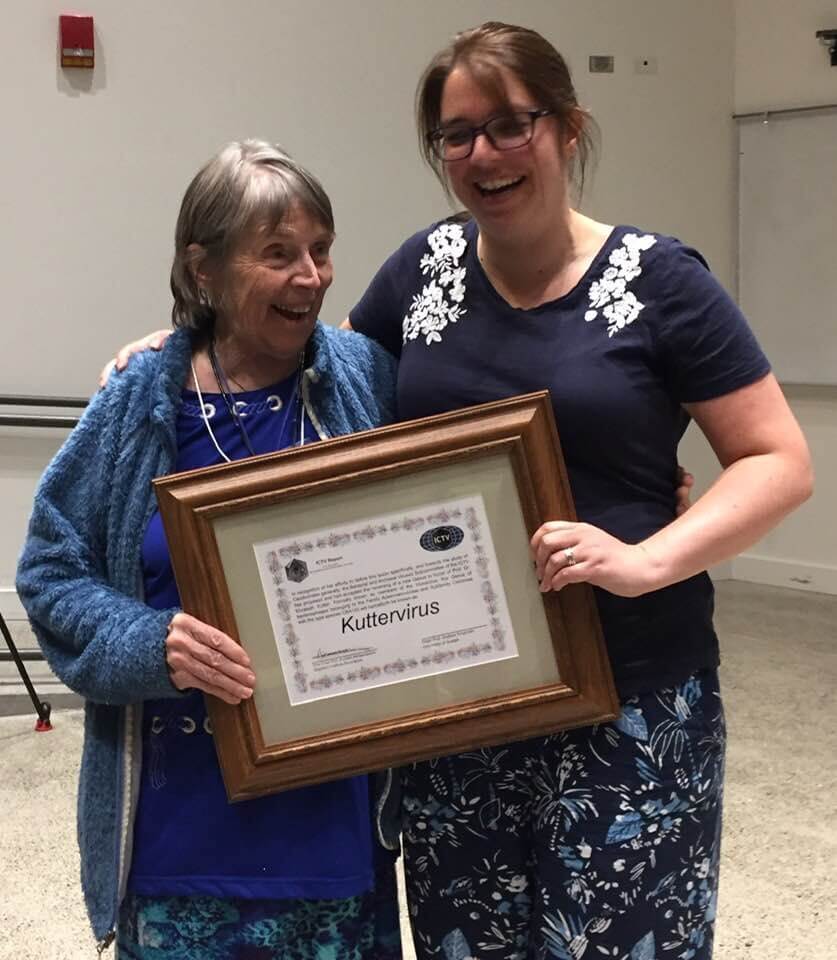
-
Camille d’Humières and colleagues at the Université Paris Diderot and the Institut Pasteur describe a simple, cost-effective way to analyse the gut phageome: from phage isolation to bioinformatics.
-
A new paper published by Zachary Storms and colleagues in the Sauvageau lab at the University of Alberta describes a method for high-throughput quantification of phage virulence that can be applied to phage screening, evaluation of phage strains, phage mutants, infection conditions, susceptibility of host strains, and phage cocktail formulation. This paper was published in the preview edition of the new Mary Ann Liebert journal, "PHAGE".
-
Have you heard about the similarities between the Caudovirales (tailed phages) and the Herpesevirales (a eukaryotic viral order)? Juan Andrade-Martinez and colleagues at the Universidad de los Andes in Colombia compared 2000 Caudovirales genomes and 600 Herpesvirales genomes, and have shown strong evidence for an evolutionary relationship between the two orders.
-
Jeremy Barr, who runs a phage lab at Monash University, was interviewed about his work and career on the Meet the Microbiologist podcast. 45 min.
-
Community Q&A: Extracting phage DNA from low titer lysate?
This week on #phagetwitter: "Anyone have a good protocol for DNA extractions from low titer phage lysates?" — @FazzinoLisa
Check out the thread for many helpful answers and links!
-
Simon Roux and a multidisciplinary team of colleagues have found that inoviruses (filamentous, single stranded DNA phages that replicate without killing their host) are much more prevalent than previously thought, and they even infect archaea! Plus, this study gets into their biology, including how they interact with CRISPR. Paper | Behind the paper.
-
A research group at McMaster University led by Dr. Zeinab Hosseini-Doust has gotten phages to a high enough concentration to create a solid gel matrix. The phages self-assemble, and are still active against their bacterial host in this form. Paper | Press release
-
Benjamin Thuronyi and colleagues from the Broad Institute and Harvard have developed a way to use phage-assisted continuous evolution to evolve better base editors for gene editing.
-
The Danish project TOPSAFE (Targeted Optimized Phage solutions for food Safety), a 4-year collaboration between Danish businesses and researchers, is drawing to a close, and has shown that phages that target fresh food spoilage bacteria are ready to be scaled up for use in the food industry. A follow-up study focusing on reducing Campylobacter in poultry production, CAMPACT, will start soon.
-
Bacteriophage.news is a new platform for phage therapy patients to share their stories.
-
Question about phage genome sequencing
Amna Mian University of Lahore Lahore, Pakistan
I want to sequence my phage genomes. Could someone tell me where to send, and about the cost? Please email me at amnaafmian@gmail.com if you can help.
-
Seeking Acinetobacter and Pseudomonas phages for research
Noel-David Nogbou Sefako Makgatho Health Sciences University Pretoria, South Africa
Hello, I am looking for Acinetobacter baumannii bacteriophages and Pseudomonas aeruginosa phage OMKO1. This is for a research project. If you can help, please contact me at davnogbou2@gmail.com
-
Phage Directory, expanded
Dear phage fans,
You may have noticed some improvements and differences around the site, and we have some exciting news to share! We've heard lots of feedback over the past year, and we've made some additions and improvements based on what we've heard from the phage community. Plus, we've received funding to move forward with this work!
Read more about our expanded mission and how we got here. Please let us know how we're doing and send us questions and suggestions!
— Jan & Jessica
More focus on phage research and development
Expanded access to phage therapy starts with phage research, clinical trials, data collection, publication, and the collective hard work of the entire phage community.
Phage Directory is expanding its platform to support the community of phage researchers and phage developers in a few ways:
Profiles for phage researchers, labs and organizations
Phage Directory is growing beyond tracking labs for phage therapy. We want to help you find collaborators in the phage community, follow what others are working on, and get noticed for your specific expertise.
The directory welcomed people working with phages across roles, and organizations such as startups, phage banks, nonprofits and CROs. The open signup forms from this announcement are retired; profile editing is currently by invitation.
Capsid & Tail is now easier to read and cite
Each article is now easier to read and to cite, and our guest writers can easily get credit for their work. All changes apply to past issues too!
Easily post a job, event, or a message to the Community
Let the phage community know if you have any thoughts or requests, upcoming workshops and conferences, or if you're hiring.
To support our growing phage biotech community, all job posts are now free.
Support from Mozilla!


We’re thrilled to announce that we’ve been awarded a Mozilla Open Science Mini-Grant! We’re extremely grateful to Mozilla and to the Leona M. and Harry B. Helmsley Charitable Trust for getting behind our vision and supporting us as we build the infrastructure to accelerate progress in the phage field through increased openness and collaboration.
With this grant, Phage Directory is funded to begin developing an open source and open access phage tracking and phage data publication platform.
Let's bring phage data and insights online
Our goal is to bring the world’s known phages and associated metadata online, and to make the data open and discoverable. This means ALL phages—not just those useful for therapy.
1. Contribute to an open phage database
Get noticed for what you do, help potential collaborators find you, and help your global peers by listing your lab's phages along with their associated characteristics, papers and patents.
If you’d like to bring your lab’s phage data online, please email us at phages@phage.directory and we’ll be in touch soon.
If you’re concerned about sharing information about your phages, we’d love to hear your perspective too. What kinds of phage data should be public, and what should be private? Is there anything we can do to make you feel more comfortable listing your phages and sharing your insights? Let us know by emailing phages@phage.directory.
2. Get your phage insights published
Publish open access, peer-reviewed phage genome reports and phage characterization reports. We are now open for submissions!
If you're interested in publishing with us, please email us at reports@phage.directory and we’ll send you the author guidelines.
-

Thinking of attending Phage Futures EU in Brussels this September? Tomorrow (Friday, July 26) is your last chance for early bird rates! Register here & use PD10 for 10% off!
-
Before now, no virus has been reported to infect ammonia-oxidizing archaea (AOA) from the phylum Thaumarchaeota (ubiquitous marine archaea). However, a new paper by Jong-Geol Kim (Chungbuk National Univ.) and colleagues describes the isolation and characterization of three Nitrosopumilus spindle-shaped viruses that infect AOA. Curiously, viral replication inhibits AOA growth and reduces ammonia oxidation and nitrite reduction, but does not degrade the host chromosome or decrease cell counts.
-
Wondering about the infective capacity of the phages that make up the gut viromes you're analyzing? Ling Deng (Univ. of Copenhagen) and colleagues have developed an efficient protocol for the extraction of infective viruses from low volume fecal samples. They detect infective viruses from the same samples used for metagenomic sequencing, and they report extracting 48 viromes per working day, with less than 4 h of hands-on time!
-
Alfred Fillol-Salom (Univ. of Glasgow) and colleagues have uncovered how Gram-negative phage-inducible chromosomal islands (PICIs), a universal class of mobile genetic elements that impact bacterial virulence, hijack phage machinery for their own packaging.
-
Community Q&A: Database of phage genomes for mapping / favorite mapping pipeline?
Here’s a great example of the phage community helping each other out on Twitter — thanks to Stephen Stockdale of APC Microbiome (@SteveStockyPhD) and Simon Roux of the Joint Genome Institute (@simroux_virus) for providing answers!
Here’s the question:
Does anyone know of a database of (putative) phage genomes that you can map reads against? Or your favorite pipeline for mapping reads to a set of references/contigs? Bonus points if it's easy to use for people who don't like coding (that's me)! — @ElysianTweets
The answers (so far):
If you are not comfortable downloading viral RefSeq, there is the complete reference viral database (RVDB) — @SteveStockyPhD
Or Andrew Millard's group @milja001 have an easy to download database — @SteveStockyPhD
Or if you would like easy to download crAss-like phage sequences — @SteveStockyPhD
If you have access to a server that will run alignments and process output (using Bowtie2 and Samtools), but are not comfortable with coding, I can send you some commands. — @SteveStockyPhD
And for mapping reads to genomes without the need to code, we have iVirus on @CyVerseOrg, with full protocols courtesy of Ben Bolduc from @Lab_Sullivan. — @simroux_virus
If you get help from someone in the phage community, or you see an example like this, send it to community@phage.directory — we’d love to feature it here!
-
BiomX, a biotech company developing natural and engineered phages to treat microbiome diseases, announced a merger agreement with Chardan Healthcare Acquisition Corp. The combined company is expected to be listed on the New York Stock Exchange under the name BiomX, and will proceed with developing BiomX’s phage products. This is a big deal for phage biotech as a field, as it means more public visibility and more funding, and importantly, it’s a signal that investors are gaining confidence in phage-based technologies.
-
Pherecydes Pharma is joining forces with BIOASTER, a French not-for-profit foundation that brings together academic, industry and its own capacities to execute high-impact, collaborative projects, to explore the use of phage therapy to treat complicated urinary tract infections.
-
Bayer has teamed up with the Israeli life sciences investment company Trendlines to form a new biotech company, Ecophage, which will develop phage-based treatments of crop diseases.
-
Phage surprises all around! Emma Piligrimova and colleagues at the Skryabin Institute of Biochemistry and Physiology of Microorganisms in Russia published a paper on a new Bacillus phage that was previously thought to be a plasmid, and which also appears to represent a new Siphoviridae genus.
-
The Burroughs-Wellcome fund has announced a grant to fund study of the interplay between human and microbial biology. The deadline is November 15, 2019. Perhaps phage researchers studying phage interactions with the microbiome/pathogens/human host could fit their research into this scope?
-
Where did our gut virome originate? A team of 117 authors (from 75 labs & 60 countries), led by Rob Edwards (SDSU) and Bas Dutilh (Utrecht University), has published an impressive new crAssphage study in Nature Microbiology showing how globally widespread crAssphage is among humans, how it’s even found in primates, and how it seems to be benign, as its presence doesn’t correlate with health or disease. There’s much more to this study, so have a read! Or take a look at the extensive media coverage it's gotten so far.
-
Harald Brüssow, guest editor of the recently completed "Hurdles for Phage Therapy to Become a Reality" issue of Viruses, has written an editorial on the work (30 papers) published in the issue. His take-home lessons for optimizing phage therapy clinical trials: (1) Establish the disease-causing role of the pathogen in the target population (don't rely on textbook knowledge). (2) Avoid polymicrobial infections. (3) Make sure the pathogen concentration in the patient is high enough to support phage infection. (4) Make sure available phages cover the genetic diversity of the pathogen. The editorial is filled with many more insights, and is worth a read!
-
How do we inactivate phages after they’ve served their purpose? Here’s a new review by Julia Sommer and colleagues at the University of Veterinary Medicine in Austria, which goes over the effectiveness of different phage inactivation products and strategies.
-
The first Phages for Global Health Phage Workshop in West Africa started this week! This 2-week lab training workshop is hosted at the Kwame Nkrumah University of Science and Technology in Ghana. Participants from 6 countries (Benin, Cote d'Ivoire, Ghana, Nigeria, Senegal and The Gambia) will learn how to isolate phages from local sources and begin to develop them as antibacterial agents.
-
PHAGES in Grenoble will take place on October 8-9, 2019 at the Institute for Structural Biology, on the EPN (European Photon & Neutron Campus) campus in Grenoble. This is the fifth phage symposium organized by PHAGES.fr. Its objective is to bring together the community of French phage research teams, while being open to international teams. It's free to register, but you must register in advance.
-
Amelia McKitterick and colleagues at UC Berkeley and the icddr,b in Bangladesh have published a new preprint on how Vibrio cholerae phage “satellites” (parasites of phages) adapt to their ever-evolving phage targets.—Provide comments on their preprint here!
-
PhagoMed, an Austrian phage therapy company, announced this week that it’s received 1.5 million Euro in additional investment!
-
Listen to Paul Turner of Yale describe his group’s phage research and phage therapy work (they’ve treated 16 patients so far!) on This Week in Evolution (TWiEVO), an ASM podcast. This one was recorded live at last week’s ASM Microbe conference. Fascinating insights! (Phage talk starts around 18 minutes in)
-
Submissions are now open to a new Bacteriophage Collection within the journal Microbial Genomics (a Microbiology Society journal). Here’s their tweet: #Bacteriophages are a key tool in biological research, and this new collection will bring together research focussed on the role of phages in #evolution of bacteria and #ecosystems, and large-scale genomic analyses that can inform new phage therapies. This collection will be guest-edited by Prof. Testuya Hayashi (Kyushu University, Japan).
-
Call for Posters for Phage Futures Europe, Brussels, September 25-26
Looking to showcase your recent work to the phage therapy community? Phage Futures Europe is accepting abstract submissions for poster presentations. Your poster will be displayed in a dedicated poster area. The poster session will take place at the afternoon networking break along with an evening session to present and talk about your poster. Abstract submission deadline is July 17th, 2019, so submit your abstract soon! See you there! (And don’t forget to use code PD10 for 10% off conference registration!)
-
Mian Li Ooi and colleagues at the University of Adelaide and Ampliphi Biosciences published a paper on their use of phage therapy in a phase I clinical trial to treat patients with chronic rhinosinusitis caused by Staphylococcus aureus. They found that intranasal irrigation with phage cocktail AB-SA01 was safe and well tolerated, and they saw promising preliminary efficacy results.
-
Nicolas Dufour of the Institut Pasteur and colleagues have shown that lysis of E. coli by phages in mice (as a treatment for pneumonia) did not increase innate inflammatory responses compared to an antibiotic treatment.
-
The International Livestock Research Institute in Kenya has partnered with the Université Laval in Canada to develop phage products against Salmonella to treat poultry in Kenya. The project is funded by Canada’s International Development Research Centre and the UK’s Global AMR Innovation Fund.
-
The winner of the Microbiology Society’s 2019 Fleming Prize for outstanding research is Prof. Peter Fineran, Associate Professor at the University of Otago, New Zealand. Watch Prof. Fineran’s award talk on phage resistance systems here.
-
Sociovirology is the study of conflict, cooperation and communication of viruses. To get up to speed on this rapidly advancing new field, check out this news feature in Nature by Elie Doglin.
-
Seeking phage research opportunity
Mahsa Yazdi Gorgan, Iran — Golestan University of Medical Sciences
I recently graduated with a Ph.D. in Microbiology from the University of Isfahan, Iran. My thesis was entitled “Isolation and characterization of lytic bacteriophages against some of the most common bacterial causes of urinary tract infections” under the supervision of Prof. Majid Bouzari. During my Ph.D. project, I learned almost all the necessary techniques and methods for phage study and gained useful experience in phages and phage therapy. I currently work as an independent researcher at the Department of Microbiology, Golestan University of Medical Sciences, Gorgan, Iran. I am looking for a postdoc or research scientist position to pursue my interest in phages and related topics. Please email me at mahsayazdi92@gmail.com if you have any openings or would like to discuss further!
-
PhD student seeking a phage lab for a funded 1-month internship
Ibtihadj Souda Constantine, Algeria — University of Constantine 1
I am Ibtihadj Souda, a PhD student at the University of Constantine 1 in Algeria working on isolation and characterization of new bacteriophages from wastewater in the Sahara Desert of Algeria (North Africa). Recently, I have been offered a fully funded scholarship from our university (to cover travel and accommodation), so I have an opportunity to spend a one-month internship at a laboratory to do molecular characterisation of the phages we have isolated. I would like to observe my phages by transmission electron microscopy and perform genome sequencing. The location of the lab can be anywhere, and the timing of the visit can be anytime from June-Dec 2019, but I need to submit an invitation letter by June 30, so I need to find a host lab as soon as possible. Please email me at ibtihege.souda@umc.edu.dz and we can discuss details! Thank you!
-
Phage meetups and talks at ASM Microbe this weekend!
San Francisco, California — American Society for Microbiology
Phage Meetups
- Friday, June 21, 5-6:30 PM: Division M phage meeting and award ceremony (Division M is the bacteriophage division of ASM); there will be food, drink and phage; room 306/307/308 South
- Sunday, June 23, 5:30 PM: Adair Borges and others in the Bondy-Denomy lab are organizing an informal gathering for phage enthusiasts at a brewery near the conference venue (location TBA)! RSVP by commenting on Adair's tweet.
Phage Talks
For more, check out (and add to) this Twitter thread!
- Carski Award Lecture: Dr. Louise Temple (Saturday, 3:30 PM, S206, room 2018 West)
- Dr. Paul Turner (Friday, 8:30 AM)
- Dr. Graham Hatfull on SEA-PHAGES (Saturday, noon, S167)
- Bacteriophage defense in the era of CRISPR (Sunday, 8:00 AM, S287)
Seeking a guest blogger!
If you're attending ASM Microbe, we're looking for a phage researcher to write a guest post for Capsid & Tail about insights/impressions from the conference! Email capsid@phage.directory if you're interested, and we'll send you more info! Looking for a draft to be written by mid-July.
-
Help us build a publication platform for the phage community!
As you may know, we're launching a peer-reviewed publication platform for the phage community. We want to improve the publishing experience for authors and reviewers, and we'd love to hear from you!
Email your answers to reports@phage.directory, or fill out this form: https://forms.gle/U2qEdfiwSa5J47af8 (and please share the link with your colleagues!).
- What annoyed you about the last paper you submitted for publication?
- Where are you publishing your next paper? Why?
- What is one thing you would change about scientific publishing?
- Are you waiting to publish any insights or data? Why?
- Why did you accept your last peer review request?
- Do you think you review more or less than your peers?
-
Vorrapon Chaikeeratisak and colleagues at UC San Diego, the group that discovered that certain Pseudomonas phages replicate their DNA inside a phage-encoded nucleus-like structure, have now published that the capsids of these phages traffic along phage-encoded, "treadmilling" tubulin filaments. The "nucleus" rotates as a result of this treadmilling action, which distributes capsids for efficient DNA packaging. Paper | News article | Youtube video | Apply for a job in this lab!
-
A new paper by Saima Aslam and colleagues at the Center for Innovative Phage Applications and Therapeutics (IPATH) at UC San Diego reports their early clinical experience with phage therapy in lung transplant recipients.
-
Intralytix announced that it will be collaborating with the Eliava Foundation and Ferring Pharmaceuticals to develop new phage-based drugs to improve reproductive medicine and women's health through modulation of the vaginal microbiome.
-
ContraFect has received a $7.2 Million grant from the US Army Medical Research and Development Command to advance their engineered phage lysin candidate CF-296 for Staphylococcus aureus infections.
-
Md. Shamim Ahasan and colleagues at James Cook University in Queensland, Australia have published a study comparing phage therapy to antibiotics in treating gut dysbiosis in endangered green turtles. They found that phages (isolated from sewage on turtle gut strains) reduced the targeted Acinetobacter, but did not otherwise significantly alter the microbiota. Antibiotics also reduced Acinetobacter load, but also led to microbiome disruption. Paper | Press release
-
Seeking T4 and T7 phage
Ednner Emmanuel Victoria Blanco Panama City, Panama — Universidad de Panamá
I am seeking samples of T4 and T7 phage for research. Please email me at Ednner@gmail.com if you can help. Thank you!
-
Dear phage community,
We recognize the importance of supporting fundamental phage research, because effective phage therapy starts from a basic understanding of phages.
We're excited to announce that we're working on publishing affordable, open access, peer-reviewed Phage Characterization Reports and Phage Genome Reports.
We would like your help!
You're the phage experts, and we'd love to get your thoughts and feedback on what currently works well, and what doesn't. If you're interested in joining our small but growing list of very early adopters, and submitting your work with or helping us develop this new avenue, please let us know!
If you're interested in helping or are just as excited as we are, please get in touch through email (reports@phage.directory). The chat-booking link from this announcement is retired.
Jan & Jessica
-
A new paper by Mohammad Tariq and colleagues at the University of Northumbria describes induction of temperate P. aeruginosa phages isolated from patients with cystic fibrosis or bronchiectasis. The more advanced the disease, the broader host range the phages had, and phage infection led to altered antimicrobial susceptibility in P. aeruginosa.
-
BiomX, a phage therapy biotech company, just announced that it's licensed new bacterial targets for commercialization of phage therapies for Primary Sclerosing Cholangitis (PSC; a rare, progressive liver disease). The targets: strains of Klebsiella pneumoniae, discovered by Dr. Takanori Kanai and colleagues at Keio University School of Medicine. The presence of these strains disrupts the gut epithelium and leads to liver inflammatory responses. BiomX has phages that target these strains, and is developing a cocktail to treat PSC.
-
The now-constant flood of phage sequence data is showing that tailed phages are more genetically diverse than previously thought. This has led to a re-classification of tailed phages, which is described in a new paper by Jakub Barylski and colleagues. The Spounavirinae subfamily of the Myoviridae family has now been re-classified as its own family, the Herelleviridae, a new taxon of the same rank.
-
The journal Viruses has announced that it is now accepting nominations and applications for two travel awards. Awards (800 Swiss Francs each) can be applied to a virology conference in 2020, and can be awarded to PhD students or postdocs.
-
Seeking review articles on phage endolysins
Fazal Mehmood Khan Wuhan, China — Wuhan Institute of Virology
I am looking for recommended review articles on phage endolysins. Please send them to fazalmehmoodhu@hotmail.com. Thank you!
-
Seeking references for phage gene loss/genetic drift
Ellie Jameson — University of Warwick
Can anyone help find a reference for gene loss and genetic drift in lab grown phage isolates? I'm sure there must be something published but my search terms aren't hitting the right publications. (Reply or check out the responses to date on Twitter here).
-
Seeking Propionibacterium freudenreichii phages
Paulina Deptula Copenhagen, Denmark — University of Copenhagen
Does anyone have access to phages infecting Propionibacterium freudenreichii? I'm trying to isolate my own, but in the meantime I'd like to start testing defence systems with any phage I can get. Please email me at paulina.deptula@helsinki.fi!
-
Seeking groups who work with Legionella phages
Clark Tibbs Newark, Ohio — PhageVax
Ohio Department of Health director Amy Acton issued an order to the Mount Carmel Grove City hospital on May 31 to take immediate action to contain an outbreak of Legionnaire's disease. If anyone knows of anyone working with Legionella phages, please get in touch with Clark Tibbs at cta@ee.net.
-
Seeking Vibrio natriegens phages
Mya Breitbart St. Petersburg, Florida — University of South Florida
Looking for a lytic #phage capable of infecting Vibrio natrigens (for lab research, not therapy) - can anyone help? Needs to infect well in liquid culture, preferably a myovirus but any dsDNA phage will work. Please message me on Twitter at @virome_girl.
-
A new paper by Alexander Meeske and colleagues at Rockefeller University shows that CRISPR-Cas13, poorly understood compared to other CRISPR-Cas systems, leads to host cell growth inhibition (through degradation of both phage and host RNA) in the presence of phage. This way, the cell can defend against phages without selecting for CRISPR-resistant mutant phages. See also this commentary on the paper by Simon Jackson and Peter Fineran.
-
A new paper by Bryan Hsu and colleagues at Harvard and Brigham and Women's Hospital showed (in the mouse gut) that introducing phages led to predictable shifts in the targeted population, but also had "cascading effects" on non-phage-susceptible bacteria. Also, phage-induced shifts led to changes in the metabolome, including changing neurotransmitter levels, etc.
-
Virome datasets are being generated at unprecedented rates, but new data are rarely cross-compared, which leads to virus novelty being inflated in new datasets and many viral sequences going undetected. A new preprint by Ann Gregory and colleagues at Ohio State University discusses a new human gut virome database they built to aggregate findings into a central database.
-
An interesting reflection by Prof. Marc Bonten of UMC Utrecht on the current impasse in the Netherlands when it comes to the need for phage clinical trials, and on UMCU's recent discussions with national health authorities on the matter.
-
Rick Bright, Director of BARDA, shared his opinion on how the recent bankruptcy of Achaogen (a BARDA-funded biotech that recently brought an antibiotic to market, then saw such poor sales that it closed its doors) proves that the marketing paradigm for new antimicrobials needs to be completely reevaluated. He says BARDA "cannot continue to provide non-dilutive investment, only to have companies collapse and their newly minted antibiotics shelved or lost completely." He's optimistic that new business models and collaboration through public-private partnerships (like CARB-X) could help.
-
Register now for the 2019 Evergreen Phage Bioinformatics Workshop
Betty Kutter & Evergreen Organizers Olympia, WA — Evergreen International Phage Meeting
The 2019 Evergreen Phage Bioinformatics Workshop will consist of three tracks: Genomics with Galaxy & WebApollo; Genomic annotation with PATRIC; and Viromics (metaviromics). Participants are invited to register for one of these tracks on Saturday (4 PM – 9PM, 4h of work, with a break for supper), and/or for one of these as repeated on Sunday (8:30 to- 12:00, 3 ½ h). Each track will consist of an introductory lecture followed by hands-on sessions where participants can work on example datasets.
Observers are also welcome in each of the 3 sessions. (Note: Participants need to work on their own laptops; no computers will be provided.
We will plan on having a van pool for people arriving Saturday morning. For people taking part in the Saturday workshop, there will be an extra $10 fee from Evergreen for using their facilities.
The 3 tracks are:
-
Genomics – Annotation: with PATRIC (Ramy Aziz & PATRIC people): Phage annotation using RAST and PATRIC. This track is suitable for beginners.
-
Genomics - Phage genomics: with Galaxy and WebApollo (Jason Gill): This track will cover the start-to-finish process of whole-phage genomics, including DNA sequencing, assembly, end determination, annotation, and comparative genomics using the user-friendly interfaces Galaxy and WebApollo. This is suitable for both beginner and intermediate users. There will be a limited number of participants for people doing their own genomes, but the 2 hour lecture is open to all, the hand-on portion can handle about 15 people working on their own genomes.
-
Viromics -- (Alejandro Reyes & Evelien Adriaenssens): introduction to sequence pre-processing, clean-up, and assembly using command-line tools; visualization of data. Suitable for users who know how to navigate a command-line environment.
Register here for the Genome Workshops!
And if you haven't yet registered for the Evergreen phage conference itself (Aug 4-9), register here!
-
-
Seeking soil samples for phage isolation
College Station, Texas — Center for Phage Technology
Howdy phage enthusiasts! The Center for Phage Technology is currently seeking out new environmental soil and water samples for phage isolation! Direct message the CPT on Twitter if there's something you'd like to send! We'll cover shipping and can even send you a kit to get started! #phage #science #savingtheworld #CitizenScience
-
This NPR article discusses Locus Biosciences' upcoming E. coli urinary tract infection phage therapy trial and interviews one of the trial volunteers—Alfonso Evans, a US Army veteran who was paralyzed by a spinal cord injury and thus suffers frequent UTIs—and a physician involved in the trial, Dr. Michael Priebe of the Norwood VA Medical Center in Augusta, Georgia, USA. Starting later this year, volunteers will receive a cocktail of Locus' CRISPR-engineered phages to test their safety.
-
Diane Shader Smith is the mother of Mallory Smith, the 25-year-old who passed away in 2017 from an antibiotic resistant lung infection. Diane has given a TEDx talk (14 min) about Mallory's life, legacy and memoir: Salt in My Soul. Diane describes their family's efforts to promote and raise funds (so far $5 million+ for research, plus all Salt in My Soul profits to be donated) for cystic fibrosis and phage therapy, so they can save other lives.
-
-
A new patent on phage compositions and uses was published this month by Paul Turner, Benjamin Chan and John Wertz. Their invention includes phage compositions and methods to increase antibiotic sensitivity in bacteria, a pharmaceutical composition comprising a lytic phage, a method of treating multi-drug resistant bacteria, and a method of disrupting biofilms.
-
This week on #PhageTwitter: a fantastic and informative Twitter thread (with images and videos!) by Patrick R. Secor (@PRSecor) on how filamentous P. aeruginosa phage Pf spontaneously forms liquid crystals in the presence of polymers, which contributes to antibiotic-resistant biofilm formation by its host.
-
IBRC Community Update: New web design, a documentary, and new members welcome!
International Bacteriophage Research Consortium
The IBRC portal is inspired by the global antibiotic resistance situation & the promising potential phages offer as credible antimicrobial therapeutics.
Launched in October 2018, IBRC is a joint effort by Acharya Narendra Dev College (ANDC), University of Delhi, India and Open Health Systems Laboratory (OHSL), USA to build a consortium of scientists working on phages and lysins.
If you're a phage scientist/scholar, a medical or industry professional, or a phage therapy supporter interested in joining the consortium, contact Dr. Urmi Bajpai at urmibajpai@andc.du.ac.in or at ibrc.pt2018@gmail.com, or tweet @phageconsortium.
To help promote AMR awareness, and prior to launching the IBRC, Dr. Bajpai created a short docu-drama film on AMR and phage therapy (10 min), which will be soon dubbed in other languages too. In it, you'll hear from Pranav Johri of Vitalis Phage Therapy and Mzia Kutateladze, the director of Eliava Institute.
-
A 13-month old infant was successfully treated with phage therapy (English article | Dutch article) post-liver transplant at the Saint-Luc University Hospital in Brussels. Phages were obtained from the Queen Astrid Military Hospital—read more about how the Queen Astrid now processes and responds to patient requests for phage therapy for patients like this one in their recent paper by Sarah Djebara and colleagues.
-
The BBC's CrowdScience has done a fantastic podcast interview on phage therapy and phage hunting (31 min), where they travel to Tbilisi, Georgia, visit the Eliava Phage Therapy Center, and go phage-hunting with the scientists there. They even drink some phage! This is a great piece that really takes the listener into the world of phages.
-
The Cystic Fibrosis Foundation, a world-leading non-profit that drives CF research and development, has teamed up with CARB-X, a global partnership investing in antibacterial innovation, in pursuit of a new Infection Research Initiative. They will host a live webinar June 11, 10-11 am ET, to introduce this initiative.
-
A new phage pharmacokinetics paper by Katarzyna Hodyra-Stefaniak and colleagues in Krystyna Dabrowska's group at the Polish Academy of Sciences has demonstrated a "short-circulating phage" phenotype that has implications for engineered phage therapy. Contrary to expectations, T4 phages engineered to display tissue-homing peptides (including lung, prostate, and brain-targeting peptides) were cleared more rapidly from mice (likely via complement) compared to unmodified T4.
-
The Society for Bacteriophage Research and Therapy, SBRT, a new society in Varanasi, India, is accepting new members. Their goal is to work together as a team for the betterment of bacteriophages and their positive global impact. Find them on Twitter @PhageIndia.
-
Seeking temperature-inducible P22 prophage
Glasgow, UK — José R Penadés
Phage community, I need your help! I'm desperate looking for a P22 prophage that is inducible by temperature (P22 ts c2 29). It was published more than 50 years ago. If you know somebody that could have it, please, contact me at JoseR.Penades@glasgow.ac.uk! If not, please pass it on! It is really important! Thanks!
(Check out his twitter thread (@jrpenades) to see responses so far, or to add yours!)
-
How do we translate phage-based applications into clinically- and commercially-viable therapeutics? Join us Sept. 25-26, 2019 in Brussels, Belgium at Kisaco Research's Phage Futures Europe conference! The new agenda is now up, registration is open, and early bird pricing lasts until June 15. Use discount code PD10 for an extra 10% off!
-
Check out two exciting new phage perspectives in mSystems by a couple of key phage scientists: the first, by Jeremy Barr: "Missing a Phage: Unraveling Tripartite Symbioses within the Human Gut", and the second, by Simon Roux: "A Viral Ecogenomics Framework To Uncover the Secrets of Nature’s “Microbe Whisperers”.
-
Sadly, Dr. Michael Rossmann of Purdue University passed away this week at the age of 88. Dr. Rossmann was a renowned virologist, whose work on structural biology of viruses will not be forgotten. He was key in the discoveries of the structure of the common cold virus, the structure of Zika virus, and his work has led to the visualization of T4 phage in impeccable detail.
-
The upcoming PHAGE journal, by Mary Ann Liebert, Inc. (Editor-in-chief: Martha Clokie), will be launching its inaugural issue in March 2020! The journal covers all aspects of phage biology and is open now for submissions.
-
The Eliava Institute is hosting its second Bacteriophage Research and Methodology summer school training course from July 22-Aug 2, 2019, in Tbilisi, Georgia. The course is for master's students, PhD students and young scientists, and covers genome annotation and basic phage methodology. Register by June 30!
-
Seeking phage typing collections
Michael Koeris
I’m looking for phage typing collections of Enterobacteriaciae (eg. E. coli, Klebsiella, Salmonella) to pursue capsular variant-phage type correlation studies. Please email me at mike@aresinnovation.com or tweet @mkoeris to get in touch!
-
CARB-X has announced its 2019 calls for proposals. Funding Round 1 covers non-traditional alternatives to antibiotics, including phage! Learn how to apply by tuning in May 16 for a webinar. Expressions of interest can be submitted June 3 – June 10, 2019. (Thanks to Wellcome Trust's Chief Medical Officer John Rex's newsletter for this info!)
-
You may recall reading about the discovery of arbitrium, a peptide produced by Bacillus phages to regulate lysogeny decisions. A new paper by Avigail Stokar-Avihail and colleagues in the Sorek lab at the Weizmann Institute has shown that arbitrium-like systems are widespread in phages! What's more, they're frequently located on mobile pathogenicity elements, and seem to be controlled by anti-sense RNA.
-
Ho Bin Jang, Benjamin Bolduc and colleagues from the Sullivan lab at Ohio State University, along with several collaborators from the US, UK, Canada, France, and Belgium, have published a paper this week in Nature Biotechnology describing a new tool, vConTACT v.2.0, that can provide reliable taxonomic assignments for uncultivated viral genomes. Paper | Bitbucket.
-
The business combination transaction between AmpliPhi and C3J, two phage therapy biotech companies, is expected to close today. The new name of the combined company will be Armata Pharmaceuticals, Inc., and shares will be expected to start trading on the New York Stock Exchange under the symbol “ARMP” tomorrow.
-
The 26th Biennial Conference on Phage/Virus Assembly is happening July 14-19, 2019 at Cragun's Resort in Brainerd, Minnesota. Registration is open until May 30.
-
A new preprint by Dr. Aleksandra Petrovic Fabijan and colleagues at the Westmead Institute for Medical Research in Sydney, Australia and AmpliPhi Biosciences provides much-awaited data from their IV phage therapy treatment of 13 patients with severe Staphylococcus aureus infections. They saw no adverse effects, bacterial burden and inflammation was reduced, and no phage-resistant S. aureus were isolated. Please comment on / discuss their preprint here!
-
Phage genomes can be hard to annotate, especially with tools that aren't designed with phages in mind. Fortunately, Katelyn McNair and colleagues in Rob Edwards' lab have published a paper describing their new phage gene caller, PHANOTATE. They annotated >2000 phage genomes alongside the three other most popular gene callers, and found that all four agreed on 82% predicted genes, but PHANOTATE predicted more genes than the other three. Paper | Github
-
Here's our favourite #phagetwitter conversation from the week: John Beaulaurier of Oxford Nanopore describes a new preprint on using single-molecule nanopore sequencing to avoid assembling phage genomes. Without assembling, they got >1400 whole, polished phage genomes out of seawater samples using one MinION flow cell.
-
A new phage product is now on the market! OmniLytics, Inc. and Certis USA have released AgriPhage™, which fights fire blight (Erwinia amylovora) in apple and pear crops. This is the first phage product approved for use against fire blight.
-
Micreos, a Dutch phage biotech company, secured 30 million Euro last month for its phage lysin technology. The company plans to use the funds for lysin development, and to launch its over-the-counter Gladskin product (anti-Staph aureus lysin product for treating eczema, acne and rosacea) in the US.
-
Safety and tolerability of phage therapy in severe S. aureus infection
An observational, open-label study assessed adjunctive intravenous AB-SA01 phage therapy in 13 critically ill patients with severe Staphylococcus aureus bacteraemia, including six with endocarditis, alongside standard medical and surgical care.
-
Andrei Bolocan and colleagues from APC Microbiome, the University College Cork and the Teagasc Food Research Centre in Ireland have published a new review evaluating the prospects of E. faecalis phage therapy. They've categorized phages with respect to suitability for therapy by looking at in vitro and in vivo potency, characterizing their genomes (including checks for antibiotic resistance genes) and looking at endolysin architecture.
-
-
The same group that brought us the fascinating study on filamentous phage Pf's influence on P. aeruginosa virulence has published another study on the same phage. This time, they describe Pf prevalence (high) and implications (increased antibiotic resistance, reduced lung function) in CF lungs.
-
CBS 60 Minutes covered superbugs this week. Buying colistin off the shelf, anyone?
-
A new paper (published today!) by Ann Gregory and colleagues shows identification of almost 200,000 new viral populations in the ocean (this work comes in part from the Tara Oceans expedition). The work identifies interesting new biodiversity hotspots in the ocean (including in the Arctic!) and virome diversity patterns that don't always follow diversity patterns of larger organisms.
-
Seeking collaborator for phage and host sequencing
Irshad Ul Haq, PhD, Assistant Professor, Khyber Pakhtunkhwa, Pakistan — University of Haripur
We are seeking help/collaboration on phage and host sequencing. We don't have any resources to do the sequencing of these, and therefore would like to connect with someone who would want to collaborate. Please email me at irshadulhaq85@gmail.com.
-
TU Delft has just opened a new phage library (Fagenbank) for phage therapy. If you have phages you'd like to see used in medical treatments, reach out to Fagenbank by email at fagenbank@tudelft.nl. This library is an initiative by Dr. Stan Brouns, and Fagenbank is already in collaboration with UMC Utrecht, which has applied for a phage clinical trial for CF patients. Read more here!
-
-
We've been interviewed on the What Matters with Steven Brantley podcast! We talk antibiotic resistance, phage therapy, and Phage Directory. Listen here (64 min).
-
Sooyeon Song and colleagues have published a new paper showing that E. coli employs both active (lytic and temperate) and inactive phages (a cryptic prophage) to discriminate between nearby strains and control cell-cell contact according to whether a nearby strain is kin or non-kin. Journal article | News article
-
A Canadian cystic fibrosis patient is looking to become the first in Canada to receive phage therapy. He currently seeks phages for his Burkholderia cepacia infection, and his doctors will have to convince Health Canada to give this a try. Read the story here.
-
Seeking Pseudomonas phages for a canine ear infection
Miami Beach, Florida — Phage Directory
We are seeking Pseudomonas aeruginosa phages to treat a dog's antibiotic-resistant ear infection. Please get in touch with us by email at staff@phage.directory if you are willing to test your phages on the dog's strain, or to send phages on behalf of this dog.
-
Welcome, new volunteers!
Phage Directory
We have our first Phage Directory volunteer! Cathy Nguyen will be helping with Capsid & Tail's What's New and Jobs section. We also welcome our first guest writer this week, Lucy Furfaro!
If you'd like to help (or be kept up to date on other volunteer opportunities), email volunteer@phage.directory. If you'd like to contribute a guest article, email capsid@phage.directory for details.
-
Thank you to participants of the 2019 Latin America Phage Workshop
Ednner Emmanuel Victoria Blanco
Thank you to all the students from Latin America for participating in this 2019 phage course, and special thanks to Martin Loessner and Alejandro Reyes for the amazing lectures and workshop. Hope to see you all soon!
-
Johanna Sweere and colleagues just published a very exciting paper today in Science! A temperate filamentous phage of Pseudomonas aeruginosa dampens the immune response against P. aeruginosa, which leads to increased P. aeruginosa virulence. (More phage = increased wound severity!) The authors also show that vaccination against this phage works to protect mice against P. aeruginosa. STAT News article | Paper
-
Announcing a new series of hands-on phage (meta)genomics workshops at this year's Evergreen International Phage Meeting! Workshops will take place Sat, Aug 3, 4-6 pm and 7-9 pm, and Sun, Aug 4, 9-11 am. An open phage genomics and metagenomics discussion will follow (Sun Aug 4, 11:15 am - 1:30 pm). Workshops will be taught by a group of leaders in the field, including Ramy Aziz, Evelien Adrianssens, Alejandro Reyes and Jason Gill.
Workshops are free with conference registration; extra charge only for Saturday night dorm accomodation if needed. If interested, email tescphage@gmail.com and specify whether interested in metagenomics issues and/or phage annotation challenges. Spots are limited. It is possible to sign up for Sunday only. More details to come!
-
This just in! Videos of many of the 2017 Evergreen International Phage Meeting's talks are now online. Register for the 2019 meeting here.
-
The Bacteriophage Biology and Therapeutics Special Interest Group is part of the Australian Society for Microbiology. Their goal is to promote collaborative phage work in and outside Australia, so especially if you do phage work in the area, check them out! They also publish a quarterly blog!
-
This week, several exciting new papers on the evolution of CRISPR-Cas systems were published. One, by Amelia McKitterick and colleagues from the Seed lab at UC Berkeley, shows how a phage-encoded CRISPR-Cas system interferes with an anti-phage island.
-
Dr. Krystyna Dabrowska of the Institute of Immunology and Experimental Therapy at the Polish Academy of Sciences has just published a systematic and critical review of the phage pharmacokinetics and bioavailability literature (spanning 1924-2016, including non-English reports).
-
If you want to better understand US laws affecting the development of prescription drugs, and the roles and responsibilities of the FDA, edX (HarvardX) is running an online course called The FDA and Prescription Drugs: Current Controversies in Context. It's free to audit the class, which started this week.
-
The 4th International Hands-on Phage Biotechnology Course takes place June 17-21, 2019 in Braga, Portugal. Learn theory and techniques for studying phage-host interaction and performing phage genetic manipulation. Registration is now open! Prices go up April 1.
-
This summer, a new phage journal, PHAGE: Therapy, Applications, and Research, will be launched by the publisher Mary Ann Liebert, Inc., and the editor in chief will be Dr. Martha Clokie!
-
More phage defense systems?? (And a great article title!) Check out this new paper on Gordonia phages by Matthew T. Montgomery and colleagues in the Hatfull lab.
-
Cherry canker is a devastating tree disease that could one day be treated by phages. Learn about the work George Sundin's lab at Michigan State University is doing to make this a reality!
-
If you want to better understand the funds available for AMR drug development, here's a slideshow from a talk given this week by John Rex of the Wellcome Trust. It explains what's available, the different funding models that exist, provides lots of links, discusses pitfalls, and lists a lot of upcoming meetings where you can learn more.
-
Seeking collaborators and guidance for phage research
Raniero Lorenzetti Rome, Italy — IZSLT
Our group is looking to begin isolating and characterizing phages, first against fish pathogens, mainly at the molecular level. In the future, we will seek to exploit phages to control many animal pathogens. We are seeking help and support from phage experts during the learning curve process. I would also be very grateful if a phage lab could host me as a visiting scientist for a few days, to help me get acquainted with the process of phage manipulation. Please contact me at raniero.lorenzetti@izslt.it to talk about this further.
-
Seeking environmental samples for phage hunts!
Steffanie Strathdee San Diego, CA — IPATH
Want to help #phagetherapy patients? Our collaboration between @IPATH & @TAMU_CPT needs environmental samples for #phagehunts! You can help by sending soil samples to @TAMU_CPT. Message Steffanie Strathdee (@chngin_the_wrld) on Twitter for details and may the #phage be with you! #AMR #superbugs #AntibioticResistance
-
We're less than two weeks away from another exciting translational phage conference! The Bacteriophage Therapy Summit will take place in Boston, Massachusetts March 25-27, 2019.
The meeting will focus on the discovery, translation and acceleration of phage research into targeted therapeutics. Register here and use code 12259PHD for 10% off.

-
The 2019 Evergreen Bacteriophage Meeting, taking place Aug 4-9, 2019 in Olympia, Washington, is now open for registration! If you work with phages, this iconic biennial (once per 2 years) meeting is not to be missed!
*COMING SOON: We're helping Evergreen coordinate financial assistance for this conference. Interested? Email us at evergreen@phage.directory!
-
Want to learn to analyze your (phage) genomes? The PATRIC/RAST teams will be offering a tutorial at Argonne National Laboratory in the suburbs of Chicago, IL from Apr 16-18, 2019. Email Lisa Hundley to sign up (hurry, workshop is free BUT limited to 40 participants).
-
Check out this exciting new preprint from the Banfield lab and colleagues. They sequenced DNA from diverse ecosystems and found HUNDREDS of huge phage genomes (up to 716 kbp). The phages they found encode lots of new things phages don't typically have, such as new CRISPR-Cas systems, translation factors and ribosomal proteins!
-
Listen to Dr. Minmin Yen, co-founder & CEO of the new biotech startup PhagePro, discuss her company's goals of preventing cholera with phages on the podcast "Important, Not Important". An especially great listen for grad students & postdocs wondering about the transition from the bench to founding a biotech company! (61 min)
-
Article commenting was introduced with this issue in 2019. The old comment form is now retired; read the archive notice.
-
Seeking postdoctoral opportunity in medical microbiology / phage therapy
Prasanth Manohar — Vellore Institute of Technology
I have completed my Ph.D. at Vellore Institute of Technology, Vellore, India. My research project deals with the characterization of bacteriophages infecting E. coli, K. pneumoniae and Enterobacter species. I have expertise in working with carbapenem-resistant clinical bacteria and studying the antibacterial activity of phages in vivo. In the future, I am looking forward to do my post-doctoral research in the field of Medical Microbiology, especially phage therapy. Please email me at prasanth.emsa1@gmail.com if you know of opportunities!
-
Salt in My Soul: An Unfinished Life is the memoir of Mallory Smith, whose story inspired us to create Phage Directory. It comes out next week (Mar 12). Mallory was set to receive phage therapy in November 2017 after a Burkholderia cepacia infection took over her lungs, but she passed away too quickly. However, she kept journals from age 15 to 25, when she died, which she intended to be published as a memoir. Preorder here and read this touching LA Times article about the book while you wait.
-
If you know anyone who hasn't heard Tom and Steffanie's story yet, here's an in-depth podcast interview with them on the Super Awesome Science Show that you can share. It also goes into phage use in the livestock industry in an interview with Dr. Lawrence Goodridge. (36 minutes)
-
Texas A&M University is a major hub of phage research, and the Center for Phage Technology there is the only state-funded phage research center in the US. Learn about the center and their involvement in Tom Patterson's phage therapy case here.
-
As a specialist in infectious diseases, I have been interested in phage therapy as long as I can remember, but only recently have I felt comfortable saying this out loud. - Dr. David Pride, UCSD. Read more about his perspective in this article he wrote for The Conversation.
-
Marco Cafora and colleagues have developed a zebrafish model of cystic fibrosis and used it to show that phage therapy can treat Pseudomonas aeruginosa (and modulate immune response in the fish). This is the first time that phage therapy has been successfully applied to an in vivo CF model system. Here's the paper.
-
-
The World Health Organization wants to better understand the current pre-clinical antibacterial R&D landscape! Companies, institutions and individuals doing pre-clinical work targeting any of the WHO Priority Pathogens, TB and/or C. difficile, submit your data here by March 18, 2019!
-
A new NIH funding announcement involving phages: exploratory/developmental research into microbial-based cancer therapy ("Bugs as Drugs"). Excerpt: "Utilizing bacteria, archaebacteria, bacteriophages and other non-virus microorganisms, this initiative will support research projects designed to study the underlying mechanisms of the complex interactions between microorganisms, tumor, and immune system." Open date: May 5, 2019.
-
The University of Pittsburgh has established the Roger W. Hendrix Fund to honor a giant in the phage field who was lost too soon. Please consider contributing to this endowed fund to support and encourage future generations of scientists and advance science. Contact Tom Golightly at twg3@pitt.edu if you have questions.
-
Dr. Ellie Jameson's lab at Warwick University is now offering reproducible, standardized tests to investigate phages as targeted bactericidal agents. Also available: optimized phage methods to investigate interactions with other antimicrobials and phage, dose, toxicity gene screening, host-range, robustness and virulence.
-
Dr. Benjamin Chan of Yale University continues his treatment of patients in need with phages. Most recently, his phages were administered to a 26-year-old woman named Ella Balasa from Richmond, Virginia, who traveled to Yale for treatment. Article: The State; Video: Associated Press.
-
The Perfect Predator came out this week! Expect a lot of new mainstream press for phages over the coming weeks/months! This week has already brought coverage from Wired and People, and tomorrow morning at 9 AM, Steffanie Strathdee and Tom Patterson will be on The Today Show! Get your copy of the book here!.
-
Check out our new paper on sourcing phages for compassionate use, which was published in the journal Microbiology Australia last week!
-
Seeking feedback on a new phage susceptibility testing platform
Michael Van Delle — Adventus Research + Consulting
University of Toronto researchers have developed a novel phage susceptibility testing platform. To understand the need for such a solution, Adventus Research + Consulting is reaching out to phage community experts, stakeholders and researchers for feedback. Honoraria are offered in exchange for your feedback (either via phone or survey). Email Michael Van Belle at mvb@adventusresearch.com to participate!
-
Check out this extremely informative Twitter thread by Simon Roux, which breaks down his new preprint on the pervasiveness of Inoviruses. Detect Inoviruses in your own sequence data with this tool (Github). We want to encourage more scientists to break down their studies like this, so if you find examples, let us know and we'll highlight them!
-
-
A new virome twin study! J. Leonardo Moreno-Gallego and colleagues show that virome and microbiome diversity correlate, and in contrast to a prior study, adult twins DO have more similar viromes than unrelated individuals. They suggest that microbiome diversity in study subjects should be balanced before viromes are assessed.
-
Rob Lavigne at KU Leuven is seeking comments on his new preprint on patents related to phage use in agriculture. Comment under the paper on BioRxiv, or tweet @RobLavigne1!
-
This commentary by Jens H. Kuhn and colleagues may convince you to care more about the need for cataloguing viral genomes.
-
Great news for BiomX, a company developing custom phage therapies to treat microbiome-based diseases, which just raised $32 million in series B financing!
-
Cell Host & Microbe just released a special issue devoted to phages!. This includes four free featured reviews, one of which is this article by Kaitlyn Kortright, Benjamin Chan, Jonathan Koff and Paul Turner of Yale University, where they describe the use of phages to select against virulence and antibiotic resistance. Excitingly, they also take us through five clinical case studies and the three most advanced phage clinical trials done to date.
-
Fernando L. Gordillo Altamirano and Jeremy Barr from Monash University in Melbourne, Australia have published a new review: Phage Therapy in the Post-Antibiotic Era. Their paper includes a nice timeline of phage therapy history and a beautiful figure depicting modern approaches to phage therapy (including immuno-phage-antibiotic synergy, engineered phages, and lysins in addition to conventional phage therapy).
-
Stephen Wandro and colleagues at the University of California, Irvine have published a new paper on Enterococcus faecium phage evolution. His experiments, which he presented at Kisaco Research's North American Microbiome Congress last week, allowed him to clearly track phage and host resistance coevolution, and would be useful for others to do on their phages!
-
Intralytix's phage clinical trial (treating E. coli in IBD patients) at Mt. Sinai hospital has begun! Here's a video interview with two Mt. Sinai doctors involved in the trial
-
Phages for Global Health has announced a call for applications for its first West Africa Phage Workshop, which will take place July 7 - 20, 2019, at Kwame Nkrumah University of Science and Technology in Ghana. Apply now!
-
Review: Phage Therapy, a renewed approach to combat antibiotic-resistant bacteria (Cell Host & Microbe)
Review in Cell Host & Microbe by Kortright, Chan, Koff and Turner (Yale) on the history of phage therapy and why it is regaining interest as multidrug-resistant infections rise. It compares phage therapy with chemical antibiotics and their potential synergies, examines animal models, case studies and clinical trial results, and discusses how to evaluate phage therapy against antibiotic-resistant bacteria.
-
Seeking tips on how to isolate P. larvae phages
Heather Hendrickson Auckland, New Zealand — Massey University
Phage Friends! We need help! We have processed over 300 soil samples looking for phages on Paenibacillus larvae... (the bee pathogen) here in NZ. Have you ever looked SO HARD for a phage and not found one? Suggestions? Ideas? Sympathy? PLEASE? (Bonus: check out all the tips the phage community has already shared via Twitter!)
-
The 4th annual OSU Viromics Workshop is May 8-10, 2019. The workshop kicks off with a mini-symposium, then introduces students and postdocs (and possibly early career faculty) to the informatics tools available to develop biological understanding of viruses from metagenomic datasets. Apply now!
-
Guy Schleyer and colleagues published a new paper on "in-plaque" mass spec imaging to visualize what happens during (algal) viral infection. Here's the original paper and a blog post on the work.
-
Robert Edwards and (many!) colleagues have published an exciting new preprint on the phylogeography and evolution of crAssphage around the world.
-
Anushila Chatterjee and colleagues published a new preprint showing that phage resistance in enterococci leads to reduced antibiotic resistance and reduced mouse gut colonization.
-
A perspective on phage therapy as an anti-superbug option in India.
-
The UK government is making some new plans to tackle antibiotic resistance, including new incentives for pharma.
-
Ampliphi Biosciences just published new pre-clinical data on its anti-Staphylococcus aureus phage cocktail.
-
At Phage Futures 2019, Kisaco offered attendees access to speakers' slides through an exit survey. We also ran a three-question survey about the kinds of events readers wanted to attend. Our 2019 survey is now closed; current site feedback goes to a separate form.
-
NIAID just issued a request for comments and suggestions on its Antibacterial Resistance Research Framework. Details: NIAID laid out 7 approaches for tackling AMR in 2014 (including exploring phage therapy!), and they're updating these approaches this year. You can submit comments & suggestions here. Deadline: Mar. 8, 2019.
-
Voting in the ISVM (International Society for Viruses of Microorganisms) elections is open NOW through Feb 3! Check out the candidate bios here and vote here.
-
Update: Citrobacter phages for sea turtle
Phage Directory
We are still seeking Citrobacter phages to treat a sea turtle's antibiotic-resistant shell infection. If you can help, please email staff@phage.directory!
Progress so far: Good news! At least one phage active against the turtle's Citrobacter strain has been found, and the FDA has given its approval to proceed with getting phages ready for this case.
-
Seeking collaborators and guidance for new phage therapy center
Gunaraj Dhungana Kathmandu, Nepal — Tribhuvan University
My name is Gunaraj Dhungana, I'm a Ph.D scholar from the central Department of Biotechnology, Tribhuvan University, Nepal. We have been working on the characterization and preparation of a phage bank to establish a phage therapy centre in Nepal. We are seeking collaborations and guidance to establish the centre. Please email me at grdhungana79@gmail.com if you are willing to offer advice or would like to talk about collaborating.
-
Phage Futures 2019 is next week! Even if you're not able to make it, we'll be posting tweets (#PhageFutures2019) and keeping you up to date on which speaker is speaking, what people's reactions are, and who's up next. Check out our Phage Futures page to follow along next week!
-
Mt. Sinai Hospital in NYC is now recruiting patients for a randomized, controlled, double-blind, Phase 1/2a phage therapy trial. The goal: test the safety and efficacy of Intralytix's EcoActive phage collection on intestinal AIEC (adherent invasive E. coli) in Crohn's Disease patients.
-
Dr. Saima Aslam and colleagues at IPATH / UCSD School of Medicine and Ampliphi Biosciences report on their use of IV phage therapy to treat biofilms associated with left ventricular assist devices (LVADs). This is now a protocol guiding clinical trials at IPATH.
-
Phage scientists! It's time for the International Society for Viruses of Microorganisms (ISVM) elections. If you're a member, you can run for: President-elect, Vice-President, Secretary, Secretary Assistant, Treasurer, or Private Partnership. Send 5-6 sentences on your interests/qualifications to membership@isvm.org by TOMORROW (Jan 25).
-
Bacteria sometimes acquire "incorrect" CRISPR spacers in response to phage infection. Until now, no one knew whether these incorrect ("slipped") spacers had a purpose. Simon A. Jackson, Peter Fineran and co. have just shown that slipped spacers can actually be beneficial to bacteria. Here's the full paper and a ScienceDaily article about it.
-
Could phages help explain the mysteriously healing qualities of India's Ganges river? If you're looking to learn about some interesting phage-related history (and mystery), you may like this excerpt of the new book "Ganges: The Many Pasts Of A River" by Sudipta Sen.
-
Our opinion piece, A Bright Outlook for Bacteriophage Applications, is featured in the Microbiome Times January 2019 edition (page 34).
-
Bioharmony Therapeutics and Boehringer Ingelheim just announced a collaboration to develop Acinetobacter baumannii lysin therapeutics.
-
-
Phages for Global Health reached their 2018 fundraising goal, meaning they can deliver TWO phage workshops in 2019! Congratulations! And thanks to everyone who supports this one-of-a-kind phage nonprofit! Donate or sign up for their newsletter here—the more they raise, the more people they can train to be phage scientists.
-
Jee-Hwan Oh and colleagues published a paper on how certain dietary sugars promote Lactobacillus phage production in the mouse gut.
-
PharmExec.com has named phage therapy as one of the top 10 drug discovery trends to watch in 2019!
-
Want to win one of 50 free copies of The Perfect Predator, the true story of how a global village saved the life of Tom Patterson with IV phage therapy? Sign up for the book giveaway on Goodreads.com by Jan 23. Note: you need to view it from a laptop, not a phone.
-
IPATH has just received FDA approval to start its first clinical trial! This will be the first US trial involving intravenous (IV) phage treatment, and will be a collaboration with Ampliphi Biosciences.
-
Adaptive Phage Therapeutics has partnered with Yale University to manufacture and supply phages for use in Yale's upcoming clinical trials.
-
Johnson & Johnson has invested $20 million (with another ~$800 million to follow if things go well) into Locus Biosciences, a biotech company equipping phages with CRISPR-Cas3 to obliterate bacterial DNA upon phage infection.
-
A phase II clinical trial for a phage lysin has been deemed successful! An anti-Staphylococcus aureus phage lysin, called exebacase, was just found to be both safe and effective at treating MRSA in patients. Exebacase is being developed by ContraFect using technology licensed from Rockefeller University.
-
The phage therapy biotech company Ampliphi Biosciences is merging with C3J Therapeutics, a synthetic phage/antimicrobial engineering company.
-
Due to the partial U.S. government shutdown, ASM is extending the deadline for ASM Microbe abstract submissions to January 25, 2019.
-
Thanks to support from Roche Molecular Diagnostics and Intralytix, ASM Division M will provide 4 travel awards to students presenting phage work at ASM Microbe 2019! To apply, use "phage" as a keyword in your submitted abstract. Before you do, go to http://myasm.asm.org to become a Division M (Bacteriophage) member, as preference for awards is given to students who are members (and whose mentors are too).
-
Phage Futures Congress (January 29-30, 2019) is fast-approaching! Speakers include representatives of the FDA (Scott Stibitz, Cara Fiore), biotech (Xavier Duportet, Carl Merril), academia (Martha Clokie, Betty Kutter, Steffanie Strathdee) and the non-profit sector (Tobi Nagel). If you haven't registered yet, it's not too late! - use code PHDI10 for 10% off.
-
Mark your calendars for another exciting translational phage conference! The Bacteriophage Therapy Summit will take place in Boston, Massachusetts March 26-27, 2019. The meeting will focus on the discovery, translation and acceleration of phage research into targeted therapeutics. Register here and use code 12259PHD for 10% off.
-
The American Society for Microbiology will host ASM Microbe 2019 in San Francisco June 20-24, and the abstract submission deadline is Jan. 15, 2019—submit yours here!
-
Did you know ASM has a phage group called Division M?. Members are invited to attend Division M's Business Meeting on June 21 at 5 PM (at ASM Microbe 2019) for food, drinks and (phage) conversation!
-
Not one but TWO interesting new phage methods papers have just been published by KU Leuven researchers. The first, by Hanne Hendrix et al. details how to screen for growth-inhibitory proteins made by phages. The second, by Jeroen De Smet et al. shows how to identify phage-host protein interactions.
-
Justin Silpe and Bonnie Bassler discovered that a Vibrio cholerae phage senses its host’s quorum sensing molecules and lyses only when enough hosts are present in the surrounding area. By engineering this system, they got phages to lyse in response to user-defined cues, which has intriguing implications for phage therapy. Read also Ed Yong’s story on this exciting work in The Atlantic.
-
A large group of leaders in the phage community and beyond has published a set of minimum standards that should be reported alongside any new, uncultivated viral sequence. If more of the community adopts these standards, it will be easier for everyone to do comparative studies, meaning we'll learn a lot more about the global virosphere.
-
Congratulations to Jesca Nakavuma and her team of phage researchers in Uganda for winning an $800,000 grant from the African Union. The grant will support their development of phage products combating antibiotic resistant bacteria in fish. In 2017, Dr. Nakavuma's group participated in the first East Africa Workshop put on by the nonprofit organization Phages for Global Health.
-
Christian Møller-Olsen et al. just published an article in Scientific Reports showing that an E. coli phage can kill its host intracellularly, and that it kills more efficiently when human bladder epithelial cells are present. This corroborates findings published earlier this year in the same journal by Jinyu Shan et al., who found that a C. difficile phage kills its host more efficiently when human colon cells are present.
-
The dairy industry has historically seen phages as a threat to productions, but Samuel D. Alcaine, a Cornell professor researching dairy fermentations, makes the point here that phages could also be beneficial to the industry.
-
Lytic phages are usually thought to be best for therapy, but this recent review by Rodrigo Monteiro et al. makes a case for giving temperate phages a second look.
-
Sarah Kronheim et al. published a paper in Nature this week on a new mechanism of chemical phage defense in Streptomyces. Here's a News and Views piece by Martha Clokie and an Ars Technica piece on the work.
-
A recent re-estimation of annual deaths caused by multidrug-resistant organisms (MDRO) has come up with a number almost 7 times higher than the CDC estimate made in 2010. This suggests a need for better surveillance and reporting systems for MDRO infections.
-
Karin Moelling et al. published a paper this week in Viruses calling for urgent changes in regulation to allow phage therapy to proceed for patients in need. The authors are also championing a petition for the cause — learn more at http://phage-initiative.org
-
Tobi Nagel, founder and president of the nonprofit Phages for Global Health, was selected as a 2018 Moonshot Fellow by the Kravis Leadership Institute. The award recognizes leaders of innovative initiatives that positively impact the lives of people worldwide. Fantastic work, Tobi!!
-
PhagoMed, a Vienna-based phage therapy company, was just awarded a Phoenix Award. The award honours young and successful companies that serve as role models for high-class research and entrepreneurship in Austria. Congratulations!
-
The European Research Council just released the results of its Consolidator Grants 2018 competition, and two prominent phage research labs have been funded! Many congratulations to the labs of Rob Lavigne of KU Leuven, who will tap into phages as synthetic biology tools, and Anat Herskovits of Tel Aviv University, who will study phage-pathogen cooperation during mammalian infection.
-
A new paper by Gerlach et al. shows that a phage gene can help MRSA evade immune defenses. See also this commentary on the paper.
-
Another mini phage therapy documentary is out! This one was made by Freethink, is 12 min long, and documents the amazing story of "Paige's Phages" – Pseudomonas phages from Ben Chan's lab at Yale helped a young woman regain her deteriorating lung function.
-
Kathryn Kauffman and Martin Polz of MIT have developed new ways of streamlining phage propagation and titration methods to save us all time and materials. You can also find the protocols here on Protocols.io!
-
A group of students from the Technical University of Munich won second prize in the 2018 International Genetically Engineered Machine (iGEM) Competition for their work creating a cell-free phage propagation system called Phactory. Amazing work!
-
We are actively seeking Klebsiella phages for a patient. If you have Klebsiella phages, please get in touch with us ASAP. Please spread the word!
-
Buzzfeed made an excellent mini documentary on phage therapy (~15 min), and it’s on Netflix! It’s part of a series called “Follow This” and it features both Ben Chan and Steffanie Strathdee.
-
Another US patient has been successfully treated with phages. This is thanks to Ben Chan at Yale, who found, prepared and provided the phages for a 23-year-old woman with Cystic Fibrosis.
-
Martha Clokie has an exciting, fully-funded PhD opportunity to work on soil phages in collaboration with APS Biocontrol Ltd. Apply by Jan. 6, 2019.
-
If you’d like to support a woman’s phage therapy treatment at the Eliava Phage Therapy Center in Tbilisi, Georgia, you can donate here.
-
It's World Antibiotic Awareness Week! This is a WHO campaign to educate the public about antimicrobial resistance. The Wellcome Trust is bringing together 300 scientists, politicians, civil society and industry leaders and academics to talk resistance prevention on Nov. 19-20. Follow live tweets by @Wellcome_AMR and use the hashtag #CalltoAction18 to contribute!
-
33,000: the number of deaths in Europe caused by antibiotic-resistant infections in 2015. Surprisingly, this new study found that 1/3 of these deaths were in Italy.
-
How much should we worry about phage-induced spreading of antibiotic resistance? This review by Clara Torres-Barceló lays out some contrasting viewpoints and data on the matter.
-
How big is the market for bacteriophage products? One group estimates that number to be $567.9 million USD.
-
A high school sci-comm intern at the Innovative Genomics Institute developed Phage Invaders, a game where you control Cas9 to defend the city of Bacterium against viral infection. Try it here! Also, Jennifer Doudna is challenging others to beat her score…
-
Save the date! The 23rd biennial Evergreen International Phage Meeting will be held in Olympia, WA Aug. 4-9, 2019. The organizers are in the process of selecting ~20 invited keynote speakers. Nominate speakers until Sept. 30! Please include the potential speaker's full name, institution, and a detailed topic or title.
-
Phage Futures 2019 “super early bird pricing” ends today, Nov. 2 (Note: the student rate will still available until Nov. 30). Get 10% off with this code: PHDI10. Also, the organizers just announced that they're accepting poster submissions until Dec. 17!
-
Dr. Eleanor Jameson has an opening for a PhD student to study the role of phages in the gut microbiome at the University of Warwick. Apply here!
-
Benler and colleagues at San Diego State University published a new paper that shows that diversity-generating retroelements (which lead to hypervariable proteins) are present in many prophages found in bacteria that live in the human gut. These elements were found in 92 phages, but their role is unknown.
-
Dr. Urmi Bajpai invited phage researchers to join a newly unveiled global research consortium for promoting phage and lysin therapy: the International Bacteriophage Research Consortium. This is a collaboration between Acharya Narendra Dev College (University of Delhi, India) and Open Health Systems Laboratory (USA). Join the consortium here!
-
Chen et al. published a groundbreaking new study on the discovery of a new kind of phage transduction that leads to genome hypermobility. You’ve heard of generalized and specialized transduction—now there's "lateral transduction."
-
Dr. Darren Smith posted a new 24-month postdoc position at Northumbria University in Newcastle upon Tyne, UK. The postdoc will study the ecology and biology of phages in the guts of pre-term infants. Apply by Nov 30, 2018.
-
Eric Boodman wrote a great article on the background of Adaptive Phage Therapeutics (paywall)
-
Pherecydes published the long-awaited results of PhagoBurn, the first blinded, controlled, randomized phage trial on burn patients.
-
-
Steffanie Strathdee and Urmi S. Bajpai announced a new 12-month postdoc position starting July 2019. The postdoc will work on phages in Dr. Bajpai’s lab at ANDC in Delhi. Contact urmibajpai@andc.du.ac.in to apply (fellowship application deadline is November 15, 2018).
-
Phage Futures (January 29-30, 2019) is a translational phage therapy conference where Steffanie Strathdee, Tom Patterson, the FDA, and others will discuss how we move phage therapy forward in the US. Registration is open to all - use code “PHDI10” for 10% off. We'll also be there!
-
Case report: phage therapy in a 16-year-old boy with Netherton syndrome (Eliava Phage Therapy Center)
Case report from the Eliava Phage Therapy Center in Tbilisi of a 16-year-old with Netherton syndrome, atopic diathesis and serious staphylococcal infections, with allergy to multiple antibiotics. Treatment with several antistaphylococcal phage preparations led to significant improvement within 7 days and very substantial changes in symptoms and quality of life after 6 months, including phage use at home.
-
Pirnay et al., "The Phage Therapy Paradigm: Prêt-à-Porter or Sur-mesure?" (Pharmaceutical Research)
Article by Jean-Paul Pirnay and colleagues in Pharmaceutical Research, published online on 10 November 2010, whose title frames the phage therapy paradigm as a choice between prêt-à-porter (ready-made) and sur-mesure (tailor-made).
- Publication date unknown NCMAS / NCI / Pawsey
NCMAS Australian supercomputing: 2026 application archive
NCMAS’s 2026 round allocated merit-reviewed access to the NCI Gadi and Pawsey Setonix supercomputers. Applications closed on October 31, 2025 at 8pm AEDT / 5pm AWST. This is the 2026 allocation edition, separate from the 2027 call.
- Publication date unknown Anusandhan National Research Foundation
India ANRF Prime Minister Early Career Research Grant
The programme supports researchers beginning their careers at a new institution with up to ₹60 lakh plus overheads for three years. Support can cover staff, project-related travel, open-access publication and patent costs. The programme page includes a call-specific joining-date relaxation; the complete eligibility rules and current application window need the linked guidelines.
- Publication date unknown Noda Institute for Scientific Research
Noda fermentation-science consortium: October 30 deadline
Noda’s new 2027 consortium call supports two-person collaborations between a fermentation-science researcher and a researcher from another discipline. Each selected group can receive ¥26 million per year, including indirect costs, for April 2027–March 2030. Applications close at noon on October 30, 2026.
- Publication date unknown University of Michigan MIDAS
MIDAS African Faculty AI in Science Fellowship: October 5 first-stage deadline
The final application cycle supports African faculty researchers for two years, including one year in Ann Arbor from summer 2027. Support includes a $35,000 residence stipend, housing, travel and a $50,000 pilot grant on return to Africa. Basic biological research is eligible; projects focused on disease diagnosis, prevention or treatment are excluded. Phase 1 closes October 5, 2026, at 23:59 EDT; selected applicants complete Phase 2 by November 23.
- Publication date unknown Ersilia / H3D Foundation
Ersilia AI Incubator: October 19 application deadline
Ersilia and H3D’s six-month AI Incubator supports African-led small-molecule drug-discovery projects for infectious diseases. Selected projects receive US$10,000, mentoring and funded in-person participation. Applications close on October 19, 2026 for the February–July 2027 programme. The remit is small molecules, rather than a dedicated phage-therapy track.
- Publication date unknown JST / BRIN
JST–BRIN bioproduction collaboration: 2025 call archive
JST and BRIN’s 2025 Japan–Indonesia joint call supported up to three years of collaborative bioproduction research. Japanese-side support included ¥24 million in direct expenses plus 30% indirect expenses; Indonesian-side support was up to Rp1 billion per project per year. Applications closed on May 15, 2025 at 2pm JST / noon Indonesia time.
- Publication date unknown Department of Health Research, India
DHR studentships and thesis support: 2026 deadline archive
DHR’s 2026–27 health-research call offered short-term studentships for MBBS/BDS students and thesis support for MD/MS/DM/MCH/DNB/DrNB/MDS students. A May 30 notice extended both components’ application deadline to June 10, 2026 at 5pm. Applications were submitted through DHR’s ePMS portal.
- Publication date unknown UNESCO-TWAS
TWAS GTCR-MENA research grants: 2026 call closed
The programme supports research capacity and German-laboratory collaborations in selected Middle Eastern and North African countries, including biotechnology, AI and health research. PhD investigators need an eligible-country appointment and German collaboration letter; age and concurrent-grant restrictions apply. The extended deadline was June 18, 2026, at 23:59 CEST.
- Publication date unknown Bioinformatics (Oxford, England) (via PubMed)
Pharokka: a fast, scalable bacteriophage genome annotation tool
Pharokka is a Python tool, installable through bioconda, that annotates bacteriophage genomes easily, rapidly and consistently with standards-compliant outputs, taking under 5 minutes for an average 50-kb phage genome. Its authors built it because existing tools are either not phage-specific or are web- and email-based and need significant manual curation; the source code is on GitHub.
- Publication date unknown BioFAIR / Earlham Institute
BioFAIR Pathfinder Projects: closed first round, further round planned
Pathfinder Projects support practical solutions for FAIR and AI-ready life-science data and workflows. The first round offered up to £100,000 for twelve months to UK research organizations eligible for UKRI funding. It closed December 15, 2025; the page anticipates another round later in 2026 without announcing a new application window.
- Publication date unknown Cystic Fibrosis Australia
WA phage therapy grant: September 2026 closed round
Conquer Cystic Fibrosis and the McCusker Charitable Foundation offered up to A$200,000 over two years for phage-therapy research into antimicrobial-resistant infections, including cystic fibrosis. Both the research and lead investigator had to be based in Western Australia. Applications closed on September 25, 2026 at 5pm AWST.
- Publication date unknown IUBMB / FEBS / PABMB
PROBio-LatAm research visits: 2026 fellowship archive
IUBMB, FEBS and PABMB supported three- to six-month research visits for Latin American PhD students and early-career researchers at host laboratories in FEBS countries. Awards ranged from €4,500 for three months to €7,000 for six months, covering travel and living expenses. Applications closed on April 19, 2026.
- Publication date unknown NIH / NIAID
NIAID phage biology and therapy: 2020 call archive
NIAID’s R21 call supported basic and translational research on phage biology relevant to preventing and treating drug-resistant bacterial infections. Applications closed on March 18, 2020. The listing gave US$2.5 million as total programme funding, rather than a per-award maximum. Clinical trials were not allowed.
- Publication date unknown Phage Arab
Best Arabic Phage Award: apply by October 20
Phage Arab’s BAPA 2026 award recognises Arab researchers working on distinctive phages from the Middle East and North Africa. Its announcement invites researchers with a newly isolated phage registered in NCBI GenBank to apply by October 20, 2026. JAFRAL Biosolutions and MediPHAGE sponsor the award.
- Publication date unknown DBT / BIRAC
DBT–BIRAC Bio-AI hubs: May 2025 call archive
DBT and BIRAC invited interdisciplinary teams to propose Bio-AI research hubs under the BioE3 policy. The 2025 call sought biotechnology problems with substantive research outcomes and offered up to ₹25 crore over two years, according to merit and requirements. Concept-note submissions closed on May 10, 2025.
- Publication date unknown HPCI
HPCI and Fugaku compute: FY2026 Period A archive
The HPCI FY2026 Period A call allocated computing resources for projects beginning in April 2026. Online submission closed on November 5, 2025 at 5pm JST. General, industrial and junior-researcher tracks had different applicant and project conditions.
- Publication date unknown Bioplatforms Australia
Bioplatforms animal-disease genomics: 2026 partnership archive
Bioplatforms Australia invited partnerships to build reference genomes and an animal virome atlas. Support included sequencing vouchers generally capped at about A$30,000 per project, data services, computing and analysis access. Proposals closed on May 1, 2026; data-sharing obligations applied.
- Publication date unknown UKRI
UKRI AIRR innovator compute: January 2026 closed round
UKRI’s AIRR innovator access round supported AI research with computing time. Applications closed on January 16, 2026 at 4pm UK time. This is a separate round from the later July 2026 open-access call.
- Publication date unknown OpenAI
Rosalind Biodefense Program: rolling applications for research API support
Free GPT-Rosalind API use supports high-impact, defensive applications of AI in the life sciences. Academic, nonprofit, government-affiliated and qualified company research teams can apply for projects with clear public benefit, including public-health preparedness, biosurveillance and medical countermeasure research. Proposals are reviewed on a rolling basis.
- Publication date unknown AMED
AMED HealthTech Challenge: 2025 closed call
AMED’s HealthTech Challenge supported early-stage infectious-disease technology projects at Japanese institutions, including startup or entrepreneurship-oriented academic work. The 2025 call closed at noon on September 11. Support was staged, with continuation into later years subject to selection.
- Publication date unknown ICARS
ICARS climate-smart livestock and aquaculture AMR call: 2025 archive
The Asia-Pacific call supported small-scale action research combining climate mitigation/adaptation with reduced antimicrobial use and AMR mitigation in livestock or aquaculture. Up to four studies were planned, with a stated total budget of US$100,000 over nine months. The submission deadline was June 30, 2025, at 23:59 CET.
- Publication date unknown CAS Computer Network Information Center
China Science Cloud AI Star research support: 2026 closed call
The AI Star programme offered six months of cloud infrastructure, technical support and up to five billion monthly tokens for twenty selected AI-for-science projects, including life sciences. Applicants needed Chinese nationality, age eligibility and institutional endorsement. The 2026 submission deadline was April 30 at 17:00.
- Publication date unknown Advanced Genome Support / PAGS
Japan Advanced Genome Support: 2026 call archive
Advanced Genome Support offers genome and information-analysis assistance for suitable KAKENHI research projects across life sciences, including microorganisms. The 2026 intake accepted applications April 14–May 12 at noon, with support beginning in September. Applicants need the linked programme guidance and required project hearing.
- Publication date unknown Phenomics Australia
Pipeline Accelerator infrastructure vouchers: October 30 deadline
The 2026–27 first round subsidizes access to Australian translational research facilities, with support up to A$50,000 and at least 50% applicant matching funding. Supplementary Bioplatforms Australia or Microscopy Australia vouchers require a Phenomics Australia, TIA or NDF voucher application in the same round. Applications close October 30, 2026, at 17:00 AEST.
- Publication date unknown PhageScanner: a reconfigurable machine learning framework for bacteriophage genomic and metagenomic feature annotation
PhageScanner
PhageScanner is a reconfigurable machine-learning framework for annotating bacteriophage genomic and metagenomic features, including phage virion proteins.
- Publication date unknown BELLA II / RedCLARA
BELLA II BIO+IA early adopters: 2026 call archive
BIO+IA offered Latin American and Caribbean teams an eight-week early-adopter programme combining AI infrastructure, training and mentoring for biological research. Applications closed on March 27, 2026. At least one team member needed an affiliation with a regional national research and education network.
- Publication date unknown MCTI / CNPq
CNPq PROSUL Pepe Mujica: 2026 closed research call
The PROSUL Pepe Mujica call supported research networks linking Brazil with Latin American and Caribbean partners. A Brazilian institutional coordinator with a doctorate and partner support was required. Proposals closed on April 30, 2026.
- Publication date unknown Antibodies.com
Antibodies.com travel grants: quarterly awards up to $500
Antibodies.com offers four travel grants of up to $500 each quarter for researchers presenting at in-person life-science conferences. Applications are reviewed quarterly; apply at least three to four months before the meeting. Academic researchers worldwide can apply, and already-incurred expenses are excluded.
- Publication date unknown EMBL
EMBL ARISE2: 2026 fellowship archive
EMBL’s ARISE2 programme offered three-year fellowships for researchers developing technologies and methods for life-science research infrastructures. Fellows receive a site-based salary, social benefits and training across research and infrastructure services. The 2026 application round closed on September 30.
- Publication date unknown NSF
NSF biology/AI postdoctoral fellowships: September 2027 deadline
NSF’s PRFB programme supports postdoctoral research at the intersection of AI and biological sciences. Fellowships provide US$110,000 per year for two years: an US$85,000 stipend and US$25,000 research and training allowance. The next listed deadline is September 28, 2027, at 5pm in the submitting organisation’s local time.
- Publication date unknown BRIN / MIGHT
Indonesia–Malaysia Grand Challenge: 2025 archive
BRIN and MIGHT supported bilateral research in natural-product medicine, agricultural genetic resources and mechanisation, and vaccine processes and technology. Each country’s consortium needed a research partner and company or SME. Applications closed on January 31, 2025.
- Publication date unknown NAIRR Pilot / NSF
NAIRR Pilot: available AI research, startup and education resources
NAIRR connects U.S. researchers and educators with computational, data and training resources for AI research and research using AI. Current routes include research allocations, startup-project resources, education resources and deeper partner collaborations. The portal states that existing opportunities remain available during the Operations Center transition; each route has its own application terms.
- Publication date unknown NSF
NSF graduate fellowships: October 19 life-science deadline
NSF GRFP offers three years of support over five years for eligible research-based graduate study: a US$37,000 annual stipend and US$16,000 annual institutional education allowance in supported years. The life-sciences deadline is October 19, 2026 at 8pm Eastern. Basic biological research may qualify; directly human disease, therapy and drug-development projects are excluded, subject to the solicitation’s limited exceptions.
- Publication date unknown NEDO
NEDO biomanufacturing support: fourth call, 2026 archive
NEDO’s fourth biomanufacturing call supported technology development across sustainable microbial production and manufacturing value chains. Companies, groups and universities could apply. Applications closed at noon on March 19, 2026.
- Publication date unknown Brouns Lab
Brouns Lab invites postdoc and PhD inquiries
If you are interested in postdoc or PhD opportunities, you are welcome to send your CV to Brouns Lab. Postdoc candidates seeking a host laboratory for a personal fellowship can also get in touch.
- Publication date unknown Arc Institute
Arc AIxBio undergraduate fellowships: 2027 applications expected in January
Teams of two or three undergraduates based in North America can propose open, exploratory AI and life-science projects at their home institutions. The remote, part-time fellowship offers mentorship, a stipend and cloud/GPU resources for 6–12 months. Applications for 2027 are due to become available in January.
- Publication date unknown ANR / NRF
France–Korea AI biotechnology: 2026 call archive
ANR and NRF’s 2026 joint call supported three-year academic projects combining artificial intelligence and biotechnology. French funding was indicatively €200,000; Korean teams could request up to KRW270 million. Joint proposals were due on June 4, 2026 through both national systems.
- Publication date unknown EuroHPC JU
EuroHPC AI for Science compute: continuous applications
EuroHPC’s AI for Science access call accepts proposals continuously for six-month computing allocations. Scientific and public-sector users can apply; industrial users must participate in eligible EU-funded R&I projects. The next evaluation cutoffs are October 30 and December 11, 2026.
- Publication date unknown Anthropic / Claude
Claude team plan for scientists: free and discounted lab subscriptions
Verified academic and nonprofit research groups can access twelve months of promotional Claude Team pricing: standard seats at US$0/month or premium seats at US$15/month with five times the usage. Groups can have 1–25 seats, with larger groups handled separately. A PI or equivalent verifies the lab and adds its researchers; final pricing is confirmed at verification.
- Publication date unknown Japan MEXT
Japan SPReAD AI for Science support: 2026 second round closed
SPReAD supports exploratory AI-for-science projects across disciplines, including life sciences, with up to ¥5 million in direct costs per project and AI adoption support. Researchers and students must be affiliated with eligible institutions in Japan. The second 2026 call closed July 3 at noon; selected projects run through February 19, 2027.
- Publication date unknown PhageGE: an interactive web platform for exploratory analysis and visualization of bacteriophage genomes
PhageGE
PhageGE is a graphical platform for exploring bacteriophage genomes, with interactive genomic analysis and visualization tools.
- Publication date unknown Wellcome Sanger Institute / Google DeepMind
Sanger–Google DeepMind genomics fellowship: 2026 archive
Sanger’s 2026 Google DeepMind Fellowship in Genomics and AI offered three years of salary, research funding, outreach and travel support, plus a relocation allowance. One early-career fellow would work at Sanger with AI co-supervision from a UK university. The programme closed to applications in June 2026.
- Publication date unknown SAAFE CRC
SAAFE AMR PhD Scholars: scholarships and professional development
SAAFE PhD scholars join research partners working on antimicrobial-resistance monitoring, analytics and solutions. Support includes a A$45,000 annual scholarship for 3.5 years FTE and a A$21,000 professional-development fund. Candidates can apply for an approved PhD project or propose a new project; individual project eligibility follows the linked application routes.
- Publication date unknown TÜBİTAK / Eureka
TÜBİTAK biotechnology: national-stage deadline November 18
TÜBİTAK’s Turkish national stage for Eureka biotechnology projects closes on November 18, 2026 at 11:59pm Turkey time, with first-time organisation pre-registration due November 17. This stage is for Turkish partners whose international application has passed preliminary review; the international call closed September 25. Turkish-partner project budgets are capped at €500,000, with support rates depending on organisation type.
- Publication date unknown ANRF
ANRF National Postdoctoral Fellowship: programme and eligibility
ANRF’s National Postdoctoral Fellowship supports two years of mentored research in science and engineering in India. The programme lists ₹80,000 per month plus applicable HRA for qualified fellows, or ₹50,000 before the degree is awarded, and ₹200,000 per year in research support. Individual call windows are announced separately.
- Publication date unknown JHPCN
JHPCN joint research compute: FY2026 closed round
JHPCN’s FY2026 joint-research call offered approved projects free computing resources, interdisciplinary collaboration and specified publication or meeting subsidies. Applications closed on January 6, 2026 at 10am JST for projects running April 2026–March 2027.
- Publication date unknown UKRI / BBSRC
BBSRC Bioinformatics and Biological Resources Fund: November 19 deadline
UK research organizations can apply to implement, improve or consolidate community bioinformatics or biological resources serving significant bioscience demand. Projects can run up to five years with full economic costs up to £2 million; BBSRC funds 80%, up to £1.6 million. Applications close November 19, 2026, at 16:00 UK time.
- Publication date unknown DELGEME Plus
DELGEME Plus AMR MSc fellowship: 2024 application archive
DELGEME Plus offered a fully funded MSc fellowship in antimicrobial resistance at USTTB in Bamako, Mali. Support covered stipend, limited research costs, travel and training. Class 2 applications closed on September 30, 2024.
- Publication date unknown Frontiers in Microbiology article
P9ly study examines a phage lytic enzyme against resistant bacteria
The study characterizes P9ly, a lytic enzyme from bacteriophage PSD9. In laboratory experiments, it showed bacteriolytic and bactericidal activity against multidrug-resistant Shigella dysenteriae and Staphylococcus aureus strains; combining it with ceftriaxone sodium improved the antibacterial effect.
- Publication date unknown Bacteriophage therapy beyond antibiotics: emerging innovations for infectious and non-infectious diseases
Bacteriophage therapy beyond antibiotics
This review surveys emerging bacteriophage approaches across infectious and non-infectious diseases, including phage engineering, delivery strategies, and translational research.
- Publication date unknown Flinders University
Flinders phage-genome “viral dark matter” PhD scholarship: closed round
The 3.5-year scholarship in Robert Edwards’ programme combines phage biology, microbial genomics and computational analysis to study unknown phage-protein functions. Candidates must meet PhD admission requirements and work full-time on campus at Flinders. The advertised closing date was September 1, 2026; the page gives conflicting stipend figures.
- Publication date unknown CARB-X via AMR.Solutions
CARB-X: November 2026 expressions of interest
CARB-X’s next Expression of Interest window is scheduled for November 10, 2026 at 10:00 ET through November 23 at 23:59 ET. The 2026 funding round lists four themes: Gram-negative therapeutics, novel target-based chemistry, non-vaccine neonatal-sepsis prevention and neonatal-sepsis diagnostics.
- Publication date unknown University of Tokyo ITC
Tokyo AI for HPC: applications through October 31
The University of Tokyo’s AI for HPC joint-research call offers selected projects free use of requested computing resources. The FY2026 programme accepts applications on a rolling basis with quarterly reviews, with a final deadline of October 31, 2026.
- Publication date unknown Clinical infectious diseases : an official publication of the Infectious Diseases Society of America (via PubMed)
Compassionate-use phage therapy in 20 patients with drug-resistant mycobacterial disease
A Clinical Infectious Diseases case series screened Mycobacterium isolates from 200 patients for phage susceptibility and gave phages intravenously, by aerosolization or both to 20 patients on a compassionate-use basis. No adverse reactions were attributed to therapy, favorable clinical or microbiological responses were seen in 11 patients, and no phage resistance emerged in the 11 patients treated with a single phage.
- Publication date unknown UKRI and Southeast Asian partner funders
UKRI–Southeast Asia infectious-disease collaboration: 2024 archive
The UKRI–Southeast Asia call supported collaborative infectious-disease research with antimicrobial-resistance and epidemic potential. UKRI offered up to £1 million per project, with partner-country funding rules set separately. Applications closed on May 30, 2024 at 4pm UK time.
- Publication date unknown OHAMR / ANR
OHAMR OH-TREAT: 2026 transnational AMR call
The 2026 OH-TREAT call supports transnational antimicrobial-resistance research. Pre-proposals closed on February 2; invited full proposals closed on June 17, 2026. Participating funders apply their own national eligibility and funding rules.
- Publication date unknown University of Sydney
Sydney phage–antimicrobial conjugates PhD scholarship: 2026 archive
The Hooper Shaw Foundation-funded scholarship supports full-time PhD research on bacteriophage-based antimicrobial biotechnology in Sydney’s Faculty of Medicine and Health. It provides the university RTP stipend rate for up to 3.5 years, subject to progress. Applications ran August 20–September 2, 2026.
- Publication date unknown Phanta
Phanta profiles virus-inclusive gut metagenomes
Phanta is a workflow for quantifying taxa from short-read human gut metagenomes using a virus-inclusive genome database with integrated taxonomic information.
- Publication date unknown Australian BioCommons
ABLeS: computational resources and expertise for life-science data communities
Australian BioCommons Leadership Share supports community-defined life-science data assets with infrastructure, computational resources, specialist expertise and shared software. Its focus includes reference data generation, production-scale analysis and bioinformatics software development. Access processes, eligibility and contacts are provided in the linked ABLeS documentation.
- Publication date unknown UK Research and Innovation
UKRI AIRR AI open-access compute: July 2026 round closed
UK-based researchers and AI developers from academia, industry, the public sector and other organizations could request 50,000–1.4 million GPU hours on Isambard-AI over six or twelve months. Priority areas included medical research and engineering biology. This is compute access without cash funding; the round closed July 17, 2026, at 16:00 UK time.
- Publication date unknown Nanyang Technological University
NTU Schmidt AI in Science postdoctoral fellowship: December 31 deadline
The two-year fellowship offers salary, benefits, travel support and AI training for researchers applying AI to natural sciences, engineering or mathematics. Applicants must be within three years of a non-computer-science PhD and secure an NTU faculty mentor’s support. The 2026 call closes December 31 at 23:59 Singapore time.
- Publication date unknown NTU / NRF
NTU AI-for-X postdoctoral fellowship: October 30 deadline
NTU’s AI-for-X fellowship supports early-career researchers using AI across STEM, including medicine. Awardees receive up to four years of funding, remuneration and benefits, a S$250,000 research grant and access to AI facilities and computing. Applications close on October 30, 2026 at 23:59 Singapore time.
- Publication date unknown EMBO
EMBO Postdoctoral Fellowships: year-round applications
EMBO accepts postdoctoral fellowship applications throughout the year, with the next cutoff on January 22, 2027 at 14:00 CET. The fellowships support life-science research and require international mobility.
- Publication date unknown Noda Institute for Scientific Research
Noda fermentation-science grants: 2027 closed round
Noda Institute for Scientific Research’s 2027 call supported basic and applied microbial research connected to fermentation science and sustainability. Standard, early-career and sustainability grants offered ¥3 million for one year, with separate continuation and exceptional-project awards. Web applications closed at noon on September 30, 2026.
- Publication date unknown ICMR / National One Health Mission
ICMR One Health AI tools: 2026 EOI archive
India’s National One Health Mission sought organisations to develop AI tools for detecting emerging pathogens across human, animal and environmental settings. The mission offered R&D funding, with budgets proposed by applicants. The ICMR notice lists an extended February 27, 2026 deadline.
- Publication date unknown AI4PEP / IDRC
AI4PEP public-health research: 2023 call archive
AI4PEP’s Global South call supported responsible AI research for public-health preparedness and response within a One Health framework. Teams could request up to CAN$362,500, with up to CAN$1,283,286 per region. The 2023 application round is closed; the call’s timeline lists registration on January 15, letters of intent on February 24 and final proposals on April 7.
- Publication date unknown Institute of Early Metabolic Evolution Fund
IEME short overseas visits: young-researcher travel support
The IEME fund accepts applications throughout the year for short overseas research visits and conference participation. Researchers in their twenties or thirties, based in Japan, must work in one of the fund’s specified microbial biochemistry, ecology, evolution or electron-transfer fields. Support is generally up to ¥500,000 per visit.
- Publication date unknown Africa Oxford Initiative
AfOx Schmidt AI in Science faculty fellowships
Early-career faculty at African universities can develop AI research in climate, food/water security or STEM underpinning biomedical research while retaining their home positions. The programme provides Oxford mentorship, training and computational resources. Applicants must be African citizens and residents, hold a PhD and be within six years of their current faculty appointment. Clinical outcomes and patient-data projects are excluded.
- Publication date unknown bioRxiv
Bacteriophage genomics: What has five years of INPHARED taught us?
The 2026 INPHARED snapshot contained 28,777 complete phage genomes, about twice the 2021 collection, but novel species-level diversity did not rise proportionally and host bias persisted.
- Publication date unknown ACIAR
ACIAR Pacific postgraduate scholarships: October 21 deadline
ACIAR’s 2027 PASS programme supports postgraduate agriculture, forestry and fisheries research at USP and Fiji National University. Scholarships cover tuition, shared research costs and conference support, for up to two years for master’s students or three years for PhD candidates. Applications close on October 21, 2026.
- Publication date unknown C-CAMP / GAMRIF
C-CAMP environmental AMR innovation: 2025–26 call archive
C-CAMP’s second environmental-AMR call offered up to £170,000 or approximately ₹2 crore per startup or innovation, with mentoring and validation support. Indian innovators could apply; non-Indian applicants needed an Indian subsidiary or partner. The cover poster lists September 26, 2025 as the deadline.
- Publication date unknown AMED
AMED multidisciplinary infectious-disease research: 2025 call archive
AMED invited multidisciplinary basic research supporting infectious-disease drug science, prevention, diagnosis and treatment. The 2025 call closed at noon on June 9. Research support was up to ¥12 million per project per year, excluding indirect costs.
- Publication date unknown ICGEB
ICGEB African pathogen-detection fellowships: September 2026 round closed
African early/mid-career scientists could apply for six months of training in Italy, India or South Africa, with host-specific stipends, travel, insurance and visa support. Topics include AMR, pathogen biology and computational biology/AI. An expression of interest was due August 14; selected applicants’ full applications closed September 30, 2026, at 23:59 CET.
- Publication date unknown PubMed Central
Pseudotyping Bacteriophage P2 Tail Fibers to Extend the Host Range for Biomedical Applications
The study re-engineered E. coli phage P2 tail fibers with S16 components. The resulting phages were detargeted from native LPS and could infect through S16’s protein receptor, OmpC.
- Publication date unknown INPHARED repository
INPHARED phage genome reference pipeline
A Perl pipeline for downloading and filtering GenBank phage genomes, extracting taxonomy and host metadata, and generating downstream bioinformatics files.
- Publication date unknown Phynteny (susiegriggo/Phynteny, GitHub README)
Phynteny predicts the functions of unknown phage genes from gene order (synteny)
Phynteny is an open-source tool from the Edwards Lab (Grigson et al.) that uses a long short-term memory (LSTM) model trained on phage synteny, the conserved gene order across phages, to assign hypothetical phage proteins to a PHROG functional category; about 65% of phage genes have no known function. It takes a GenBank file with PHROG annotations (for example from pharokka) and returns predictions with a Phynteny score and a recalibrated confidence score, and it installs from bioconda or PyPI. The README flags this LSTM version as a work in progress limited to phages with 120 genes or fewer and points to a newer Phynteny Transformer.
- Publication date unknown Open Source for Science Fund
Open Source for the Life Sciences: 2026 funding archive
The Open Source for Science Fund’s first life-science call offered up to US$250,000 for domain-specific tools or US$1 million for foundational libraries and ecosystems, over two years. Projects needed open licences, public code and demonstrated community adoption. Letters of intent closed on June 8, 2026; invited full proposals closed on July 21.
- Publication date unknown Phage Research and Advocacy Network (PRAN)
Community spotlight: Phage Research and Advocacy Network
Based in Abuja, the Phage Research and Advocacy Network brings students, researchers and communities together around phage research, education and advocacy, with interests across health, agriculture and the environment.
- Publication date unknown PubMed — Ackermann HW, Bacteriophage electron microscopy, Adv Virus Res 2012
Ackermann review: problems of electron microscopy for bacteriophages
Review of bacteriophage electron microscopy by H.-W. Ackermann (Advances in Virus Research, 2012). It argues that the quality of phage TEM micrographs has slipped since the 1970s, citing a survey of about 130 phage papers since 2006 in which 70 showed low-contrast, unsharp or otherwise poor images, and recommends purifying specimens, improving digital contrast and regularly checking magnification with test specimens.
- Publication date unknown AHRI / Ragon Institute
AHRI–Ragon infectious-disease immunology grants: 2025 call archive
AHRI, the Ragon Institute and SANTHE invited African researchers to develop infectious-disease immunology projects using multi-omics and computational approaches. Awards offered up to US$250,000 in direct costs over two years. Concept notes closed on September 15, 2025; full proposals were by invitation.
- Publication date unknown Phold
Phold annotates phage genomes using protein structures
Phold annotates bacteriophage genomes and metagenomes using protein structural homology. Its README describes translating protein sequences to Foldseek’s 3Di alphabet with ProstT5 before searching protein structures.
- Publication date unknown KP Directorate General of Science and Technology
Khyber Pakhtunkhwa Local Challenges grants: 2025 archive
KP’s Local Challenges Grants Programme offered research consortia up to PKR20 million to develop solutions in eight priority sectors, including fisheries, fruits and vegetables, and herbs. The lead institution and corresponding investigator needed to be based in KP. Expressions of interest closed on September 25, 2025.
- Publication date unknown BioTuring
BioTuring AI/bioinformatics fellowship: October 26 deadline
The three-month fellowship develops and deploys AI systems for life-science applications, with mentorship, a VND 11 million monthly full-time allowance and approximately US$15,000 per month in computing resources. Fellows can work in Ho Chi Minh City, at VIASM in Hanoi or remotely within Vietnam. Applications close October 26, 2026, at 23:59; onboarding is in November.
- Publication date unknown PhaMer
PhaMer identifies phages in metagenomic data
PhaMer is a Python library that identifies bacteriophages in metagenomic data using a Transformer model and protein-based vocabulary. The repository says development moved to PhaBOX 2 and that this folder will no longer be maintained.
- Publication date unknown NVIDIA
NVIDIA Academic Grant Program: not accepting new applications
NVIDIA’s Academic Grant Program currently does not accept new applications. The programme page points researchers to education discounts, open hackathons, research resources and its startup Inception programme. Retain this as a programme to revisit when a new call is announced.
- Publication date unknown A*STAR / PREPARE
Singapore–Southeast Asia fellowships: 2026 closed round
A*STAR’s S-SEAF programme supported research exchanges of up to two years between Singapore and Southeast Asia, with infectious diseases as an anchor theme. Support included salary subject to a cap, S$2,000 monthly living allowance and return airfare. The 2026 deadline was August 1; the application form now confirms that round is closed.
- Publication date unknown JSPS / NSFC / NRF
JSPS A3 Foresight synthetic biology: 2025 archive
The 2025 A3 Foresight programme supported synthetic-biology research networks between Japan, China and South Korea. Japanese-side support was planned at up to ¥50 million per project over five years. Applications closed on February 14, 2025; all three national partners had to submit matching proposals.
- Publication date unknown Foundation for Food & Agriculture Research
FFAR ICASA animal-agriculture AMR grants: 2026 applications under review
ICASA offered US$100,000–$500,000 for 18–36-month antimicrobial-stewardship projects relevant to U.S. beef or swine production. Domestic and international organizations could apply, with matching funds covering at least 40% of the total budget. Full proposals required a pre-application invitation and were due September 2, 2026, at 17:00 EDT. Applications are now under review.
- Publication date unknown NIH
NIH computational genomics and data science R01: closed 2026 opportunity
PAR-25-228 supported investigator-initiated innovation in computational genomics and data science through the R01 mechanism, with clinical trials not allowed. The official grant record lists September 4, 2026 as its closing date.
- Publication date unknown Application of machine learning in bacteriophage research
Application of machine learning in bacteriophage research
This review surveys machine-learning applications in bacteriophage research, including phage genomics, host interactions, and microbial-community analysis.
- Publication date unknown Foresight Institute
Foresight AI for Science & Safety Nodes: funding, workspace and compute
Grant funding, office space, community and compute are available for open AI-first science and safety projects. Typical grants are $30,000–$100,000, with larger amounts possible. Individuals, teams and organizations can apply; active participation at the San Francisco or Berlin hubs is strongly prioritized. Applications close October 31, 2026, at 23:59 PDT.
- Publication date unknown Proteinbase / Anthropic and Adaptyv
Anthropic–Adaptyv Protein Design Competition: five autumn challenges
Five weekly AI protein-design challenges run September 28–November 1, 2026, with sponsored experimental validation and openly published results. Challenge 1 is open for submissions. Applications for Claude-supported tracks closed September 24; the open track uses participants’ own tools and compute. Each challenge closes Sunday at 23:59 Anywhere on Earth.
- Publication date unknown European Commission / HERA via AMR.Solutions
HERA Invest: rolling venture loans for medical countermeasure SMEs
HERA Invest offers non-dilutive venture loans covering up to 50% of investment costs for innovative SMEs developing medical countermeasures, including AMR technologies. Applications are accepted on a rolling basis. Applicants must already have raised equity from professional investors; individual financing typically starts at €7.5 million.
- Publication date unknown Phages.fr
Phages.fr annual network conferences
Phages.fr runs an annual conference series in different French cities, bringing together research teams working on bacteriophages.
- Publication date unknown NCI / Pawsey NCMAS
NCMAS 2027 Australian supercomputing allocations: applications closed October 2
Australia’s National Computational Merit Allocation Scheme offers research access to NCI Gadi and Pawsey Setonix. The 2027 round closed October 2, 2026, at 19:00 AEST / 17:00 AWST. Technical and merit assessment runs in October–November, with allocations announced December 18.
- Publication date unknown Phages.fr
Phages.fr Network (Bacteriophage Network France)
Phages.fr brings together French research teams and partners working across bacteriophage biology, therapy and biocontrol, and shares their research and activities.
- Publication date unknown PBI-Scope GitHub release v0.5.0
PBI-Scope v0.5.0 adds PhageScope GFF3 information
PBI-Scope v0.5.0 adds PhageScope GFF3 information to the pbi package.
- Publication date unknown Comprehensive benchmarking of tools to identify phages in metagenomic shotgun sequencing data
Benchmarking tools for identifying phages in metagenomic data
The authors benchmarked ten phage identification tools using artificial contigs, a four-phage mock community, and simulated viromes. DeepVirFinder had the highest F1-scores on the artificial contigs and mock community (0.98 and 0.61); most tools recovered similar alpha and beta diversity patterns, while Seeker differed significantly.
- Publication date unknown U.S. National Science Foundation
NSF BIO-AI: route AI/ML biology proposals through existing solicitations
NSF BIO welcomes research that advances biological discovery with AI/ML or develops AI/ML methods using biological data and systems. Proposals go through an existing BIO solicitation, with a BIO-AI title prefix; this is not a separate competition. Researchers are encouraged to discuss the appropriate submission mechanism with NSF before applying.
- Publication date unknown PubMed Central
A century of phage research: Bacteriophages and the shaping of modern biology
This review traces phage research from Frederick Twort’s 1915 observations through the discoveries that shaped modern biology.
- Publication date unknown DBT-BIRAC
India DBT–BIRAC Bio-AI call: extended July 2026 deadline has passed
The BioE3 Bio-AI call supports high-performance biomanufacturing collaborations, with categories including biomolecular design, synthetic biology, sustainable agriculture and genome diagnostics. Eligible companies, startups, LLPs and specified academic/research organizations apply through BIRAC. The extended deadline was July 15, 2026; older June 30 wording remains on the page.
- Publication date unknown PubMed Central
Current Clinical Laboratory Challenges to Widespread Adoption of Phage Therapy in the United States
This review describes clinical laboratory barriers to phage therapy in the United States, including inconsistent susceptibility testing and selection, a lack of phage–antibiotic synergy testing, and limited standard methods for testing phage activity on biofilms.
- Publication date unknown ICGEB
ICGEB Bioinoculants SMART fellowships: March 2026 round
ICGEB offered three- to nine-month research visits in bio-fertilisers, bio-pesticides, bio-inoculants and microbiome-based food-production solutions. The March 2026 round closed on March 31. PhD and postdoctoral stipends were US$1,500 and US$2,000 per month, with travel and health insurance.
- Publication date unknown PhageHostLearn
PhageHostLearn predicts phage–host interactions
PhageHostLearn provides pairwise machine-learning models for phage–host interaction prediction, with code for training models, reproducing the study, or making new predictions.
- Publication date unknown Computers in Biology and Medicine article
PhageDPO paper introduces a Galaxy tool for predicting phage depolymerases
The paper introduces PhageDPO, a machine-learning tool available in Galaxy for identifying depolymerases in phage and prophage genomes. The authors say the source code is on GitHub.
- Publication date unknown JST / PMU-B
Japan–Thailand NEXUS biotechnology: 2025 call archive
JST and Thailand’s PMU-B funded joint biotechnology projects lasting up to 36 months. The remit covered genome engineering, precision fermentation and microbial-community control. Matching proposals had to reach both funders by September 26, 2025.
- Publication date unknown Intralytix
Intralytix small phage-related R&D project inquiries
Intralytix supports small phage-related R&D projects in the U.S. and internationally and accepts inquiries about sponsorships or project opportunities. Funding levels depend on project scope, with indirect cost rates limited to a maximum of 30%.
- Publication date unknown BIRAC
BIRAC i4 and PACE biotechnology grants: May 2025 archive
BIRAC’s May 2025 biotechnology call covered BIPP, SBIRI and PACE’s AIR and CRS schemes, from proof-of-concept work to validation and pre-commercialisation. Its stated priorities included therapies for antimicrobial resistance, agriculture, aquaculture and AI applications. The extended deadline was May 30, 2025 at 5:30pm; funding and applicant rules differed by scheme.
- Publication date unknown UNESCO / AI-Lab CBPF
UNESCO–CBPF remote AI/HPC access: 2026 call closed
Remote AI and high-performance computing access supports research, mentoring and collaborative training, including life sciences and environmental health. MSc/PhD students, postdocs and junior faculty from Latin America and the Caribbean, Africa, Ukraine and Small Island Developing States were eligible. Applications closed August 31, 2026.
- Publication date unknown ESCMID
ESCMID Global 2027 travel and outreach support: next call October 7
Travel, Outreach and LMIC grants will accept applications October 7–November 18, 2026. Travel grants provide registration and €500 for Young Scientist Members with accepted abstracts; Outreach and LMIC grants cover registration and up to €1,300 for travel and accommodation. The LMIC grant does not require an abstract. Other Study Group and Green Travel awards are expected in early 2027.
- Publication date unknown Medical Research UK
Medical Research UK AMR fellowships: 2026 closed round
The AMR fellowship competition offered early-career and mid-career routes for UK-based researchers. Early-career awards supported up to two years; mid-career awards up to three years with an interdisciplinary secondment. Applications closed on July 2, 2026. New drug development and clinical trials were outside the remit.
- Publication date unknown Google.org
Google.org AI for Science Impact Challenge: 2026 round closed
The $30 million global AI for Science call offered selected nonprofits, social enterprises and academic institutions $500,000–$3 million, with optional technical support and cloud credits. Its health and life-science scope includes foundational models, open datasets and predictive biology. Applications closed May 1, 2026.
- Publication date unknown Novo Nordisk Foundation via AMR.Solutions
Novo Nordisk Foundation: AMR diagnostics Challenge Programme 2027
The Novo Nordisk Foundation’s Challenge Programme 2027 supports early-stage proof-of-concept research on rapid, minimally invasive and affordable point-of-care tests for lower respiratory tract infections. Grants of DKK 30–75 million run for six years; expressions of interest close October 7, 2026 at 2:00 pm Copenhagen time.
- Publication date unknown BIRAC
BIRAC BIG: 25th call archive
BIRAC’s 25th Biotechnology Ignition Grant call closed on November 30, 2025. The November 2025 guidelines offer eligible Indian biotech startups up to ₹50 lakh for proof-of-concept work over 18 months, with mentoring through BIG partners.
- Publication date unknown CNPq / MCTI / FNDCT
CNPq biotechnology research: 2026 closed call
CNPq’s call 24/2026 supported biotechnology across human health, agriculture, industry, environment and energy. Its bioinformatics line included omics, modelling, biological databases and applied AI, with R$500,000–R$5 million per project in that line. Applications closed on September 18, 2026 at 11:59pm Brasília time.
- Publication date unknown ICGEB
ICGEB Biotechnet PhD fellowships: March 2026 round
ICGEB’s Biotechnet PhD fellowships support research at Trieste, New Delhi and Cape Town. The March 2026 call closed on March 31. Monthly stipends were €1,500 in Trieste, US$1,122 in New Delhi or ZAR16,500 in Cape Town; applicants must be from Djibouti, Ethiopia, Kenya or Uganda and meet the call’s host-support and endorsement requirements.
- Publication date unknown Emerging Microbes & Infections / Taylor & Francis
K27-targeting PRA33gp45 depolymerase reduces Klebsiella virulence and biofilms
The recombinant PRA33gp45 hydrolysed K27 capsule polysaccharides and inhibited biofilm formation, disrupted mature biofilms, and altered biofilm architecture. In a Galleria mellonella larvae model, PRA33gp45 treatment lowered morbidity and mortality after K. pneumoniae infection.
- Publication date unknown Cell (via PubMed)
Phage-assisted evolution yields compact, efficient prime editors (PE6a-g)
Broad Institute researchers used phage-assisted evolution to improve the editing efficiency of compact reverse transcriptases by up to 22-fold and generated prime editors 516-810 base pairs smaller than PEmax. The resulting PE6a-g editors enhanced therapeutically relevant editing in patient-derived fibroblasts and primary human T-cells, and achieved 40% loxP insertion in mouse cortex after dual-AAV delivery.
- Publication date unknown Beyond AI / University of Tokyo
Beyond AI DGX SuperPOD research call: January 2025 archive
Beyond AI invited University of Tokyo research groups to use NVIDIA DGX SuperPOD resources and seek project research support. The call was restricted to university-employed faculty and researchers and closed on January 20, 2025 at 6pm.
- Publication date unknown SGCI / IDRC and participating national councils
SGCI STISA-2034 research: 2026 EOI archive
SGCI’s collaborative call supported African-led research in health, agriculture, AI and digital technologies, energy and the environment. Consortia needed three to five institutions from different participating countries, with funding and thematic eligibility set by country. Expressions of interest closed on September 25, 2026.
- Publication date unknown NIH / NIAID RFA-AI-24-069 via AMR Solutions overview
NIH CAPT-CEP phage therapy RFA (expired)
The NIH CAPT-CEP RFA solicited applications for centers developing preclinical assays, tools and models for phage therapy research and development, and advancing phage clinical research. The NIH notice is expired; its application deadline was January 28, 2025.
- Publication date unknown Hamdan Bin Rashid Foundation
Hamdan Health Research Grant: 2025 application window closed
UAE-led biomedical, medical-education and health-policy projects could receive two years of support, including up to AED400,000 for biomedical research. International collaborations are encouraged with a UAE-based lead organization. Applications ran September 1–December 22, 2025; travel and publication costs are excluded from the grant budget.
- Publication date unknown Nature — npj Viruses collection: Phages as antimicrobial therapy
npj Viruses collection “Phages as antimicrobial therapy”: call for submissions
npj Viruses is inviting submissions to its collection “Phages as antimicrobial therapy”, edited by Ruby CY Lin (The University of Sydney), Sabrina Green (KU Leuven) and Renee Ng (The Kids Research Institute Australia and The University of Western Australia), with a submission deadline of 30 November 2026. The collection covers the translational landscape of phage therapy, from manufacturing platforms and quality assurance to regulatory frameworks, clinical trial design and health economics.